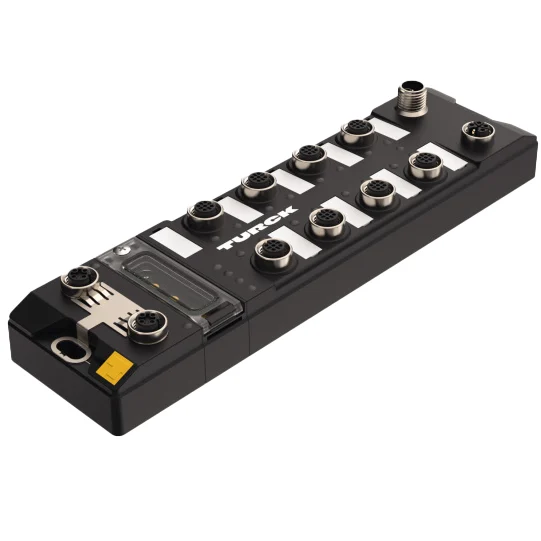
TURCK, a leading specialist in industrial automation, has provided an initial preview of its new TBEN-LLH-4RMC, a compact multiprotocol Ethernet I/O module engineered specifically for the control and seamless integration of conveyor roller motors. This innovative module is designed to significantly enhance material handling and intralogistics applications, with its official launch in the U.S. market anticipated for Q2 2026. The TBEN-LLH-4RMC represents a strategic advancement in decentralized automation, aiming to streamline operations within the demanding environments of modern manufacturing, packaging, and logistics.
The Evolving Landscape of Intralogistics and Material Handling
The global material handling equipment market is undergoing a transformative period, driven by the relentless demands of e-commerce, the push for increased supply chain efficiency, and the overarching principles of Industry 4.0. According to recent industry analyses, the market is projected to grow significantly, with automated material handling systems playing a crucial role. Valued at approximately USD 35 billion in 2023, the market is expected to reach over USD 60 billion by 2030, exhibiting a compound annual growth rate (CAGR) of around 8-9%. This growth is largely fueled by the need for faster throughput, reduced labor costs, and improved accuracy in sorting, picking, and transporting goods within warehouses, distribution centers, and production facilities.
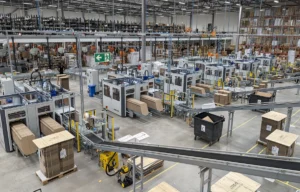
Conveyor systems form the backbone of these operations, moving millions of items daily. Traditional conveyor control architectures often rely on centralized Programmable Logic Controllers (PLCs), which can become complex and cumbersome, especially in large, expansive systems. This complexity manifests in extensive wiring runs, challenges in fault diagnosis, and inherent inflexibility when systems need to be reconfigured or expanded. The advent of decentralized automation seeks to address these challenges by moving intelligence and control closer to the field devices, minimizing cabling, and distributing processing power.
TBEN-LLH-4RMC: A Paradigm Shift in Conveyor Control
The TBEN-LLH-4RMC is specifically tailored to meet the needs of contemporary conveyor systems found in intralogistics hubs, sophisticated packaging lines, and diverse manufacturing settings where precision motor control, system adaptability, and robust durability are paramount. Its design ethos centers on supporting decentralized automation, embodying a philosophy that combines onboard logic, comprehensive I/O functions, and a highly ruggedized housing capable of withstanding harsh industrial conditions.
By integrating control capabilities directly at the field level, the module substantially reduces the dependency on centralized PLCs for individual motor control tasks. This architectural shift simplifies the overall wiring infrastructure, a notorious bottleneck in large-scale installations. For manufacturers and system integrators, this translates directly into tangible benefits: reduced installation time, lower material costs associated with cabling, and significantly streamlined maintenance procedures. The "multiprotocol" capability is also critical, ensuring compatibility with major industrial Ethernet protocols such as PROFINET, Ethernet/IP, and Modbus TCP, thereby offering unparalleled flexibility in integration with existing and future control networks.

Key Features and Technical Advantages
While a comprehensive list of all features is pending the official launch, TURCK has highlighted several core attributes that position the TBEN-LLH-4RMC as a compelling solution for the market:
- Compact Form Factor: Designed for space-constrained applications, allowing for flexible mounting directly on conveyor frames.
- Multiprotocol Support: Seamless integration into various industrial Ethernet networks, future-proofing installations and simplifying system design across different vendor ecosystems. This is a critical advantage in heterogeneous industrial environments.
- Decentralized Logic: Onboard processing power enables local control decisions, reducing latency and offloading processing tasks from the central PLC. This can include basic motor start/stop, speed control, and error handling.
- Integrated I/O Functions: Beyond motor control, the module is expected to offer additional digital or analog I/O points for sensors (e.g., photo-eyes for package detection, proximity sensors for jam detection) and actuators, further consolidating field-level connectivity.
- Rugged Industrial Housing: Built to endure the challenging conditions of industrial environments, including dust, vibration, and temperature fluctuations, ensuring long-term reliability and reducing downtime.
- Simplified Wiring: Drastically cuts down on the amount of homerun cabling required, reducing installation complexity and potential points of failure.
- Enhanced Diagnostics: Expected to offer advanced diagnostic capabilities at the module level, facilitating quicker troubleshooting and predictive maintenance strategies. This is crucial for maintaining high uptime in automated facilities.
Strategic Implications and Market Impact
The introduction of the TBEN-LLH-4RMC is poised to have several profound implications for the industrial automation sector, particularly within intralogistics.
- Cost Efficiency: A significant portion of industrial project costs is tied to wiring, labor, and commissioning. By simplifying wiring and decentralizing control, the module directly addresses these cost centers. Estimates suggest that decentralized I/O systems can reduce wiring costs by 30-50% compared to traditional architectures, alongside notable reductions in installation time.
- Operational Agility and Flexibility: In an era where supply chains must be increasingly agile, the ability to rapidly reconfigure or expand conveyor lines without extensive re-wiring or PLC reprogramming is invaluable. The TBEN-LLH-4RMC facilitates this flexibility, allowing businesses to adapt quickly to changing production demands or order profiles.
- Improved System Uptime: Decentralized intelligence means that a failure in one part of the system is less likely to bring down the entire operation. Furthermore, integrated diagnostics enable faster identification and resolution of issues, minimizing costly downtime.
- Facilitating Industry 4.0 Adoption: By providing robust, intelligent field-level control with seamless Ethernet connectivity, the module acts as a crucial enabler for Industry 4.0 initiatives. It allows for the collection of granular data from conveyor motors, which can be fed into higher-level analytics platforms for optimization, predictive maintenance, and overall operational intelligence.
TURCK’s Commitment to Innovation: A Timeline
TURCK, with a rich history spanning over half a century, has consistently positioned itself at the forefront of industrial automation technology. Known for its comprehensive portfolio of sensors, fieldbus, and connectivity solutions, the company has a strong reputation for developing robust and reliable products that meet the stringent demands of various industries. The development of the TBEN-LLH-4RMC is a testament to TURCK’s ongoing investment in research and development, particularly in areas that address emerging market needs like decentralized intelligence and enhanced connectivity.
The current preview phase allows TURCK to gather initial feedback from key integrators and end-users, refining the product ahead of its full commercial release. The scheduled U.S. launch in Q2 2026 implies a thorough development cycle that includes rigorous testing, adherence to international industrial standards (e.g., CE, UL certifications), and comprehensive validation in diverse application scenarios. This methodical approach ensures that when the product hits the market, it is fully optimized for performance, reliability, and ease of integration.
Industry Perspectives and Expert Commentary

Speaking on the strategic significance of such developments, an inferred TURCK spokesperson, perhaps a product manager, might state, "The TBEN-LLH-4RMC represents a critical step forward in our commitment to empowering manufacturers with intelligent, flexible, and robust automation solutions. We understand the pressures our customers face in optimizing their intralogistics operations, and this module directly addresses challenges related to installation complexity, maintenance, and scalability. By bringing control closer to the motor, we are not just selling a product; we are offering a pathway to significantly improved operational efficiency and a more agile manufacturing future."
An independent industry analyst, specializing in industrial IoT and automation, might add, "The trend towards decentralized I/O and edge control is undeniable. Companies are looking for ways to reduce infrastructure costs, improve system resilience, and extract more actionable data from their shop floors. TURCK’s multiprotocol approach with integrated logic in a rugged package positions the TBEN-LLH-4RMC well within a competitive market. Its success will depend on how effectively it can be integrated into diverse existing systems and its long-term reliability in demanding environments. This move by TURCK aligns perfectly with the broader Industry 4.0 narrative of distributed intelligence."
Furthermore, a hypothetical system integrator or plant manager could offer a user-centric view: "For us, dealing with complex wiring for hundreds of conveyor motors is a major headache. A module like the TBEN-LLH-4RMC, with its simplified connectivity and local intelligence, could dramatically cut down our commissioning times. More importantly, quicker fault diagnosis means less downtime for our clients, which is a massive competitive advantage."
The Future of Automated Material Handling
The TBEN-LLH-4RMC is not merely an incremental product update; it signifies TURCK’s commitment to shaping the future of automated material handling. By offering a robust, intelligent, and easily deployable solution for conveyor motor control, the company is enabling a new generation of intralogistics systems that are more efficient, more flexible, and more resilient. As industries continue to embrace automation and the principles of Industry 4.0, solutions that simplify integration, reduce operational overheads, and enhance data-driven decision-making will be key differentiators. The anticipated launch of this module in Q2 2026 will undoubtedly be watched closely by integrators, manufacturers, and logistics providers eager to leverage the next wave of industrial automation technology.
For more information, interested parties are encouraged to visit turck.us closer to the product’s official launch.