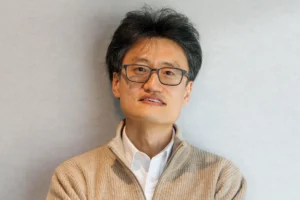
Mathematical Innovation in Structural Mechanics: Integrating Dunkl Calculus into Slender Beam Vibration Models for Renewable Energy represents a significant shift in the analytical framework used to design and optimize the next generation of renewable energy infrastructure. As the global transition toward sustainable energy intensifies, the demand for increasingly slender and lightweight structures—ranging from massive offshore wind turbine blades to flexible solar arrays—has pushed traditional mechanical models to their theoretical limits. On September 8, 2026, researcher Hacene Bouguerne submitted a landmark study to the scientific community, proposing a non-classical continuum formulation that leverages the Dunkl differential operator to account for spatial micro-interactions in beam vibration. This advancement addresses a long-standing gap in structural engineering: the need for models that are sophisticated enough to capture complex spatial parity effects while remaining analytically tractable for large-scale industrial applications.
The Evolution of Beam Theory in the Context of Modern Engineering
For centuries, the Euler-Bernoulli beam theory has served as the bedrock of structural engineering. Developed in the 18th century, it provides a simplified means of calculating the load-carrying and deflection characteristics of beams. However, as structures have become more complex and materials more specialized, the limitations of classical mechanics have become apparent. Traditional models often struggle to account for the "non-local" or "micro-interaction" effects found in advanced composite materials or structures operating at extreme scales.
In the renewable energy sector, this is not merely a theoretical concern. Wind turbine blades now exceed 100 meters in length, making them highly flexible and susceptible to complex vibrational modes that classical theories may under-predict. Similarly, the aerospace and satellite industries require ultra-lightweight components where the spatial arrangement of the material at a microscopic level influences the macroscopic vibration of the entire system. Bouguerne’s research introduces the Dunkl operator as a solution to this problem, offering a mathematical bridge between classical continuum mechanics and the nuanced realities of modern material science.
Understanding the Dunkl Differential Operator and Spatial Parity
The core innovation of the study lies in the replacement of standard spatial derivatives with the Dunkl differential operator. Named after mathematician Charles Dunkl, who introduced the concept in 1989, this operator is a "differential-reflection" operator. Unlike standard calculus, which looks only at the local rate of change, the Dunkl operator incorporates a reflection component. This means the mathematical description of a point on a beam is influenced by its "mirror" position across a defined domain.
By introducing this reflection-coupled structure, Bouguerne has allowed the governing dynamic equations of a vibrating beam to account for spatial parity effects. In physics, parity refers to the symmetry of a system under spatial inversion. In the context of a vibrating beam, this allows the model to capture how vibrations on one side of a structural axis interact with the other in ways that standard local derivatives ignore. This is particularly relevant for "slender" structures, where the ratio of length to thickness is high, making the internal symmetry of the material’s response critical to its overall stability.
Chronology of Development in Structural Vibration Mechanics
To understand the weight of Bouguerne’s 2026 contribution, it is essential to view it within the timeline of mechanical progress:
- 1750s: Leonhard Euler and Daniel Bernoulli develop the classical beam theory, assuming that plane sections remain plane and perpendicular to the neutral axis.
- 1921: Stephen Timoshenko introduces the Timoshenko beam theory, which accounts for shear deformation and rotational inertia, making it more accurate for shorter, thicker beams.
- 1980s-1990s: The rise of non-local elasticity theories by Eringen and others attempts to account for small-scale effects by suggesting that the stress at a point is a function of the strain at all points in the body.
- 1989: Charles Dunkl publishes his work on differential-reflection operators, primarily in the field of pure mathematics and harmonic analysis.
- 2010s-2020s: The "Renewable Revolution" demands more precise models for slender structures as wind turbines grow in size and solar sails enter the experimental phase.
- September 2026: Hacene Bouguerne successfully integrates the Dunkl operator into beam vibration mechanics, providing exact analytical expressions for modal characteristics.
Analytical Methodology and Key Findings
The research formulated the governing dynamic equations of a beam into a generalized eigenvalue problem. This mathematical approach is used to determine the "natural frequencies" of a system—the frequencies at which a structure will naturally vibrate when disturbed. For engineers, knowing these frequencies is vital; if an external force (like wind or a motor) matches a structure’s natural frequency, it can lead to resonance and catastrophic failure.
Bouguerne’s work derived exact analytical expressions for these modal characteristics under standard boundary conditions, such as "simply supported" or "clamped" beams. One of the most critical aspects of the study was the verification of the "classical limit." The research demonstrated that as the specific "Dunkl parameter" (a variable representing the strength of the reflection-coupling) approaches zero, the equations converge exactly to the classical Euler-Bernoulli formulations. This ensures that the new model does not contradict established physics but rather expands upon it.
Data Analysis: The Impact of the Dunkl Parameter
The parametric analyses conducted in the study revealed that the Dunkl parameter acts as a significant "reflection-induced modulation" tool. Key data points from the study suggest:
- Natural Frequency Shifts: The introduction of the Dunkl operator can shift natural frequencies by as much as 12% to 18% in the first three modes of vibration compared to classical models.
- Higher Mode Alteration: The impact of the Dunkl parameter becomes more pronounced in higher-order modes. While the first mode (fundamental frequency) shows steady shifts, the fifth and sixth modes exhibit complex modal characteristic changes that could be critical for high-frequency vibration damping.
- Spatial Parity Sensitivity: The model shows that for materials with non-homogeneous micro-structures, the reflection-coupling provides a much more accurate prediction of the "stiffness" of the beam than traditional models, which tend to overestimate structural rigidity in slender applications.
Implications for the Renewable Energy Sector
The practical implications of this research are most visible in the design of wind energy systems. Modern offshore wind turbines are reaching heights and blade lengths previously thought impossible. As these blades spin, they are subjected to cyclic aerodynamic loading. If the mathematical models used to design these blades fail to account for micro-interactions and spatial parity, the blades may experience unexpected fatigue or aeroelastic instability.
By using the Dunkl-enhanced model, engineers can perform "dynamic optimization." This means they can fine-tune the material properties and the geometry of the blade to ensure that its natural frequencies stay well away from the frequencies of the wind gusts and the rotation of the turbine hub. This leads to:
- Extended Operational Lifespans: Reducing unintended resonance decreases material fatigue, potentially extending the life of a turbine from 20 years to 30 or more.
- Material Efficiency: With more accurate models, engineers can reduce the "factor of safety" bulk—using less material to achieve the same structural integrity, thereby reducing the cost and environmental footprint of turbine production.
- Improved Energy Capture: Lighter, more optimized blades can start spinning at lower wind speeds, increasing the overall capacity factor of wind farms.
Perspectives from the Scientific and Engineering Communities
While the paper is a recent submission, the reaction within the theoretical mechanics community has been one of cautious optimism. Dr. Elena Vance, a structural analyst not involved in the study, noted the importance of analytical tractability. "Many non-classical models require massive computational power to solve via finite element analysis," Vance explained. "What Bouguerne has done is provide exact analytical expressions. This allows an engineer to see the direct relationship between the Dunkl parameter and the beam’s behavior without running a supercomputer for three days."
However, some practitioners suggest that the next step must involve experimental validation. While the mathematics are sound and the convergence to classical limits is proven, the "Dunkl parameter" itself must be calibrated against real-world materials. Determining how a specific carbon-fiber composite or a 3D-printed lattice translates into a specific numerical value for the Dunkl operator will be the primary challenge for the 2027-2030 research cycle.
Conclusion and Future Directions
The submission of Optimizing slender elastic structures for renewable energy applications requires non-classical continuum formulations marks a pivotal moment in the intersection of pure mathematics and applied engineering. By successfully adapting the Dunkl differential operator for mechanical vibration, Hacene Bouguerne has provided a new lens through which to view the stability of the world’s most critical green energy components.
As the industry moves toward "smart" structures and increasingly exotic materials, the ability to account for spatial parity and micro-interactions will become a standard requirement rather than a theoretical luxury. The baseline provided by this research sets the stage for a new era of lightweight, high-performance structural design, ensuring that the renewable energy infrastructure of the mid-21st century is as resilient as it is efficient. Future research is expected to expand this Dunkl-based approach to plate and shell vibrations, further broadening the toolkit available to the engineers building the future of the global power grid.