As the United States grapples with an unprecedented surge in electricity demand driven by the digital infrastructure boom, a breakthrough in materials science from Washington University in St. Louis offers a promising pathway toward energy independence for the nation’s data centers. The rapid expansion of these facilities, which serve as the backbone of the global artificial intelligence (AI) revolution and cloud computing industry, is placing immense pressure on an aging national power grid. According to recent estimates by the Electric Power Research Institute (EPRI), data centers could consume as much as 9% of the total annual U.S. electricity generation by 2030—a staggering increase from the 4% recorded in 2023. To address this looming energy crisis, researchers have unveiled a novel catalyst design that significantly improves the performance and lifespan of low-temperature fuel cells, potentially allowing data centers to generate their own clean power on-site.
The research, led by Gang Wu, the Elvera and William R. Stuckenberg Professor in the McKelvey School of Engineering at Washington University in St. Louis, introduces a sophisticated carbon nanostructure that solves a decades-old problem in fuel cell engineering: the tradeoff between a catalyst’s activity and its long-term stability. The team’s findings, published on August 6, 2026, in the journal Nature Nanotechnology, represent a collaborative effort involving experts from Brookhaven National Laboratory, Lawrence Berkeley National Laboratory, Northeastern University, and the University of Pittsburgh. By enabling fuel cells to operate more efficiently and for longer durations, this technology could facilitate a shift away from grid-dependent data centers toward a more resilient, hydrogen-based energy model.
The Growing Crisis of Data Center Power Consumption
The urgency of this research is underscored by the shifting landscape of American energy consumption. In the past decade, data center growth was largely offset by improvements in hardware efficiency. However, the emergence of generative AI and large language models (LLMs) has fundamentally altered that trajectory. These technologies require specialized GPUs (Graphics Processing Units) that consume significantly more power than traditional servers. Furthermore, the heat generated by these high-density computing clusters necessitates massive cooling systems, which often account for nearly 40% of a facility’s total energy use.
"If a data center is able to supply its electricity itself by using a fuel cell, it would directly convert hydrogen and other fuels into the electricity, reducing the burden on the energy grid," Professor Wu explained. This decentralized approach would not only alleviate the strain on public utilities but also provide data centers with a more reliable, "always-on" power source that is less susceptible to grid failures or regional blackouts.
Overcoming the Platinum Paradox
At the heart of modern fuel cell technology is the catalyst, the material responsible for facilitating the chemical reaction between hydrogen and oxygen to produce electricity, water, and heat. For years, platinum has been the gold standard for these catalysts due to its high reactivity. However, platinum is a precious metal of extreme scarcity and cost, making the widespread commercialization of fuel cells economically challenging.
To reduce costs, scientists have long sought to use platinum nanoparticles—microscopic particles that maximize the surface area available for reactions while using minimal amounts of the metal. Current industry standards aim for less than one-quarter of a milligram of platinum per square centimeter. Yet, these nanoparticles are notoriously unstable. During the rigorous cycles of a fuel cell’s operation, platinum particles tend to dissolve, migrate, or clump together (a process known as sintering), which causes a rapid decline in power output.
In recent years, researchers pivoted toward platinum intermetallic catalysts—alloys where platinum is combined with other metals like cobalt in a highly ordered atomic arrangement. These intermetallics offer superior durability and activity compared to standard alloys, but they present a manufacturing "Catch-22." To achieve the necessary atomic order, the materials must be heated (annealed) at high temperatures. However, high temperatures typically cause the nanoparticles to clump together, destroying the very surface area that makes them effective.
A Breakthrough in Carbon Support Architecture
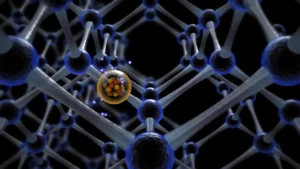
Professor Wu’s team solved this dilemma by re-engineering the "host" or support structure that holds the catalyst particles in place. They developed a unique carbon nanostructure consisting of porous, hollow carbon spheres. Unlike traditional carbon supports, these spheres feature orderly radial nanochannels and a vast internal surface area.
This "radial nanochannel" design acts as a physical cage for the platinum-cobalt (Pt-Co) intermetallic nanoparticles. Because the particles are confined within these tiny channels, the researchers were able to heat the material to 1000°C—a temperature high enough to ensure a perfectly ordered atomic structure—without the particles merging or clumping.
"Traditionally, there would be a tradeoff between size and stability, but with the ordered carbon nanochannel host, platinum cobalt nanoparticles can be confined and remain stable at very small particle size even at high temperatures," Wu said. This allowed the team to maintain particle sizes smaller than 5 nanometers, ensuring maximum efficiency while achieving the structural integrity required for long-term use.
Exceptional Performance and Longevity
The results of the laboratory testing were unprecedented. The new catalyst retained 85% of its initial performance after 150,000 severe voltage cycles. To put this into perspective, the researchers estimate this could translate to roughly 25,000 hours of real-world operation. For industrial applications like data centers or heavy-duty transportation, where reliability is paramount, this level of durability represents a major leap forward.
The architecture of the carbon support provides more than just stability; it also optimizes the flow of "reactants." The open-channel structure allows ionomers (materials that transport ions) to spread more uniformly across the electrode. This creates a "highway" system for protons, oxygen, and water, reducing the internal resistance of the fuel cell and allowing it to generate more power with less fuel.
Industry Implications and the Road to 2030
The implications of this research extend far beyond the laboratory. As the U.S. Department of Energy (DOE) continues to push for the "Hydrogen Shot" initiative—which aims to reduce the cost of clean hydrogen by 80% to $1 per kilogram in one decade—innovations that make fuel cells more durable and less reliant on precious metals are critical.
Industry analysts suggest that if this technology can be scaled, it could fundamentally change the site selection process for data centers. Currently, developers are limited by the proximity of high-capacity power lines. With efficient, long-lasting fuel cells, data centers could theoretically be built in a wider variety of locations, provided there is access to hydrogen infrastructure.
Furthermore, the technology holds promise for the heavy-duty trucking and maritime industries. These sectors require high power density and long operating lifespans that current battery technologies struggle to provide. A fuel cell that can withstand 25,000 hours of operation would meet the rigorous demands of long-haul logistics.
Collaborative Research and Intellectual Property
The success of the project was bolstered by the diverse expertise of the collaborating institutions. Brookhaven National Laboratory and Lawrence Berkeley National Laboratory provided advanced imaging and characterization tools, allowing the team to observe the atomic transitions of the catalysts in real-time. Theoretical modeling from Northeastern University and the University of Pittsburgh helped the researchers understand the fundamental physics of the radial nanochannels.
Recognizing the commercial potential of the discovery, Professor Wu has filed a patent for the technology through the Washington University Office of Technology Management. The next phase of research will likely involve collaboration with private sector partners to test the catalyst in full-scale fuel cell stacks and under varied environmental conditions.
Conclusion: A Sustainable Path for the Digital Age
As the world becomes increasingly dependent on data, the environmental and logistical costs of powering that data cannot be ignored. The transition from a 4% to a 9% share of national electricity consumption represents a significant challenge for the American energy landscape. However, the development of high-performance, durable, and cost-effective fuel cells offers a vision of a future where digital growth does not come at the expense of grid stability.
By overcoming the longstanding barriers to platinum catalyst efficiency, Professor Wu and his colleagues have provided a vital tool for the "hydrogen economy." Through further development, this "best-in-class" catalyst could serve as the cornerstone of a new generation of power systems—ones that are as clean as they are resilient, ensuring that the AI revolution is powered sustainably for decades to come.