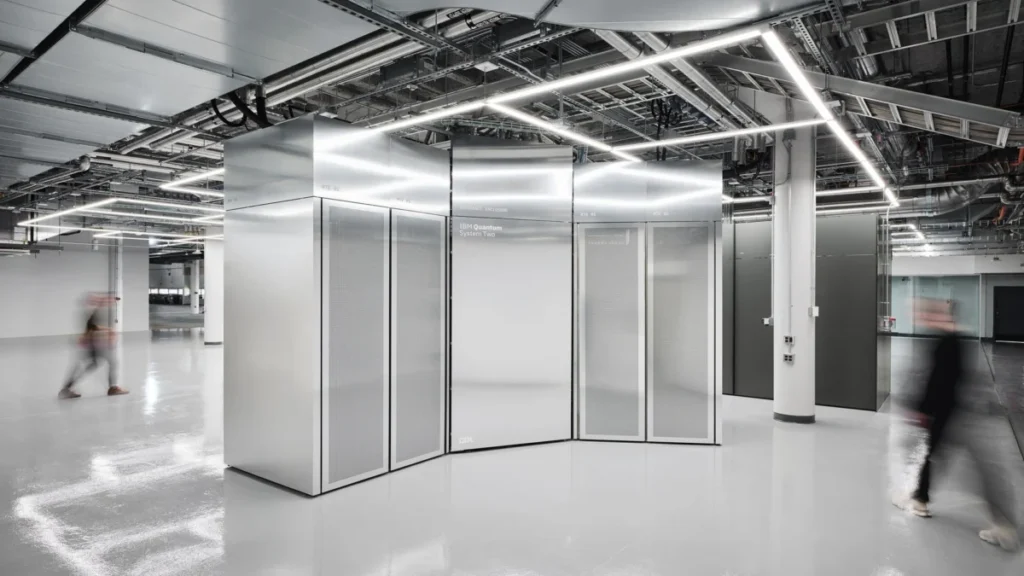
Switzerland is embarking on a transformative journey into the quantum era, with the landmark announcement that it will host its first IBM quantum computer. An IBM Quantum System Two is slated for installation at the prestigious Swiss National Supercomputing Centre (CSCS) in Lugano by the close of 2026. This pivotal development is further amplified by the establishment of a dedicated quantum innovation hub at ETH Zurich, a collaboration between IBM and Lockheed Martin, formalized through an offset agreement with armasuisse, Switzerland’s Federal Office for Defence Procurement. This multi-faceted initiative is designed to provide unparalleled direct access to cutting-edge quantum computing hardware and expertise for Swiss researchers, companies, and startups, positioning the nation at the forefront of this nascent yet profoundly impactful technological revolution.
The IBM Quantum System Two, a modular quantum computing platform, represents a significant advancement in the field. It is designed to scale and provide the foundational infrastructure for future quantum processors, moving beyond the current generation of single-chip systems. This particular installation will be powered by IBM’s advanced Nighthawk processor, a key component in the company’s roadmap towards fault-tolerant quantum computing. IBM will assume the operational responsibilities for the Quantum System Two, leveraging its extensive global experience in managing complex quantum infrastructure. Complementing this, ETH Zurich, consistently ranked among the world’s leading universities in science and technology, will provide crucial on-site infrastructure, technical expertise, and facilitate access for both Swiss academia and industry. Beyond mere access, ETH Zurich is committed to supporting comprehensive education and workforce development programs, recognizing that the human capital skilled in quantum technologies is as vital as the hardware itself.
This state-of-the-art system is expected to serve as a dedicated platform, offering researchers an unprecedented opportunity to develop novel quantum algorithms and rigorously test applications that hold the potential to redefine numerous sectors. The anticipated applications span a broad spectrum, including the discovery of new materials and chemical processes, complex optimization problems in logistics and manufacturing, and sophisticated financial modeling. The promise of quantum computing lies in its ability to tackle problems that are computationally intractable for even the most powerful classical supercomputers, by leveraging principles of quantum mechanics such as superposition and entanglement. This foundational shift in computational paradigm could unlock solutions to some of humanity’s most pressing challenges, from climate change to drug discovery.
The Dawn of Quantum Hardware in Switzerland
The arrival of advanced quantum hardware marks a strategic inflection point for Switzerland, providing a robust foundation for translating theoretical quantum research into tangible, practical applications. By integrating a national quantum computing resource, the country aims to accelerate its innovation pipeline and foster a vibrant quantum ecosystem. Organizations that join the innovation hub through ETH Zurich will not only benefit from the on-site Quantum System Two but will also gain cloud-based access to IBM’s extensive global fleet of quantum computers. This hybrid access model ensures that Swiss innovators have a wide array of quantum resources at their disposal, enabling diverse research and development projects.
Beyond the hardware, the initiative emphasizes the critical importance of human capital development. It will combine computing access with a comprehensive suite of educational programs, including specialized courses, certifications, hands-on workshops, and competitive hackathons. These programs are meticulously designed to cultivate a new generation of talent proficient in quantum technologies, addressing the global shortage of quantum engineers, scientists, and developers. By investing in education and training, Switzerland is proactively building the skilled workforce necessary to harness the full potential of quantum computing and maintain its competitive edge in the global innovation landscape.
Joël Mesot, President of ETH Zurich, underscored the significance of this endeavor, stating, "Switzerland will gain access to essential research infrastructure that will enable us to further advance the exploration of this emerging technology and educate the talent needed to support it." His statement highlights the dual strategic objectives: pushing the boundaries of scientific discovery and nurturing the specialized expertise required for future technological leadership. This aligns with Switzerland’s long-standing commitment to scientific excellence and its reputation as a hub for advanced research and innovation.
Strategic Partnerships Fueling Quantum Innovation
The project also signifies a deepening of the existing strategic relationship between IBM and Lockheed Martin, two global technology leaders with complementary strengths. The companies are committed to pursuing collaborative research with selected Swiss academic institutions, focusing on two particularly promising areas: quantum sensing for navigation and advanced methods to improve additive manufacturing of metallic alloys. These research themes reflect both companies’ core interests and the potential for quantum technologies to deliver disruptive advancements in their respective domains.
Quantum sensing, a field that leverages quantum phenomena to achieve unprecedented levels of sensitivity and precision in measurements, holds immense promise for applications such as highly accurate navigation systems independent of traditional GPS, advanced medical imaging, and subterranean exploration. The ability to detect minute changes in magnetic fields, gravity, or time could revolutionize numerous industries and defense capabilities. Simultaneously, advancements in additive manufacturing, often referred to as 3D printing, stand to transform how complex metallic components are designed and produced. Quantum computing and AI could optimize material properties, process parameters, and design methodologies, leading to stronger, lighter, and more efficient parts for aerospace, automotive, and other high-tech sectors.
Dr. Craig Martell, Lockheed Martin vice president and chief technology officer, articulated the broader vision behind this collaboration: "This project extends the strategic relationship between Lockheed Martin and IBM in quantum and AI while positioning Switzerland as a leader in these critical, cutting-edge fields. It provides resources and expertise, develops skills and enables joint research across the Swiss commercial, defense and academic ecosystem." His remarks emphasize the comprehensive nature of the initiative, designed to foster a robust, interconnected innovation ecosystem across multiple sectors within Switzerland. The involvement of armasuisse through an offset agreement further underscores the strategic national importance of developing advanced capabilities in areas like quantum sensing and manufacturing, crucial for future defense and security needs. Offset agreements are common in defense procurement, where the purchasing country receives industrial benefits, technology transfer, or investment in return for a major defense contract. In this instance, it channels investment and technological capability directly into Switzerland’s burgeoning quantum landscape.
For IBM, this project reinforces its long-standing and deep-rooted presence in Switzerland. The company’s Zurich Research Laboratory has been an integral part of the country’s vibrant scientific ecosystem for decades, contributing significantly to breakthroughs in various fields. This new quantum initiative builds upon recent collaborations, including a significant 10-year effort between IBM and ETH Zurich focused on foundational algorithmic research for the burgeoning AI and quantum era. This continuum of collaboration highlights a shared vision for pushing the boundaries of scientific and technological innovation.
Alessandro Curioni, vice president, Algorithms and Applications, IBM Research and director of the Zurich Research Laboratory, expressed IBM’s enthusiasm: "As we continue to foster innovation with the Swiss community, we are excited to have the opportunity to put world-class quantum hardware, software and expertise directly into the hands of Switzerland’s thriving academic institutions and industries." This statement encapsulates IBM’s commitment to democratizing access to quantum technology and empowering local ecosystems to drive innovation.
Global Quantum Race and Switzerland’s Strategic Position
The installation of the IBM Quantum System Two positions Switzerland as a pivotal player in the global quantum race, a competition among nations and technological powerhouses to achieve quantum supremacy and harness its transformative potential. Countries worldwide are investing billions in quantum research and infrastructure, recognizing its strategic importance for national security, economic competitiveness, and scientific leadership. The global quantum computing market size, estimated at several hundred million dollars in 2023, is projected to grow exponentially, reaching tens of billions of dollars by the next decade, fueled by advancements in hardware, software, and increasing enterprise adoption.
Switzerland, with its robust economy, highly skilled workforce, and strong intellectual property protection, offers an ideal environment for nurturing advanced technological ventures. Its neutrality and reputation for stability make it an attractive location for sensitive, cutting-edge research. The Swiss National Supercomputing Centre (CSCS) in Lugano, where the System Two will reside, is already a world-class facility, providing high-performance computing resources to researchers across various disciplines. Integrating a quantum computer into this existing infrastructure creates a unique hybrid computing environment, where classical supercomputing can complement quantum processing, addressing different facets of complex scientific and industrial problems.
The significance of the Nighthawk processor, which will power the Swiss system, cannot be overstated. As quantum processors grow in qubit count and coherence, the challenge of managing these complex systems and minimizing errors becomes paramount. IBM’s Quantum System Two architecture is designed with modularity and scalability in mind, aiming to overcome these engineering hurdles and pave the way for future generations of quantum computers with even greater computational power. The Nighthawk processor represents a critical step towards achieving the necessary error rates and qubit connectivity for practical quantum advantage.
Broader Implications and Future Outlook
The implications of this quantum initiative for Switzerland are far-reaching, touching upon its scientific leadership, economic prosperity, and educational landscape.
Scientific Advancement: The dedicated quantum platform will accelerate fundamental research in quantum physics, computer science, and related fields. Swiss researchers will be empowered to explore novel algorithms for drug discovery, material design, and complex system optimization, potentially leading to breakthroughs in healthcare, renewable energy, and advanced manufacturing. The focus on quantum sensing could also yield revolutionary advancements in metrology and fundamental science.
Economic Impact: The establishment of the innovation hub is expected to catalyze economic growth by fostering a vibrant ecosystem of quantum startups, attracting foreign direct investment, and creating high-value jobs. Swiss industries, particularly in finance, pharmaceuticals, and precision engineering, stand to benefit from early access to quantum capabilities, gaining a competitive edge through optimized processes, new product development, and enhanced analytical tools. The "quantum valley" effect could emerge, drawing talent and investment similar to how Silicon Valley formed around classical computing.
Educational and Workforce Development: ETH Zurich’s commitment to education and training is crucial for building a sustainable quantum workforce. The programs – courses, certifications, workshops, and hackathons – will equip students and professionals with the specialized skills needed to operate, program, and innovate with quantum computers. This investment in human capital is vital for ensuring Switzerland’s long-term leadership in this transformative technology. It addresses a critical global challenge, as the demand for quantum-literate individuals far outstrips current supply.
Geopolitical Significance: By establishing itself as a hub for quantum computing, Switzerland enhances its global standing as a leader in scientific and technological innovation. This strategic move strengthens its position in the international "quantum race," contributing to its technological sovereignty and national security, especially through applications in quantum sensing and secure communication. The partnership with Lockheed Martin further underscores the dual-use nature of many quantum technologies, with implications for both civilian and defense sectors.
The deployment of the IBM Quantum System Two by the end of 2026 will mark a monumental milestone, providing Swiss researchers with a dedicated quantum computing resource that is both nationally situated and globally connected through IBM’s expansive quantum infrastructure. This strategic investment underscores Switzerland’s forward-thinking approach to technology and innovation, cementing its role as a key player in shaping the future of computing and its profound impact on society. The collaborative model, involving leading academic institutions, global technology companies, and national defense agencies, serves as a blueprint for accelerating quantum progress and translating its immense potential into tangible benefits for the nation and beyond.