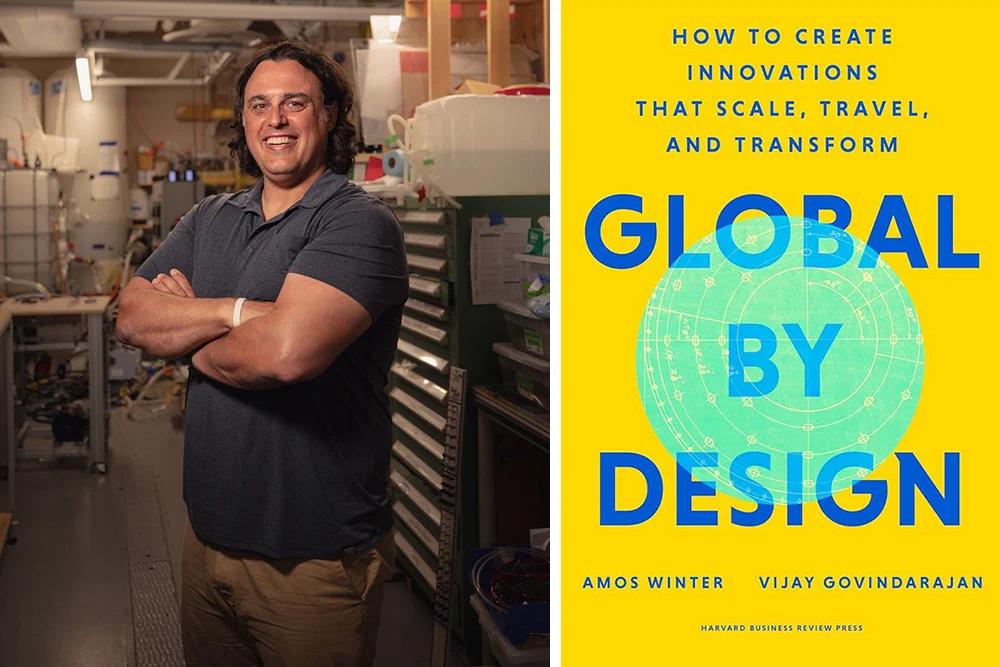
A groundbreaking new book, "Global by Design: How to Create Innovations That Scale, Travel, and Transform," is set to redefine how businesses approach innovation, particularly for success across diverse global markets. Co-authored by Amos Winter, the Germeshausen Professor of Mechanical Engineering at MIT and a recognized pioneer in engineering design, and Vijay Govindarajan, a leading voice in strategy and innovation, the publication offers a robust framework for developing solutions that resonate equally in both rapidly expanding emerging economies and established, high-income markets. Published by Harvard Business Review Press, the book provides a pragmatic, disciplined methodology aimed at transcending traditional innovation paradigms and fostering truly globally scalable products and services.
The Imperative for Global Innovation: A Shifting Economic Landscape
The strategic impetus behind "Global by Design" is rooted in the undeniable shift in global economic dynamics. Emerging markets, encompassing regions like India, parts of Africa, Southeast Asia, and Latin America, are experiencing growth rates significantly outpacing those of developed economies in North America and Europe. According to recent economic forecasts, these markets are indeed expanding at roughly twice the rate of their developed counterparts, making them indispensable for multinational corporations (MNCs) seeking sustained, aggressive growth trajectories. For instance, the International Monetary Fund (IMF) consistently highlights that while advanced economies might grow at 1.5-2.5% annually, many emerging and developing economies often see growth rates between 4-6%, sometimes even higher for specific countries. This disparity underscores a critical challenge and opportunity for global businesses.
Professor Winter articulates this imperative clearly: "If you’re a multinational company that really wants to maximize your growth rate, it’s not going to be in wealthy markets, it has to be in emerging markets." This observation is particularly pertinent for legacy companies that have historically thrived by selling high-value, often premium-priced products in affluent Western markets. The conventional wisdom of simply transplanting these successful models into new, lower-income environments frequently falters.
Beyond "Copy-Paste": The Flaws of Traditional Market Expansion
The pitfalls of a "copy-paste" approach are manifold and well-documented. Products designed for the purchasing power, infrastructure, and specific user contexts of wealthy nations often prove prohibitively expensive or fundamentally unsuited to the needs and constraints of consumers in emerging markets. A high-end medical device developed for a state-of-the-art hospital in New York, for example, might be too costly, too complex to maintain, or require infrastructure (like consistent electricity or highly trained technicians) that is simply unavailable in a rural clinic in Sub-Saharan Africa. Similarly, a consumer durable item like a refrigerator, designed for large homes and stable power grids, might be unaffordable or impractical for a family in a densely populated urban slum with erratic electricity.
"You can’t just simply take what you sold in the U.S. and Europe and then try to sell it in a place like India; it’s probably going to be too expensive [or not meet consumer needs]," Winter emphasizes. The book directly addresses this historical challenge, providing a structured approach to "leverage what was done before without trying to just copy and paste." This distinction is crucial, moving beyond mere "frugal innovation"—which often implies stripping down existing products—to a more fundamental re-imagining of solutions from the ground up, with global applicability in mind from the outset.
The "Global by Design" Framework: A Practical Blueprint for Cross-Border Success
At the core of "Global by Design" lies a robust, three-phase framework engineered to guide innovators through the entire lifecycle of developing scalable solutions. This process moves beyond abstract theory, offering a tangible roadmap from initial opportunity identification to solution design and, finally, successful local and global scaling. The authors advocate for a "disciplined approach" to problem-spotting, emphasizing the strategic leveraging of existing knowledge while building "high-value, low-cost solutions with global appeal."
The phases, while not explicitly detailed in the initial summary, are designed to systematically uncover, define, and resolve complex challenges. This involves:
- Opportunity Identification: This phase involves looking at "historically unsolved problems" with "fresh eyes," deeply understanding the unique requirements of diverse user segments, particularly in resource-constrained environments. It demands ethnographic research, empathy, and a willingness to question established norms.
- Solution Design: Once unique requirements are distilled, the focus shifts to creating innovative solutions. This isn’t just about cost reduction; it’s about optimizing value proposition—delivering superior performance, reliability, and usability within the economic and environmental constraints of the target markets.
- Scaling Locally and Globally: The final phase addresses how to effectively deploy these solutions. This includes strategies for manufacturing, distribution, market entry, and ensuring the innovation can thrive in different cultural and regulatory landscapes, while also exploring "upsell opportunities" in wealthier markets without cannibalizing existing product lines.
"The book is aimed at how to approach solving problems that are historically unsolved," Winter explains. "It talks about how to look at those problems with fresh eyes, how to really distill what are the unique requirements that must be satisfied, which often differ from the requirements in wealthy countries, and figure out how to create not just low-cost solutions, but really high-value solutions." This philosophy contrasts sharply with "reverse innovation," which often implies adapting a developed-world product for emerging markets. "Global by Design" advocates for an approach where solutions are conceived with global constraints and opportunities in mind from the very beginning, leading to universally superior products.
Addressing Grand Challenges: Innovation for the Underserved
A significant focus of the book’s methodology is its applicability to grand challenges, particularly those prevalent in the developing world. Issues such as access to clean water, affordable healthcare, and reliable energy are not merely humanitarian concerns but also represent vast, untapped market opportunities for truly innovative, scalable solutions. Despite technological advancements in wealthy nations, these problems persist for billions globally, often because existing solutions are either too expensive, too fragile, or require infrastructure that isn’t available.
Professor Winter highlights this disconnect: "Even though we have solutions to these problems in wealthy countries, they just haven’t mapped over, often because the solutions are too expensive or they’re not robust enough, leading these problems to persist for generations unsolved." The book implicitly addresses the United Nations Sustainable Development Goals (SDGs), offering a framework for creating commercially viable innovations that simultaneously drive positive social impact. For example, a low-cost, robust water purification system developed for remote villages could also find application in disaster relief efforts or niche markets in developed countries.
The Dual Benefit: Reaching Resource-Constrained and Affluent Consumers
One of the most intriguing aspects of the "Global by Design" philosophy is its potential for creating "win-win" scenarios. Solutions initially conceived for resource-constrained environments can often find unexpected traction in wealthier markets. This can occur in several ways:
- Cost-Conscious Segments: Even in affluent nations, there are consumers and businesses who prioritize cost-effectiveness. A high-value, low-cost solution might appeal to budget-conscious segments, small businesses, or educational institutions.
- Niche Applications: The robustness and simplicity often inherent in globally designed products can make them ideal for niche applications where complex, expensive alternatives are overkill.
- Upsell Opportunities: As the book notes, these products can create "upsell opportunities" for wealthy consumers. For instance, a basic, highly efficient version might lead to a premium, feature-rich version for a different segment, effectively expanding the overall market without cannibalizing existing high-end products. The key lies in strategic product differentiation based on nuanced understanding of segment needs rather than arbitrary feature addition.
Case Studies: Theory in Practice – The Drip Irrigation Revolution
The theoretical framework presented in "Global by Design" is brought to life through a series of compelling case studies, including five from Professor Winter’s own research group, alongside various industry examples. These real-world applications demonstrate the practical efficacy of the book’s principles.
A standout example is the innovative drip irrigation emitter technology developed by Winter’s team, which is poised to revolutionize agricultural practices worldwide. This technology exemplifies the "Global by Design" approach by simultaneously addressing critical needs in emerging markets while offering superior performance in developed ones.
"We created new drip irrigation emitter technology that cuts pumping power in half, reduces the price of solar-powered irrigation by about 40 percent, requires less than half the plastic to make, and is an industry leader in clog prevention," Winter details. This technological leap addresses multiple pain points:
- Energy Efficiency: Halving pumping power drastically reduces operational costs, making irrigation more accessible and sustainable, especially for smallholder farmers reliant on expensive fuel or nascent solar solutions. This aligns perfectly with the need for low-cost, high-value solutions in regions with limited energy infrastructure.
- Cost Reduction: The 40% reduction in the price of solar-powered irrigation systems is a game-changer for farmers in low-resource, water-stressed markets where traditional irrigation is unaffordable or impractical. This directly impacts food security and farmer livelihoods.
- Resource Conservation: Using less than half the plastic in manufacturing contributes to environmental sustainability, a global concern.
- Reliability: Superior clog prevention is critical for drip irrigation systems, as blockages can lead to uneven watering and crop failure. This enhances the robustness and reliability of the system, a key requirement in challenging agricultural environments where maintenance resources are scarce.
Commercialization and Future Impact: The Toro Partnership
This groundbreaking technology is not merely an academic exercise; it is actively being commercialized by Toro, a global leader in turf and landscape maintenance equipment and irrigation solutions. The partnership with Toro signifies a significant validation of the "Global by Design" approach, demonstrating its commercial viability and potential for widespread adoption. The product is expected to hit the market in early 2027, marking a pivotal moment in the application of these innovation principles.
"It is truly a global product that is a better mousetrap, as it meets or exceeds the performance of any other product on the market in every category," Winter proudly states. This assessment underscores the core tenet of "Global by Design": that solutions conceived with global constraints in mind can often result in universally superior products, outperforming even those designed solely for affluent markets. The research underpinning this drip emitter technology has already garnered significant academic recognition, with findings published in prestigious journals such as Nature Communications and Water.
The Minds Behind the Framework: Pioneers in Engineering and Strategy
The intellectual rigor and practical applicability of "Global by Design" are products of its esteemed authors’ extensive experience.
Amos Winter is the Germeshausen Professor of Mechanical Engineering at MIT. His work at the K. Lisa Yang Global Engineering and Research (GEAR) Center, where he serves as director, is explicitly focused on developing technical solutions for challenges faced by low-resource communities worldwide. His team’s impactful contributions span areas such as water purification, agricultural equipment, and assistive technology, consistently demonstrating the power of thoughtful, context-aware design. Winter’s engineering background provides the practical, problem-solving lens for the book.
Vijay Govindarajan is a globally renowned authority on strategy and innovation. As a professor at Dartmouth’s Tuck School of Business and a former Chief Innovation Evangelist at General Electric, Govindarajan has spent decades advising Fortune 500 companies on how to foster breakthrough innovation. His expertise provides the strategic and business scaling dimensions, ensuring the framework is not only technically sound but also commercially viable and scalable within complex corporate structures. Together, their complementary expertise creates a holistic and powerful guide for global innovation.
Broader Implications and Future Outlook: Reshaping Corporate Strategy and R&D Paradigms
"Global by Design" is poised to have far-reaching implications across several domains:
- Corporate Strategy: The book offers a compelling argument for MNCs to re-evaluate their R&D and market entry strategies. Instead of a linear flow of innovation from developed to developing markets, it advocates for a more integrated, bidirectional approach where insights from emerging markets drive universal solutions. This could lead to more resilient, adaptable, and globally competitive product portfolios.
- Research and Development: R&D departments may need to adopt new methodologies, integrating ethnographic research in diverse contexts and fostering interdisciplinary teams with deep cultural and economic understanding. The emphasis on "high-value, low-cost" solutions could also spur innovation in materials science, manufacturing processes, and supply chain management.
- Social Impact and Sustainable Development: By providing a framework for creating commercially viable solutions to pressing global challenges, the book can accelerate progress towards the SDGs. It offers a pathway for private sector engagement that is both profitable and profoundly impactful, moving beyond traditional corporate social responsibility models to integrate social good into core business strategy.
- Entrepreneurship: For startups and entrepreneurs, "Global by Design" provides a blueprint for building ventures with inherent global scalability, potentially attracting broader investment and achieving wider reach and impact from inception.
Professor Winter expresses a profound hope for the book’s influence, aiming to broaden design thinking and equip innovators with the toolsets necessary to tackle complex, multifaceted global problems. "We want readers to walk away from ‘Global by Design’ inspired to create solutions that are financially viable and create positive social impact," he states. "Furthermore, we want them to feel empowered, seeing how they can apply their unique experience, perspectives, knowledge, and resources to make meaningful change in the world."
In an increasingly interconnected yet deeply disparate world, "Global by Design" arrives at a critical juncture, offering not just a new perspective, but a practical, actionable guide for innovators, strategists, and leaders committed to building a future where groundbreaking solutions can truly scale, travel, and transform lives across every corner of the globe. Its principles promise not only commercial success but also a tangible pathway to addressing some of humanity’s most persistent challenges.