In the iconic woodblock print The Great Wave off Kanagawa by Katsushika Hokusai, the crests of the waves and the snow-capped peak of Mount Fuji possess a luminous, brilliant white quality that appears almost tactile. To the casual observer, it seems as though a thick white pigment was applied to the surface. However, a scientific analysis of the traditional washi paper reveals a surprising reality: there is no white ink or pigment in those areas. The brilliance is a result of structural whiteness, a phenomenon where light scatters off the exposed, uncompressed fibers of the paper itself. This ancient aesthetic principle has now become the foundation for a modern technological breakthrough. An international research team, led by Professor Easan Sivaniah of Kyoto University’s Institute for Integrated Cell-Material Sciences (iCeMS), has developed a new materials platform known as Deep Foam Photolithography (DFP). This innovation replicates nature’s ability to create color and functionality through architecture rather than chemistry, offering a sustainable alternative to hazardous white pigments and "forever chemicals."
The Science of Structural Whiteness and Biomimetic Design
For decades, the manufacturing of white materials—ranging from milk cartons and plastic films to pharmaceutical coatings—has relied heavily on chemical additives. In nature, however, whiteness is rarely the result of a white substance. Instead, it is an optical effect emerging from the microscopic geometry of a material. When light hits a structure with a complex, porous network—such as the microscopic air pockets in snow, the foamy nests of certain tropical frogs, or the specialized scales of the Cyphochilus beetle—the light waves are scattered in every direction. Because all visible wavelengths are reflected equally, the human eye perceives the material as an intense, bright white.
This effect, known as structural whiteness, is the core focus of the study published by the team from Kyoto University, Tokyo Metropolitan University, and Donghua University. By mimicking the way natural foams and plant tissues interact with light, the researchers have engineered a method to turn ordinary polymers into highly reflective, white materials without the need for traditional mineral fillers. This biomimetic approach addresses a growing crisis in the chemical and manufacturing industries: the urgent need to phase out titanium dioxide (TiO2) and per- and polyfluoroalkyl substances (PFAS).
Addressing the Regulatory Crisis: The Decline of TiO2 and PFAS
The development of Deep Foam Photolithography comes at a critical juncture for global industry. For over a century, titanium dioxide has been the "gold standard" for whiteness and opacity. Its high refractive index makes it incredibly effective at scattering light, leading to its widespread use in everything from sunscreen and toothpaste to food packaging and paint. However, the safety profile of TiO2 has come under intense scrutiny. In 2022, the European Union officially banned titanium dioxide as a food additive (E171) due to concerns regarding its potential genotoxicity—the ability of a substance to damage DNA. This move has sent shockwaves through the packaging and food industries, sparking a frantic search for safe, non-pigment-based alternatives.
Simultaneously, the industry is grappling with the phase-out of PFAS, often referred to as "forever chemicals" because of their extreme persistence in the environment and the human body. PFAS are used to give materials water- and oil-repellent properties. However, their link to various health issues, including hormonal disruption and immune system suppression, has led to aggressive regulatory action in the United States and Europe.
The research led by Professor Sivaniah provides a dual-purpose solution. By manipulating the physical structure of a material, the team has succeeded in creating surfaces that are both structurally white and naturally hydrophobic (water-repellent), effectively replacing both TiO2 and PFAS with a single structural modification.
The Mechanics of Deep Foam Photolithography (DFP)
The manufacturing process developed by the researchers is notable for its elegance and its reliance on existing industrial tools. The process, termed Deep Foam Photolithography, involves a multi-step transformation of standard polymer films.
The first stage of the process involves exposing a polymer to a specific wavelength of light. This light does not merely sit on the surface; it penetrates the material, breaking the long-chain polymers into smaller molecular fragments. This "photo-fragmentation" creates a latent pattern within the material. In the second stage, the material is treated with a mild, environmentally friendly solvent. This solvent interacts specifically with the light-damaged fragments, causing the polymer to swell and undergo a controlled phase separation.
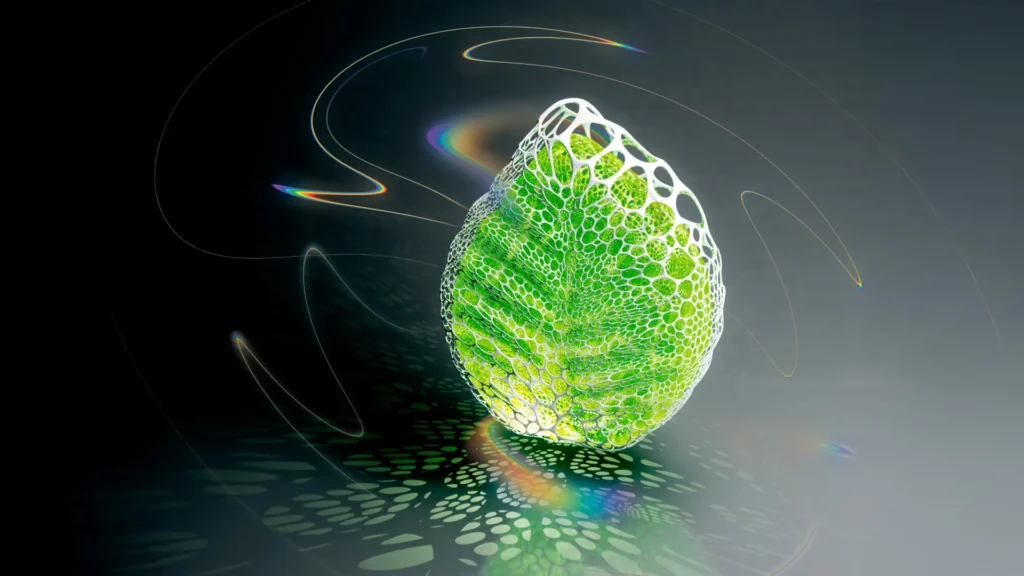
As the material expands, it develops an intricate, open-cell network of microscopic pores. This internal architecture is the key to the material’s dual functionality. Internally, these pores are sized perfectly to scatter visible light, creating the intense structural whiteness observed in the study. Externally, the process creates a "re-entrant" surface geometry—a microscopic roughness that mimics the surface of a lotus leaf. This roughness traps air beneath any liquid droplet that touches the surface, causing the water to bead up and roll off rather than soaking in.
"A key challenge faced by biomimetic science is realizing environmentally friendly material designs inspired by nature at the scale and cost of existing materials," noted Associate Professor Taiki Yanagishima of Tokyo Metropolitan University. The DFP process achieves this by using commercially available polymers and standard photolithographic equipment already used in the semiconductor and printing industries.
High-Resolution Precision and Textile Integration
One of the most impressive metrics reported by the research team is the resolution of the DFP process. The team demonstrated that they could print white, water-repellent patterns at a resolution of 20,000 dots per inch (DPI). To put this in perspective, high-end commercial printing typically operates at 300 to 1,200 DPI. This level of precision allows for the creation of microscopic functional zones on a single piece of material, which could have profound implications for microfluidics, security printing, and advanced electronics.
Furthermore, the collaboration with textile researchers at Donghua University in China has expanded the scope of DFP beyond rigid films. The team successfully applied the DFP process to fabrics, creating "pigment-free" white textiles that are inherently water-repellent. In the traditional textile industry, achieving whiteness requires heavy bleaching and the application of chemical brighteners, while waterproofing requires PFAS coatings. DFP replaces both with a structural change to the fibers themselves, offering a path toward a "closed-loop" and more sustainable fashion industry.
Timeline and Chronology of Development
The path to Deep Foam Photolithography has been a multi-year journey of interdisciplinary research:
- Phase 1: Fundamental Research (2018–2020): The team initially investigated the physics of light scattering in porous polymers, looking for ways to maximize "opacity without mass."
- Phase 2: Process Refinement (2021): Researchers at Kyoto University’s iCeMS perfected the "light-then-solvent" approach, discovering that the degree of swelling could be precisely controlled by adjusting the light exposure time.
- Phase 3: Functional Integration (2022): The team successfully integrated hydrophobic properties into the structural whiteness, realizing that the same pores providing color could also manage surface energy.
- Phase 4: Collaborative Scaling (2023–2024): Partnering with Donghua University, the researchers demonstrated the versatility of the platform across different substrates, including synthetic fabrics and flexible polymers.
Analysis of Implications: A Paradigm Shift in Manufacturing
The implications of this research extend far beyond the laboratory. By shifting the focus from "what a material is made of" to "how a material is structured," the DFP platform represents a fundamental change in material design.
1. Environmental and Health Impact:
The immediate removal of TiO2 and PFAS from the production cycle reduces the toxic load on both the environment and human populations. Since the DFP process uses mild solvents and existing polymers, the carbon footprint of manufacturing these "functionalized" materials is significantly lower than that of mining minerals for pigments or synthesizing complex fluorinated chemicals.
2. Economic Feasibility:
Unlike many "green" technologies that require expensive new infrastructure, DFP utilizes existing photolithography and polymer processing equipment. This lowers the barrier to entry for manufacturers looking to comply with new EU and global environmental regulations. The ability to use "off-the-shelf" polymers further ensures that the raw material costs remain competitive.
3. Innovation in Packaging and Design:
The 20,000 DPI resolution allows for the integration of "invisible" features. For example, a food package could have a structurally white label that also contains microscopic, water-repellent patterns acting as a QR code or an anti-counterfeiting mark, all without using a single drop of ink.
4. Lightweighting:
Because the structural whiteness is created by air-filled pores rather than heavy mineral pigments, the resulting materials are significantly lighter. In industries like aerospace or automotive manufacturing, where every gram matters, "pigment-free" white coatings could contribute to overall vehicle efficiency and fuel savings.
Official Responses and Future Outlook
While the research has been met with excitement in the academic community, industry experts are cautiously optimistic about the speed of adoption. Representatives from the textile and packaging sectors have noted that while the DFP process is revolutionary, the next step involves demonstrating "durability at scale"—ensuring that the microscopic foam structures can withstand the rigors of heavy use, washing, and environmental exposure over long periods.
Professor Easan Sivaniah and his team are already looking toward the next phase of their research. Future iterations of DFP may explore "structural color" beyond just white, aiming to replicate the iridescent blues and greens of butterfly wings or peacock feathers. If successful, this could eventually lead to a world where dyes and pigments are entirely obsolete, replaced by the precise, light-manipulating architecture of the materials themselves.
By building function directly into the physical structure of everyday objects, the researchers at Kyoto, Tokyo Metropolitan, and Donghua Universities have provided a blueprint for a more sustainable industrial future. Just as Hokusai used the simple fibers of washi paper to create the illusion of crashing foam and falling snow, modern science is now using the architecture of the vacuum to create the next generation of high-performance, eco-friendly materials.