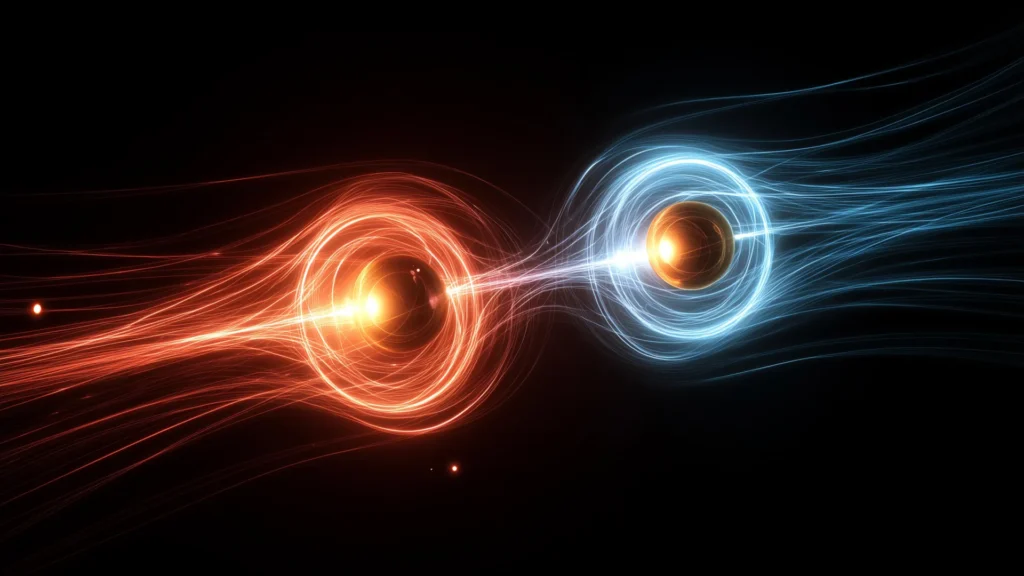
Physicists at Emory University have achieved a significant breakthrough, employing a novel machine learning approach to unveil previously unknown details about how particles interact within intricate systems. Their pioneering work specifically targets non-reciprocal forces, a phenomenon where the influence exerted by one particle upon another differs from the return influence, offering a more nuanced understanding than traditional models. This advancement not only deepens our comprehension of fundamental physics but also demonstrates the profound potential of artificial intelligence to transcend data analysis and prediction, becoming a genuine tool for scientific discovery.
The AI Paradigm Shift in Physics Discovery
The findings, meticulously documented and published in the prestigious journal PNAS, represent the culmination of an intensive collaboration between Emory University’s experimental and theoretical physics departments. By ingeniously integrating a custom-designed neural network with empirical data meticulously collected from a dusty plasma laboratory setup, the research team has definitively shown that artificial intelligence possesses the capability to do more than merely process vast datasets or forecast future outcomes. Crucially, it can actively contribute to the identification and formulation of entirely new physical laws, a feat previously considered the exclusive domain of human intuition and deductive reasoning.
"We have provided compelling evidence that AI can be a powerful engine for discovering novel physics," stated Justin Burton, an Emory professor of experimental physics and a senior co-author of the seminal paper. Burton emphasized a critical aspect of their methodology: "Our AI method operates transparently; it is not a ‘black box.’ We possess a comprehensive understanding of its operational mechanisms and the rationale behind its conclusions. Furthermore, the robust framework developed is universally applicable, holding immense promise for exploration across a multitude of other many-body systems, thereby charting new avenues for scientific inquiry." This interpretability sets their AI approach apart from many opaque machine learning models, fostering trust and enabling deeper scientific understanding.
Decoding Non-Reciprocal Dynamics: A Fundamental Challenge
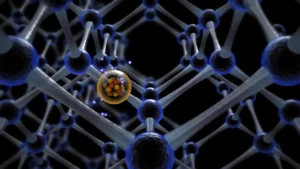
The study offers one of the most granular and precise descriptions to date concerning the complex physics that govern dusty plasma systems. These systems, ubiquitous in the universe, consist of an ionized gas populated by a dynamic array of interacting charged particles, including microscopic grains of dust. Understanding the forces within such systems is paramount, yet inherently challenging due to their non-reciprocal nature. Unlike the reciprocal forces governed by Newton’s third law (for every action, there is an equal and opposite reaction), non-reciprocal interactions imply an asymmetry. Particle A might push Particle B, but Particle B might pull Particle A, or the magnitudes of their mutual influences might differ significantly based on their relative states, such as velocity or orientation. Such forces are notoriously difficult to measure with high fidelity and even more arduous to model accurately using conventional theoretical frameworks.
Using their bespoke AI model, the Emory researchers achieved an unprecedented level of accuracy, describing these elusive non-reciprocal forces with precision exceeding 99%. This remarkable feat significantly advances the field, given the historical complexities associated with their quantification and theoretical representation. Ilya Nemenman, an Emory professor of theoretical physics and the other co-senior author, elaborated on the implications: "The ability to describe these forces with over 99% accuracy is a monumental step. What makes this even more compelling is that our findings actively challenge and correct several long-held theoretical assumptions regarding these forces. Our capacity to observe the intricate dynamics in such exquisite detail allows us to rectify these inaccuracies, paving the way for more precise and predictive models."
The potential applications of this methodology extend far beyond dusty plasma. The team posits that this AI-driven approach could be broadly applied to any system composed of numerous interacting components. This vast category encompasses everything from commonplace industrial materials like paints and inks, where particle interactions dictate macroscopic properties, to the intricate collective behaviors observed in groups of living cells, crucial for understanding biological processes from development to disease.
Dusty Plasma: A Cosmic Laboratory for Fundamental Physics
Plasma, frequently referred to as the fourth state of matter, constitutes the vast majority—approximately 99.9%—of the visible universe. In this state, gases become ionized, meaning their atoms lose or gain electrons, resulting in a soup of freely moving electrons and ions. This ionization imparts unique properties, such as electrical conductivity, and governs phenomena ranging from the solar wind emanating from the Sun to the dramatic spectacle of lightning strikes on Earth.
Dusty plasma introduces an additional layer of complexity by incorporating charged dust particles into this ionized gas matrix. These systems are found in a diverse array of environments, from the ethereal rings of Saturn and Jupiter to the Earth’s ionosphere and even in industrial processes and fusion energy experiments. Their omnipresence makes their study fundamentally important for astrophysics, atmospheric science, and materials engineering.
Justin Burton provided an intriguing terrestrial example: "On the Moon, the combination of weak gravity and the presence of charged dust particles causes dust to hover electrostatically above the surface. This is precisely why astronauts’ suits become so thoroughly coated in lunar dust after extravehicular activities." On Earth, dusty plasma can manifest in less benign ways, such as during wildfires, where soot particles become charged within the smoke plume. These charged particles can significantly disrupt radio signals, complicating critical communication efforts for firefighters and emergency services. The ability to model these systems with higher accuracy therefore has tangible benefits for both space exploration and terrestrial safety.
Methodological Fusion: Experiment Meets Algorithm
The research at Emory was a testament to interdisciplinary synergy. Professor Burton’s experimental lab specializes in studying dusty plasma and analogous materials by meticulously recreating them under controlled conditions. This involves suspending microscopic plastic particles within a plasma-filled vacuum chamber, effectively simulating more complex natural systems. By precisely adjusting parameters like gas pressure, researchers can mimic various real-world conditions and observe how these particles respond to different forces.
For this particular project, Burton and his then-PhD student, Wentao Yu (now a postdoctoral fellow at the California Institute of Technology), engineered a sophisticated tomographic imaging method. This technique allowed them to capture the three-dimensional (3D) motion of particles with unprecedented detail. A laser sheet systematically sweeps through the vacuum chamber, while a high-speed camera simultaneously records a series of images. These individual snapshots are then computationally combined to reconstruct the precise positions of dozens of particles over time, enabling researchers to track their intricate motions and interactions with exceptional clarity.
Complementing the experimental work, Professor Nemenman, a theoretical biophysicist, brought his expertise in understanding how complex systems emerge from simpler interactions. His research often focuses on collective motion, a phenomenon vital to biological processes, such as the coordinated movement of cells within the human body. "The overarching questions of how the collective behavior of an entire system arises from the myriad interactions of its tiny constituent parts are profoundly important," Nemenman explained. "In the context of cancer, for instance, a deeper understanding of cell interactions could illuminate why some cells detach from a primary tumor and metastasize to new locations."
Compared to the inherent complexities and variability of living systems, dusty plasma offered a more tractable and controllable environment for rigorously testing novel theoretical ideas and computational approaches. This made it an ideal testbed for exploring the groundbreaking hypothesis: could AI truly uncover new physical principles, rather than merely aiding in the analysis of known ones? Nemenman acknowledged the novelty of their endeavor: "Despite widespread discussions about AI’s revolutionary potential in science, there are remarkably few concrete examples where something fundamentally new has been discovered directly by an AI system."
Designing a Neural Network for Discovery, Not Just Prediction
The development of the AI model itself required painstaking effort and careful strategic planning. Unlike many contemporary AI systems that thrive on gargantuan datasets, this project faced a crucial constraint: limited experimental data, inherent when probing entirely new physical phenomena. "When you are venturing into uncharted scientific territory, the volume of data available to train an AI is naturally constrained," Nemenman clarified. "This necessitated the design of a neural network specifically capable of learning something genuinely new from a relatively small dataset."
The collaborative team dedicated over a year to meticulously refining the neural network’s architecture, engaging in weekly, in-depth discussions. "We faced the challenge of structuring the network in a way that adhered to established physical principles, yet simultaneously granted it the necessary freedom to explore and infer unknown physics," Burton elaborated. Nemenman underscored the iterative nature of this process: "It was a back-and-forth dialogue spanning more than a year in those weekly meetings. Once we converged on the correct and optimal structure for the network to be trained, its fundamental design actually proved to be quite elegant and simple."
The final AI model was architecturally designed to disaggregate particle motion into three primary influences: drag forces dependent on velocity, broader environmental forces like gravity, and, critically, the complex, often non-reciprocal forces acting between individual particles.
Surprising Results and Overturning Theoretical Dogma
Upon completion of its training using the precisely reconstructed 3D particle trajectories, the AI model successfully captured the intricate dynamics of the system, including the asymmetrical forces between particles. The researchers drew an evocative analogy to two boats navigating a lake: each boat generates waves that propagate and influence the other. Depending on their relative positions and motions, these waves can either push or pull the boats differently, illustrating the non-reciprocal nature of the interaction.
Nemenman provided a specific, significant finding: "Within the dusty plasma, our AI precisely described how a leading particle exerts an attractive force on the trailing particle, while, conversely, the trailing particle consistently repels the leading one. This specific phenomenon had been hypothesized by some theorists, but now, for the first time, we possess a precise, data-driven approximation for it, which was previously unavailable."
Beyond confirming theoretical conjectures, the results actively challenged and corrected several long-standing theoretical assumptions in the field. One prevalent idea posited a direct, linear relationship between a particle’s electric charge and its size. The new AI-derived findings revealed a more complex reality: while larger particles indeed carry more charge, this relationship is not simply proportional but is intricately dependent on other critical factors, such as the plasma’s density and temperature.
Another deeply entrenched assumption held that the forces between particles diminished exponentially with increasing distance, and crucially, that this decay rate was independent of particle size. The AI model, however, presented a more nuanced picture, demonstrating unequivocally that particle size does influence the rate at which these inter-particle forces weaken over distance. The team meticulously confirmed these groundbreaking conclusions through a series of additional, targeted experiments, solidifying the validity of the AI’s discoveries.
Wider Reverberations: From Materials Science to Medicine
The researchers have made their physics-based neural network accessible, noting that it can operate efficiently on a standard desktop computer. They are confident that this flexible framework holds immense promise for studying a diverse range of many-body systems across disparate scientific disciplines.
Professor Nemenman’s upcoming teaching engagement at the Konstanz School of Collective Behavior in Germany exemplifies the anticipated broader impact. At this renowned institution, scientists from across the globe converge to study complex collective systems, from the synchronized movements of bird flocks to the emergent dynamics of human crowds. "I will be instructing students from around the world on how to leverage AI to infer the underlying physics of collective motion – not just within a dusty plasma, but within living systems," he announced, highlighting the direct applicability of their method to biological contexts. This suggests a future where AI could unravel the mysteries of cellular self-organization, tissue development, and even the spread of disease.
For materials scientists, the ability to precisely model non-reciprocal forces could lead to the design of novel industrial materials with unprecedented properties. Imagine paints that self-organize, or inks that exhibit specific flow characteristics dictated by designer particle interactions. In space science, improved models of dusty plasmas could enhance our understanding of planetary ring formation, cometary tails, and the behavior of spacecraft in charged environments.
A Testament to Collaboration and Vision
The success of this project is a powerful testament to the value of interdisciplinary collaboration, a core tenet of modern scientific advancement. The initial conceptualization and experimental execution by Burton’s team, combined with Nemenman’s theoretical insights and AI expertise, created a synergy that allowed for a breakthrough that neither group could have achieved in isolation. The foundational support from the National Science Foundation (NSF), alongside additional funding from the Simons Foundation, was instrumental in bringing this ambitious research to fruition. Vyacheslav (Slava) Lukin, program director for the NSF Plasma Physics program, aptly summarized its significance: "This project stands as an exceptional example of interdisciplinary collaboration, where the generation of new knowledge in both plasma physics and artificial intelligence holds the potential to catalyze further advancements in the study of living systems. The intricate dynamics of these complex systems are often dominated by collective interactions, which emerging AI techniques can help us to describe, recognize, understand, and ultimately, even control with greater efficacy."
The research team also acknowledges the significant contributions of the study’s first author, Wentao Yu, who spearheaded much of the project as an Emory PhD student, and co-author Eslam Abdelaleem, who also contributed as an Emory graduate student and is now a postdoctoral fellow at Georgia Tech. Their dedication and skill were pivotal in the successful execution of this complex research.
Future Horizons and the Enduring Human Touch
Despite these groundbreaking advances in AI’s capacity for discovery, the researchers firmly underscore the enduring and indispensable role of human expertise. Scientists remain crucial for meticulously designing the models, formulating the initial hypotheses, and, most importantly, critically interpreting the results generated by AI. "It demands rigorous critical thinking to develop and deploy AI tools in ways that genuinely propel advancements across science, technology, and even the humanities," Burton emphasized. The AI, in this context, serves as an incredibly powerful magnifying glass and computational assistant, but the scientific direction and ultimate understanding still rest with human intellect.
Burton remains profoundly optimistic about the future trajectory of scientific discovery, particularly with AI as an increasingly sophisticated partner. "I often liken it to the Star Trek motto: to boldly go where no one has gone before," he mused. "When utilized judiciously and ethically, AI possesses the transformative power to unlock entirely new realms of scientific exploration, pushing the boundaries of human knowledge in ways we are only just beginning to comprehend." This pioneering work from Emory University signals a new era where AI is not just a tool for processing, but a co-explorer in the grand endeavor of uncovering the universe’s most fundamental secrets.