Researchers led by the University of Warwick have unveiled a groundbreaking unified approach for identifying "spacetime fluctuations," the elusive, minute distortions in the very fabric of spacetime predicted by various efforts to reconcile quantum physics with gravity. This development marks a pivotal moment in fundamental physics, offering experimental scientists a clear roadmap to search for signals that have, until now, remained largely theoretical and without a standardized detection methodology. Published in the esteemed journal Nature Communications, this research promises to accelerate the quest for a quantum theory of gravity, translating abstract predictions into concrete, measurable phenomena.
The Enigma of Spacetime Fluctuations: Bridging Two Pillars of Physics
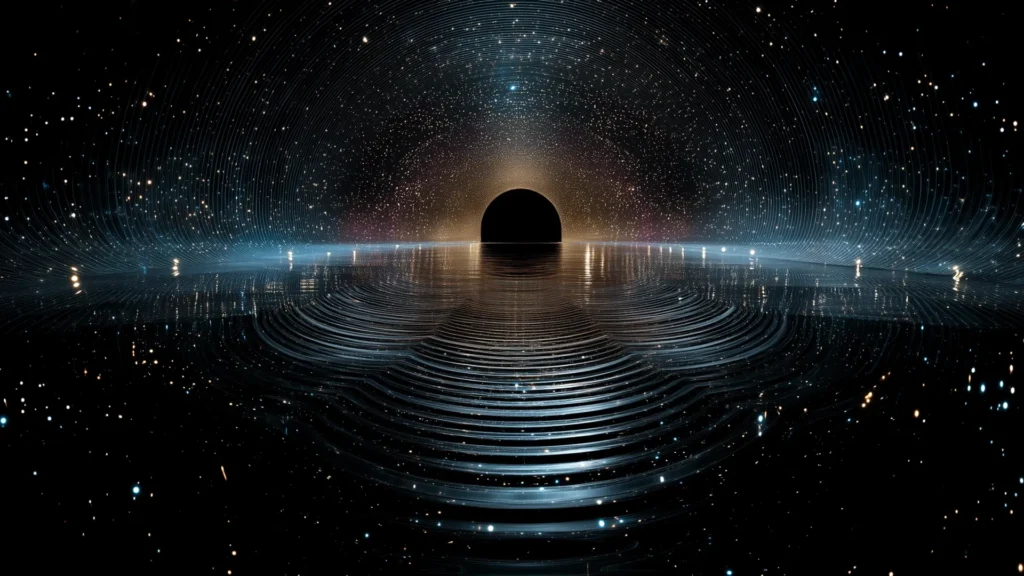
The concept of spacetime fluctuations traces its origins to the visionary physicist John Wheeler, who, in the mid-20th century, proposed the idea of "quantum foam." This imaginative construct suggested that at incredibly small scales – specifically, the Planck length (approximately 10-35 meters) and Planck time (around 10-43 seconds) – spacetime is not smooth but rather a turbulent, frothing sea of quantum activity, constantly fluctuating and bubbling into and out of existence. These microscopic variations are a natural consequence of applying the principles of quantum mechanics, which govern the subatomic world, to spacetime itself, as described by Albert Einstein’s General Theory of Relativity.
The challenge lies in the inherent incompatibility between these two foundational pillars of modern physics. General Relativity elegantly describes gravity as the curvature of spacetime caused by mass and energy, operating flawlessly on cosmic scales. Quantum Mechanics, conversely, describes the behavior of matter and energy at the atomic and subatomic levels with astonishing precision, introducing concepts like quantization, superposition, and entanglement. The grand ambition of theoretical physics for decades has been to develop a "theory of everything" – a unified framework that seamlessly integrates gravity into the quantum realm. Many leading candidates for such a theory, including string theory, loop quantum gravity, and other quantum gravity models, independently predict the existence of these spacetime fluctuations.
However, the diversity of these theoretical models has historically presented a significant hurdle for experimentalists. Each theory often posits different characteristics for these fluctuations – their amplitude, frequency, spatial correlation, and temporal behavior. This lack of a unified predictive framework meant that experimental physicists faced a daunting task: searching for an unknown signal with unknown properties, akin to finding a needle in an astronomical haystack without knowing the needle’s size, shape, or composition. This is precisely the problem that the Warwick-led team, spearheaded by Dr. Sharmila Balamurugan, Assistant Professor at the University of Warwick and first author of the study, has set out to resolve.
From Abstract Theory to Measurable Signals: A Unified Framework
The core innovation of the new research lies in its ability to systematize the search for these elusive fluctuations. Instead of treating each quantum gravity theory’s predictions as isolated cases, the team developed a framework that groups spacetime fluctuations into three primary categories. These categories are defined by how the fluctuations manifest across space and time, offering a more generalized and tractable approach. For each category, the researchers meticulously identified clear, measurable patterns – specific "signatures" – that could be detected using highly sensitive instruments known as laser interferometers.
"Different models of gravity predict very different underlying trends in the random spacetime fluctuations, and that has left experimentalists without a clear target," explained Dr. Balamurugan. "Our work provides the first unified guide that translates these abstract, theoretical predictions into concrete, measurable signals." This crucial step represents a paradigm shift, providing a common language and methodology for experimental verification, regardless of the specific quantum gravity model being considered.
The significance of this unification cannot be overstated. By categorizing fluctuations based on their observable characteristics rather than their theoretical origins, the framework offers a flexible tool. It moves the field beyond the ‘which theory is correct?’ dilemma to a more pragmatic ‘what can we measure?’ approach. This allows physicists to test a broad class of quantum gravity predictions simultaneously, rather than designing bespoke experiments for each individual theory, a process that would be prohibitively slow and expensive.
Laser Interferometers: The Precision Tools for Spacetime Exploration
The chosen instruments for this ambitious task are laser interferometers, devices already at the forefront of fundamental physics research. These instruments operate on the principle of interference, where a laser beam is split, travels along two perpendicular arms, reflects off mirrors, and then recombines. Any minute change in the relative length of the arms, caused by a passing phenomenon such as a gravitational wave or, in this new context, a spacetime fluctuation, alters the interference pattern, which can then be precisely measured.
The most famous examples of such instruments are the kilometer-scale gravitational-wave observatories, LIGO (Laser Interferometer Gravitational-Wave Observatory) in the United States, and its counterparts Virgo in Italy and KAGRA in Japan. These colossal detectors, with arm lengths stretching up to 4 kilometers, were instrumental in the first direct detection of gravitational waves in 2015, a monumental achievement that opened a new window onto the universe. Their extraordinary sensitivity, capable of detecting changes in arm length smaller than one ten-thousandth the diameter of a proton, makes them ideal candidates for probing the infinitesimal distortions of spacetime.
However, the new framework also identifies potential roles for smaller, more specialized experimental setups. These include projects like QUEST (Quantum Experiments for SpaceTime) being developed at Cardiff University in the UK and GQuEST (Gravitational Quantum Experiments for Spacetime) at Caltech in the USA. While these may operate on smaller scales than LIGO, their designs are often optimized for different frequency ranges or specific types of quantum measurements, potentially offering complementary insights into spacetime fluctuations. The framework’s ability to provide tailored predictions for various interferometer types, from large-scale observatories to tabletop experiments, underscores its versatility.
Dr. Sander Vermeulen, a co-author of the study from Caltech, emphasized the capabilities of these instruments: "Interferometers can measure spacetime with extraordinary precision. However, to measure spacetime fluctuations with an interferometer, we need to know where – i.e., at what frequency – to look, and what the signal will look like. With our framework, we can now predict this for a wide range of theories. Our results show that interferometers are powerful and versatile tools in the quest for quantum gravity." This statement highlights the critical role of the Warwick team’s framework in transforming interferometers from general detectors of spacetime phenomena into targeted probes for quantum gravity effects.
Implications and the Path Forward: A Flexible Tool for Fundamental Physics
The implications of this research extend far beyond the immediate goal of detecting spacetime fluctuations. A key strength of the new framework is its inherent flexibility and independence from any single theoretical explanation for the origin of these fluctuations. It only requires a mathematical description of the proposed fluctuations and detailed information about the measurement setup. This adaptability makes it an invaluable tool for a much broader spectrum of fundamental physics investigations.
For instance, the framework can be applied to the study of stochastic gravitational waves – a background hum of gravitational radiation permeating the universe, potentially originating from a multitude of astrophysical events or even from the very early universe. Similarly, it could aid in the search for dark matter signals, as certain theoretical models propose that dark matter particles might interact with or induce subtle fluctuations in spacetime. Moreover, the methodology can be utilized to better characterize and understand various types of experimental noise that often plague high-precision measurements, allowing scientists to distinguish genuine physical signals from instrumental artifacts.
Professor Animesh Datta, Professor of Theoretical Physics at Warwick, underscored this versatility: "With this methodology, we can now treat any proposed model of spacetime fluctuations in a consistent, comparable way. In the coming years, we can use this to design smarter tabletop interferometers to confirm or refute possible theories of quantum or semiclassical gravity and even test new ideas about dark matter and stochastic gravitational waves." This forward-looking statement hints at a future where purpose-built, smaller-scale experiments could play a crucial role, potentially offering more cost-effective and agile ways to probe these fundamental questions.
The ability to use existing interferometric technologies, rather than waiting for entirely new generations of detectors, is a significant practical advantage. It means that the scientific community can begin to test these quantum-gravity predictions in the near future, accelerating the pace of discovery. This rapid transition from theoretical prediction to experimental test is precisely what is needed to advance our understanding of the universe’s most fundamental laws.
Chronology and Context: A Long Journey Towards Unification
The journey to unify quantum mechanics and general relativity has been ongoing for nearly a century. Einstein himself spent his later years fruitlessly searching for a unified field theory. Wheeler’s "quantum foam" concept in the mid-20th century provided a vivid mental image, but without experimental guidance, it remained largely speculative.
The development of laser interferometry, initially driven by the desire to detect gravitational waves, inadvertently created the perfect instruments for this new line of inquiry. LIGO’s conceptualization began in the 1960s, with construction in the 1990s and its first operational phase in the early 2000s. Its success in detecting gravitational waves in 2015 proved the extraordinary sensitivity achievable, validating the technology for even more subtle spacetime phenomena.
This Warwick-led research, published in 2024, represents a crucial methodological breakthrough, providing the "how-to guide" that was previously missing. It bridges the gap between decades of theoretical speculation and the cutting edge of experimental physics. The funding for this pioneering work, provided by the UK STFC "Quantum Technologies for Fundamental Physics" program (Grant Numbers ST/T006404/1, ST/W006308/1, and ST/Y004493/1) and the Leverhulme Trust (research grant ECF-2024-124 and RPG-2019-022), highlights the strategic importance placed on solving these fundamental questions by national and philanthropic bodies. This sustained investment underscores the belief that breakthroughs in quantum gravity could revolutionize our understanding of space, time, and the very origin of the cosmos.
The Broader Impact: A New Era for Experimental Fundamental Physics
The unified framework for detecting spacetime fluctuations marks the dawn of a new era in experimental fundamental physics. It transforms a nebulous theoretical problem into a concrete, testable hypothesis. By providing clear, measurable targets for laser interferometers, it empowers scientists worldwide to embark on a coordinated search for the quantum nature of spacetime.
Should these fluctuations be detected, it would represent one of the most profound discoveries in human history, offering empirical evidence for a quantum theory of gravity and fundamentally altering our perception of reality at its most basic level. Conversely, even the non-detection of these predicted signals within the framework’s parameters would provide invaluable data, helping to constrain and refine existing quantum gravity theories, guiding theorists towards more accurate models.
This research exemplifies the iterative and collaborative nature of scientific progress, where theoretical insights drive experimental innovation, and experimental results, in turn, inform and refine theoretical understanding. The University of Warwick, in collaboration with institutions like Cardiff University and Caltech, has positioned itself at the forefront of this monumental scientific endeavor, paving the way for potential revelations that could redefine our place in the universe. The pursuit of quantum gravity is not merely an academic exercise; it is a quest to understand the ultimate nature of reality, and this new framework brings us significantly closer to that elusive goal.