The global pursuit of a decarbonized future has placed immense focus on hydrogen, often hailed as "the fuel of the future." Its potential to revolutionize energy production and industrial processes is undeniable, offering a clean alternative that produces only water when burned or fed into a fuel cell. Furthermore, hydrogen can serve as a crucial replacement for fossil fuels in challenging sectors like steel and cement manufacturing, where emissions reduction has proven particularly difficult. However, unlocking this vast potential hinges on overcoming two significant hurdles: developing cost-effective, low-carbon production methods and establishing efficient, scalable means of transporting and storing this versatile energy carrier.
While considerable research is being dedicated to the first challenge, the equally critical issue of hydrogen logistics has received less public attention. A collaborative effort between researchers at the MIT Energy Initiative (MITEI) and their counterparts at ExxonMobil Technology and Engineering Co. has now shed crucial light on this complex domain. Their work, funded by ExxonMobil and detailed in a recent publication in the journal Fuel, introduces a novel adaptive tool designed to help stakeholders navigate the multifaceted decisions involved in transporting hydrogen across vast distances.
The Hydrogen Paradox: Light, Volatile, and Energy-Dense
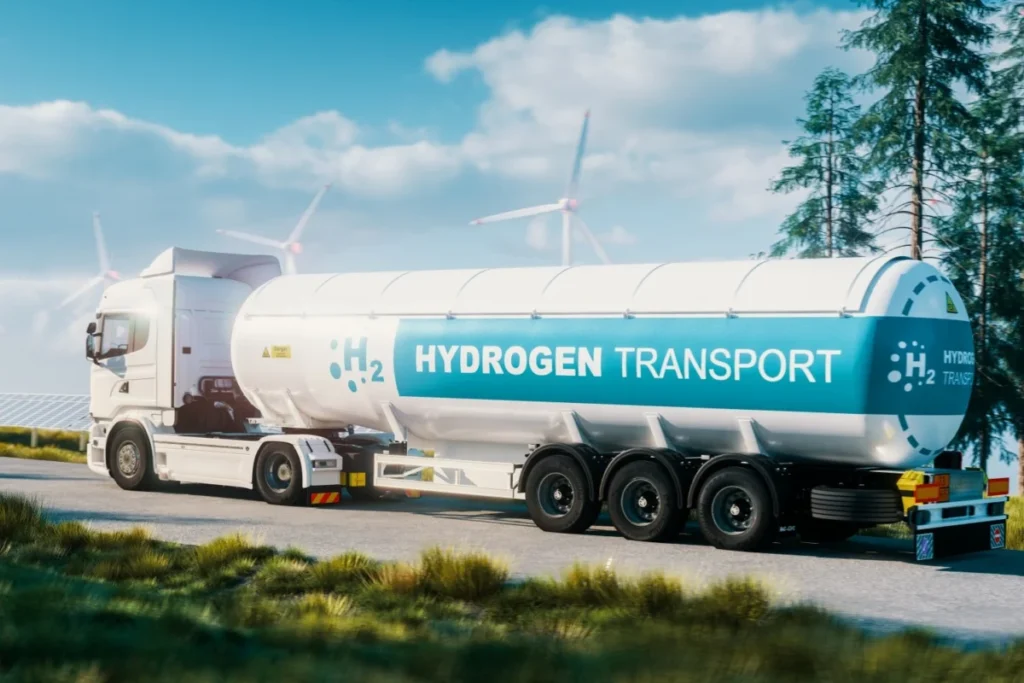
Hydrogen’s unique properties, while central to its clean energy appeal, also present significant logistical challenges. As the lightest gas known, it requires exceptionally secure containment to prevent leakage. Moreover, its low energy density per unit volume means that transporting a substantial amount of energy necessitates a large volume of hydrogen, demanding robust and leak-proof infrastructure. This contrasts sharply with the relative ease of transporting liquid fuels like gasoline. Without effective solutions for its storage and transport, hydrogen’s promise as a cornerstone of a sustainable global energy system remains aspirational.
The realization of a global hydrogen economy necessitates moving this fuel from production sites, often located in regions with abundant renewable energy resources, to demand centers scattered across continents and oceans. This geographical disparity underscores the critical need for efficient long-haul transportation solutions.
A Collaborative Endeavor: The Genesis of HyCAT
In 2024, a joint research initiative was launched under the umbrella of the MIT Energy Initiative, with financial backing from ExxonMobil Technology and Engineering Co. The team, comprising MITEI researchers and ExxonMobil engineers, embarked on a comprehensive examination of various hydrogen transportation strategies. Their core objective was to move beyond generalized conclusions and develop a framework that acknowledges the localized nature of transportation costs and carbon footprints.
The researchers recognized that a one-size-fits-all approach would be insufficient. Instead, they opted to create a sophisticated, yet user-friendly, analytical tool. This tool, named the Hydrogen Carrier Analysis Tool (HyCAT), empowers users to evaluate diverse transportation options based on their specific circumstances, enabling informed decision-making tailored to individual use cases.
"There hasn’t been a lot of attention paid to addressing those questions," stated Gasim Ibrahim, a former MITEI postdoctoral associate and lead author of the study, now an R&D engineer/scientist at Honeywell. He elaborated on the limitations of existing research, noting inconsistencies and a lack of comprehensive data regarding large-scale hydrogen transport. "So we decided the best thing to do was to develop an adaptive tool that would enable users to perform their own assessments – a tool that could be updated very easily," Ibrahim added. "And we would make it open source, so anyone can see and update the numbers that we used in formulating and testing it. As the industry develops, and as scale becomes more a factor, the assumptions made in [our initial] assessments of the economics and the carbon intensity [of different shipping methods] will need to be updated."
The study’s co-authors include Guiyan Zang, another former MITEI postdoctoral associate and group lead, now an associate professor at Washington State University, along with former MIT postdocs Bosong Lin, Jacqueline Garrido, Woojae Shin, and Haoxiang Lai.
Deconstructing the Supply Chain: HyCAT’s Focus
HyCAT is meticulously designed to isolate and analyze the transportation and storage phases of the hydrogen supply chain. It deliberately excludes the upstream production of hydrogen and its downstream utilization, concentrating solely on the costs and greenhouse gas (GHG) emissions incurred from the point of hydrogen delivery to the transportation infrastructure to its final release at the destination. This focused approach allows for a granular understanding of the logistical challenges.
The tool’s architecture is built for accessibility. A user-friendly interface incorporates drop-down menus for inputting various assumptions, and the analytical results are presented through clear bar charts. For those seeking deeper insights, these charts link to detailed tables outlining the underlying data and calculations.
"HyCAT has a well-defined boundary – ‘incoming hydrogen to outgoing hydrogen’," explained Ibrahim. "In an analysis of a specific situation, the user will input various factors about the local situation, including the carbon intensity and cost associated with production of the incoming hydrogen. So that will inform the final values that come out of a HyCAT analysis, and in part explains why the results vary from place to place."
Based on user-defined parameters, HyCAT quantifies costs and GHG emissions across five key stages of the hydrogen supply chain:
- Hydrogen Carrier Production/Liquefaction: The initial conversion of gaseous hydrogen into a transportable form.
- Storage at Export Terminal: On-site storage before loading onto transport.
- Marine Shipping/Pipeline Transport: The primary mode of long-distance transit.
- Unloading and Storage at Import Terminal: Offloading and temporary storage at the destination.
- Hydrogen Recovery/Regasification: The process of returning the hydrogen to its usable gaseous state.
Navigating the Liquid Landscape: Hydrogen "Carriers" and Direct Liquefaction
The central decision in any hydrogen transportation strategy revolves around how to convert gaseous hydrogen into a readily shippable liquid state and then efficiently recover it at the destination. Two primary pathways emerge: direct liquefaction and the use of hydrogen "carriers."
Direct Liquefaction: The Cold Reality
The most straightforward approach involves cooling gaseous hydrogen to extremely low temperatures, transforming it into a liquid. However, this process is energy-intensive. Ibrahim noted, "you would need to consume about a third of the energy content of the hydrogen to make the gaseous hydrogen cold enough to liquify." Furthermore, maintaining the liquefied state during storage and transit requires exceptionally well-insulated vessels to prevent re-gasification and subsequent loss of hydrogen. The primary advantage of direct liquefaction lies in its chemical simplicity, avoiding complex reactions.
Hydrogen "Carriers": Chemical Ingenuity
An alternative strategy involves utilizing chemical compounds that can reversibly absorb and release hydrogen atoms. These "carriers" act as intermediaries, binding hydrogen at the production site and releasing it upon arrival at the destination. This approach necessitates two chemical reactions: one for hydrogen absorption and another for its release.
The MITEI and ExxonMobil study explored three potential hydrogen carriers, each with distinct advantages and disadvantages:
- Toluene-Based Carriers: This method involves adding hydrogen to toluene, a process that has been less extensively studied. A significant drawback is toluene’s typical derivation from the oil and gas industry, resulting in a relatively high carbon intensity for the carrier itself. Additionally, some toluene is inevitably lost over time, requiring periodic replenishment.
- Synthetic Methane: Produced by reacting hydrogen with carbon dioxide, synthetic methane offers the unique benefit of consuming CO2, which can be captured from the atmosphere. This process, known for some time, offers a carbon-negative potential. However, a byproduct of the reaction is water, leading to a loss of hydrogen with each reaction cycle.
- Ammonia: Formed by reacting hydrogen with nitrogen from the air, ammonia production is a well-established commercial process with existing infrastructure for transport and storage. Ibrahim described ammonia as "the most promising option," citing its mature industrial footprint. However, the efficiency and energy requirements of the reaction needed to release hydrogen from ammonia have not been as thoroughly investigated as other aspects of the ammonia lifecycle.
Divergent Pathways: The Context-Dependent Nature of Optimal Solutions
The researchers’ initial simulations using HyCAT revealed a crucial insight: there is no universal "best" method for hydrogen transportation. The optimal strategy is highly dependent on a multitude of site-specific factors.
"As we developed the tool, we saw that the ‘best’ carrier was very specific to the supply chain at hand," Ibrahim emphasized. "It’s a function of how far you’re trying to ship your hydrogen, energy and shipping costs at your exporting and importing countries, the capital cost of building the needed facilities at both ends, and more."
This variability stems from differences in:
- Local Energy Costs: The price of electricity or other energy sources directly impacts the cost of liquefaction or carrier synthesis and recovery.
- Capital Investment: The expense of constructing liquefaction plants, storage facilities, and specialized transport vessels varies significantly by region.
- Infrastructure Availability: Existing port facilities, pipelines, and shipping networks can influence the feasibility and cost of different transportation modes.
- Environmental Regulations and Carbon Pricing: Stringent regulations or carbon taxes can make lower-emission pathways more economically attractive.
- Geographical Proximity: The distance between production and consumption centers plays a pivotal role in determining the most efficient mode of transport.
Future Directions: Refining the Analysis and Informing Policy
The MITEI and ExxonMobil team plans to leverage HyCAT for more in-depth analyses of specific hydrogen supply chains under various hypothetical scenarios. This follow-up study will focus on identifying and quantifying uncertainties in key parameters, such as the efficiency of chemical reactions or the future cost of renewable energy.
"Then we’ll be able to say, ‘under these conditions, this carrier is better than that one,’ or ‘this carrier is better at cost, but worse at carbon intensity’," Ibrahim explained, highlighting the tool’s capacity for nuanced comparisons.
The overarching message from the study is a call for a nuanced approach to hydrogen transportation strategy. "There’s no conclusion," Ibrahim stated, cautioning decision-makers against overgeneralizing findings from existing literature. He urged stakeholders to utilize HyCAT to conduct their own rigorous assessments, guided by their specific objectives and values, to optimize their supply chains and accelerate the transition to a hydrogen-powered future.
The implications of this research are far-reaching. By providing a transparent and adaptable framework for evaluating hydrogen transportation options, HyCAT can empower governments, energy companies, and investors to make more informed decisions. This, in turn, can help de-risk investments in hydrogen infrastructure, foster innovation in logistics technologies, and ultimately pave the way for hydrogen to fulfill its promise as a cornerstone of a sustainable global economy. The successful deployment of clean hydrogen hinges not only on its production but critically on its efficient and cost-effective journey from source to end-user, a journey that HyCAT aims to illuminate.