In a significant leap for the field of quantum computing and secure communications, researchers at the Harvard John A. Paulson School of Engineering and Applied Sciences (SEAS) have unveiled a groundbreaking method to safeguard delicate quantum information using mechanical vibrations. By employing microscopic sound waves, known as phonons, the team has demonstrated a technique to protect quantum bits, or qubits, from environmental interference, potentially paving the way for the development of compact, chip-integrated quantum networks and hybrid quantum systems.
The research, conducted in the laboratory of Marko Lončar, the Tiantsai Lin Professor of Electrical Engineering at SEAS, addresses one of the most persistent hurdles in quantum science: the fragility of quantum states. As the global race to build a functional quantum internet intensifies, the ability to store and transmit information without loss of "coherence"—the state in which quantum information remains intact—is paramount. The Harvard team’s findings, recently published in the journal Nature Physics, suggest that sound, rather than light or magnetism, may hold the key to stabilizing the next generation of quantum hardware.
The Evolution of Quantum Networking and the Role of Phonons
To understand the magnitude of this advancement, one must first look at the current landscape of quantum networking. Traditional quantum systems often rely on photons—particles of light—to carry information over long distances. While photons are excellent for high-speed transmission, they present challenges when it comes to miniaturization. At the frequencies required for quantum processing, light has a relatively long wavelength, which limits how small the components on a quantum chip can be.
In contrast, phonons—packets of mechanical vibrational energy—travel much more slowly than light and have significantly shorter wavelengths at the same frequency. This physical property allows researchers to design much smaller components, enabling a higher density of quantum features on a single semiconductor chip. Furthermore, phonons interact naturally with both solid-state spins and electromagnetic fields, making them a versatile "bridge" for hybrid systems that might combine different types of quantum technologies, such as superconducting qubits and spin-based qubits.
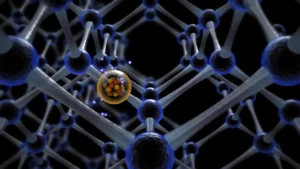
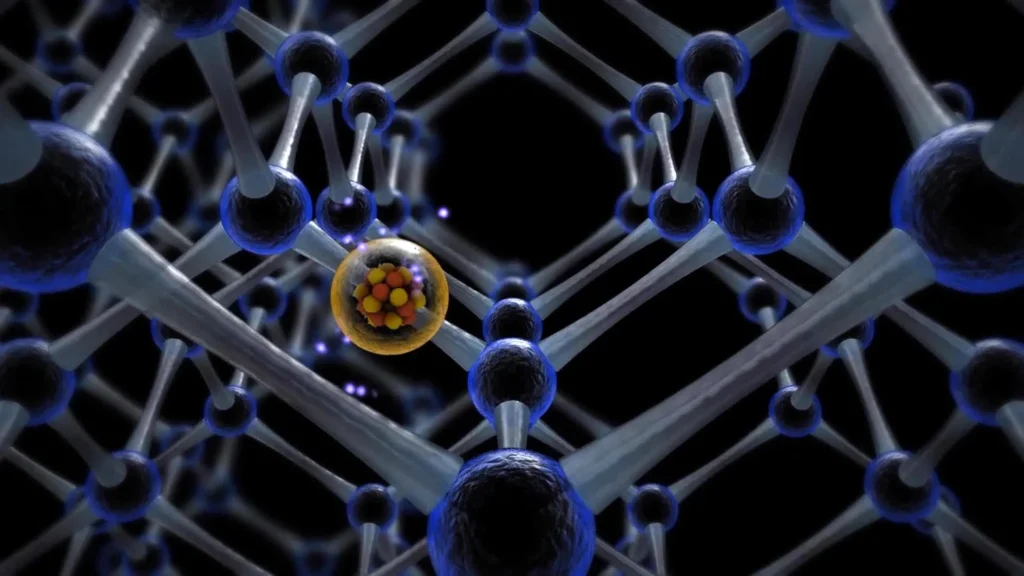
The Lončar lab has been at the forefront of this "phononic" revolution. For years, the group has explored the use of diamond-based qubits, specifically those utilizing the "spin" of an electron associated with impurities in the diamond’s crystal lattice. To enhance the interaction between these spins and mechanical vibrations, the lab developed "phononic cavities"—tiny structures that trap sound waves in a confined space, forcing them to interact more intensely with the electron spin.
The Challenge of Maintaining Quantum Coherence
Despite the promise of phonons, a major technical conflict emerged: the very environment required to make phonons interact strongly with qubits often compromised the qubit’s memory. In quantum mechanics, coherence refers to the lifespan of a quantum state. Because qubits are incredibly sensitive to their surroundings—reacting to fluctuations in temperature, magnetic fields, or even the presence of nearby atoms—they quickly lose their information in a process called decoherence.
Historically, scientists have used "dynamical decoupling" to extend coherence. This involves hitting the qubit with rapid pulses of microwave radiation to "flip" the spin and cancel out environmental noise, much like noise-canceling headphones use anti-phase sound to silence a room. However, these microwave techniques are difficult to integrate into the specialized phononic cavities needed for sound-based quantum networking. The metallic components required for microwave delivery can interfere with the mechanical properties of the cavity, leading to a trade-off where researchers could have either strong phonon interaction or long-lasting memory, but rarely both.
All-Mechanical Coherence Protection: The "Dressed" Qubit
The breakthrough at SEAS, led by recent Ph.D. graduate Eliza Cornell and former postdoctoral scholar Zhujing Xu, involves a paradigm shift in how qubits are protected. Instead of relying on external microwave pulses, the team utilized a continuous mechanical driving field—essentially a constant stream of phonons—to shield the qubit.
By applying this continuous vibrational field to a silicon-vacancy (SiV) center in a diamond, the researchers transformed the qubit into what is known as a "dressed" state. In quantum physics, a dressed state occurs when a quantum system is so intimately coupled with an external oscillating field that they effectively behave as a single, new entity.
"The term ‘dressed’ refers to the qubit effectively ‘wearing’ a continuous acoustic field," the researchers explained. This "suit of armor" made of sound waves makes the qubit significantly less vulnerable to the low-frequency noise that typically causes decoherence. Because this protection is mechanical in nature, it is perfectly compatible with the phononic cavities used to house the qubits, eliminating the need for bulky or intrusive microwave hardware.
This "all-mechanical" approach solves the long-standing bottleneck. It allows the silicon-vacancy spin to maintain a high degree of sensitivity to the phonons it uses for communication while simultaneously shielding it from the "junk" noise of the outside world.
Experimental Results and Quantitative Improvements
The experimental setup was conducted at the Harvard Center for Nanoscale Systems, utilizing state-of-the-art nanofabrication techniques to create the diamond-based phononic structures. The team focused on the silicon-vacancy center, a specific type of point defect in the diamond lattice where a silicon atom replaces two carbon atoms. SiV centers are highly prized in quantum research because they can be controlled with high precision and emit light in a narrow frequency range, making them ideal for networking.
The results of the study were clear and measurable. By implementing the continuous-wave mechanical noise suppression, the researchers were able to extend the coherence time of the silicon-vacancy spin by approximately a factor of three.
While a threefold increase may seem modest in the context of classical computing, in the quantum realm, it represents a massive leap in the feasibility of multi-step operations. Extending the life of a qubit from microseconds to even longer durations allows for more complex calculations and more reliable data transfer between nodes in a network. The experiment proved that microscopic sound waves are not just a medium for transport, but a robust tool for stability.
Chronology of the Research and Collaborative Effort
The journey toward all-mechanical coherence protection has been a multi-year effort within the Lončar lab. The group’s earlier work focused on the fundamental physics of how diamond impurities interact with strain and vibration. By 2020, the lab had already demonstrated the ability to control SiV centers using strain, but the issue of decoherence remained a primary obstacle for practical application.
The latest study, "All-mechanical coherence protection and fast control of a spin qubit," was a collaborative effort involving several institutions and funding bodies. Co-authors included Zhaoyou Wang, Hana K. Warner, Eliana Mann, Michael Haas, Smarak Maity, Graham Joe, Liang Jiang, Peter Rabl, and Benjamin Pingault.
The research was supported by a diverse array of federal agencies, highlighting its importance to national security and technological leadership. Funding sources included the National Science Foundation (NSF), the Air Force Office of Scientific Research (AFOSR), and Q-NEXT, one of the U.S. Department of Energy’s National Quantum Information Science Research Centers. This multi-agency support underscores the strategic value of developing quantum systems that are compact, energy-efficient, and resistant to environmental noise.
Broader Implications for the Quantum Industry
The implications of Harvard’s "dressed" qubits extend far beyond the laboratory. As the industry moves toward commercializing quantum computers, the pressure to miniaturize components is growing. Current quantum computers often require massive dilution refrigerators and complex wiring to manage qubits. A system that can be built directly onto a chip using phononic architecture would be a game-changer for the scalability of the technology.
Moreover, the versatility of phonons makes this research a cornerstone for "hybrid" quantum computing. In a hybrid system, different qubits are used for different tasks—for example, one type of qubit might be used for rapid processing while another is used for long-term storage. Because phonons can interact with a wide variety of quantum systems, they could serve as the universal "bus" or "translator" that allows these disparate parts to communicate.
Eliza Cornell, now a postdoctoral researcher at Boston University, emphasized the dual-purpose nature of their discovery. "We are solving two problems," Cornell stated. "We want the spin to have strong interaction with phonons, and we want the spin to have a long coherence time. Our paper demonstrates a method of extending the coherence time that is compatible with the silicon-vacancy center being in a cavity."
Future Outlook and Commercial Potential
The Harvard Office of Technology Development (OTD) is currently moving to protect the intellectual property generated by this research. They are actively pursuing patent protection and seeking commercialization opportunities, which could lead to partnerships with semiconductor companies or quantum startups looking to integrate phononic components into their hardware stacks.
As the research moves forward, the team expects to further refine the mechanical driving fields to see if coherence can be extended even further—perhaps by factors of ten or more. They also aim to test the system in more complex environments, moving from single-qubit protection to protecting multiple interconnected qubits within a larger network.
By turning sound into a shield, the Harvard SEAS team has provided a new blueprint for quantum architecture. In the silent, microscopic world of quantum bits, it appears that the right kind of noise—controlled, mechanical, and precise—is exactly what is needed to keep the information flowing. This discovery marks a pivotal moment where the ancient science of acoustics meets the futuristic frontier of quantum mechanics, promising a more stable and compact future for the quantum age.