In a breakthrough that challenges decades of battery manufacturing conventions, scientists at the University of Surrey have demonstrated that sodium-ion batteries—long considered a secondary alternative to lithium-ion technology—can achieve significantly higher performance by embracing an unlikely ingredient: water. The research, recently published in the Journal of Materials Chemistry A, reveals that a specific sodium-based material not only stores more energy when its natural water content is preserved but also possesses the unique ability to remove salt from seawater. This dual-functionality could pave the way for a new generation of sustainable technologies capable of simultaneously stabilizing the electrical grid and addressing the growing global water crisis.
For years, the gold standard in battery production has involved the rigorous removal of moisture. In the context of lithium-ion batteries, even trace amounts of water are typically viewed as a contaminant that can lead to catastrophic failure, reduced lifespan, or hazardous chemical reactions. However, the team at the University of Surrey found that for sodium vanadium oxide (SVO), a promising cathode material, the presence of water molecules within its crystal structure acts as a performance enhancer rather than a hindrance. This discovery could simplify manufacturing processes while delivering a cheaper, more abundant alternative to the lithium-based systems that currently dominate the market.
The Global Context: Moving Beyond the Lithium Monopoly
The urgency of this research is rooted in the limitations of the current energy storage landscape. Lithium-ion batteries are the backbone of modern portable electronics and the electric vehicle (EV) revolution. However, the rapid scaling of these technologies has exposed significant vulnerabilities. Lithium is relatively scarce, and its extraction is geographically concentrated in a few regions, such as the "Lithium Triangle" in South America. The mining process is notoriously water-intensive and has been linked to significant environmental degradation and social conflicts. Furthermore, other essential components like cobalt often carry high ethical and financial costs.
Sodium, by contrast, is the sixth most abundant element in the Earth’s crust. It is found in massive quantities in seawater and salt deposits worldwide, making it virtually inexhaustible and far more affordable than lithium. While sodium-ion batteries function on a similar principle to their lithium counterparts—shuttling ions between an anode and a cathode—they have historically lagged in energy density. Sodium ions are larger and heavier than lithium ions, which makes it more difficult for them to move quickly through battery materials without causing structural strain. The Surrey team’s work addresses this fundamental hurdle by reimagining the chemistry of the cathode.
The Science of Hydrated Sodium Vanadate
The focus of the study was a specific form of the material known as nanostructured sodium vanadate hydrate (NVOH). By definition, a "hydrate" contains water molecules chemically bonded within its framework. Traditionally, researchers would subject such materials to high-heat treatments to "calcine" or dry them, believing that a dry material would provide a more stable environment for ion exchange.
Led by Dr. Daniel Commandeur, a Research Fellow at the University of Surrey’s School of Chemistry and Chemical Engineering, the team decided to test the material in its hydrated state. They utilized "nanostructuring," a process where the material is engineered at the scale of billionths of a meter. This high-surface-area architecture allows ions to move in and out of the material with less resistance.
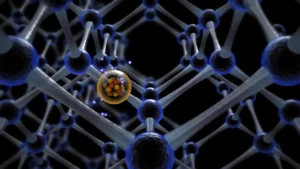
The results were transformative. When the water molecules remained in place, they appeared to act as "structural pillars," stabilizing the layers of the material and widening the pathways through which sodium ions travel. This allowed the NVOH to store nearly twice as much charge as standard sodium-ion cathode materials. Furthermore, the hydrated material demonstrated remarkable kinetic properties, allowing for much faster charging speeds—a critical requirement for the next generation of EVs and grid-scale storage.
Comparative Data and Performance Metrics
The laboratory testing phase yielded data that suggests sodium-ion technology may be closer to commercial parity with lithium than previously thought. The researchers subjected the NVOH cathode to over 400 charge-discharge cycles. In the battery industry, a cycle represents the process of fully charging and then fully depleting the battery. Many experimental sodium-ion materials degrade rapidly after 50 to 100 cycles; however, the hydrated NVOH maintained its structural integrity and performance throughout the testing period.
Key data points from the study include:
- Capacity: The hydrated NVOH held nearly double the charge of typical anhydrous (dry) sodium-ion materials.
- Longevity: It maintained high efficiency over 400 cycles, indicating a level of stability suitable for commercial applications.
- Rate Capability: The material showed an ability to discharge energy rapidly without a significant drop in capacity, making it viable for high-demand power applications.
These metrics place NVOH among the top-performing cathode materials currently reported in scientific literature for sodium-ion systems. By eliminating the energy-intensive heating step required to dry the material, manufacturers could also reduce the carbon footprint and cost of battery production.
From Energy Storage to Electrochemical Desalination
Perhaps the most surprising aspect of the research was the material’s performance in salt water. Typically, salt water is a hostile environment for battery components; the presence of various dissolved minerals and the corrosive nature of salt can lead to rapid degradation. However, the Surrey team found that NVOH remained stable even when immersed in a saline solution.
This stability opened the door to a secondary application: electrochemical desalination. In a standard desalination plant, fresh water is produced through reverse osmosis, which requires forcing seawater through membranes at high pressure, or through thermal distillation, which requires boiling water. Both methods are extremely energy-intensive.
The Surrey system operates differently. When the NVOH cathode is placed in salt water and an electric current is applied, the material acts as a chemical sponge. It pulls sodium ions directly out of the water and stores them. Simultaneously, a graphite electrode removes chloride ions. Because common salt is composed of sodium and chloride, this process effectively "de-salts" the water.
"Being able to use sodium vanadate hydrate in salt water is a really exciting discovery," Dr. Commandeur stated. "It shows sodium-ion batteries could do more than just store energy—they could also help remove salt from water. In the long term, that means we might be able to design systems that use seawater as a completely safe, free and abundant electrolyte, while also producing fresh water as part of the process."
Broader Implications for Sustainable Development
The potential for a "dual-purpose" device—one that stores renewable energy from wind or solar power while simultaneously purifying water—has profound implications for global sustainability. Coastal regions, particularly in developing nations, often face the "water-energy nexus" challenge: they have an abundance of seawater but lack the energy infrastructure to purify it or the storage capacity to manage intermittent renewable energy.
A combined battery-desalination system could serve as a decentralized utility. During the day, excess solar energy could be stored in the sodium-ion battery. During this charging process, the system could pull salt from seawater. At night, the stored energy could be released back into the local grid to power homes, while the fresh water produced during the day provides a clean drinking supply.
Furthermore, the safety profile of sodium-ion batteries is generally superior to that of lithium-ion batteries. Sodium-ion systems are less prone to "thermal runaway"—the process that leads to battery fires—and can be transported at zero volts, significantly reducing the risks associated with shipping and handling.
Challenges and the Path to Commercialization
Despite the promising results, the researchers caution that the technology is still in the laboratory stage. Scaling up from a "coin cell" or small laboratory prototype to a full-scale industrial battery pack involves significant engineering hurdles.
One challenge is the development of a compatible anode to match the high performance of the NVOH cathode. Additionally, while the electrochemical desalination process works in a controlled environment, real-world seawater contains biological matter and a variety of trace minerals that could foul the electrodes over time. Further research will be required to develop coatings or filtration systems that protect the nanostructured materials from these contaminants.
The University of Surrey team is now looking toward long-term stability testing and exploring how different nanostructures might further enhance the "pillar" effect of the water molecules. They are also investigating the economic feasibility of integrated energy-water systems to determine how they might compete with existing separate technologies.
Conclusion: A New Paradigm in Material Science
The discovery at the University of Surrey represents a paradigm shift in how scientists view moisture in energy storage. By challenging the long-standing assumption that water is a "poison" to battery chemistry, the researchers have unlocked a pathway to higher performance and new functionalities.
As the world transitions away from fossil fuels, the demand for affordable, ethical, and high-capacity energy storage will only increase. Sodium-ion technology, bolstered by the structural benefits of hydration and the added value of water purification, stands as a formidable contender to lithium’s dominance. This research brings the vision of a circular, sustainable energy economy—one where the ocean provides both the power and the water for a growing population—one step closer to reality.