The landscape of advanced thermal management is undergoing a significant transformation, driven by innovations in additive manufacturing (AM). Farsoon Technologies, a prominent player in the metal AM sector, has recently highlighted its capabilities through the production of sophisticated 3D printed components designed for the demanding requirements of the liquid cooling industry. The showcased items, a heat dissipation cold plate and a finned heat sink, exemplify the precision and performance achievable with Farsoon’s Fine Laser Spot metal additive manufacturing technology.
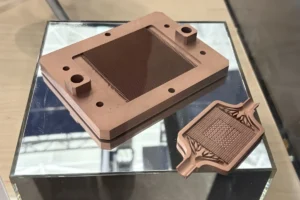
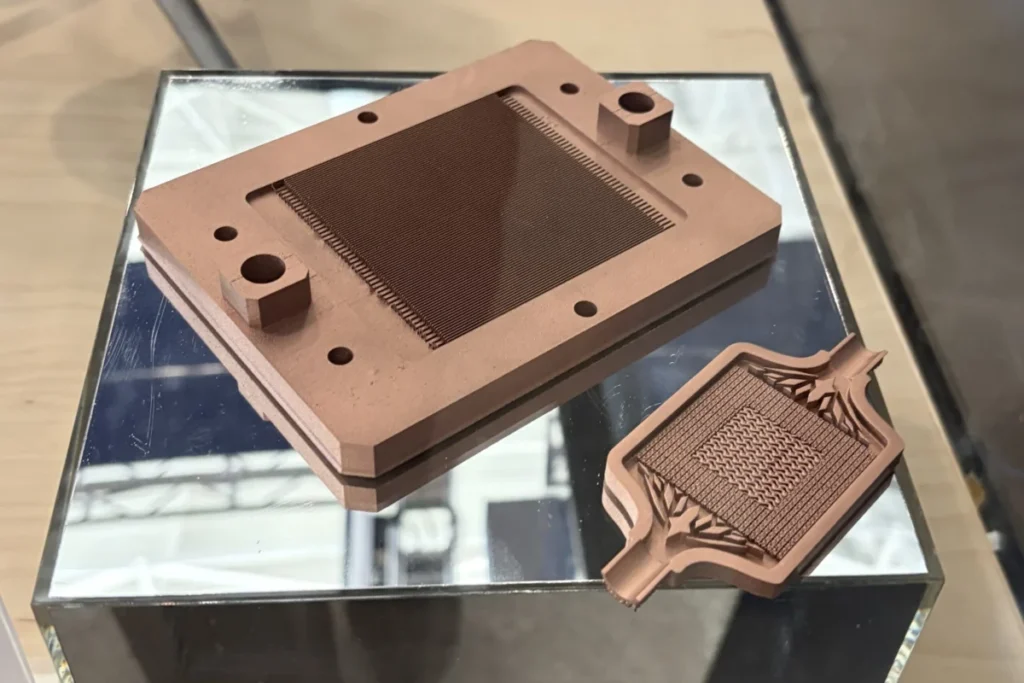
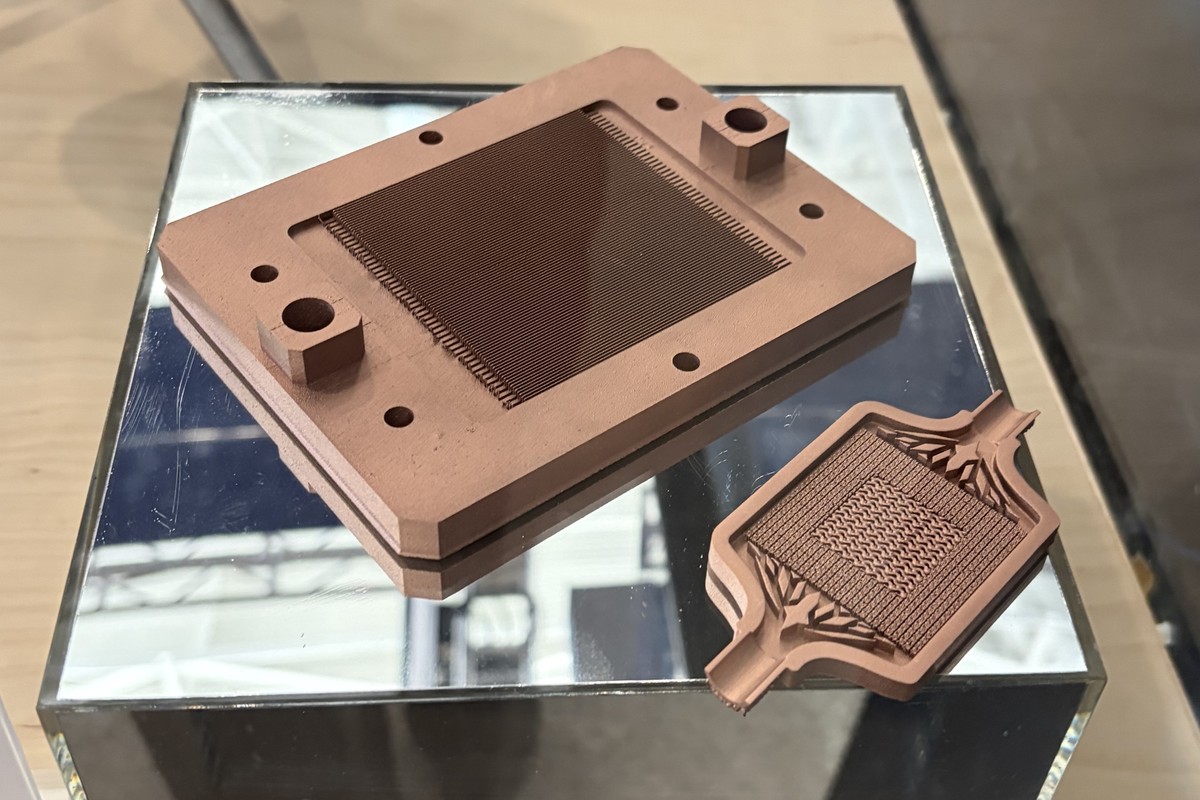
These components, detailed in a recent feature from Additive Manufacturing Media, underscore the growing adoption of AM for creating highly engineered parts that offer superior thermal performance compared to traditionally manufactured alternatives. The cold plate, printed from a CuCrZr alloy, integrates complex internal geometries to maximize heat exchange efficiency, while the finned heat sink, produced from a copper alloy, is engineered for rapid and consistent heat dispersion.
The Evolution of Thermal Management and the Role of Additive Manufacturing
Thermal management is a critical challenge across a vast array of industries, including electronics, automotive, aerospace, and renewable energy. As devices and systems become more powerful and compact, the need for efficient and reliable methods to dissipate heat intensifies. Overheating can lead to reduced performance, component degradation, and ultimately, system failure. Traditional manufacturing methods, such as machining and casting, have limitations when it comes to creating intricate internal structures that are essential for optimizing heat transfer. This is where additive manufacturing, particularly metal 3D printing, has emerged as a disruptive force.
Metal AM technologies, such as Laser Powder Bed Fusion (LPBF), allow for the creation of complex, lightweight, and highly functional parts that were previously impossible to produce. These technologies enable designers to incorporate advanced geometries, such as lattice structures, conformal cooling channels, and optimized fin designs, directly into the component during the printing process. This level of design freedom translates into significant improvements in thermal performance, reduced part count, and enhanced overall system efficiency.
Farsoon Technologies: Pioneering Fine Laser Spot Technology
Farsoon Technologies has been at the forefront of developing advanced AM solutions, with its Fine Laser Spot technology being a key differentiator. This technology is specifically engineered for applications that demand microscopic precision and high-resolution details, making it ideal for intricate thermal management components and microfluidic devices. The Fine Laser Spot system utilizes laser powder bed fusion (LPBF) to build parts layer by layer from fine metal powders. Its precision allows for the creation of near-net-shape components with minimal post-processing requirements, reducing lead times and manufacturing costs.
The Fine Laser Spot technology’s ability to produce parts with very fine features, such as thin walls and complex internal channels, is crucial for maximizing the surface area available for heat exchange and for controlling fluid flow with exceptional accuracy. This capability directly addresses the challenges faced in developing high-performance cooling solutions for increasingly sophisticated applications.
Detailed Analysis of the Showcased Components
The 3D Printed Heat Dissipation Cold Plate
The heat dissipation cold plate, fabricated from the CuCrZr alloy, represents a significant advancement in integrated cooling design. CuCrZr is a copper-chromium-zirconium alloy known for its excellent thermal conductivity, high strength, and good creep resistance at elevated temperatures, making it a suitable material for demanding thermal applications.
The decision to 3D print this component as a single, monolithic piece offers several advantages. Traditional manufacturing often requires assembling multiple parts to create cooling channels, which introduces potential leak paths and assembly complexities. By printing the cold plate as one piece, Farsoon eliminates these risks, ensuring a robust and leak-free design.
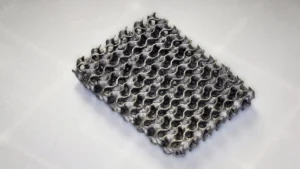
A key innovation in this cold plate is the strategic integration of triply periodic minimal surface (TPMS) structures alongside traditional cooling channel designs. TPMS structures are mathematically generated surfaces that divide space into two interconnected regions, creating highly efficient, tortuous paths. When applied to heat exchangers, TPMS can significantly increase the internal surface area available for heat transfer, thereby enhancing cooling efficiency. The combination of TPMS with conventional cooling channels allows for a synergistic effect, optimizing both structural integrity and thermal performance.
The internal geometry, enabled by the Fine Laser Spot technology, is designed to improve fluid dynamics, ensuring that coolant flows effectively over the heat-generating surfaces, maximizing heat absorption. Furthermore, the structural integrity is enhanced by the complex internal design, which can distribute stress more evenly.
Technical Specifications of the Heat Dissipation Cold Plate:
- Material: CuCrZr alloy
- 3D Printing Solution: Farsoon Fine Laser Spot Metal AM Technology
- Layer Thickness: 10 microns. This extremely fine layer thickness is crucial for achieving the high resolution required for intricate TPMS structures and smooth internal surfaces, which are vital for efficient fluid flow and heat transfer.
- Printing Accuracy: ±0.03 mm. This level of accuracy ensures that the printed features conform precisely to the design specifications, critical for the performance of micro-scale internal geometries.
- Minimal Wall Thickness of TPMS: 0.2 mm. The ability to print such thin walls in TPMS structures maximizes the surface area to volume ratio, leading to superior heat dissipation.
- Minimum Diameter of Cylindrical Structure: 0.1 mm. This capability allows for the creation of very fine channels and features, further enhancing the complexity and efficiency of the internal cooling network.
The 3D Printed Finned Heat Sink
The finned heat sink, printed from a copper alloy using Farsoon’s FS273M metal LPBF system, is another testament to advanced thermal management solutions. Copper alloys are highly valued for their exceptional thermal conductivity, making them ideal for dissipating heat effectively.
The FS273M system is a robust metal LPBF platform designed for industrial applications, capable of producing larger and more complex parts. The printing process employed for this heat sink is LPBF, which builds the component layer by layer by selectively fusing metal powder with a laser.
The design of this finned heat sink focuses on maximizing the surface area exposed to the surrounding air or coolant, facilitating rapid heat dissipation. The base of the heat sink absorbs heat from the source, and the fins then spread this heat over a larger area, promoting convective heat transfer. The expanded surface area provided by the fins allows for more efficient cooling, even in demanding environments where heat generation is high. The intricate fin geometries, precisely manufactured through AM, can be optimized for airflow patterns, further enhancing cooling performance.
Technical Specifications of the Finned Heat Sink:
- Material: Copper alloy. Copper’s high thermal conductivity (approximately 400 W/m·K) makes it an excellent choice for heat sinks.
- System: Farsoon FS273M. This system is designed for industrial-scale metal additive manufacturing, capable of handling various metal powders and producing parts with high accuracy and density.
- Process: Laser Powder Bed Fusion (LPBF). This additive manufacturing technique is well-suited for creating complex, high-density metal parts.
- Average Density: 8.87 g/cm³. This density is characteristic of pure copper, indicating a high-quality print with minimal porosity.
- Part Density: > 99.5%. A density exceeding 99.5% signifies that the printed component is nearly fully dense, which is crucial for optimal thermal conductivity and structural integrity. High density minimizes thermal resistance within the material itself.
- Minimum Fin Thickness: 0.25 mm. The ability to produce thin, precisely shaped fins maximizes the surface area for heat dissipation without adding excessive weight or volume to the component.
Implications and Future Outlook
The showcased components from Farsoon Technologies represent a significant step forward in the capabilities of additive manufacturing for thermal management. The ability to produce highly complex, integrated parts with superior performance characteristics opens up new possibilities for product design and engineering.
Supporting Data and Analysis:
- Enhanced Thermal Performance: Components with intricate internal geometries and optimized fin designs can achieve significantly higher heat dissipation rates compared to conventionally manufactured parts. This can lead to reduced operating temperatures, allowing electronic devices to perform at higher capacities and extending their lifespan. For instance, research has shown that 3D printed heat exchangers can achieve up to 30-50% improvement in heat transfer efficiency compared to traditional designs.
- Reduced Part Count and Assembly: Printing components as single, integrated units eliminates the need for multiple assembly steps, reducing manufacturing complexity, potential failure points (like leaks), and overall production time.
- Material Efficiency: Additive manufacturing typically uses only the material required for the part, minimizing waste compared to subtractive manufacturing processes.
- Design Freedom: AM allows engineers to explore novel geometries and topological optimizations that are not feasible with traditional manufacturing. This leads to lighter, stronger, and more efficient components.
- Scalability: While early AM applications were often for prototyping, systems like the Farsoon FS273M are designed for industrial production, enabling the manufacturing of these advanced components at scale.
Timeline and Context:
The development and showcasing of these components align with a broader trend in the AM industry: the shift from prototyping to production. Companies are increasingly investing in AM technologies to manufacture end-use parts, particularly in sectors where performance and efficiency are paramount. This trend has been accelerated by advancements in materials science, machine capabilities, and software for design and simulation. Farsoon Technologies has been actively participating in this evolution, consistently releasing new machines and technologies tailored to industrial needs. The focus on thermal management is particularly timely, given the increasing power densities in computing, electric vehicles, and advanced manufacturing processes.
Potential Reactions and Statements (Inferred):
Industry experts and potential customers would likely view these developments with significant interest. A representative from a high-performance computing company might comment, "The ability to integrate complex cooling channels directly into components with such precision is a game-changer for managing heat in our next-generation servers. This could lead to denser, more powerful systems with improved energy efficiency." Similarly, an automotive engineer working on electric vehicle battery thermal management might state, "Achieving highly efficient and compact cooling solutions is critical for battery performance and safety. Farsoon’s technology offers a pathway to overcome these challenges with integrated, lightweight components."
Broader Impact and Implications:
The advancement of 3D printed thermal management components has far-reaching implications:
- Electronics: Enabling smaller, more powerful, and more energy-efficient electronic devices, from consumer electronics to high-performance servers and supercomputers.
- Automotive: Facilitating advanced cooling solutions for electric vehicle batteries, power electronics, and internal combustion engines, contributing to improved performance, range, and reliability.
- Aerospace: Developing lightweight and highly efficient cooling systems for avionics, propulsion systems, and other critical components, where weight savings and performance are paramount.
- Renewable Energy: Improving the efficiency and lifespan of components in solar inverters, wind turbine gearboxes, and other energy generation systems.
- Medical Devices: Enabling the miniaturization and enhanced performance of medical equipment requiring precise thermal control.
In conclusion, Farsoon Technologies’ demonstration of advanced 3D printed thermal management components signifies a crucial advancement in additive manufacturing’s role in critical industries. The precision, material integrity, and design freedom offered by technologies like the Fine Laser Spot and systems like the FS273M are poised to redefine the standards for heat dissipation and cooling efficiency across a wide spectrum of applications. As the industry continues to mature, such innovations will be instrumental in driving technological progress and enabling next-generation product development.