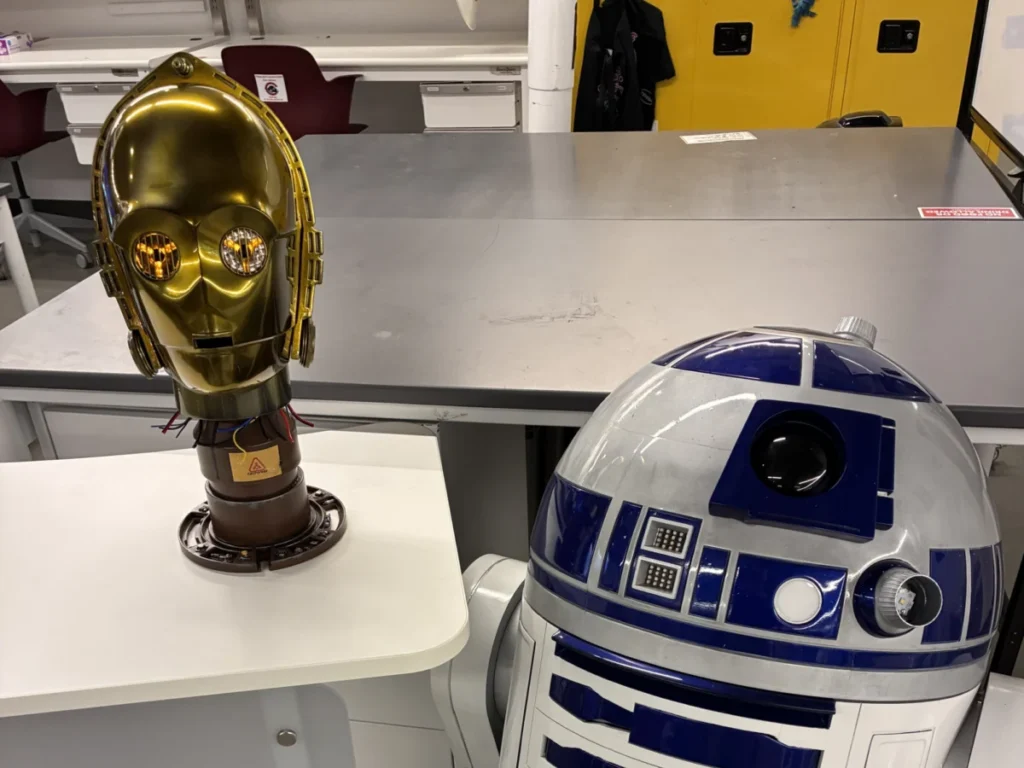
Sam Potozkin, a student at Chapman University, has achieved a significant milestone in the field of embodied artificial intelligence (AI) with the successful development of his "Threepio" project, a meticulously crafted, conversational robot designed to replicate the iconic C-3PO protocol droid from the Star Wars saga. This ambitious endeavor transcends typical chatbot applications by integrating advanced AI capabilities within custom-fabricated hardware, aiming to explore and enhance human-AI interaction through physical presence and personality. The project is not merely a fan tribute but forms the basis of a comprehensive paper by Potozkin, delving into the nuanced differences in human perception and interaction with embodied AI compared to screen-based interfaces.
The Genesis of Threepio: Bridging Fiction and Reality
The proliferation of AI chatbots in recent years has made them ubiquitous, accessible across countless platforms and devices. However, the true frontier of AI research often lies beyond mere digital interfaces, venturing into the realm of physical embodiment. Potozkin’s Threepio project stands as a testament to this evolving landscape, drawing direct inspiration from the 1977 cinematic debut of C-3PO, a character renowned for his distinctive personality, articulate communication skills, and, crucially, his physical presence within the narrative. The project’s core objective was to faithfully recreate the experience of interacting with such an iconic protocol droid, pushing the boundaries of what is achievable with accessible technology.
The decision to base the project on C-3PO was deliberate. As Potozkin notes in his accompanying paper, "This project explores the translation of a fictional character into a real-world, embodied AI system. Developing this system required translating and combining abstract concepts from both AI and communication theory into a functional, working architecture." The enduring familiarity of C-3PO as a benevolent, if somewhat anxious, companion provided a unique framework for investigating how a pre-existing persona influences human engagement with an AI system. This approach bypasses the abstract nature of most modern AI interactions, grounding the experience in a tangible, recognizable form that users have decades of cultural context for.
Engineering an Icon: Hardware and Software Synergy
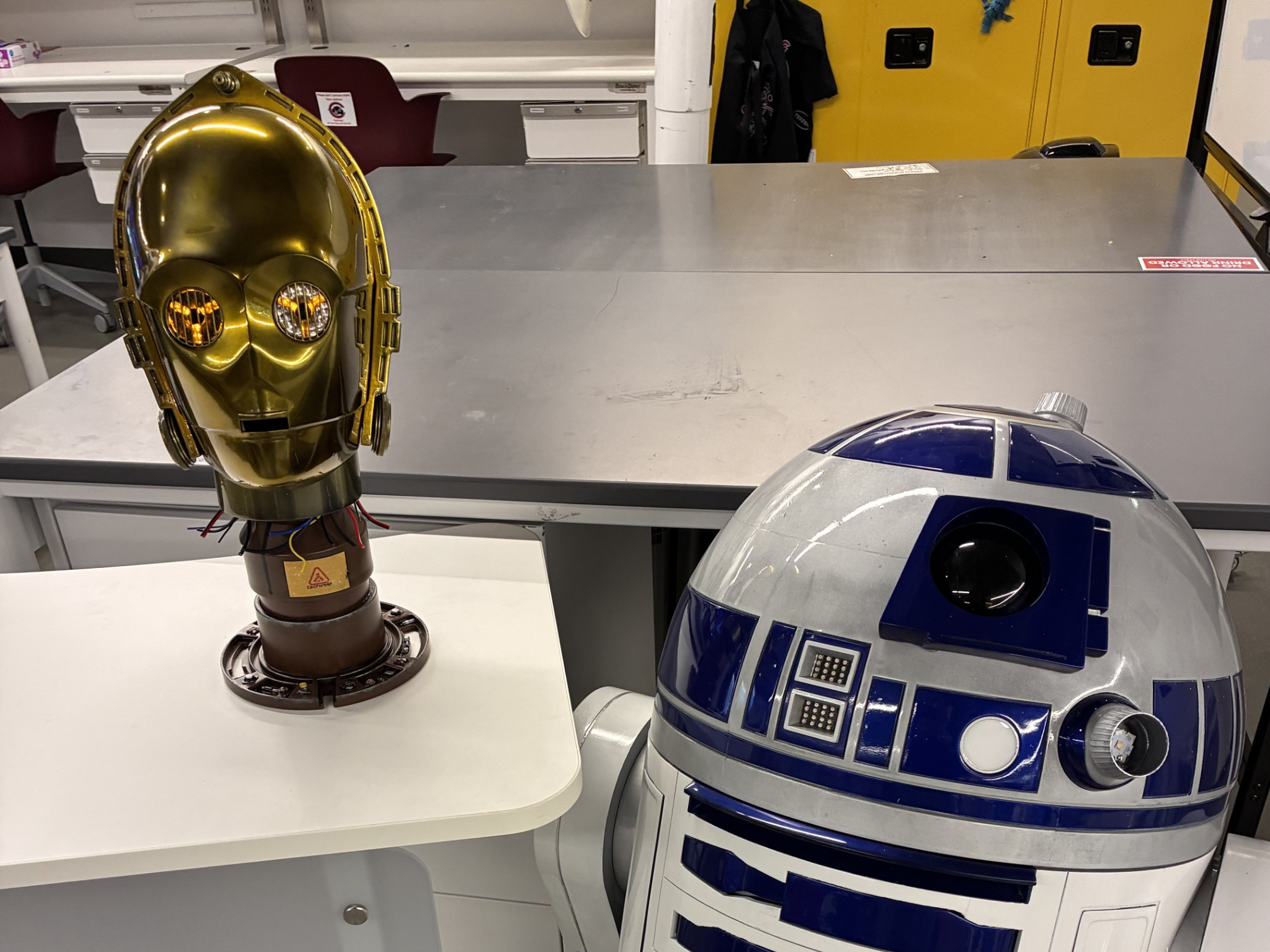
The technical execution of the Threepio project showcases a blend of traditional craftsmanship and cutting-edge digital fabrication. The physical form of the droid’s head, an immediate identifier of the character, was achieved through intricate 3D printing. Potozkin invested considerable effort into post-processing, meticulously sanding the 3D-printed layers to achieve the smooth, metallic finish characteristic of C-3PO’s golden chassis. Further enhancing its authenticity, custom "greeblies" – small, intricate details often used in sci-fi models to suggest complex functionality – were added to the display stand, elevating the aesthetic realism and contributing to the illusion of a sophisticated, functional machine.
At the heart of Threepio’s intelligence lies a Raspberry Pi 5, a powerful single-board computer that allows the entire AI chat stack to run locally. This choice is significant, offering several advantages over cloud-based AI solutions, including enhanced privacy, reduced latency, and greater control over the system’s operation. The Raspberry Pi 5, with its improved processing power, expanded RAM, and faster I/O capabilities compared to its predecessors, is increasingly becoming a preferred platform for hobbyists and researchers developing on-device AI applications. Its ability to handle complex computational tasks locally empowers creators like Potozkin to build sophisticated AI systems without constant reliance on internet connectivity or external servers, democratizing access to advanced AI development.
One of the project’s most innovative aspects lies in its audio output. Instead of a conventional speaker, Potozkin opted for an exciter. An exciter speaker, unlike traditional cone speakers, transmits vibrations directly to a surface, turning that surface into a sound radiator. In Threepio’s case, this means the entire head structure resonates, making the voice appear to emanate organically from the droid’s form rather than from a discrete speaker grille. This subtle yet impactful detail significantly enhances the illusion of a living, speaking entity, aligning perfectly with the goal of creating an embodied AI. Potozkin dedicated extensive time to refining these audio effects, meticulously tuning the sound until it captured the distinctive vocal qualities associated with C-3PO, further blurring the lines between fiction and reality.
The Research Imperative: Exploring Embodied AI
Beyond the impressive technical feat, the Threepio project serves as a tangible platform for academic inquiry into human-AI interaction. Potozkin’s research paper, accessible via his GitHub repository, directly addresses the fundamental question of why individuals react differently to a physically embodied AI, even one inspired by a decades-old fictional character, compared to modern, screen-bound AI interfaces. This area of study, known as Human-Robot Interaction (HRI), is a rapidly expanding field, recognizing that the physical presence of an AI system fundamentally alters human perception, trust, and engagement.
Potozkin’s central hypothesis, as articulated in his paper, is that "The goal of the project was to explore what happens when conversational AI moves off the screen and into a physical, interactive system. Rather than treating AI as something purely digital, this build focuses on embodiment, giving the system a presence, voice, and personality that can be experienced in the real world." This perspective aligns with broader trends in HRI research, which suggest that embodiment can foster a greater sense of social presence, accountability, and even empathy from human interactors. When an AI system occupies physical space, it becomes more than just an algorithm; it becomes a tangible entity with which humans can establish a more natural and intuitive form of communication. The iconic personality of C-3PO provides a ready-made framework for this, offering a recognizable and emotionally resonant character that users are predisposed to engage with on a personal level.

The paper likely delves into communication theory, examining how factors such as vocal timbre, spatial presence, and perceived agency contribute to the human experience of interacting with an embodied AI. For instance, the choice of an exciter speaker directly impacts perceived spatiality, making the voice seem to originate from the robot itself, rather than a disembodied source. This attention to detail in the physical and auditory design reinforces the illusion of a sentient being, encouraging a more profound level of engagement from the user.
The Journey of Creation: Challenges and Triumphs
The development of Threepio was by no means a straightforward process, highlighting the multifaceted challenges inherent in ambitious DIY robotics projects. Potozkin’s journey involved a steep learning curve across various disciplines. From mastering the intricacies of soldering, essential for integrating electronic components, to painstakingly honing the audio effects to achieve the desired vocal fidelity, each step required dedication and problem-solving.
3D printing, while offering immense flexibility in custom fabrication, comes with its own set of challenges. Potozkin faced the arduous task of sanding away visible layer lines – the faint ridges left by the additive manufacturing process – to achieve a smooth, professional finish. The common issue of "orange peel," a textured surface defect, also required careful mitigation. The practicalities of construction were not without their dramatic moments, including an incident where the droid’s head was dropped, necessitating repairs and further refining of the build. These anecdotes underscore the iterative nature of engineering and design, where setbacks are often crucial learning opportunities.
The project’s open-source nature, with its build instructions and code available on GitHub, represents a significant contribution to the maker community. This accessibility encourages other enthusiasts and students to replicate, customize, and extend Potozkin’s work. The ability to "put their spin on it" or, humorously, "add in the other 5,999,999 languages" C-3PO is famously capable of, fosters collaborative innovation. This approach aligns with the broader ethos of the maker movement, which emphasizes sharing knowledge and designs to accelerate collective learning and creativity.
Broader Implications and the Future of Embodied AI

Potozkin’s Threepio project serves as a compelling case study at the intersection of popular culture, advanced technology, and academic research. It demonstrates how iconic fictional characters can inspire tangible advancements in AI and robotics, acting as powerful catalysts for innovation. The enduring appeal of Star Wars droids, from the practical R2-D2 to the verbose C-3PO, has long fueled the imagination of engineers and hobbyists alike. The Star Wars universe, in many ways, has provided a roadmap for desirable AI companions, setting a high bar for intelligence, personality, and interaction that real-world robotics strives to achieve.
This project also highlights the increasing democratization of advanced AI development. With platforms like Raspberry Pi 5 and widespread access to 3D printing, sophisticated AI systems are no longer exclusively within the domain of large corporations or research institutions. Individual students and hobbyists can now embark on projects that, just a decade ago, would have been prohibitively complex or expensive. This accessibility fosters a diverse ecosystem of innovation, leading to novel applications and research insights that might otherwise be overlooked.
The implications for human-AI interaction are profound. As AI systems become more integrated into daily life, understanding how humans perceive and interact with them will be paramount. Embodied AI, especially when infused with personality and a relatable form, holds the potential to build greater trust, improve usability, and enhance the overall user experience. Imagine therapeutic robots, educational companions, or even personal assistants that offer not just functionality but also a comforting, familiar presence. The research stemming from projects like Threepio will be instrumental in designing future AI that is not only intelligent but also empathetic and socially intelligent.
Furthermore, the project’s success in replicating a beloved character underscores the power of narrative and design in shaping our relationship with technology. By tapping into pre-existing cultural familiarity, Potozkin has created an AI that instantly feels less alien and more approachable. This strategy could be critical in overcoming potential apprehension towards advanced AI, making it more palatable and integrated into societal norms.
The C-3PO project is not an isolated incident; the maker community consistently showcases remarkable ingenuity in building Star Wars-inspired droids. From meticulously engineered R2-D2 units capable of complex movements to bespoke BB-8 replicas, the passion for these fictional machines drives continuous innovation. The advice often given to aspiring R2-D2 builders—to start with the dome—underscores the meticulous attention to detail required in such endeavors. Potozkin’s Threepio, with its emphasis on sophisticated communication, stands as a crowning achievement within this vibrant community, demonstrating that if one is to invest significant time and effort in constructing a robot, its ability to meaningfully communicate is indeed a paramount feature. As AI continues its rapid evolution, projects like Sam Potozkin’s Threepio will undoubtedly serve as beacons, guiding the way towards a future where human-AI interaction is not just functional, but deeply engaging and profoundly human-like.