Published: September 11th, 2026
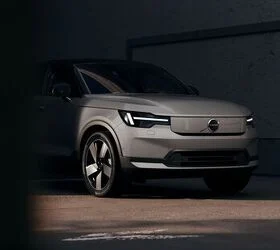
Volvo is set to withdraw its all-electric EX40 from the North American market next year, a decision that arrives as the model and its 40-Series counterparts are on the cusp of a global refresh. This strategic move follows the automaker’s earlier elimination of the similarly positioned EC40, its decision not to introduce the smaller EX30 EV to the region, and a recalibration of its own electrification targets. The departure of the EX40 suggests that the brand’s electric vehicle strategy in North America has encountered significant headwinds, a situation heavily influenced by regional sales performance and the methodologies used to calculate EV adoption.
Globally, the EX40, which was previously known as the XC40 Recharge, has consistently ranked as Volvo’s second best-selling model, trailing only the more popular XC60/CX60. However, sales figures for both the electric EX40 and its combustion engine or hybridized XC40 counterparts are often aggregated. This blending of sales data can obscure the true performance of the purely electric variants, potentially presenting a more optimistic picture of EV adoption than the reality on the ground.
Despite the challenges, Volvo has reported a substantial year-over-year increase of approximately 27 percent in EV sales across its global operations during the summer period. This growth in electric vehicle sales has occurred concurrently with a decline in sales for combustion engine models. On the surface, this trend might indicate a clear and decisive shift towards electrified vehicles within the brand’s portfolio. However, a broader perspective reveals that global sales volumes for Volvo as a whole decreased by approximately 7.5 percent in the previous year, suggesting that the overall market reception for the brand’s vehicles, regardless of powertrain, has been mixed.
A Shifting Landscape for Electrification
Volvo’s trajectory since 2010 has been marked by considerable growth both domestically and internationally. However, the North American market has presented unique challenges for the Swedish automaker in recent years. A prevailing assumption is that American consumers have demonstrated a comparatively lower appetite for purely electric vehicles, particularly within the premium segment.
While industry publications have often highlighted Volvo’s reported growth in all-electric sales, this narrative is frequently tempered by the observation that EVs are not displacing traditional internal combustion engine (ICE) models as rapidly as initially projected. It can be argued that a significant portion of Volvo’s success in the electrified sphere is attributable to an increased offering of plug-in hybrid (PHEV) and battery-electric vehicle (BEV) options, rather than a direct substitution of ICE sales by EVs. The distinction between these electrified powertrains is crucial, as PHEVs still rely on gasoline engines, a factor that influences their environmental impact and consumer perception compared to zero-emission BEVs.
Revised Electrification Targets and Market Realities
In response to evolving market conditions, Volvo has been compelled to revise its electrification ambitions. The company’s earlier, ambitious target of transitioning to an all-electric lineup by 2030 has been softened. The automaker now aims for "nearly all" of its vehicles to be electrified, a broader definition that encompasses both PHEVs and BEVs. This revised goal raises questions about the precise definition of "electrified" and whether it adequately reflects a genuine commitment to zero-emission mobility, especially when both powertrain types are counted collectively.
The practical implications of these strategic adjustments are becoming evident in product planning. Volvo’s XC models, which offer a blend of utility and traditional internal combustion powertrains, have consistently outperformed their EX (all-electric) counterparts in the North American market. This disparity is reflected in Volvo’s product roadmap. The EX30, though a promising compact EV, will not be offered in North America, and the EX40 is slated for discontinuation. Conversely, the XC40, the gasoline-powered and mild-hybrid sibling to the EX40, is set to receive an update for the 2028 model year, solidifying its position as Volvo’s more popular offering. The EX30’s absence and the EX40’s departure signal a pragmatic acknowledgment of consumer preferences in the region.
The EX60 (likely referring to the XC60, as the EX60 name is not currently in Volvo’s North American EV lineup and the text mentions EX60/CX60) is now poised to become Volvo’s entry-level EV offering in North America, a move that likely reflects a strategy to make its electric offerings more accessible to a broader segment of the market.
Performance and Competitive Landscape of the EX40
Despite its impending exit from the North American market, the Volvo EX40 was, by many accounts, a competent electric vehicle. The single-motor variant offered an impressive EPA-estimated range of nearly 300 miles on a full charge, coupled with spirited acceleration. The dual-motor, all-wheel-drive EX40 provided a still-respectable 260 miles of range and boasted a brisk 0-to-60 mph time of just 4.6 seconds. These performance figures, combined with its attractive design and practical SUV form factor, should have theoretically contributed to sustained sales.
However, the competitive landscape for electric SUVs has intensified significantly. Many rivals have emerged offering more intuitive user interfaces, superior driving ranges, or enhanced performance capabilities. In this environment, the EX40, while a well-rounded vehicle, struggled to differentiate itself as a segment leader. For mainstream crossovers with internal combustion engines, being a "jack-of-all-trades" can be a desirable attribute. However, in the rapidly evolving EV market, consumers often exhibit a greater propensity to gravitate towards vehicles that excel in specific areas or offer cutting-edge technology.
While the EX40 was not an antiquated model, having been formally introduced in the United States in 2021, it is now older than some of its more recently launched competitors. The lack of class-leading specifications or standout technological features meant that it could not consistently command attention in a market increasingly driven by novelty and perceived technological superiority.
The assumption that declining sales of the EX40/XC40 pairing were primarily attributable to the all-electric EX40 variant is a logical one, particularly given that the XC40 is slated to continue its presence in the lineup. This suggests that the underlying platform and overall appeal of the XC40 remain strong with North American buyers, but the purely electric iteration of the model did not resonate as effectively.
The Future of the XC40 in North America
The updated 2028 model year XC40 is set to receive a series of subtle yet impactful design enhancements. The exterior will feature a revised grille, updated headlamps, and a refined front fascia. Similar understated alterations are expected at the rear of the vehicle. While these changes may not be immediately apparent without a direct comparison, Volvo’s exterior design language has historically been well-received, necessitating only minor evolutionary adjustments rather than radical overhauls.
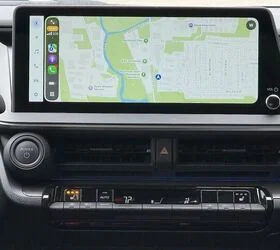
Inside the cabin, the updated XC40 will offer new upholstery options and a larger, 11.2-inch central touchscreen. This upgraded display will be powered by Volvo’s latest UX software, which has already been implemented in other models and is lauded for its enhanced speed and user-friendliness. These interior and software advancements are also being rolled out to the EX40 and EC40 models in markets where they remain available.
Powertrain updates for the XC40 are also on the horizon. The all-wheel-drive B5 models, equipped with the turbocharged 2.0-liter engine, are not expected to see a significant increase in horsepower. Instead, engineers have reportedly focused on improving fuel efficiency, a pragmatic decision given the prevailing fuel prices and consumer demand for economy.
Details regarding the B4 front-wheel-drive trim remain somewhat elusive. It is not currently indicated as discontinued, leading to speculation that Volvo may be re-evaluating its positioning as the entry-level model for North America or is holding back on sharing specific changes to this variant.
The Role of Mild Hybridization and Consumer Perception
The absence of significant updates regarding hybridization for the XC40 is noteworthy, especially considering Volvo’s stated commitment to electrification. While all current XC40 variants are technically classified as "mild hybrids," this designation can be misleading. These 48-volt-assisted systems primarily function to support the traditional starter motor and provide a modest power boost under specific engine loads, rather than enabling substantial all-electric propulsion.
Industry analysts, such as those at Toyota, have suggested that the term "mild hybrid" may be technically inaccurate, advocating for a distinct categorization for 48-volt systems separate from full hybrid powertrains. Volvo’s insistence on labeling the XC40 as a "mild hybrid" reflects its positioning within the broader electrification spectrum.
Ultimately, consumer engagement with these technical distinctions is likely to be secondary to the vehicle’s overall performance and utility. The XC40 has established itself as a credible option for individuals seeking a premium subcompact crossover. However, it faces competition from a diverse range of alternatives. Mainstream SUVs like the Honda CR-V offer superior practicality, while models such as the Mazda CX-50 compete on near-luxury attributes and performance. Furthermore, vehicles like the Ford Bronco Sport provide enhanced off-road capabilities.
Volvo’s value proposition for the XC40 in North America centers on its slightly higher starting MSRP, premium European branding, and a minimalist interior design philosophy that emphasizes advanced driver-assistance systems (ADAS). The updated XC40 is expected to incorporate additional cameras, radar sensors, and ultrasonic technology to further enhance its driver-assistance suite and advanced software capabilities. It is anticipated that buyers of the XC40 will continue to prioritize these sophisticated safety and connectivity features over raw mechanical specifications or aggressive pricing strategies.
Images: Volvo Cars
Become a TTAC insider. Get the latest news, features, TTAC takes, and everything else that gets to the truth about cars first by subscribing to our newsletter.