The Open Source Hardware Association (OSHWA) has officially announced the first cohort of projects to receive the newly established Open Healthware Certification, a specialized designation designed to validate medical and health-related hardware that adheres to rigorous open-source standards. This development follows a multi-year collaborative effort supported by the National Science Foundation (NSF) and represents a significant shift in how medical technology is developed, vetted, and distributed globally. By providing a framework for transparency in health-related devices, OSHWA aims to foster an ecosystem where researchers, clinicians, and patients can access fully documented, reproducible, and customizable medical tools.
The certification program is the culmination of a two-year initiative funded by an NSF POSE III (Pathways to Enable Open-Source Ecosystems) grant. This specific grant focused on the intersection of healthcare and open-source hardware, leading to the creation of the Open Healthware ecosystem. While OSHWA has long maintained a general certification for open-source hardware, the unique regulatory, safety, and documentation requirements of the medical field necessitated a specialized branch. The first four certifications issued under this new banner—ranging from high-tech neural implants to modular hospital infrastructure—demonstrate the breadth and potential of the open-source movement in the life sciences.
The Evolution of Open Source in Healthcare
The path to the Open Healthware Certification began with the recognition that traditional proprietary models of medical device development often create barriers to innovation and equity. In many clinical settings, proprietary "black box" technologies prevent researchers from understanding the exact parameters of a device’s operation, while high costs and restrictive licensing limit the availability of essential tools in low-resource environments.
To address these challenges, OSHWA leveraged its existing community definition of open-source hardware—a set of principles requiring that the hardware’s design be made available so that anyone can study, modify, distribute, make, and sell it. Under the NSF POSE III grant, the association worked with the Open Healthware community to refine these standards for medical applications. This involved creating a new certification process that emphasizes not only the availability of schematics and code but also the clarity of documentation required for health-related use cases.
The resulting Open Healthware Certification database currently features four pioneering projects. These projects serve as a proof of concept for a future where medical hardware is as transparent and collaborative as open-source software.
Technical Breakdown of the First Certified Projects
The inaugural class of certified Open Healthware projects showcases the diversity of the ecosystem, spanning research platforms, clinical accessories, and advanced neuromodulation.
Open-LIFU by Openwater (IUD US00002844)
One of the most technically sophisticated entries is Open-LIFU, a Low-Intensity Focused Ultrasound platform developed by Openwater. Designed specifically for research environments, Open-LIFU provides a console capable of generating high-voltage drive signals and coordinating complex timing sequences for ultrasound sonication.
The system includes a wearable transducer headset and 64-element 2D matrix transmit modules. What distinguishes Open-LIFU from commercial alternatives is its total programmability; every parameter of a sonication sequence is accessible through open-source software. Furthermore, the device utilizes an integrated Android interface for localization via photogrammetric reconstruction, allowing researchers to precisely target areas of interest. By certifying this platform, OSHWA validates a tool that could accelerate research into non-invasive brain stimulation and targeted drug delivery.
The Universal Mounting System (IUD KE000001)
Representing the "appropriate technology" sector of the ecosystem, the Universal Mounting System (UMS) is a series of 3D-printed attachments designed for hospital environments. Originating from Kenya—as indicated by the "KE" prefix in its identification number—the UMS addresses the practical problem of equipment organization in clinical settings.

The system consists of various hooks, holders, and clamps that are compatible with a universal back piece. This back piece can be mounted to walls, hospital beds, trolleys, and IV poles. The modular front pieces are designed to secure specific medical tools, such as handheld pulse oximeters and humidifier bottles. This project highlights the power of open-source hardware to solve localized supply chain issues, allowing hospitals to manufacture their own organizational infrastructure using 3D printing.
COSMIIC (IUD US00002851)
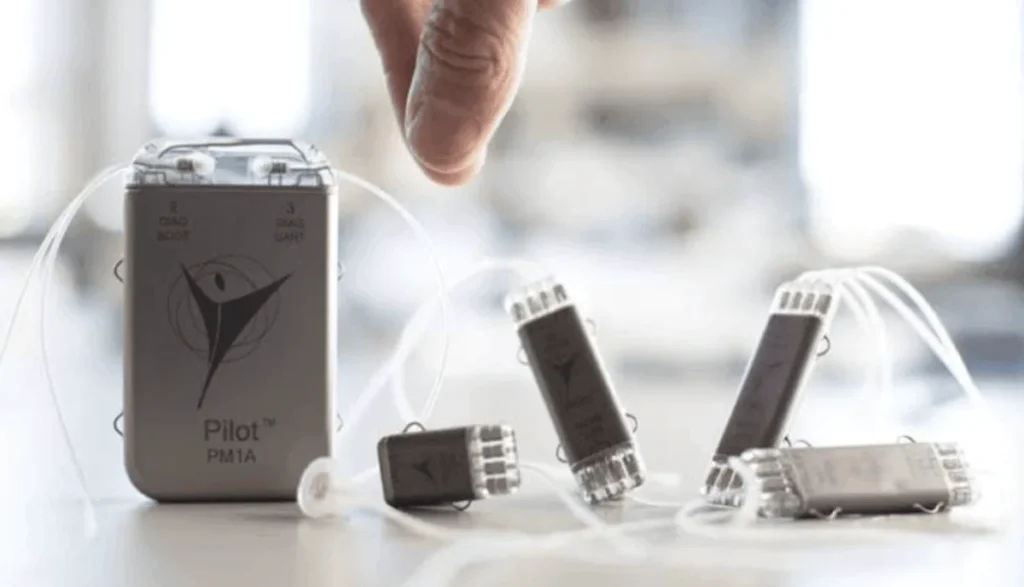
Perhaps the most ambitious project in the registry is COSMIIC, a fully implantable neuromodulation platform. Developed with funding from the National Institutes of Health (NIH) through the SPARC (Stimulating Peripheral Activity to Relieve Conditions) and HORNET (Human Open Research Neural Engineering Technologies) initiatives, COSMIIC is designed for research into spinal cord injuries and other neurological conditions.
As an implantable device, COSMIIC represents the highest tier of hardware complexity. The open-source nature of the platform allows the global neuroscience community to vet the hardware’s safety and efficacy, potentially shortening the development cycle for new neural therapies. The project has already expanded into numerous research sub-projects, proving that even high-stakes medical devices can benefit from an open-source framework.
The Role of Federal Funding and Institutional Support
The launch of these certifications is inseparable from the strategic support of federal agencies in the United States. The NSF’s POSE program was specifically designed to transition open-source products into sustainable ecosystems. By funding OSHWA’s efforts, the NSF has acknowledged that open hardware is a critical component of national research infrastructure.
Similarly, the NIH’s involvement via the SPARC program underscores a shift in how the federal government views intellectual property in medical research. By encouraging "Open Research Neural Engineering Technologies," the NIH is betting that transparency will lead to faster breakthroughs in chronic disease management. These agencies recognize that when hardware designs are locked behind patents, the cost of entry for new researchers is often prohibitively high. Open Healthware lowers these barriers, allowing a wider array of institutions to contribute to medical progress.
Broader Implications for the Medical Industry
The introduction of specialized certifications for healthware has profound implications for several sectors of the healthcare industry:
- Regulatory Transparency: While OSHWA certification does not replace FDA or EMA regulatory approval, it complements it by ensuring that the underlying design is available for public audit. This can lead to safer devices, as a global community of engineers can identify and report potential hardware flaws.
- Supply Chain Resilience: The COVID-19 pandemic exposed the fragility of global medical supply chains. Open-source designs, such as the Universal Mounting System, allow for decentralized manufacturing, enabling hospitals to produce essential components on-site during crises.
- Cost Reduction: By eliminating licensing fees and allowing for competitive manufacturing, open healthware can significantly reduce the cost of medical devices. This is particularly vital for developing nations and rural clinics operating on limited budgets.
- Academic Continuity: In academic research, proprietary equipment often becomes "orphan-ware" when a manufacturer stops supporting a product. Open-source hardware ensures that researchers can maintain and repair their own equipment indefinitely.
Community and Official Responses
The OSHWA leadership has expressed immense pride in the conclusion of the NSF grant and the subsequent launch of the certification registry. In a statement regarding the milestone, the association emphasized that the Open Healthware ecosystem is a living entity, dependent on the continued contributions of the maker and medical communities.
Dan Blizinski of Openwater and Chris Rexrothi of the COSMIIC project have both championed the certification as a way to build trust with users. During a "Show & Tell Monthly" session in August 2026, the developers noted that the certification logo acts as a "seal of quality" that reassures researchers they are working with hardware that truly belongs to the community.
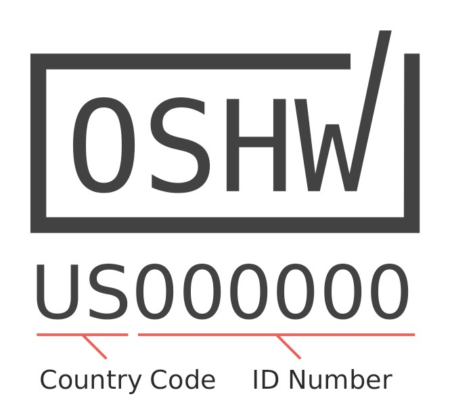
The open-source community at large has also reacted positively, with many noting that the "IUD" (Identification) system used by OSHWA provides a much-needed standardized naming convention for hardware, similar to how Digital Object Identifiers (DOIs) function for academic papers.
Future Outlook: Scaling the Ecosystem
As the Open Healthware Certification database grows beyond its initial four entries, OSHWA is actively calling for new submissions. The association has integrated the healthware process into its general certification database, ensuring that these specialized projects receive maximum visibility.

The long-term goal is to create a comprehensive library of certified hardware that covers every aspect of healthcare, from diagnostic sensors and laboratory equipment to assistive technologies and surgical tools. With the framework now established and the first successful certifications documented, the focus shifts to adoption.
The success of this movement will ultimately depend on the willingness of academic institutions and private startups to embrace the open-source model. If the first four certified projects are any indication, the future of medical technology is moving away from proprietary silos and toward a collaborative, transparent model that prioritizes patient outcomes and scientific progress over restrictive intellectual property.
For creators and researchers looking to contribute, the OSHWA certification remains a free program, providing a vital bridge between the grassroots maker movement and the formal medical industry. As the ecosystem expands, it promises to redefine the boundaries of what is possible in democratized healthcare technology.