When the iconic Empire State Building was erected in the heart of Midtown Manhattan, its 102 stories ascended into the sky, a testament to meticulous engineering and the assembly of individual components into a towering masterpiece. For four decades, it reigned as the world’s tallest structure, a symbol of human ambition and architectural prowess. Decades later and miles uptown, at Columbia University, Professor Oleg Gang and his chemical engineering laboratory are not constructing skyscrapers of steel and stone. Instead, they are building landmarks of a vastly different scale: incredibly small, intricate devices fabricated from nanoscopic building blocks that possess the remarkable ability to arrange themselves.
This groundbreaking work, detailed in two recent scientific publications, heralds a significant advancement in the field of nanoscale manufacturing. Professor Gang, a distinguished figure in chemical engineering and applied physics and materials science at Columbia Engineering, also leads the Soft and Bio Nanomaterials Group at Brookhaven National Laboratory’s Center for Functional Nanomaterials. His team’s innovations offer a glimpse into a future where complex three-dimensional structures at the nanoscale can be precisely designed and assembled with unprecedented efficiency.
"We can now build complexly prescribed 3D organizations from self-assembled nanocomponents, a kind of nanoscale version of the Empire State Building," Professor Gang stated in a recent interview, drawing a compelling parallel between the monumental architecture of the past and the miniature marvels of the present. "The capabilities to manufacture 3D nanoscale materials by design are critical for many emerging applications, ranging from light manipulation to neuromorphic computing, and from catalytic materials to biomolecular scaffolds and reactors."
The research, disseminated in a paper published on July 9, 2024, in the prestigious journal Nature Materials, and a preceding study released on April 11, 2024, in ACS Nano, outlines a novel methodology for fabricating targeted 3D nanoscale structures through self-assembly. Crucially, the researchers have also developed a design algorithm, a set of instructions that can be followed by other scientists and engineers, democratizing access to this powerful fabrication technique. The fundamental building blocks for these intricate nanostructures? The most ubiquitous and fundamental molecule of life: DNA.
The Limits of Conventional Nanofabrication
Traditional methods for fabricating microelectronic components and other small-scale devices have largely relied on "top-down" strategies. Processes like photolithography, which utilizes light and intricate stencils to etch patterns onto materials, have been the workhorse of the microelectronics industry for decades. However, these techniques encounter significant limitations when tasked with creating complex, three-dimensional structures. While additive manufacturing, commonly known as 3D printing, has made strides in fabricating larger objects, its resolution is still insufficient for true nanoscale fabrication. Both photolithography and current 3D printing methods are inherently serial processes, building features one by one, which is a slow and often inefficient approach for constructing complex three-dimensional objects.
The inherent limitations of these conventional methods underscore the transformative potential of Professor Gang’s "bottom-up" approach. By taking inspiration from the intricate and efficient self-assembly processes found in biological systems, Gang’s lab is engineering materials and devices from the ground up. This process is meticulously guided by the precise programming capabilities of DNA.
A Paradigm Shift: DNA-Directed Self-Assembly
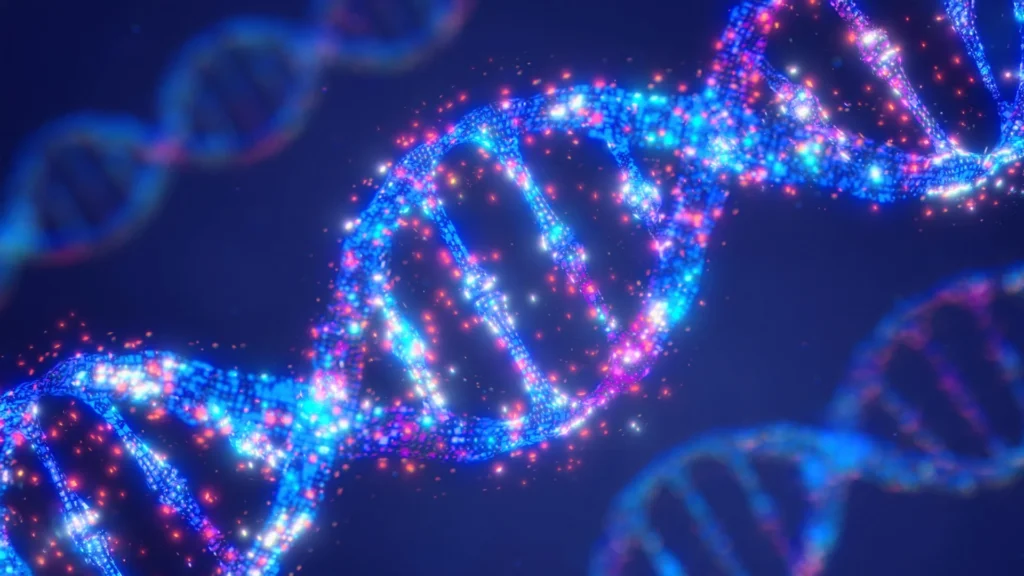
Professor Gang’s methodology leverages the predictable folding behavior of DNA. The four nucleic acids that form DNA—adenine (A), guanine (G), cytosine (C), and thymine (T)—possess a natural affinity for specific pairing (A with T, and G with C). This inherent characteristic allows scientists to design DNA sequences that will fold into specific, predictable shapes.
The team’s innovation lies in utilizing these DNA folding properties to create nanoscale building blocks, which they refer to as "voxels." These voxels are designed to be mechanically robust and possess connectors at their corners. These connectors enable the voxels to link together in precise arrangements, guided by the encoded DNA sequences. By designing millions, or even billions, of these DNA voxels with specific linking instructions, scientists can direct the self-assembly of highly complex, three-dimensional nanoscale structures.
"If we know the big structure with the function that we want to create, we can dissect that into smaller components to create our building blocks with structural, binding, and functional attributes required to form the desired structure," explained Professor Gang, illustrating their inverse structural design approach. This means that instead of trying to build a complex structure atom by atom or molecule by molecule, researchers can first define the desired final architecture and then computationally break it down into the necessary DNA building blocks.
MOSES: The Algorithm for Nanoscale Architecture
A critical challenge in designing these complex DNA-based structures is determining the correct DNA sequences for each voxel to ensure they assemble into the desired final form. For structures involving millions of components, manually designing these sequences is an insurmountable task. Professor Gang and his colleagues have addressed this by developing an algorithm, aptly named Mapping Of Structurally Encoded aSsembly, or MOSES.
"You can think of it like compressing a file," said Jason Kahn, the first author of the Nature Materials paper and a staff scientist at BNL who was previously a postdoctoral researcher in Gang’s group. "We want to minimize the amount of information for the DNA self-assembly to be most efficient." MOSES functions as a nanoscale computer-aided design (CAD) software. It takes a user’s desired three-dimensional lattice structure and computationally determines the precise DNA voxel sequences required to build it.
This algorithm is a significant breakthrough, as it provides a systematic and efficient way to design these nanoscale building blocks. "It will tell you what DNA voxel to use to make a particular, arbitrarily defined 3D hierarchically ordered lattice," Professor Gang elaborated.
From Blueprint to Nanodevice: Diverse Applications Emerge
The flexibility of this DNA-directed self-assembly platform is one of its most compelling features. Once the DNA scaffold is assembled, it can serve as a template for incorporating a wide variety of "nano-cargo" – other nanoparticles or functional molecules that imbue the final structure with specific properties.
For instance, in experiments supporting their Nature Materials publication, the team embedded gold nanoparticles into the DNA voxels. This integration endowed the resulting structures with unique optical properties, a crucial step towards Professor Nanfang Yu’s goal at Columbia Engineering of creating an optical computer. Professor Yu’s research focuses on manipulating light at the nanoscale, and these DNA-origami structures provide a precise platform for achieving novel light-bending and reflection phenomena.
The researchers also demonstrated the creation of four additional applications of their "DNA origami" approach:
- Crystal-like Structures: A structure comprised of precisely arranged one-dimensional strings and two-dimensional layers, offering a new route to ordered materials.
- Solar Panel Mimic: A structure designed to mimic the light-absorbing materials commonly found in solar panels, potentially leading to more efficient photovoltaic devices.
- Helical Crystals: Another crystalline structure that exhibits a mesmerizing helical swirl, opening possibilities for novel optical and magnetic materials.
Furthermore, the team has shown that these DNA scaffolds can be "mineralized." After assembly, the DNA structures can be coated with silica and then subjected to heat. This process decomposes the organic DNA scaffolding, effectively converting it into a highly robust inorganic material while preserving the intricate nanoscale architecture. This mineralization step enhances the durability and stability of the fabricated devices, making them suitable for a broader range of applications.
A Collaborative Endeavor
The development of this transformative technology is the result of extensive collaboration. Professor Gang’s lab at Columbia University worked closely with scientists at Brookhaven National Laboratory, including Aaron Michelson, a former student of Gang’s and now a staff scientist at Brookhaven’s Center for Functional Nanomaterials. They recently delivered a prototype for collaborators at the University of Minnesota who are focused on developing 3D light sensors integrated onto microchips. Their approach involved growing DNA scaffolds directly on a chip and then coating them with light-sensitive materials.
Computational verification of the inverse design approach was provided by Sanat Kumar, the Michael Bykhovsky and Charo Gonzalez-Bykhovsky Professor of Chemical Engineering at Columbia. This interdisciplinary collaboration highlights the synergistic nature of modern scientific research.
Environmental and Economic Advantages
Beyond the scientific novelty, the self-assembly process offers significant practical advantages. The fabrication occurs in water, a non-toxic and environmentally friendly solvent, a stark contrast to many conventional nanofabrication techniques that often involve hazardous chemicals and vacuum environments.
Moreover, the parallel nature of self-assembly, where countless components come together simultaneously, translates to substantial time and cost savings compared to serial fabrication methods. This "one-pot" approach, as it can be conceptualized, streamlines the production of complex nanoscale materials, making them more accessible for research and potential commercialization.
Future Horizons: Mimicking the Brain and Beyond
Professor Gang is optimistic about the future implications of his team’s work. "This is a platform that is applicable to many materials with many different properties: biological, optical, electrical, magnetic," he stated. The ultimate functionality of the nanodevices is limited only by the imagination and ingenuity of the designers.
The team continues to explore even more ambitious designs. Collaborations with Professor Kumar and Professor Yu are underway to uncover fundamental design principles that will enable the engineering and assembly of increasingly complex structures. A particularly exciting future goal is the creation of a 3D circuit designed to mimic the intricate connectivity of the human brain, a feat that could revolutionize artificial intelligence and neuromorphic computing.
"We are well on our way to establishing a bottom-up 3D nanomanufacturing platform," Professor Gang concluded. "We see this as a ‘next-generation 3D printing’ at the nanoscale, but now the power of DNA-based self-assembly allows us to establish massively parallel fabrication." This vision of a future where intricate nanoscale devices can be reliably and efficiently fabricated promises to unlock new frontiers in science, technology, and medicine. The journey from the towering Empire State Building to the microscopic architectures built by DNA origami represents a profound evolution in our ability to design and construct the world around us, one molecule at a time.