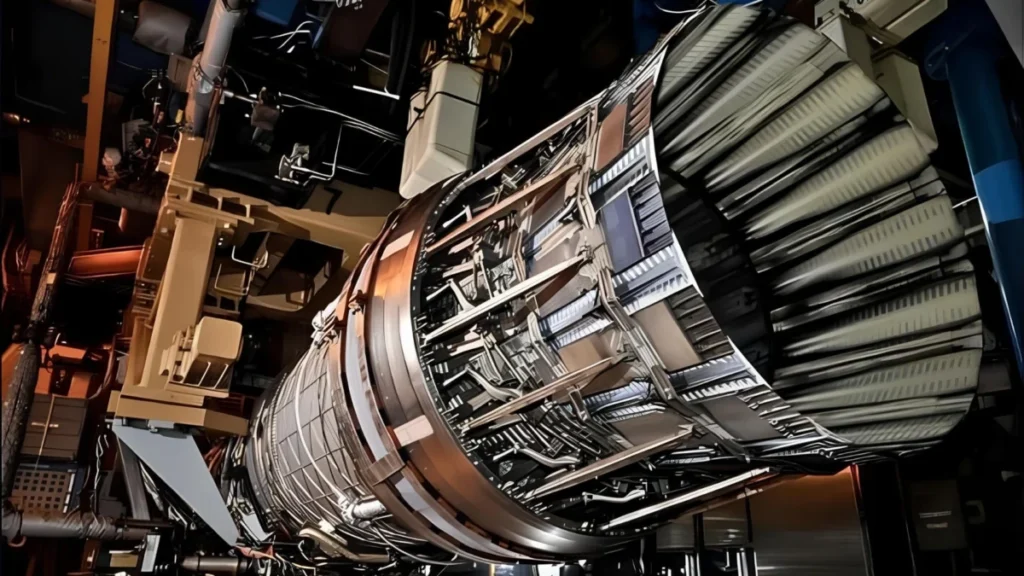
Pratt & Whitney, a cornerstone of American aerospace manufacturing, has officially licensed aerospace startup Hermeus to commence the production of its venerable F100-PW-229 turbofan engines. This landmark agreement establishes a crucial new domestic production source for one of the United States’ most widely deployed fighter aircraft engines, signaling a strategic move to expand the nation’s defense industrial capacity and fortify its supply chain resilience. The partnership allows Hermeus to leverage its agile, rapid-build manufacturing approach while adhering strictly to Pratt & Whitney’s established production standards, promising a potent blend of innovation and proven reliability.
The Enduring Legacy of the F100-PW-229: A Pillar of Air Superiority
The F100 engine family represents a foundational element of U.S. and allied air power, with a distinguished operational history spanning several decades. The F100-PW-229 variant, specifically covered by this new licensing agreement, entered operational service in 1992. It is the powerplant of choice for various iterations of the iconic F-15 Eagle and F-16 Fighting Falcon, two of the most successful and widely operated fighter aircraft globally. Pratt & Whitney reports that the F100 family has collectively amassed an astonishing more than 30 million flight hours, powering aircraft across 23 international air forces. This impressive track record underscores the engine’s exceptional reliability, performance, and adaptability, cementing its status as a critical asset for both current and future fighter fleets.
Despite its introduction over three decades ago, the F100-PW-229 remains acutely relevant in contemporary military aviation. It continues to serve actively within the U.S. fighter fleet and is compatible with modernizations such as the F-15EX Eagle II. Its continued production is essential not only for sustaining existing aircraft but also for supporting the integration of new platforms and fulfilling the requirements of international partners. The engine’s robust design and proven capabilities ensure it meets the demanding performance specifications required for air superiority missions, ground attack, and various tactical operations, making it an indispensable component of global defense strategies.
Hermeus: Bridging Innovation with Established Excellence
Hermeus, a relatively young yet ambitious aerospace startup, is primarily known for its groundbreaking work in developing high-speed aircraft and advanced propulsion systems. The company’s flagship project, the Quarterhorse unmanned aircraft, is designed for high-speed flight, with an ambitious goal of reaching speeds up up to Mach 3. This program is being pursued under a significant $219 million contract from the Defense Innovation Unit (DIU), highlighting the strategic importance of Hermeus’s contributions to future aerospace capabilities.
For Hermeus, the agreement to manufacture the F100-PW-229 solves a critical and immediate challenge: securing a reliable and integrated engine supply for its Quarterhorse program. The Quarterhorse itself utilizes the F100 engine, making the ability to manufacture these engines in-house a significant strategic advantage. This vertical integration allows Hermeus to bring a vital component of its supply chain closer to its airframe production facilities, reducing reliance on external suppliers and potentially streamlining development and production timelines for its own cutting-edge platforms. Hermeus CEO Zach Shore emphasized in discussions with Breaking Defense that the company will initially utilize its existing production facilities, viewing the arrangement as a direct extension of Pratt & Whitney’s established manufacturing operations. This approach underscores Hermeus’s commitment to disciplined production while also hinting at a future where their rapid-build methodologies could scale significantly based on customer demand.
It is crucial to understand that Hermeus is not positioning itself as a designer of new, clean-sheet fighter engines. Instead, its role is to meticulously produce an established, high-performance engine under license, applying its innovative manufacturing processes within the rigorous framework of the agreement. This unique position allows Hermeus to contribute significantly to the defense industrial base by enhancing production capacity for a proven engine, while simultaneously continuing its core mission of pioneering hypersonic and high-speed flight technologies, such as its proprietary turbine-based combined-cycle (TBCC) propulsion technology, known as Chimera. The Chimera system, designed for future high-speed aircraft, combines the efficiencies of turbine engines with the extreme speed capabilities of ramjets, illustrating Hermeus’s dual focus on both sustaining current capabilities and forging future ones.
Addressing Surging Demand and Fortifying the Defense Industrial Base
The timing of this licensing agreement is not coincidental; it directly reflects a significant and growing demand for engines across the U.S. tactical aircraft fleet, as well as for international customers. The U.S. Air Force has openly expressed its concerns regarding industrial capacity and supply chain resilience in the face of escalating global geopolitical complexities.
According to a report by Breaking Defense, an August 2023 Air Force Request for Information (RFI) projected that the peak demand for F100 engines could exceed 180 units annually by fiscal year 2034. This projected demand includes critical requirements for the F-15EX and F-16 aircraft, serving both the United States and a diverse array of international customers. The RFI explicitly stated the Air Force’s imperative to seek greater manufacturing innovation and to bolster supply-chain resilience, signaling a clear strategic intent to diversify and strengthen its industrial base.
The establishment of a second production source for the F100-PW-229 through Hermeus offers a multifaceted solution to these challenges. Firstly, it provides Pratt & Whitney with invaluable additional capacity, enabling the company to meet the projected surge in demand without the substantial capital expenditure and time required to establish an entirely new internal production line. Secondly, and perhaps more critically, it significantly reduces the dependence on a single manufacturing pipeline. In an era where supply chain disruptions, whether from natural disasters, geopolitical tensions, or unforeseen global events, pose substantial risks, having a dual-source capability drastically enhances the resilience and reliability of engine supply for critical national defense assets. This diversification is a proactive measure to safeguard against potential bottlenecks and ensure the continuous operational readiness of U.S. and allied air forces. The F100’s enduring relevance also extends to potential applications in newer unmanned aircraft platforms, a fact that Pratt & Whitney itself acknowledges in its F100-PW-229 material, describing the engine as suitable for current F-15 and F-16 aircraft, as well as new fighter and unmanned platforms. This broad applicability further highlights the strategic value of expanding its production base.
Implications for U.S. Defense Manufacturing and Innovation
The collaboration between Pratt & Whitney and Hermeus carries profound implications for the broader U.S. defense industrial base. It serves as a compelling model for how established defense contractors can partner with agile, technologically forward startups to achieve strategic objectives.
- Strengthening Domestic Capacity: By adding Hermeus as a manufacturing partner, the U.S. significantly enhances its domestic production capacity for a critical fighter engine. This move aligns with broader national security directives aimed at onshoring manufacturing and reducing reliance on potentially vulnerable international supply chains.
- Fostering Manufacturing Innovation: Hermeus’s "rapid-build manufacturing approach" is not merely about speed; it represents an opportunity to infuse new methodologies and efficiencies into the production of established defense hardware. This could lead to process improvements, cost optimizations, and faster turnaround times that could benefit the wider defense ecosystem.
- Integrating Small Businesses: The agreement highlights a successful pathway for integrating innovative small and medium-sized enterprises (SMEs) into the traditionally rigid defense procurement landscape. This integration can inject dynamism, fresh perspectives, and specialized expertise into areas that might otherwise remain static.
- Risk Mitigation: A dual-source strategy is a cornerstone of robust risk management in critical industries. Should one production facility face operational challenges, the other can potentially compensate, ensuring continuity of supply for military readiness. This distributed manufacturing approach adds a layer of security vital for national defense.
Official Perspectives and Future Outlook
While specific production rates and a definitive start date for Hermeus-built F100 engines have not been publicly disclosed, the tenor of the announcement from both companies suggests a robust and committed partnership.
From Pratt & Whitney’s perspective, this agreement represents a pragmatic and strategic solution to expanding F100 production without the significant capital investment and logistical complexities of creating an entirely new internal engine production line. It allows them to leverage external capacity while maintaining stringent quality control, ensuring that every F100-PW-229 engine, regardless of its specific manufacturing origin under this license, meets the exacting standards expected of a critical military component. Their focus remains on supporting the long-term viability and operational readiness of the F100-powered fleet.
Hermeus, through CEO Zach Shore, has clearly articulated its role as an extension of Pratt & Whitney’s manufacturing capabilities, emphasizing that production levels and investment will ultimately be dictated by customer demand. This measured approach indicates a readiness to scale while maintaining a focus on quality and efficiency. For Hermeus, this licensing deal not only provides a solution for its Quarterhorse program but also grants it an unusual and advantageous position for a young aerospace company: the ability to manufacture a mature, high-demand fighter engine while simultaneously pushing the boundaries of high-speed aircraft and propulsion technologies.
The U.S. Air Force and the Department of Defense would undoubtedly view this agreement as a positive development. It directly addresses their stated needs for enhanced industrial capacity, greater manufacturing innovation, and improved supply-chain resilience for critical defense assets. Such partnerships are vital in a rapidly evolving global security landscape that demands agile and responsive industrial capabilities.
In conclusion, the licensing agreement between Pratt & Whitney and Hermeus marks a significant expansion of the F100 industrial base and ushers in a new chapter for one of America’s longest-serving fighter engine families. For Hermeus, it solidifies its position as a burgeoning force in aerospace, bridging the gap between cutting-edge innovation and the robust demands of defense manufacturing. For Pratt & Whitney, it offers a strategic avenue to meet escalating demand and enhance industrial resilience. Ultimately, this collaboration underscores a forward-looking approach to defense readiness, combining the proven reliability of an industry giant with the agile manufacturing prowess of an innovative startup to ensure the continued strength and adaptability of the U.S. defense industrial base for decades to come.