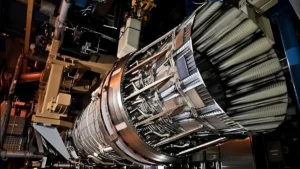
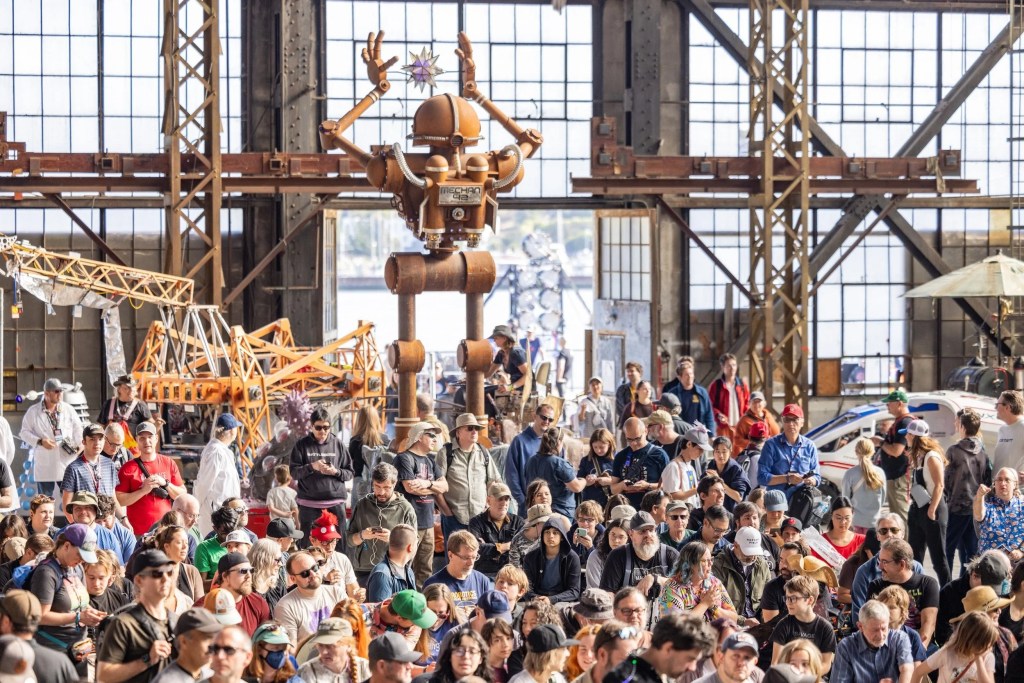
Maker Faire Bay Area is set to return to the historic Mare Island Naval Shipyard from September 25 to September 27, 2026, centering its most ambitious robotics exhibition to date within the industrial expanse of "The Foundry." This venue, characterized by soaring steel architecture and an immense overhead crane formerly utilized for submarine maintenance, will serve as the backdrop for a diverse assembly of autonomous systems, kinetic art, and community-driven engineering projects. The event represents a significant milestone in the evolution of the maker movement, showcasing the transition from traditional mechanical fabrication to the integration of advanced artificial intelligence, distributed manufacturing, and synthetic biology.
The Evolution of Maker Faire at Mare Island
The selection of Mare Island as the permanent home for Maker Faire Bay Area reflects a strategic alignment between industrial heritage and modern innovation. Established in 1854 as the first U.S. naval installation on the Pacific coast, the shipyard has transitioned from a site of heavy military manufacturing to a hub for creative technology. The Foundry, with its acres of glass and historical industrial infrastructure, provides a symbolic setting for the "Robot Party," an exhibition designed to highlight the accessibility of high-level robotics to independent inventors and hobbyists.
Historically, Maker Faire has served as the flagship event for the global maker movement since its inception in 2006. As the 2026 event approaches, organizers have noted a distinct shift in the complexity of submissions. While early iterations of the faire focused on basic electronics and DIY crafts, the upcoming exhibition emphasizes agentic AI, sophisticated CAD-driven fabrication, and collaborative open-source ecosystems.

Pop Culture Replicas and the Legacy of Open-Source Engineering
A primary draw of the Foundry exhibition is the presence of high-fidelity robotic replicas that bridge the gap between cinematic imagination and practical engineering. The Bay Area Droid Builders, a long-standing collective of enthusiasts, will present a fleet of Star Wars-inspired droids. These machines are not merely static models but functional robots featuring complex drive systems, sound integration, and interactive behaviors developed through years of community knowledge-sharing.
Complementing the droids is "OpenSAINT," a modern robotic replica of the iconic "Johnny 5" from the film Short Circuit. Developed by the Input-Inc team, OpenSAINT is the culmination of over two decades of collective labor. The project serves as a case study in long-term collaborative engineering, utilizing modern design, fabrication, and electronics to realize a vision originally conceived in the 1980s. The Input-Inc team is scheduled to deliver a technical presentation on the Make: Le Tigre stage on Sunday, September 27, detailing the challenges of translating science-fiction aesthetics into production-ready robotic hardware.
Competitive Robotics and Tactical Engineering
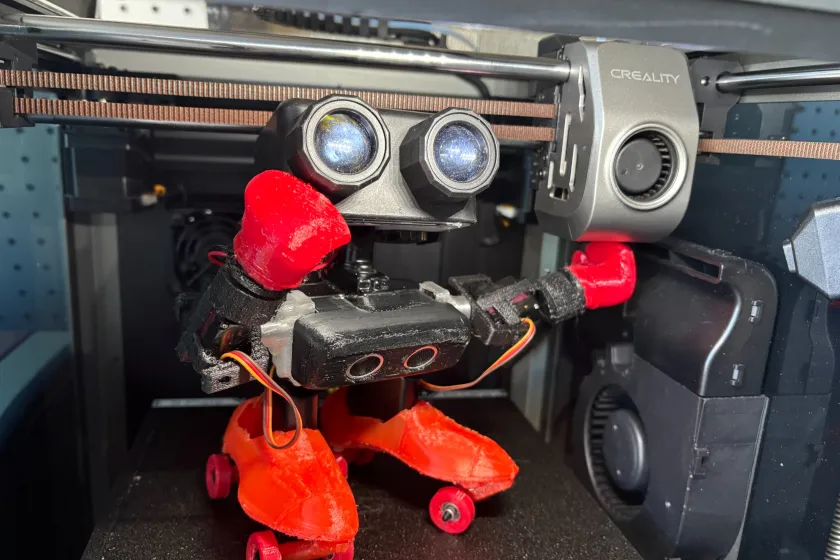
The exhibition also features a competitive dimension through "Mech Warfare," a combat-oriented robotics league. Unlike traditional "battle bots" that rely on kinetic destruction, Mech Warfare utilizes walking (bipedal or quadrupedal) robots equipped with airsoft systems and electronic target plates. The competition takes place within a scaled "cityscape" environment, complete with streets, obstacles, and miniature targets.
Participants in Mech Warfare navigate their robots using First Person View (FPV) technology, with live feeds displayed on monitors for the audience. This format emphasizes precision engineering and software development, as walking robots require significantly more complex balance and locomotion algorithms than wheeled counterparts. The event serves as a public demonstration of the current state of legged robotics in the hobbyist sector.

The Intersection of Artificial Intelligence and Human Interaction
A significant portion of the Foundry exhibition is dedicated to the practical application of Large Language Models (LLMs) and computer vision. "Robot Freedom," presented by Hip Monsters, focuses on the intersection of AI safety, security, and autonomy. This exhibit allows visitors to interact with "Talk To A Robot," a steampunk-themed machine that utilizes heuristic AI and LLMs. The exhibit is designed to educate the public on "alignment"—the process of ensuring AI behaviors remain consistent with human values—by allowing users to toggle between different AI personalities and observe the resulting shifts in behavior.
Similarly, the "Reachy Mini" project, developed by Palo Alto-based siblings Tatiana, Yaroslav, and Andrey Tsyplikhin, demonstrates the personalization of robotics through face recognition and long-term memory stores. The Reachy Mini serves as a family language tutor, capable of identifying individual users, recalling their previous lessons, and engaging in spoken dialogue tailored to their specific proficiency levels. This project highlights the potential for desktop robotics to move beyond novelty and into the realm of functional, personalized consumer technology.

Decentralized Production and Distributed Manufacturing
The 2026 exhibition also addresses the logistical and economic frameworks supporting the maker community. Elijah Peralta, a machinist from Apple Valley, California, will showcase "Assista3d," a decentralized network for 3D printing. The platform aims to eliminate shipping costs by routing 3D-printing jobs to the nearest available maker within a local community.
Peralta’s booth will feature a live demonstration of an instant-quote engine and an automated dispatch system that matches consumer parts with local production capacity. This model represents a shift toward "hyper-local" manufacturing, a concept that could significantly reduce the carbon footprint of small-scale production while providing a sustainable revenue stream for independent makers. Peralta will also display a 6-axis robot mounted on a 3-axis gantry, designed specifically for automation in the fast-food industry, further illustrating the crossover between hobbyist innovation and industrial application.

Artistic Innovation and Sensory Experiences
The Foundry will also host several projects that prioritize aesthetic and sensory engagement through technology. Nicky Alice, known for his previous "Tesseract" installation, will present "Ascension AR," an eight-foot-tall mirrored glass pyramid. The structure utilizes a two-way mirror system and internal LED panels to create an infinite kaleidoscope effect.
What distinguishes Ascension AR from traditional light art is its integration of Augmented Reality (AR). Participants wearing AR headsets can view live 360-degree footage from inside the sculpture, effectively "entering" the kaleidoscope. This project explores the boundaries of perception and the use of recursive geometry to create immersive digital-physical environments.

In a more whimsical vein, the "Yolo Maker Guys" will exhibit a collection of kinetic art pieces, including "Copperbot," a robot adorned with vacuum tubes and hundreds of LEDs, and "Cafebot," a mobile high-top table built on a wheelchair base. These projects emphasize the "joy of making," demonstrating how surplus industrial materials can be repurposed into functional art.
DIY Biology and Citizen Science
Broadening the definition of "making," Counterculture Labs will return to the faire to showcase the latest developments in DIY biology and citizen science. Based in the East Bay, the collective advocates for public access to biotechnological tools. Their exhibit in the Foundry includes a "Kombucha Petting Zoo," an active bioreactor, and "Agar Art," which utilizes living cultures as a medium for visual expression.

By bringing biotechnology into the same space as robotics and 3D printing, Maker Faire emphasizes the interdisciplinary nature of modern innovation. Counterculture Labs’ presence serves as a reminder that the tools of the 20th-century computer revolution are now being applied to the biological sciences, with potential implications for medicine, environmental mitigation, and sustainable materials.
Impact on STEM Education and Youth Engagement
The 2026 event places a heavy emphasis on youth-led innovation. Seventeen-year-old Advait Erigindindla will present a glove-controlled robotic hand that utilizes Velostat—a pressure-sensitive material—to track finger movements and translate them into robotic gestures. Erigindindla, who self-taught the necessary CAD and programming skills, intends for the project to serve as an inspiration for other students to engage with engineering.

Furthermore, the Foundry will host numerous regional FIRST Tech Challenge (FTC) teams. These middle and high school students will participate in friendly competitions and share their design processes with the public. The inclusion of these teams highlights the role of Maker Faire as an informal educational platform that bridges the gap between classroom theory and real-world application.
Conclusion and Broader Implications
The "Robot Party in the Foundry" at Maker Faire Bay Area 2026 is more than a display of technical prowess; it is a manifestation of the democratization of technology. By providing a platform for independent makers to showcase projects ranging from "Crappy Happy Robots" to sophisticated AI-driven language tutors, the event fosters a culture of open-source collaboration and iterative learning.

As robotics and artificial intelligence continue to integrate into daily life, events like Maker Faire provide the public with a critical opportunity to understand, interact with, and influence these technologies. The 2026 exhibition at Mare Island stands as a testament to the enduring power of curiosity and the transformative potential of the global maker community. Through the fusion of industrial history and futuristic technology, the Foundry becomes a site where the next generation of engineers, artists, and scientists can envision a more collaborative and creative future.