After an ambitious seven-year journey of extensive modifications, MIT Lincoln Laboratory’s Gulfstream IV (G-IV) aircraft, a critical asset for airborne research and development, has returned to its home base. This sophisticated research platform, operated and meticulously maintained by the Laboratory’s Tactical Defense Systems Group and Flight Test Facility (FTF), underwent a transformation that represents the most significant and complex airborne test bed modernization in Lincoln Laboratory’s history. The initiative was undertaken to bolster the U.S. Air Force’s Air Vehicle Survivability Evaluation (AVSE) program, ensuring its operational capabilities for decades to come. The monumental effort was a collaborative endeavor, with the Tactical Defense Systems Group and the FTF working in close concert with Field Aviation, a distinguished aerospace company based in Toronto, Canada.
"Our team made hundreds of trips to Canada and dedicated countless weekends to keep the project moving along," stated David Culbertson, FTF manager, reflecting on the arduous process. "Seeing the aircraft finally return to the laboratory invoked a sense of pride and satisfaction." This sentiment underscores the dedication and perseverance required to bring such a complex engineering project to fruition.
A Legacy of Airborne Testing for National Security
For over four decades, the Tactical Defense Systems Group has been a cornerstone in supporting the AVSE program. This program is vital for assessing the resilience and performance of U.S. aircraft and space assets against a spectrum of current and evolving threats. Historically, the group relied on a modified Gulfstream II (G-II) for its airborne testing needs, a platform that had been in service since the early 1990s. However, as the G-II approached the end of its service life, particularly concerning the looming challenge of parts availability, the need for a successor became apparent.
In 2013, a comprehensive series of studies was initiated to identify a suitable replacement. These studies meticulously evaluated various options, ultimately concluding that the G-IV offered the optimal combination of performance, capabilities, and long-term viability. Key advantages of the G-IV included its superior altitude and range capabilities, its projected long-term sustainability, and its cost-effectiveness when considering its extended operational lifespan. Following these findings, MIT Lincoln Laboratory officially acquired the G-IV in 2015, setting the stage for its extensive modernization.
Strategic Modernization for Extended Operational Life
To circumvent the recurring expense and administrative complexities associated with the Federal Aviation Administration (FAA) certification process over the anticipated 25 to 30-year operational life of the G-IV, the decision was made to complete all planned modifications in a single, comprehensive undertaking. This strategic approach aimed to minimize future disruptions and ensure a streamlined path to long-term operational readiness.
A rigorous competitive bidding process was conducted to select a contractor capable of executing these extensive modifications. Field Aviation emerged as the chosen partner, a decision bolstered by their established track record, which included prior successful modifications of the G-II and other aircraft for Lincoln Laboratory. In December 2018, FTF pilots ferried the G-IV to Toronto, with an initial estimated timeframe of three to four years for the modernization work.
Navigating Challenges and Ensuring Project Continuity
The ambitious timeline for the G-IV’s modernization, however, encountered unforeseen obstacles, most notably the pervasive disruptions caused by the COVID-19 pandemic. Coupled with shifts in contractor management, these factors extended the project’s duration significantly beyond initial projections. In response to these challenges and to ensure the aircraft’s eventual return, MIT Lincoln Laboratory took a more direct role in overseeing the aircraft’s modifications, maintenance, and reassembly.
This enhanced oversight required an unprecedented level of coordination and dedication from various Laboratory teams. Engineers, mechanics, pilots, program managers, and legal experts collaborated intensely to secure the necessary Canadian work permits and maintain a continuous on-site presence to facilitate progress. A pivotal figure in this sustained effort was Senior Aircraft Mechanic Craig Rowe, who served as the lead crew chief. Rowe, recognized with a 2026 MIT Excellence Award for Outstanding Contributor, traveled to Canada monthly with his team members, demonstrating an exceptional commitment to the project’s success. His leadership and the collective dedication of the on-site teams were instrumental in overcoming the logistical and operational hurdles posed by the extended timeline.
A Comprehensive Structural and Systems Overhaul
The transformation of the G-IV into a specialized research platform involved a meticulous process of dismantling, tracking, and reinstalling over 2,000 individual components. The revamped aircraft now boasts 12 major modifications, each necessitating substantial structural alterations to accommodate advanced research capabilities.
Enhancing Aerodynamic Capabilities and Sensor Integration
A significant aspect of the modernization involved fortifying the aircraft’s wings to support the integration of external sensor pods. Mechanics installed four pylons on the wings, designed to carry sensor payloads ranging from 200 to over 1,000 pounds. This required substantial structural reinforcement to withstand the increased weight, stresses, and aerodynamic loads encountered during flight. Furthermore, a fifth, larger sensor pylon was integrated onto the forward lower fuselage. This pylon is capable of supporting up to 2,000 pounds and accommodating systems nearly 19 feet in length.
The development of these specialized pylons was a protracted process, spanning nearly five years. It involved intensive reverse engineering, including the procurement and disassembly of a wing from a scrapped G-IV to obtain precise measurements of internal structural components. The installation itself was equally demanding, taking almost two years due to the limited access to the inner wing structure, which is typically only accessible through small inspection panels.
Streamlining External Equipment Mounting
To facilitate the rapid deployment of external antennas and sensor systems, the aircraft’s roof and lower fuselage were modified to create flat, stable mounting surfaces. This design eliminates the need for repeated intrusions into the aircraft’s pressurized fuselage, thereby enhancing efficiency and safety. The aircraft’s nose and tail sections were also extended with standardized sensor-mounting interfaces. This crucial enhancement allows for the rapid placement of sensors for both forward- and aft-facing test scenarios, providing greater flexibility in data acquisition. The six-foot nose extension, for instance, necessitated a complete gutting of the cockpit to allow for internal structural reinforcement to bear the considerable weight of the mounting interface and test systems.
Upgrading the Interior for Advanced Research Operations
The interior of the G-IV underwent a radical transformation to support its new role as a mobile research laboratory. The cabin was outfitted with 14 equipment racks, providing ample space for sophisticated instrumentation. Workstations for six onboard operators were installed, facilitating real-time data monitoring and analysis. An extensive network of fiber-optic, Ethernet, and coaxial cables was laid to ensure high-speed data transmission. Advanced liquid- and air-cooling systems were integrated to manage the heat generated by the electronic equipment, ensuring optimal operating conditions. Crucially, a dedicated power-distribution infrastructure was established, separated from the baseline aircraft’s systems for enhanced safety and reliability.
Powering Innovation: The Auxiliary Power Unit Upgrade
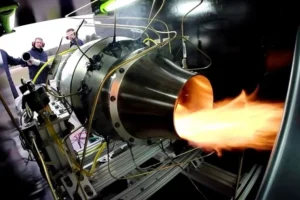
A significant engineering challenge involved developing a robust power generation system capable of supporting the demanding electrical requirements of the test systems in flight, while simultaneously adhering to stringent FAA fire-containment standards. The aircraft’s original Auxiliary Power Unit (APU), designed primarily for engine startup assistance, was insufficient for the mission’s power needs and incapable of airborne operation.
Engineers at Field Aviation undertook the complex task of designing an entirely new, fireproof titanium enclosure to house a larger, more powerful APU. This upgraded APU is capable of producing nearly double the original electrical output, extending its operational capacity up to the G-IV’s maximum altitude ceiling of 45,000 feet. To validate the effectiveness of this critical upgrade, the MIT Lincoln Laboratory’s Engineering Division conducted extensive simulations. These simulations meticulously analyzed the APU inlet airflow, ensuring that it would consistently allow for maximum APU power output throughout the entire flight duration, thereby guaranteeing the reliability of the onboard research systems.
Broader Implications for U.S. Defense Capabilities
The successful modernization of the G-IV represents a significant advancement for the U.S. Air Force’s AVSE program. The enhanced capabilities of this new airborne test bed will allow for more sophisticated and comprehensive evaluations of aircraft survivability against increasingly advanced threats. The extended range and altitude capabilities, coupled with the ability to rapidly deploy a wide array of sensors, will provide researchers with unprecedented data for threat assessment and defense system development.
This project underscores MIT Lincoln Laboratory’s continued commitment to providing cutting-edge research and development support for national security initiatives. The successful completion of such a complex, multi-year project, despite facing significant global challenges, highlights the ingenuity, dedication, and collaborative spirit inherent within the Laboratory’s scientific and engineering community. The re-deployment of this state-of-the-art research platform signifies a renewed and strengthened capacity to safeguard U.S. aerospace assets and maintain a critical technological edge in a dynamic global security environment.