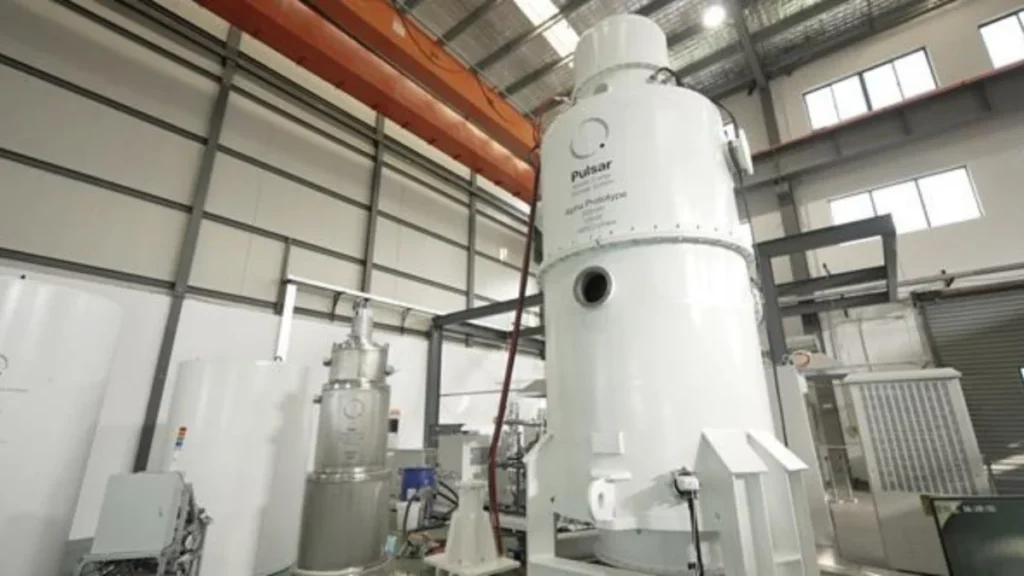
Qnetic, a pioneering manufacturer of flywheel-based energy storage systems, has announced a significant milestone with the commencement of low-speed testing for its 200kWh Pulsar prototype system. This critical phase of validation will meticulously assess the system’s control and safety protocols before the unit progresses to higher rotational speeds, marking a crucial step towards bringing this innovative grid-scale storage solution to market. The successful completion of these initial tests is paramount for confirming the foundational integrity and operational reliability of a technology poised to address some of the most pressing challenges in renewable energy integration.
The global energy landscape is undergoing a profound transformation, driven by an accelerating shift towards renewable energy sources such as solar and wind. This transition, while essential for combating climate change and achieving decarbonization targets, introduces inherent complexities due to the intermittent nature of these energy sources. Solar power is unavailable at night, and wind generation fluctuates with weather patterns, making direct, uninterrupted connection to the electrical grid problematic. This intermittency creates significant demand for robust, reliable, and cost-effective energy storage systems that can capture surplus energy during periods of high generation and dispatch it when demand outstrips supply, thereby stabilizing the grid and ensuring continuous power delivery.
The Urgent Imperative for Advanced Energy Storage Solutions
The rapid expansion of renewable energy capacity has exacerbated the need for sophisticated energy storage. According to the International Energy Agency (IEA), global renewable electricity capacity is projected to increase by over 2,400 GW between 2022 and 2027, an amount equivalent to the entire power capacity of China. This immense growth necessitates an equally robust expansion of storage infrastructure. Without adequate storage, grids face challenges such as curtailment—the forced reduction of renewable generation due to oversupply or grid congestion—and increased reliance on fossil fuel "peaker plants" to fill gaps, undermining the very goals of decarbonization. The U.S. Energy Information Administration (EIA) also forecasts substantial growth in utility-scale battery storage capacity, highlighting the market’s demand for diverse solutions.
Currently, lithium-ion (Li-ion) batteries dominate the high-capacity energy storage market, offering impressive energy density and a relatively mature supply chain. However, they come with notable drawbacks: their high upfront cost, typically ranging from $150-$350 per kilowatt-hour (kWh) for grid-scale applications, can be prohibitive. Furthermore, Li-ion batteries have a limited number of charge-discharge cycles (often 3,000 to 10,000 cycles over a 10-15 year lifespan) before significant degradation occurs, impacting their long-term economic viability. Concerns also persist regarding the environmental impact of mining raw materials like lithium and cobalt, as well as recycling challenges and safety issues related to thermal runaway. These limitations have spurred extensive research and development into alternative storage technologies that can deliver comparable power densities and responsiveness at a fraction of the cost, with extended lifecycles and enhanced sustainability. Flywheel-based energy storage systems have emerged as a top contender, offering a compelling blend of low operational cost, high scalability, and exceptional durability.
Unpacking Flywheel Technology: Qnetic’s Approach
Flywheel energy storage, while not a new concept, has seen significant advancements in materials science, magnetic levitation, and power electronics, making it increasingly viable for grid-scale applications. At its core, Qnetic’s alternative to the lithium-ion battery consists of a heavy rotor, or flywheel, designed to spin at extremely high, often supersonic, speeds within a nearly frictionless vacuum chamber. The fundamental principle is the conversion of electrical energy into kinetic energy and vice versa.
When renewable energy power plants generate surplus electricity, this energy is used to accelerate the flywheel, storing the energy as rotational kinetic motion. Unlike chemical batteries, which rely on electrochemical reactions, flywheels store energy purely mechanically. When electricity demand rises, the rotor can be precisely decelerated by connecting it to a generator. This generator converts the kinetic motion back into electrical charge, which can then be supplied to the grid on demand. The entire process of charge and discharge is highly efficient, typically exceeding 90%, and critically, involves no chemical conversion or material degradation of the primary storage medium—the rotor itself. This absence of chemical wear means that flywheels can endure tens of thousands, or even hundreds of thousands, of charge-discharge cycles with minimal to no degradation, offering a lifespan potentially two to three times longer than that of conventional batteries.
Modern flywheels like Pulsar leverage advanced composite materials, such as carbon fiber, for their rotors to withstand the immense centrifugal forces at high speeds. They also often employ magnetic levitation bearings to virtually eliminate friction, further enhancing efficiency and longevity. The vacuum environment is crucial to minimize air resistance, which would otherwise dissipate energy and heat the system. These technological refinements allow flywheels to achieve rapid response times, capable of going from full discharge to full charge (or vice versa) in seconds, making them ideal for grid stabilization services like frequency regulation and voltage support.
Pulsar’s Development Timeline and Validation Program
Qnetic’s journey with Pulsar has been methodical and rigorously structured, adhering to a staged validation program designed to systematically de-risk a system of this scale and complexity. The initial mechanical assembly of Pulsar was successfully completed in June, as previously reported. This was followed by a series of exhaustive component and structural tests, each aimed at verifying the integrity and performance of individual parts before integrating them into the full prototype. These preliminary tests are essential for identifying and resolving potential issues early, thereby preventing costly delays and ensuring the safety of subsequent operational phases.
The current low-speed testing represents the next critical phase. During these tests, the Pulsar system is operated at controlled, lower rotational speeds to validate the sophisticated control systems and safety mechanisms. This includes verifying the precise management of motor/generator operation, bearing systems, vacuum integrity, and emergency shutdown procedures. The data collected from these tests will be meticulously analyzed to confirm that the system responds predictably and safely under various operational scenarios, building a robust foundation for increasing operational parameters.
Qnetic recently reported a significant early success: Pulsar completed its first 100 continuous charge-discharge cycles with zero faults or degradation. This achievement is a key indicator of the system’s inherent reliability and durability, directly addressing one of the primary limitations of chemical battery technologies. Furthermore, during these initial tests, the motor demonstrated an impressive 130 kW of power output at an exceptional 97.3 percent efficiency, with rotor speeds exceeding 11,000 revolutions per minute (rpm). These performance metrics are crucial, validating the efficiency and robustness of the system’s power conversion architecture and its ability to rapidly store and dispatch energy.
Michael Pratt, CEO of Qnetic, emphasized the strategic importance of this methodical approach in a recent press release. "Our approach is to increase operating conditions methodically, validating the data at each stage and resolving issues before moving on. That process fundamentally de-risks a system of this scale before full-speed testing and eventual customer deployment." This statement underscores the company’s commitment to rigorous engineering and comprehensive testing, acknowledging the high demands placed on mechanical systems, controls, and containment when storing significant amounts of energy in kinetic form.
Independent Validation and Industry Collaboration
Beyond internal validation, Qnetic is actively engaged in collaborative efforts to ensure independent assessment of its technology. Results from Pulsar testing are being shared with the Electric Power Research Institute (EPRI) as part of its Readiness Informed by Shared Knowhow, Evaluation, and Data (deRISKED) program, in which Qnetic is a participant. EPRI is an independent, non-profit organization that conducts research and development related to the generation, delivery, and use of electricity for the benefit of the public. Its involvement lends significant credibility to Qnetic’s test results and helps bridge the gap between emerging technologies and their adoption by utilities.
Pratt further highlighted the importance of this collaboration: "Independent validation is a critical part of moving an emerging energy storage technology from development into the field. The data we’re generating with Pulsar allows us, EPRI, and ultimately utilities and customers to evaluate the technology based on measured performance. We’re deliberately building that evidence as we move toward commercialization." This transparency and commitment to third-party verification are crucial for building trust within the energy sector, where utilities and grid operators require robust evidence of performance, safety, and reliability before investing in new technologies. The deRISKED program specifically aims to accelerate the deployment of innovative energy storage solutions by providing a platform for rigorous, standardized evaluation and data sharing, thereby reducing perceived risks for potential adopters.
Broader Implications for the Energy Landscape
The successful development and commercialization of advanced flywheel energy storage systems like Qnetic’s Pulsar hold profound implications for the global energy landscape.
Firstly, they can significantly enhance grid stability and resilience. Flywheels’ rapid response times make them exceptionally well-suited for ancillary services such as frequency regulation, which is vital for maintaining the balance between electricity supply and demand in real-time. Their ability to quickly absorb or inject power can prevent costly outages and stabilize grid operations in the face of fluctuating renewable generation.
Secondly, widespread adoption of flywheel technology could accelerate the integration of higher percentages of renewable energy into national grids. By providing reliable, long-duration (within their specified discharge window) and high-cycle storage, flywheels can help overcome the intermittency challenge, reducing the need for fossil fuel backup and enabling greater penetration of clean energy sources. This directly supports global decarbonization targets and efforts to mitigate climate change.
Economically, flywheel systems offer a compelling value proposition. While initial capital costs can be substantial, their extremely long operational life and minimal degradation mean a significantly lower levelized cost of storage (LCOS) over their lifetime compared to many battery technologies. This economic advantage, coupled with their environmental benefits (minimal hazardous materials, easy recyclability of components), makes them an attractive option for utilities, independent power producers, and industrial facilities seeking sustainable and cost-effective energy management solutions. The global market for energy storage is projected to reach hundreds of billions of dollars in the coming decade, with diverse technologies vying for market share. Flywheels are poised to capture a significant segment, particularly for applications requiring high power, frequent cycling, and long asset life.
Looking ahead, Qnetic’s progression to full-speed testing and eventual customer deployment will be closely watched by the industry. The challenges will include scaling up manufacturing, optimizing system integration, and navigating regulatory frameworks. However, the inherent advantages of flywheel technology, combined with Qnetic’s methodical validation approach and strategic partnerships, position Pulsar as a potentially transformative force in the critical field of grid-scale energy storage. Its success could pave the way for a more stable, resilient, and sustainable energy future.