A significant advancement in material science promises to streamline the production of battery components for electric vehicles (EVs) and energy storage systems. Novelis, a global leader in aluminum rolling and recycling, has introduced a groundbreaking pre-applied aluminum coating designed to protect the metal during forming while simultaneously embedding crucial properties required for high-performance battery applications. This innovative approach targets critical components such as battery enclosures, casings, and electrical connectors, commonly known as bus bars, aiming to simplify manufacturing processes, enhance durability, and improve sustainability across the rapidly expanding battery ecosystem.
The core of this new technology lies in combining automotive-grade aluminum sheet with specialized surface treatments. These treatments are engineered to provide superior corrosion resistance and formability, two vital characteristics for components subjected to the harsh conditions within battery packs and the intricate demands of modern manufacturing. Crucially, the coated material can also be tailored to offer electrical insulation, a property essential for preventing unwanted electrical contact and ensuring the safety and efficiency of battery systems. This development marks a strategic expansion of Novelis’s portfolio of coated aluminum solutions, positioning the company at the forefront of material innovation for the burgeoning clean energy sector.
Addressing Complex Manufacturing Challenges in Battery Production
The manufacturing landscape for battery components is inherently complex, driven by the stringent demands of performance, safety, and longevity. Aluminum has long been recognized as an ideal material for many battery applications due to its advantageous properties: it is remarkably lightweight, highly durable, and infinitely recyclable. However, its raw form often necessitates additional processing steps to imbue it with the full range of characteristics required for battery integration. Traditional methods frequently involve post-forming treatments to apply corrosion protection or electrical insulation, adding layers of complexity, cost, and time to the production cycle.
Novelis’s innovation directly addresses these challenges. The company’s proprietary water-based coating is applied to aluminum coils before they undergo the stamping and forming processes. This pre-application is a paradigm shift, as the coating is designed to maintain its efficacy and integrity even after the aluminum has been shaped into complex geometries. This capability is particularly significant given that battery components often require intricate forms to optimize space and performance within a battery module or pack. By integrating these critical properties upfront, manufacturers can potentially eliminate several downstream processing steps, such as external lubrication during stamping and subsequent e-coating processes for insulation or further corrosion protection.
Milan Felberbaum, Director R&D, Novelis Europe, underscored the strategic significance of this development, stating, “Leveraging decades of automotive expertise, we have developed aluminum solutions that combine advanced surface technologies with high-performance sheet products for demanding battery applications. By integrating these capabilities, we help customers improve manufacturing efficiency while supporting battery performance and durability.” This statement highlights the synergy between Novelis’s extensive experience in the automotive sector—where lightweighting and high-performance materials are paramount—and the evolving needs of the battery industry.
A Deeper Dive into the Technical Advantages
The technical benefits of Novelis’s pre-coated aluminum are multifaceted, directly impacting both the manufacturing floor and the operational lifespan of battery systems:
- Enhanced Formability and Process Simplification: The water-based coating acts as an integrated lubricant during stamping and forming operations. This reduces friction, minimizes tool wear, and allows for the creation of more complex component designs without material degradation. For manufacturers, this translates into potentially higher production yields, reduced scrap rates, and less need for costly and messy external lubricants. The elimination or reduction of post-forming treatments significantly shortens the production cycle, freeing up valuable factory space and resources.
- Superior Corrosion Resistance: Battery environments, particularly those involving liquid coolants or potential electrolyte leaks, can be highly corrosive. The specialized surface treatment provides a robust barrier against degradation, which is critical for maintaining the structural integrity and electrical performance of components over the battery’s lifespan. This directly contributes to the overall durability and safety of the battery pack, a crucial factor for both EV and stationary storage applications.
- Integrated Electrical Insulation: For many battery components, particularly bus bars that connect individual cells or modules, preventing unwanted electrical contact is paramount for safety and efficiency. The ability to engineer the coating for specific electrical insulation properties means that manufacturers can achieve this without applying separate dielectric layers or using additional insulating materials. This integration reduces component count, assembly complexity, and potential points of failure, contributing to a more compact and reliable battery design.
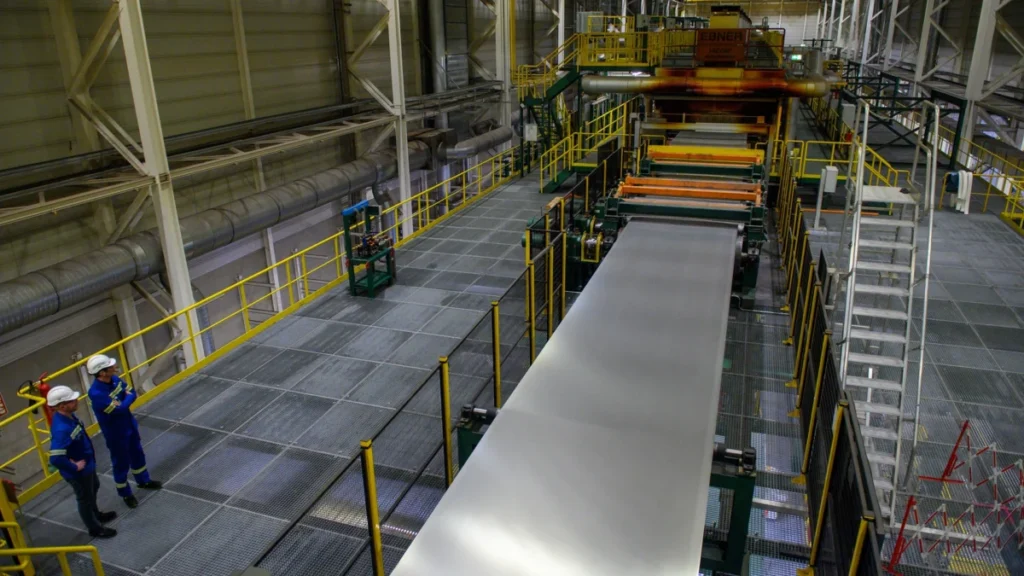
- Proven Technology: Novelis reports that this coating technology has already been rigorously tested and is actively in use on its advanced coating line in Germany. This operational validation provides confidence in its industrial scalability and performance consistency, assuring potential customers of its readiness for commercial deployment.
The Broader Context: Material Innovation in a Growing Market
The introduction of Novelis’s pre-coated aluminum comes at a pivotal moment for the global energy sector. The electric vehicle market is experiencing exponential growth, with projections indicating tens of millions of EVs sold annually in the coming decade. Concurrently, the demand for stationary energy storage systems, vital for grid stabilization, renewable energy integration, and industrial applications, is also surging. Both markets are heavily reliant on advanced battery technologies, which in turn depend on sophisticated material solutions.
According to various industry reports, the global EV battery market size is projected to reach over $300 billion by 2030, driven by policy support, technological advancements, and consumer adoption. Similarly, the energy storage market is anticipated to expand significantly, with gigawatts of new capacity deployed annually. This rapid expansion places immense pressure on the entire supply chain to innovate, reduce costs, improve efficiency, and enhance sustainability.
Historically, battery component manufacturing has often focused on optimizing cell chemistry. While chemical breakthroughs remain critical, the industry is increasingly recognizing the importance of optimizing the "balance of plant"—the materials and processes surrounding the cells—to achieve holistic improvements in performance, cost, and environmental footprint. Novelis’s solution exemplifies this shift, demonstrating how advancements in material engineering can unlock significant benefits beyond the electrochemical core of the battery.
Strategic Implications for Manufacturers and the Supply Chain
For EV manufacturers and battery pack assemblers, Novelis’s pre-coated aluminum presents several compelling strategic advantages:
- Cost Reduction Potential: While Novelis has not yet provided quantified figures for cost savings, the reduction in manufacturing steps, decreased need for external lubricants, and potentially lower scrap rates inherently suggest a pathway to significant cost efficiencies. Less processing time also translates to lower energy consumption and labor costs.
- Accelerated Production Timelines: By simplifying the manufacturing process, companies can potentially shorten lead times for battery component production, enabling faster ramp-up of EV and energy storage system assembly lines. This is crucial in a market characterized by intense competition and rapid innovation cycles.
- Improved Product Performance and Longevity: The enhanced corrosion resistance and integrated electrical insulation contribute directly to the overall reliability and lifespan of battery packs. For consumers, this means more durable EVs and energy storage systems, potentially reducing warranty claims and improving brand reputation for manufacturers.
- Flexibility in Design: The superior formability of the coated aluminum allows engineers greater freedom in designing battery enclosures and components, optimizing for space, weight, and thermal management within the battery pack.
Commitment to Sustainability and Circular Economy
Beyond immediate manufacturing and performance benefits, Novelis is also emphasizing the significant environmental advantages of its new offering, aligning with global efforts to decarbonize the transportation and energy sectors. The company highlights the use of high-recycled-content, low-carbon aluminum in its products. Aluminum is inherently one of the most recyclable materials, requiring only 5% of the energy to recycle compared to producing primary aluminum.
Novelis’s commitment to a closed-loop recycling system is particularly pertinent. This model envisions aluminum recovered from end-of-life products—such as retired EV batteries or automotive parts—being returned directly to the manufacturing cycle to produce new materials. This drastically reduces the environmental impact associated with raw material extraction and processing, lowering the overall carbon footprint of battery supply chains. As regulatory pressures for sustainable manufacturing and extended producer responsibility intensify, solutions that facilitate a circular economy will become increasingly valuable.
The environmental implications extend beyond recycling. The lightweight nature of aluminum contributes to energy efficiency in EVs, as lighter vehicles require less energy to move. The simplified manufacturing process also has a reduced energy footprint compared to multi-step post-treatment processes. This holistic approach to sustainability, encompassing material sourcing, production efficiency, and end-of-life recycling, positions Novelis as a key enabler for a greener future.
Future Outlook and Industry Impact
The introduction of Novelis’s advanced aluminum coating is not merely an incremental improvement; it represents a foundational shift in how battery components can be designed and manufactured. By addressing critical pain points in corrosion protection, electrical insulation, and formability at the earliest stages of material preparation, Novelis is offering a solution that can unlock greater efficiency, enhance safety, and drive sustainability across the battery industry.
While the current announcement focuses on the material and manufacturing process rather than changes in battery chemistry, its impact on the total cost of ownership and the environmental profile of battery systems could be profound. Industry analysts anticipate that such innovations in material science will play an increasingly crucial role in the ongoing evolution of electric mobility and renewable energy storage. The ability to integrate multiple desired properties into a single, pre-treated material simplifies the supply chain, reduces reliance on multiple vendors for different treatments, and offers a more robust, integrated solution.
As the battery and energy storage markets continue their rapid expansion, material suppliers like Novelis, with their deep expertise in high-performance metals and commitment to sustainable practices, are poised to be critical partners for OEMs. The expanded portfolio, building on Novelis’s long-standing relationship with the automotive industry, signifies a strategic pivot to meet the unique and demanding requirements of the next generation of energy technologies, promising a future where battery components are not only more efficient and durable but also produced with a significantly lighter environmental footprint. The market will closely watch for quantitative data on cost savings and performance improvements as this innovative solution gains wider adoption across the global battery manufacturing landscape.