This week’s 3D printing news cycle highlights significant advancements across multiple sectors, from aerospace and industrial manufacturing to healthcare and renewable energy. Eplus3D and Young-Will Aerospace have successfully validated a laser powder bed fusion (LPBF) process for a high-performance nickel-copper alloy, a critical step for aerospace applications demanding superior material properties. Meanwhile, Meltio is bolstering its North American presence with the introduction of a U.S.-assembled Meltio Robot Cell, designed to streamline metal additive manufacturing for industrial clients. In the healthcare space, Mosaic Manufacturing has launched a dedicated 3D printing platform, Orion, aimed at revolutionizing the production of custom foot orthotics. Beyond commercial applications, a Kennesaw State University undergraduate student has engineered a 3D printed robotic rehabilitation arm inspired by personal experience, showcasing the potential of additive manufacturing in assistive technologies. Finally, research from the University of Waterloo demonstrates how 3D printed electrodes could significantly enhance the efficiency and scalability of redox flow batteries for renewable energy storage.
Eplus3D and Young-Will Aerospace Advance Nickel-Copper Alloy Processing for Aerospace
A significant milestone in metal additive manufacturing (AM) has been achieved with the successful validation of a laser powder bed fusion (LPBF) process for a nickel-copper alloy, a material prized for its excellent corrosion resistance, good processability, and robust medium-temperature strength. This collaboration between Eplus3D, a provider of metal AM solutions, and Young-Will Aerospace focused on leveraging Eplus3D’s EP-M400 metal PBF printer to overcome the inherent challenges associated with additively manufacturing these demanding alloys.
Nickel-copper alloys are indispensable in the aerospace industry, finding applications in critical components such as landing gear, rocket engine pipe joints, hydraulic systems, fuel pipelines, and aircraft engine combustion chambers. However, their successful implementation via metal AM hinges on meticulous control over potential issues like crack formation, achieving optimal part density, mitigating elemental segregation, and ensuring consistent mechanical performance. Traditional manufacturing methods, while established, often involve complex multi-step processes and can be less efficient for producing intricate aerospace geometries.
The Eplus3D EP-M400, with its substantial build volume of 400 x 400 x 450 mm and a maximum build rate of up to 210 cm³/h, powered by as many as six lasers, provided the necessary precision and capability for this complex validation. The collaborative effort involved a coordinated optimization of the equipment’s capabilities, scanning strategies, and process parameters, carefully tailored to the specific forming characteristics of the nickel-copper alloy. This strategic approach allowed for the establishment of a stable and reliable printing foundation.
The outcome of this project was the successful production of crack-free nickel-copper alloy parts. Crucially, these additively manufactured components achieved a tensile strength of 570 MPa, representing an impressive 18% improvement over conventionally forged counterparts. This achievement not only validates the LPBF process for this specific alloy but also establishes a robust foundation for future development and application of specialized alloys within the aerospace sector, potentially leading to lighter, stronger, and more cost-effective aerospace components. The validation process, initiated to meet stringent aerospace requirements, underscores the growing maturity of metal AM for high-stakes applications.
Meltio Strengthens North American Support with U.S.-Assembled Robot Cell
Meltio, a Spanish company at the forefront of wire-laser metal deposition (W-LMD) technology, is significantly enhancing its commitment to industrial customers in the Americas with the introduction of a U.S.-assembled Meltio Robot Cell. This strategic move, executed through a partnership with longtime U.S. collaborator FORCE Automation, a specialist in robotic integration, aims to reduce lead times and improve service levels for American businesses seeking advanced metal additive manufacturing solutions.
The Meltio Robot Cell is a comprehensive, turnkey system designed to automate and optimize the printing of metal parts across a diverse range of industries. The decision to establish U.S. assembly operations directly addresses the logistical and economic advantages of local manufacturing, including minimizing shipping delays and customs complexities inherent in importing equipment from overseas. This localization also signifies Meltio’s dedication to supporting North America’s industrial base and its journey towards greater technological sovereignty.
FORCE Automation’s extensive experience in integrating Meltio’s technology with robotic arms has been instrumental in developing this plug-and-play solution. The U.S.-assembled Meltio Robot Cell is engineered for seamless integration into standard industrial environments, requiring only a single inert gas supply and an electrical power connection to become operational. Key features include autonomous operation, integrated monitoring systems, and a robust package that encompasses the Meltio Engine, Meltio Space software, and essential accessories. Furthermore, the system’s compatibility with Meltio’s open hardware platform ensures flexibility and adaptability for various manufacturing needs.
Gabriel Ortiz, Meltio North America Sales Manager, emphasized the significance of this development: "Meltio is committed to supporting the North America industrial base on its journey towards reestablishing technological sovereignty, and providing Meltio’s technology assembled in the USA, is just a first step towards improving access and service levels to an already established customer base using what is now better understood as one of the most flexible and user-friendly technologies that provides real solutions to real everyday problems of obsolescence, logistics nightmares, and excessive costs of operation in many cases." He further highlighted the platform’s open nature, enabling integration with robotic arms from any manufacturer, and its capacity to meet a wide spectrum of manufacturing demands through its autonomous production capabilities. The introduction of this domestically assembled system is poised to accelerate the adoption of metal AM for U.S. manufacturers seeking reliable, efficient, and adaptable solutions.
Mosaic Manufacturing Revolutionizes Orthotics Production with the Orion Platform
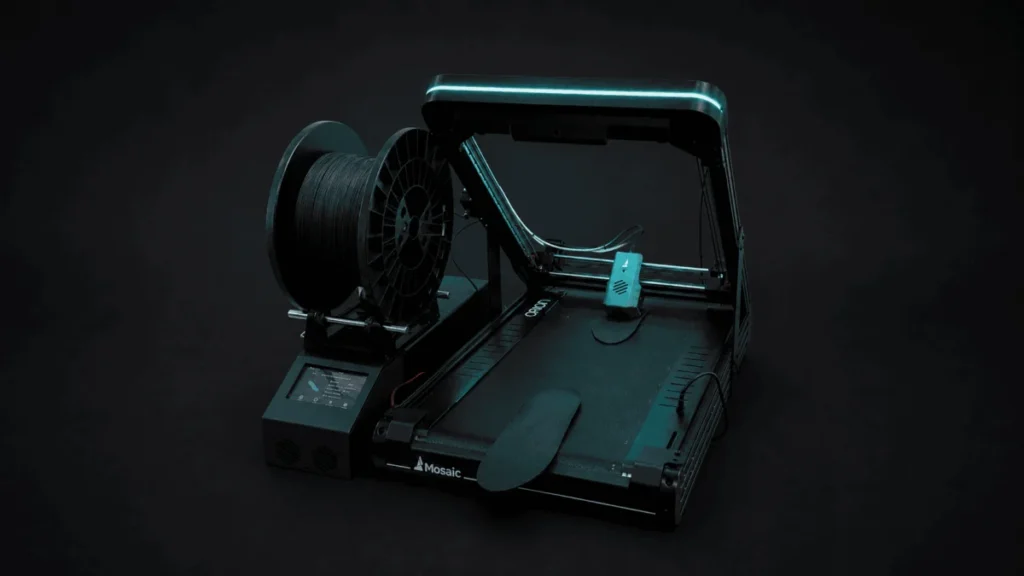
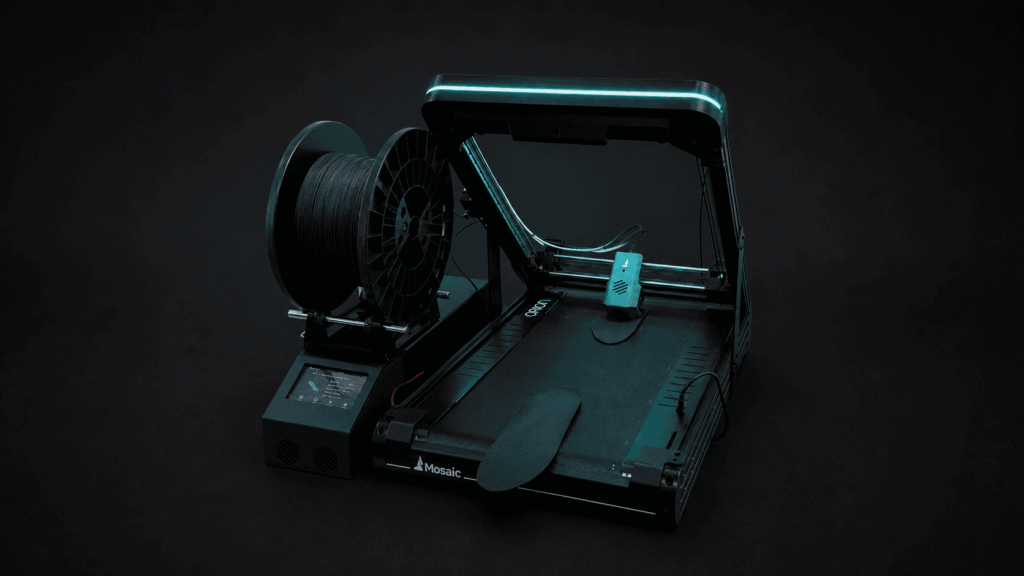
Mosaic Manufacturing has unveiled its latest innovation, the Orion, an automated 3D printing platform specifically engineered to streamline and democratize the production of custom foot orthotics. Recognizing the significant barriers—including high costs and implementation complexities—that have historically hindered the widespread adoption of digital orthotics fabrication, Mosaic has developed Orion in direct response to the needs of clinicians and orthotics manufacturers.
The Orion platform is designed to simplify, automate, and reduce the cost associated with creating personalized orthotic insoles. By automating key aspects of the production workflow, it aims to ensure consistent quality and efficiency while minimizing the need for extensive human labor. Mosaic positions Orion as an accessible, ready-to-deploy system that operates on an open-architecture workflow, capable of producing both soft and rigid patient-specific orthotics using proprietary materials.

A core feature of Orion is its belt-based 3D printing technology combined with automated queue management. This continuous production capability allows the printer to operate autonomously, producing custom orthotics around the clock, including overnight and on weekends, without manual intervention between prints. According to Mosaic, orthotics producers utilizing Orion can achieve production volumes of up to 300 pairs per month, with material costs as low as $6 per pair. The system also contributes to reduced material waste and a decrease in post-processing and hand-finishing requirements.
For organizations looking for a comprehensive digital workflow, Mosaic offers the Stryde Software Suite, which guides users from digital scanning through design and production management. Alternatively, Orion can be integrated with existing CAD/CAM setups, offering flexibility for businesses with established digital workflows. Mitch Debora, Mosaic CEO, stated, "The ask from orthotics manufacturers was clear: they want to move toward digital production, but getting there with the fragmented tools on the market has been painful. They wanted an end-to-end, validated solution they could implement confidently and thrive with – and our team delivered. Orion makes digital orthotics production accessible today." This launch signifies a pivotal step towards making personalized, digitally fabricated orthotics more accessible and cost-effective for a broader patient population.
Kennesaw State Undergrad Develops 3D Printed Robotic Rehabilitation Arm
Inspired by personal experience witnessing the challenges of mobility loss, Kai Clifford, a senior mechanical engineering student at Kennesaw State University, has developed a novel 3D printed robotic rehabilitation arm. His project, undertaken through the university’s Summer Undergraduate Research Program under the guidance of Professor Ayse Tekes, aims to enhance the effectiveness and comfort of rehabilitation exercises for individuals with upper-limb impairments, particularly stroke survivors.
Traditional rehabilitation exoskeletons often employ rigid joints, which can lead to patient discomfort and unwanted forces if they do not precisely align with the user’s anatomy. Clifford’s innovative design addresses this limitation by incorporating a 3D printed Reconfigurable Compliant Joint (RCJ) near the elbow. This flexible joint, combined with an integrated motor, wireless motion sensors, and a real-time control system powered by a Raspberry Pi, allows the robotic arm to guide rehabilitation exercises more naturally and comfortably.
The flexibility of the 3D printed RCJ is a key differentiator. It can better accommodate variations in patient anatomy and natural arm movement, reducing the risk of misalignment and associated discomfort. Furthermore, the inherent adaptability of 3D printing allows for the RCJ’s design to be easily modified and reconfigured to adjust resistance levels, tailoring the rehabilitation experience to each individual’s specific needs. Clifford described his creation as "like adding a muscle on top of your muscle. The device gives the arm additional support to help it move through rehabilitation exercises." He further elaborated on the RCJ’s unique functionality: "The reconfigurable compliant joint is what makes it different. If it’s unaligned with your joint, it’s going to try to realign with it."
The current phase of Clifford’s research involves rigorous testing to assess the robotic arm’s accuracy in tracking patient movements and its torque delivery capabilities. Future iterations will focus on optimizing wearability and patient comfort. This project exemplifies how accessible technologies like 3D printing, coupled with motivated student research, can lead to tangible advancements in assistive technologies, offering improved solutions for individuals undergoing physical rehabilitation.
University of Waterloo Research Advances Renewable Energy Storage with 3D Printed Electrodes
A groundbreaking development in the field of renewable energy storage has emerged from the University of Waterloo, where researchers have designed and tested a novel 3D printed electrode that could significantly enhance the efficiency and scalability of redox flow batteries (RFBs). RFBs, which utilize safer, water-based electrolytes compared to the flammable materials in lithium-ion batteries, are considered a promising technology for large-scale energy storage, crucial for buffering the intermittent nature of renewable sources like wind and solar power.
The research team, led by Dr. Maxime van der Heijden, a chemical engineering professor at Waterloo, was inspired by natural structures to redesign a critical component of RFBs: the porous electrodes. Traditional electrodes can limit the efficiency of the electrochemical reactions that store and release energy. By employing 3D printing, the researchers gained unprecedented control over the internal architecture of the electrodes, optimizing fluid flow and ensuring that the battery liquid can move more efficiently to reach the active reaction surfaces.
The team experimented with various triply periodic minimal surface (TPMS) geometries for their electrode designs, a class of mathematical surfaces characterized by their complex, interconnected structures. Their findings indicated that a "diamond" geometry significantly boosted performance, increasing efficiency by an impressive 52%. The porous electrodes were fabricated using digital light processing (DLP) 3D printing and subsequently heat-treated to create conductive carbon electrodes capable of carrying electrical current. Rigorous testing in laboratory flow cells and a functional vanadium redox flow battery confirmed the practical viability and performance enhancements offered by the new design.
Dr. van der Heijden explained the impact of their approach: "With 3D printing, we can design the internal structure of an electrode in ways that are difficult to achieve using conventional manufacturing. That gives us much greater control over how the liquid moves through the battery and reaches the surfaces where the energy-storing reactions take place." This advancement holds significant implications for making renewable energy more reliable and accessible by providing a more efficient and potentially more cost-effective solution for storing large quantities of clean energy. The team’s findings have been published in a peer-reviewed paper, paving the way for further development and potential commercialization of this technology.