A groundbreaking material, dubbed Stainless Steel for Hydrogen (SS-H₂), has been developed by a pioneering team at the University of Hong Kong (HKU), promising to fundamentally alter the economic landscape of green hydrogen production. This innovative alloy directly addresses a major limitation of conventional stainless steel, opening the door for its use in demanding electrochemical environments, particularly those involving corrosive seawater, and potentially slashing material costs by up to 40 times compared to existing solutions. The breakthrough represents a significant leap forward in materials science, offering a more sustainable and cost-effective pathway to the widespread adoption of green hydrogen, a crucial element in the global decarbonization strategy.
The Global Imperative for Green Hydrogen
The world stands at a critical juncture in its energy transition, with green hydrogen emerging as a pivotal player in decarbonizing hard-to-abate sectors such as heavy industry, shipping, and aviation. Produced through electrolysis powered by renewable energy sources like solar and wind, green hydrogen offers a clean fuel alternative, emitting only water vapor when consumed. However, its widespread adoption has been hampered by two primary challenges: the high cost of production and the scalability of infrastructure. Current green hydrogen production often relies on freshwater, a precious resource, or expensive desalination processes, further increasing costs. The vast potential of seawater as an inexhaustible feedstock for electrolysis has long been recognized, but its highly corrosive nature presents formidable material science hurdles. Saltwater electrolyzers demand materials that can withstand extreme electrochemical conditions, including high electrical potentials and the aggressive presence of chlorides, which can rapidly degrade most metals.
SS-H₂ Unveiled: A New Era for Electrolyzer Components
Led by Professor Mingxin Huang of HKU’s Department of Mechanical Engineering, the research team has engineered SS-H₂, a material specifically designed to resist severe corrosion under the very conditions that ordinary stainless steel cannot endure. This resilience makes SS-H₂ particularly promising for seawater electrolysis systems, where the search for practical and sustainable technologies has been an ongoing global endeavor. In performance tests within a saltwater electrolyzer, the new steel demonstrated capabilities comparable to the expensive titanium structural components currently employed for hydrogen production from desalinated seawater or acidic solutions. The key differentiator, and indeed the most impactful aspect of this discovery, is the profound reduction in cost that SS-H₂ offers.
The findings, which underscore a fundamental advance over conventional stainless steel, were rigorously peer-reviewed and published in the prestigious journal Materials Today in a study titled "A sequential dual-passivation strategy for designing stainless steel used above water oxidation." Recognizing the immense commercial potential, the researchers have already applied for patents covering this innovative technology in several countries, with two patents having already received authorization, laying the groundwork for future industrial deployment.
Deciphering the Achilles’ Heel of Conventional Stainless Steel
For approximately a century, stainless steel has been a cornerstone material in applications where corrosion resistance is paramount. Its remarkable durability largely stems from the presence of chromium (Cr). When chromium within the steel interacts with its environment, it forms a microscopically thin, yet robust, protective film on the surface, primarily composed of chromium oxide (Cr₂O₃). This passive layer acts as an effective barrier, preventing the underlying metal from succumbing to further corrosion.
However, this protective mechanism, while highly effective in many scenarios, possesses a critical limitation, particularly in high-voltage electrochemical environments. The protective chromium oxide, Cr₂O₃, can undergo further oxidation, transforming into soluble hexavalent chromium (Cr(VI)) species. Once this process initiates, the surface enters a state known as transpassive corrosion, leading to rapid degradation of the material. In conventional stainless steels, this transpassive corrosion typically commences at an electrical potential of approximately 1000 millivolts (mV) against a saturated calomel electrode (SCE). Crucially, the water oxidation reaction, an indispensable step during electrolysis, requires a substantially higher potential of around 1600 mV. This significant mismatch in potential thresholds has historically precluded the effective use of conventional stainless steel in many high-voltage electrochemical applications, including seawater electrolysis. Even advanced alloys like 254SMO super stainless steel, widely regarded as a benchmark chromium-based corrosion-resistant alloy with exceptional resistance to pitting in seawater, ultimately face this same challenge, exhibiting decreased corrosion resistance when electrical potentials become sufficiently high.
A Counter-Intuitive Breakthrough: Sequential Dual-Passivation
Professor Huang’s group has ingeniously circumvented this long-standing limitation through a novel approach termed "sequential dual-passivation." Rather than relying solely on the traditional chromium oxide layer for protection, SS-H₂ develops an additional, secondary protective layer that forms directly on top of the initial chromium oxide film. This second layer, surprisingly, is based on manganese (Mn) and begins to form at a potential of approximately 720 mV. The combined action of these two distinct protective layers allows SS-H₂ to maintain remarkable corrosion resistance in chloride-containing environments at potentials reaching an extraordinary 1700 mV. This capability is particularly significant given that chlorides, abundantly present in seawater, are notoriously aggressive toward many metals and are a common cause of localized corrosion.
Reaching a potential of 1700 mV is a pivotal achievement because it surpasses the potential required for the water oxidation reaction, thereby rendering the material suitable for electrolysis. This breakthrough fundamentally redefines the applicability of stainless steel in high-potential electrochemical systems. What makes this discovery especially remarkable is the central role played by manganese. Traditionally, manganese has been largely regarded as detrimental to the corrosion resistance of stainless steel, often associated with promoting pitting corrosion and destabilizing the passive layer.
Dr. Kaiping Yu, the first author of the study and a PhD student supervised by Professor Huang, articulated the team’s initial reaction to this counter-intuitive finding: "Initially, we did not believe it because the prevailing view is that Mn impairs the corrosion resistance of stainless steel. Mn-based passivation is a counter-intuitive discovery, which cannot be explained by current knowledge in corrosion science. However, when numerous atomic-level results were presented, we were convinced. Beyond being surprised, we cannot wait to exploit the mechanism." This statement underscores the profound scientific shift represented by SS-H₂ and the potential for new fundamental understanding in corrosion science.
A Legacy of "Super Steel" Innovation
The development of SS-H₂ is the latest triumph stemming from Professor Mingxin Huang’s ambitious "Super Steel" Project at HKU, a long-term research initiative dedicated to pushing the boundaries of material science. This extensive project, culminating in SS-H₂’s breakthrough, spanned nearly six years, beginning with the initial discovery of the unusual steel’s properties and progressing through intensive atomic-level investigations to fully understand its unique behavior. The rigorous research trajectory eventually led to its publication in a top-tier journal and the active pursuit of industrial applications.
The "Super Steel" Project has a distinguished track record of delivering innovative materials. In 2017 and 2020, Professor Huang’s team successfully developed exceptionally strong and tough forms of Super Steel, addressing critical needs in structural engineering and advanced manufacturing. Further demonstrating the versatility and societal relevance of their research, in 2021, the team unveiled a stainless steel with anti-COVID properties, a timely innovation amidst the global pandemic. This consistent output of high-impact materials underscores HKU’s position at the forefront of advanced materials research and highlights Professor Huang’s leadership in this specialized field. Rather than focusing solely on materials’ resistance under conventional conditions, Huang’s group has strategically concentrated on developing alloys that maintain stability and functionality at much higher electrical potentials, a paradigm shift for corrosion science. "Different from the current corrosion community, which mainly focuses on the resistance at natural potentials, we specialize in developing high-potential-resistant alloys. Our strategy overcame the fundamental limitation of conventional stainless steel and established a paradigm for alloy development applicable at high potentials. This breakthrough is exciting and brings new applications," Professor Huang stated, emphasizing the novel direction of his team’s research.
Economic Revolution: A Potential 40-Fold Cost Reduction
The economic implications of SS-H₂ are nothing short of transformative for the green hydrogen sector. Current electrolyzer technologies, particularly those operating with desalinated seawater or acidic solutions, necessitate the use of extremely expensive components, often made from titanium and coated with precious metals like gold or platinum. These specialized materials can constitute a substantial portion of the overall cost of an electrolysis system, acting as a major barrier to economic viability and widespread deployment.
To contextualize this, the researchers provide an estimate: a typical 10-megawatt Proton Exchange Membrane (PEM) electrolysis tank system, a leading technology for efficient hydrogen production, currently costs approximately HK$17.8 million (around US$2.28 million). Within such a system, structural components alone can account for as much as 53% of the total capital expenditure. The HKU team’s estimates suggest that by replacing some of these costly components with the far more economical SS-H₂, the material cost for structural elements could be reduced by an astounding 40 times. This dramatic reduction could significantly lower the levelized cost of hydrogen (LCOH), making green hydrogen competitive with, and eventually cheaper than, hydrogen produced from fossil fuels. Industry analysts suggest that a breakthrough of this magnitude could accelerate the global transition to a hydrogen economy by years, providing a vital tool for governments and corporations striving to meet ambitious net-zero emissions targets.
From Laboratory Bench to Industrial Scale: The Road Ahead
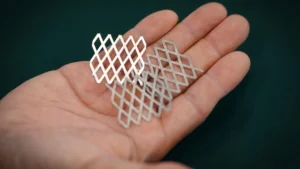
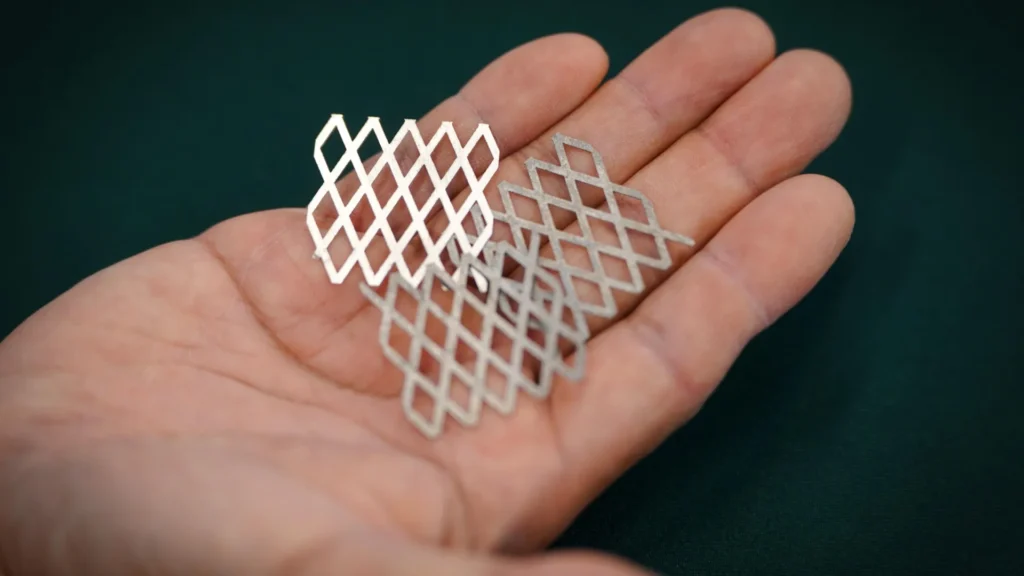
While the laboratory results for SS-H₂ are compelling, significant engineering challenges remain before the material can be widely deployed in commercial-scale electrolyzers. The industrial production of hydrogen requires components in various practical forms, such as metal meshes and foams, which must demonstrate consistent performance and durability outside controlled laboratory conditions. The transition from experimental materials to robust industrial products is a complex process, involving scaling up manufacturing, optimizing fabrication techniques, and conducting extensive real-world testing.
Despite these challenges, Professor Huang’s team has already initiated crucial steps toward the large-scale production of SS-H₂. "From experimental materials to real products, such as meshes and foams, for water electrolyzers, there are still challenging tasks at hand. Currently, we have made a big step toward industrialization. Tons of SS-H₂-based wire has been produced in collaboration with a factory from the Mainland. We are moving forward in applying the more economical SS-H₂ in hydrogen production from renewable sources," added Professor Huang. This collaborative effort to produce tons of SS-H₂ wire signifies a critical milestone, moving the technology beyond theoretical potential into tangible, manufacturable forms. It underscores a clear commitment to industrialization and widespread adoption.
Broader Impact and Future Outlook
The implications of SS-H₂ extend beyond just cost reduction in green hydrogen production. This development sets a new paradigm in materials science, particularly in the design of alloys for high-potential electrochemical applications. The discovery of manganese’s beneficial role in dual-passivation challenges long-held assumptions in corrosion science and opens new avenues for fundamental research into material behavior. For Hong Kong, this breakthrough reinforces its position as a hub for scientific innovation and advanced research, contributing significantly to global efforts in sustainable energy.
Environmental organizations and policymakers worldwide are likely to view this development with immense optimism. A more affordable and scalable method for producing green hydrogen from seawater could alleviate pressure on freshwater resources and accelerate the global energy transition. It also presents opportunities for developing countries with abundant coastlines but limited access to freshwater or traditional energy infrastructure to become significant players in the burgeoning green hydrogen economy.
The successful transition of SS-H₂ from an experimental material to a reliable component in commercial electrolyzers would represent a monumental achievement. The combination of exceptional corrosion resistance and dramatically lower material costs positions SS-H₂ as a truly disruptive technology. If this promise is realized, it could unlock a cheaper, more sustainable route to producing green hydrogen from renewable energy and the planet’s most abundant resource – seawater – thereby playing a pivotal role in shaping a cleaner, more energy-secure future for generations to come.