In a significant leap for the field of quantum information science, researchers at the Harvard John A. Paulson School of Engineering and Applied Sciences (SEAS) have unveiled a pioneering method to safeguard delicate quantum states using mechanical vibrations. This breakthrough, which utilizes microscopic sound waves known as phonons, addresses one of the most persistent hurdles in quantum computing: the preservation of information against environmental interference. By "dressing" quantum bits in a continuous acoustic field, the team has demonstrated a way to extend the lifespan of quantum memory within the very structures designed to transport information, paving the way for compact, chip-integrated quantum networks and sophisticated hybrid quantum systems.
The research, conducted in the laboratory of Marko Lončar, the Tiantsai Lin Professor of Electrical Engineering at SEAS, represents a paradigm shift in how scientists approach the "coherence" problem. For decades, the primary method for protecting quantum information has relied on electromagnetic pulses. However, as quantum devices shrink and move toward chip-scale integration, the limitations of light-based systems have become apparent. The Harvard team’s findings, recently published in the journal Nature Physics, suggest that sound—not light—may be the key to the next generation of stable quantum hardware.
The Quantum Landscape and the Challenge of Coherence
To understand the magnitude of this advancement, one must consider the inherent fragility of the quantum bit, or qubit. Unlike classical bits, which exist as either a 0 or a 1, qubits can exist in a superposition of states. This allows quantum computers to perform complex calculations at speeds unattainable by classical machines. However, this state of superposition is extremely sensitive. Any interaction with the external environment—be it thermal fluctuations, magnetic fields, or even nearby electronic noise—can cause the qubit to lose its quantum properties, a process known as decoherence.
Preserving "coherence time"—the duration a qubit remains in its quantum state—is the holy grail of quantum engineering. Traditionally, researchers have used "dynamical decoupling," a technique involving the application of precisely timed microwave pulses to flip the spin of the qubit, effectively averaging out the noise from the environment. While effective in isolated environments, these microwave techniques struggle when qubits are integrated into specialized nanostructures like phononic cavities, which are essential for modern chip-based quantum communication.
The Role of Diamond and the Silicon-Vacancy Center
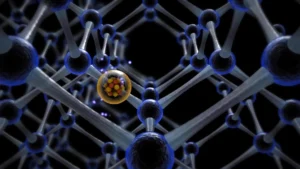
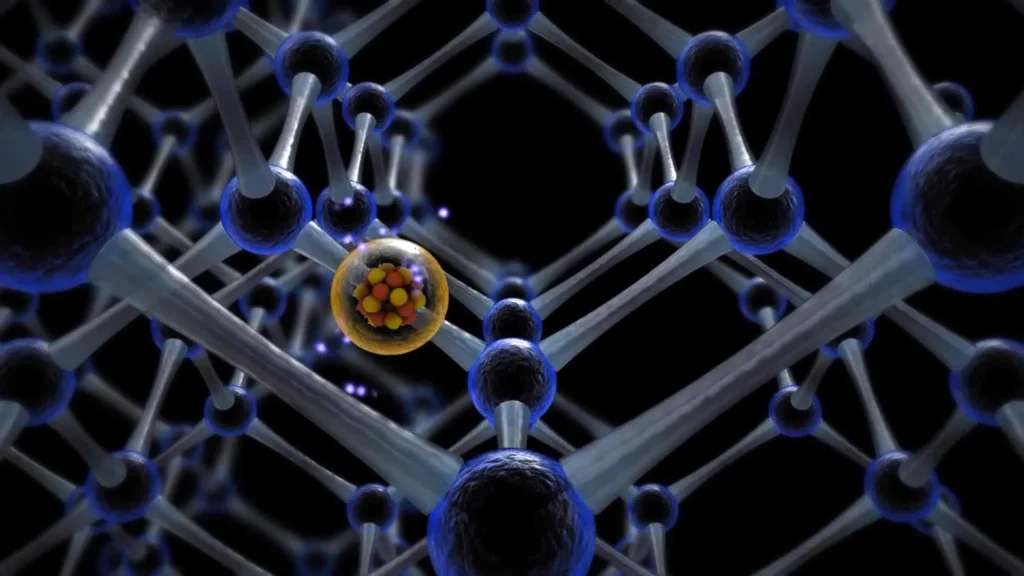
The Harvard experiment centered on a specific type of qubit: the silicon-vacancy (SiV) center in diamond. Diamond is an ideal host for quantum experiments because of its rigid crystal lattice and high thermal conductivity. An SiV center is a point defect in the diamond lattice where two carbon atoms are replaced by a single silicon atom. This defect creates an "artificial atom" with an electron spin that can be manipulated to store quantum information.
One of the primary reasons the Lončar lab focuses on SiV centers is their potential for high-speed communication. These centers can be embedded into phononic cavities—microscopic structures designed to trap and amplify mechanical vibrations. When a phonon is trapped in a cavity with an SiV center, it interacts strongly with the electron spin. This interaction is the basis for moving quantum information across a network; phonons act as the "messengers" that carry data between different qubit nodes on a chip.
The Mechanical Advantage: Phonons vs. Photons
While photons (particles of light) are the standard medium for long-distance quantum communication, phonons offer distinct advantages for short-range, on-chip applications. At the same frequency, phonons have wavelengths that are orders of magnitude shorter than those of photons. This physical characteristic allows engineers to design components that are significantly smaller, enabling a higher density of qubits and gates on a single semiconductor chip.
Furthermore, phonons are highly versatile. They can interact with a wide variety of quantum systems, including solid-state spins and electromagnetic fields. This makes them a "universal translator" in the quantum world, capable of linking different types of qubits—such as superconducting qubits and spin-based qubits—into a single, cohesive hybrid system. However, the very strength of the phonon-spin interaction that makes them useful for communication also makes the qubit more susceptible to noise, creating a catch-22 for researchers: the better the communication, the worse the memory.
Engineering the "Dressed" Qubit
To solve this conflict, the Harvard team, led by recent Ph.D. graduate Eliza Cornell and former postdoctoral scholar Zhujing Xu, developed an "all-mechanical" approach to protection. Rather than using intermittent microwave pulses, they applied a continuous mechanical driving field—a steady stream of phonons—to the SiV center.
This continuous drive transforms the qubit into what physicists call a "dressed" state. In this state, the qubit and the mechanical field become an entangled, hybrid entity. Effectively, the qubit "wears" the acoustic field as a protective layer. This dressing creates a gap in the energy levels of the qubit that makes it significantly less sensitive to low-frequency noise from the surrounding diamond environment.
"We are solving two problems," explained Eliza Cornell, who is now continuing her research as a postdoctoral fellow at Boston University. "We want the spin to have strong interaction with phonons, and we want the spin to have a long coherence time. Our paper demonstrates a method of extending the coherence time that is compatible with the silicon-vacancy center being in a cavity."
Experimental Results and Supporting Data
The results of the study were definitive. By applying this all-mechanical coherence protection, the researchers were able to increase the coherence time of the silicon-vacancy spin by approximately a factor of three. This three-fold improvement is critical because it occurs within the phononic cavity environment, where traditional microwave protection methods are often inefficient or physically impossible to implement due to space constraints and interference.
The experiment demonstrated that continuous-wave mechanical noise suppression is not just a theoretical possibility but a practical tool for real-world devices. The data showed that the "dressed" qubits maintained their integrity far longer than their "undressed" counterparts when exposed to controlled levels of environmental noise. This suggests that the same phonons used to transport data can simultaneously serve as a shield, fulfilling a dual role that simplifies the architecture of quantum chips.
Chronology of the Research and Institutional Support
The development of this technique is the culmination of years of work within the Harvard SEAS ecosystem. The Lončar lab has a long history of pioneering nanophotonic and nanomechanical devices in diamond. Previous milestones included the successful creation of high-quality phononic crystals and the first demonstrations of spin-phonon coupling in diamond cantilevers.
The current study was supported by a robust framework of federal and institutional funding, highlighting its importance to national quantum initiatives. Key supporters included:
- The National Science Foundation (NSF): Provided foundational funding under grant EEC-1941583.
- The Air Force Office of Scientific Research (AFOSR): Supported the high-frequency electronics and spin manipulation aspects of the research.
- Q-NEXT: A U.S. Department of Energy Office of Science National Quantum Information Science Research Center, which focuses on developing the next generation of quantum interconnects.
The fabrication of the diamond nanostructures was performed at the Harvard Center for Nanoscale Systems (CNS), a facility critical for the high-precision lithography required to build phononic cavities. The Harvard Office of Technology Development (OTD) has also stepped in to manage the intellectual property resulting from this breakthrough, actively seeking patent protection and potential commercial partners to bring this technology to the burgeoning quantum computing market.
Broader Impact and Future Implications
The implications of all-mechanical coherence protection extend far beyond the laboratory. As the tech industry moves toward "Quantum 2.0," the ability to integrate diverse quantum components on a single chip will be the deciding factor in the scalability of the technology.
- Hybrid Quantum Systems: Most experts believe that the first truly useful quantum computers will be hybrid, utilizing different types of qubits for different tasks (e.g., superconducting qubits for fast processing and spin qubits for long-term storage). Phonons, with their ability to bridge these different modalities, are now more viable than ever thanks to the Harvard team’s protection method.
- Compact Quantum Networks: Because phonons allow for smaller components, we could see the development of "quantum repeater" chips that are small enough to be integrated into existing fiber-optic infrastructures, facilitating a global quantum internet.
- Sensor Technology: The sensitivity of SiV centers makes them excellent sensors for magnetic fields and temperature at the nanoscale. Extending their coherence time mechanically could lead to more precise biological imaging and materials science diagnostics.
By demonstrating that sound can protect what it also carries, the Harvard researchers have provided a blueprint for more resilient and efficient quantum architectures. As the field moves forward, the "dressed" qubit may become a standard feature in the quest to build a stable, scalable quantum computer. The work of Cornell, Xu, and the Lončar lab proves that in the silent, microscopic world of quantum mechanics, the right kind of sound can be the most effective shield of all.