On August 12, 2026, a rare and awe-inspiring celestial event will grace the skies over parts of Europe: a total solar eclipse. This phenomenon, where the Moon will perfectly align to obscure the Sun’s brilliant disc, will plunge the affected regions into a temporary twilight, unveiling the Sun’s ethereal outer atmosphere, the solar corona. While a breathtaking spectacle for the public, this fleeting event also presents a critical, albeit brief, window for scientists to study the Sun’s enigmatic corona and the space weather it generates, which can profoundly impact our technologically dependent world.
The path of totality for the 2026 eclipse will traverse significant portions of Greenland, Iceland, Spain, and Portugal, offering up to just over two minutes of complete solar obscuration. This precious interval will allow observers to witness the Sun’s corona, a halo of superheated plasma that extends millions of kilometers into space, normally invisible due to the overwhelming glare of the Sun’s photosphere. The corona is the birthplace of crucial solar phenomena, including the solar wind—a continuous stream of charged particles that permeates the solar system—and energetic coronal mass ejections (CMEs). These events can have far-reaching consequences, disrupting satellite communications, navigation systems, power grids, and even posing risks to astronauts in space.
Historically, the study of the solar corona has been intrinsically linked to the occurrence of total solar eclipses. These natural events, occurring approximately once a year globally, and very rarely twice, are geographically unpredictable and incredibly brief, offering scientists limited opportunities for detailed observation. This scarcity has driven innovation in developing methods to study the corona more consistently.
Mimicking the Cosmos: Artificial Eclipses and Digital Twins
To overcome the limitations of natural eclipses, scientists have developed sophisticated techniques to create artificial "solar occultations." These methods involve instruments designed to block the Sun’s disc, mimicking the Moon’s role. The most prominent of these is the coronagraph, a specialized telescope that incorporates an internal occulting disc to precisely block the Sun’s bright face, allowing the fainter corona to be observed.
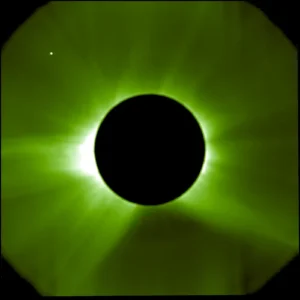
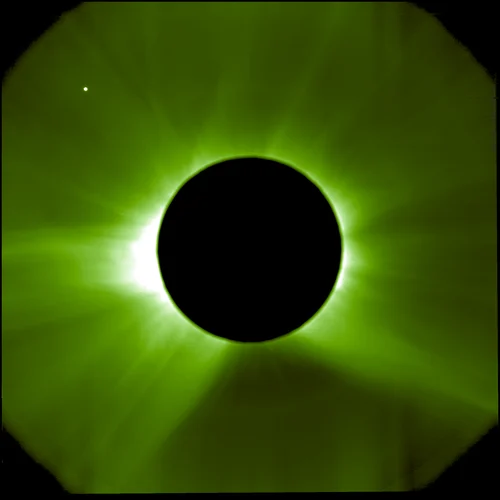
However, traditional coronagraphs often struggle to capture the inner region of the corona, the crucial interface between the Sun’s surface and its extended atmosphere. To address this observational gap, the European Space Agency (ESA) has pioneered a groundbreaking mission: Proba-3. Launched as a constellation of two satellites operating in tandem, Proba-3 functions as a sophisticated artificial eclipse-maker. One satellite, the "Occulter," precisely positions itself to cast a shadow on the second satellite, the "Coronagraph," which houses the Advanced Space-borne Instrument for Imaging of the Sun (ASPIICS). This coordinated maneuver allows ASPIICS to capture high-resolution images of the solar corona for extended periods, effectively creating hours-long "artificial eclipses."

Andrei Zhukov, principal investigator for the ASPIICS instrument at the Royal Observatory of Belgium, highlighted the significance of Proba-3’s capabilities, noting a recent artificial eclipse captured approximately two weeks prior to the upcoming natural event on August 12. "This is the 62nd eclipse of Proba-3’s nominal operations," Zhukov stated. "What makes this one unique is that it was taken about two weeks before the upcoming natural eclipse on 12 August. It takes the Sun two weeks to rotate halfway around its axis, so if we mirror the image horizontally, we get a prediction of what the corona will look like during the natural eclipse seen from Earth two days from now. The overall large-scale coronal structure usually doesn’t change much during that time." This ability to predict the corona’s appearance during a natural eclipse using artificial ones underscores the mission’s scientific value and its contribution to space weather forecasting.
Solar Orbiter: A Unique Vantage Point for Predictive Science
Complementing the artificial eclipse capabilities of Proba-3, ESA’s Solar Orbiter mission is undertaking a dedicated observation campaign in the lead-up to the August 12 eclipse. Unlike most solar observatories that orbit near Earth, Solar Orbiter follows a unique trajectory that provides a different perspective on the Sun. This mission is crucial for testing the accuracy of computer simulations that model the Sun’s complex magnetic environment, which dictates the behavior of the corona and the generation of space weather.
Jorge Amaya, ESA’s Space Weather Modelling Coordinator, emphasized the importance of these observations: "A total solar eclipse lets us verify that our models are correct by comparing forecasts with actual observations." He further explained the challenge of studying the Sun’s three-dimensional structure from Earth-bound vantage points. "Most solar observations are made from near Earth, providing only a limited view of a vast three-dimensional system. Luckily, Solar Orbiter follows a different path around the Sun than other solar observatories. Today, the spacecraft is facing the side of the Sun that will soon roll into Earth’s view, giving observers on the ground the opportunity to decide which targets to focus on during the eclipse."
A key component of Solar Orbiter’s contribution is data from its Polarimetric and Helioseismic Imager (PHI). This instrument captures detailed magnetic maps, or magnetograms, of the Sun’s visible surface. With Solar Orbiter’s distinct orbital position, these magnetograms offer modellers a more comprehensive understanding of the Sun’s magnetic field. For instance, PHI has recently detected a newly emerging active region on the Sun, a phenomenon that is likely to influence the appearance of the corona during the eclipse.
"The magnetic field lines that we see in simulations are like hairs in a fuzz ball," Amaya elaborated. "Observing the Sun from multiple viewpoints allows us to determine their orientation in three dimensions. That is the key to dramatically improving forecasts of how solar activity will affect our technology." The data gathered by Solar Orbiter also provides an early glimpse into what ESA’s future space weather forecasting mission, Vigil, planned for launch in 2031, will observe. Vigil is designed to trail Earth, offering continuous, near real-time observations of the Sun’s far side.
Miho Janvier, ESA project scientist for both Proba-3 and Solar Orbiter, summarized the synergy between these missions: "With Proba-3 and Solar Orbiter, we have an unprecedented view of our star. Both missions are contributing to our understanding of the Sun, from its surface to its extended atmosphere. The upcoming total solar eclipse offers a chance to see how this knowledge comes together, comparing observations with modelling."

Virtual Totality and Public Engagement
Beyond sophisticated satellite missions, the scientific community is also leveraging advanced computational modeling to predict the appearance of the solar corona during the eclipse. Predictive Science Inc., in collaboration with ESA’s Solar Orbiter team, is generating highly accurate predictions of the corona’s structure. These predictions are publicly accessible, allowing enthusiasts and researchers alike to visualize the anticipated celestial display.
Furthermore, KU Leuven is providing crucial predictions to ESA’s Space Weather Office, enhancing the agency’s ability to forecast potential impacts of solar activity. These predictive efforts, accessible through dedicated online portals, offer a "virtual totality," allowing a broader audience to engage with the science behind the eclipse.
For those unable to witness the eclipse firsthand, ESA will be broadcasting a live stream of the event on August 12, between 19:30 and 20:45 CEST. This broadcast offers a valuable opportunity for global audiences to experience the spectacle safely and learn more about the ongoing scientific research.
A Reminder of Solar Safety
Crucially, ESA and other scientific bodies are issuing stringent safety guidelines for observing the solar eclipse. Looking directly at the Sun without certified eye protection can cause severe and permanent eye damage. Standard sunglasses are entirely insufficient for this purpose. Certified eclipse glasses, meeting international safety standards, must be worn at all times during the partial phases of the eclipse. Only during the brief period of totality, when the Sun is completely obscured by the Moon, is it safe to momentarily remove protection. As soon as the Sun begins to reappear, eclipse glasses must be put back on immediately. This emphasis on safe observation underscores the dual nature of the eclipse: a scientific marvel and a powerful reminder of the Sun’s intensity.
The total solar eclipse of August 12, 2026, is more than just a spectacular astronomical event; it is a focal point for cutting-edge scientific research. Through a combination of natural observation, innovative space missions like Proba-3 and Solar Orbiter, and advanced computational modeling, scientists are poised to gain unprecedented insights into the Sun’s corona and its influence on our planet. The data gathered will be instrumental in improving our understanding of space weather and enhancing our ability to protect the vital technological infrastructure that underpins modern society.