Additive Manufacturing Media has highlighted two groundbreaking 3D printed components from Farsoon Technologies, a leader in metal additive manufacturing, designed to revolutionize heat dissipation within the liquid cooling sector. The featured items, a meticulously engineered heat dissipation cold plate and a highly efficient finned heat sink, underscore the growing capabilities of metal 3D printing in producing complex geometries and high-performance thermal management solutions. These components, produced using Farsoon’s proprietary Fine Laser Spot metal additive manufacturing (AM) technology, are poised to address the escalating thermal challenges in various demanding applications, from high-performance computing to advanced automotive systems.
The Fine Laser Spot technology, a sophisticated application of laser powder bed fusion (LPBF), is specifically tailored for applications requiring microscopic precision, such as intricate heat exchangers. This advanced process enables the creation of near-net-shape or fully end-use parts with minimal post-processing, significantly reducing manufacturing lead times and costs. By allowing for the intricate internal structures that are often impossible to achieve with traditional manufacturing methods, Farsoon’s technology is opening new frontiers in thermal engineering. The ability to print complex, integrated designs in a single build process also inherently reduces potential failure points, such as leaks in cooling systems, thereby enhancing reliability and performance.
The Precision-Engineered Heat Dissipation Cold Plate
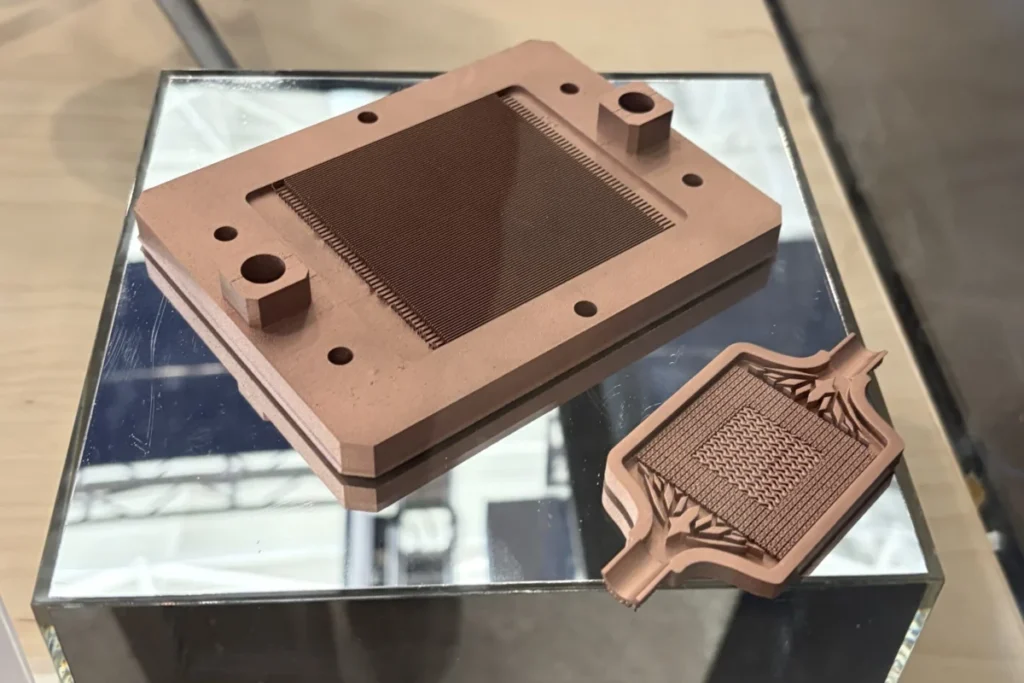
The star of this week’s showcase from Additive Manufacturing Media is a 3D printed heat dissipation cold plate. Manufactured as a single, monolithic piece from the robust CuCrZr alloy, this component eliminates the risks associated with assembly and potential leakage points inherent in traditional multi-part cold plates. The design of this cold plate represents a significant leap forward, as Farsoon engineers have masterfully integrated triply periodic minimal surface (TPMS) structures with conventional cooling channel designs. This fusion of advanced geometric concepts with established thermal principles allows for an unprecedented level of control over heat transfer.
TPMS structures, characterized by their intricate, mathematically generated forms, offer a unique advantage in heat dissipation. Their complex, interconnected lattices create a vastly increased surface area within a given volume, facilitating more efficient heat absorption from the source. When combined with optimized traditional cooling channels, the internal geometry of the cold plate is enhanced for both superior structural integrity and exceptional thermal performance. The inherent design freedom of additive manufacturing allows for the fine-tuning of these structures to precisely match the thermal load and flow dynamics of the intended application, ensuring maximum efficiency.
Technical Specifications of the Heat Dissipation Cold Plate:
- Material: CuCrZr (Copper Chromium Zirconium) alloy is chosen for its excellent thermal conductivity, good strength at elevated temperatures, and resistance to softening. This makes it an ideal material for high-performance cooling applications where heat dissipation is critical and operating temperatures can be significant.
- 3D Printing Solution: Farsoon’s Fine Laser Spot metal AM technology is employed. This LPBF system utilizes a highly focused laser beam to precisely melt and fuse metal powders, layer by layer, enabling the creation of intricate and dense parts.
- Layer Thickness: A remarkable 10 microns layer thickness is achievable with this technology. This ultra-fine layer resolution is crucial for producing the delicate features and smooth surfaces required for efficient fluid flow and heat transfer within the cold plate, minimizing flow disruptions and maximizing contact area.
- Printing Accuracy: The system boasts a printing accuracy of ±0.03 mm. This high level of precision ensures that the complex internal geometries and external features of the cold plate are manufactured to exact specifications, critical for optimal performance and reliable integration into cooling systems.
- Minimal Wall Thickness of TPMS: The technology can achieve a minimal wall thickness of 0.2 mm for TPMS structures. This allows for the creation of dense, yet lightweight, lattice structures that maximize surface area without compromising structural integrity or significantly increasing material usage.
- Minimum Diameter of Cylindrical Structure: The Fine Laser Spot technology can produce cylindrical structures with a minimum diameter of 0.1 mm. This capability is essential for designing very fine cooling channels and intricate internal features that enhance fluid dynamics and heat exchange efficiency.
The choice of CuCrZr alloy is particularly noteworthy. This precipitation-hardened copper alloy offers a unique combination of properties, including a thermal conductivity of approximately 200-300 W/(m·K) (depending on heat treatment), significantly higher than many steels or aluminum alloys. Its strength increases with heat treatment, and it maintains good mechanical properties at elevated temperatures, making it suitable for applications where passive cooling alone is insufficient and active liquid cooling is essential. The ability to 3D print this alloy in a complex, single-piece design directly addresses the limitations of traditional manufacturing, which often requires brazing or welding multiple copper parts, introducing potential failure points and limiting design complexity.
The High-Performance Finned Heat Sink
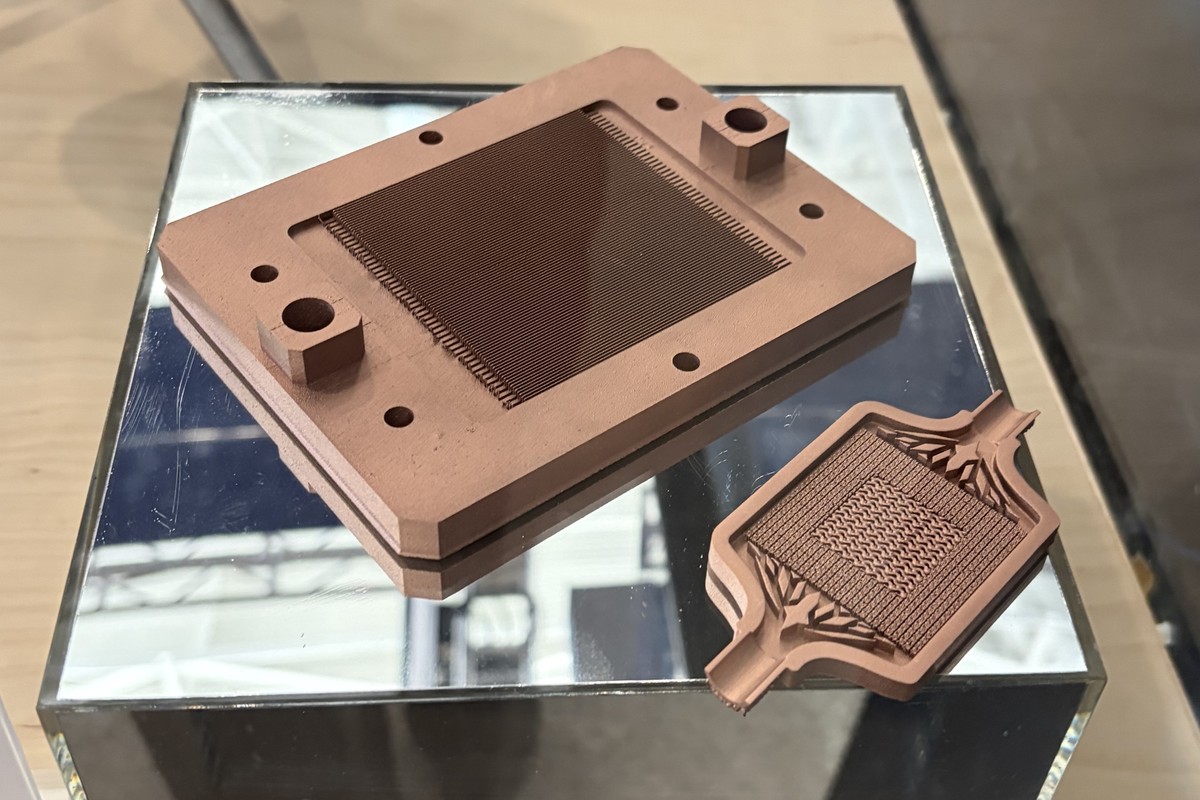
Complementing the cold plate is the 3D printed finned heat sink, also a testament to Farsoon’s advanced metal AM capabilities. This component is specifically designed for applications that demand consistent and reliable cooling performance under strenuous conditions. Fabricated from a copper alloy using Farsoon’s FS273M metal LPBF system, the heat sink leverages the inherent properties of copper for rapid heat absorption and dissipation.
The design principle of this finned heat sink is straightforward yet highly effective. Its base is engineered to efficiently absorb heat from the source component, such as a CPU or power electronics. The heat is then rapidly transferred to an array of precisely designed fins. These fins, with their expanded surface area, are optimized to disperse the absorbed heat into the surrounding environment, typically facilitated by airflow, whether natural convection or forced by a fan. The additive manufacturing process allows for the creation of fins with optimized shapes, spacing, and thicknesses that maximize surface area and airflow efficiency, surpassing the limitations of conventionally manufactured heat sinks.
Technical Specifications of the Finned Heat Sink:
- Material: Copper alloy is selected for its exceptional thermal conductivity, which is among the highest of all metals, typically exceeding 400 W/(m·K). This makes it ideal for transferring heat away from sensitive components quickly and efficiently.
- System: The component is produced using the Farsoon FS273M metal LPBF system. This industrial-grade machine is designed for high-volume production of complex metal parts.
- Process: Laser Powder Bed Fusion (LPBF) is the underlying AM technology.
- Average Density: The printed parts achieve an average density of 8.87 g/cm³. This is a crucial metric for metal components, indicating the degree to which the material has been fully fused and consolidated. High density is directly correlated with improved mechanical strength and thermal conductivity.
- Part Density: The achieved part density is greater than 99.5%. This exceptionally high density is a strong indicator of the quality of the printing process and the integrity of the resulting component, minimizing porosity and voids that could impede heat transfer or compromise structural integrity.
- Minimum Fin Thickness: The system can produce fins with a minimum thickness of 0.25 mm. This allows for the design of very fine, densely packed fins, significantly increasing the surface area for heat dissipation without adding excessive weight or volume.
Copper’s thermal conductivity makes it a superior choice for heat sinks compared to aluminum, which is more commonly used due to its lower cost and lighter weight. However, for applications where maximum thermal performance is paramount, copper’s ability to conduct heat is invaluable. 3D printing copper alloys allows engineers to harness this thermal advantage in complex geometries that were previously unachievable. The ability to print fins with minimal thickness and optimal spacing ensures that the heat sink can effectively manage high thermal loads, which are increasingly common in advanced electronic devices, electric vehicle powertrains, and high-power servers.
The Underlying Technology: Farsoon’s Fine Laser Spot LPBF
The Fine Laser Spot technology employed by Farsoon is a significant advancement in LPBF. Traditional LPBF systems often use a relatively large laser spot size, which can limit the resolution and detail that can be achieved, particularly for thin walls and intricate internal features. The Fine Laser Spot technology, as the name suggests, utilizes a much smaller and more precisely controlled laser beam. This allows for:
- Enhanced Resolution and Detail: The ability to melt smaller volumes of powder enables the printing of extremely fine features, such as thin fins, complex internal channels, and delicate lattice structures with high fidelity.
- Improved Surface Finish: A finer laser spot can lead to a smoother surface finish on the printed parts, reducing the need for extensive post-processing and improving the efficiency of fluid flow in cooling applications.
- Microscopic Precision: This level of precision is crucial for thermal management components where even minor imperfections can disrupt heat flow and reduce overall efficiency. The Fine Laser Spot technology is specifically designed for applications demanding such microscopic accuracy.
- Near-Net-Shape Manufacturing: The technology facilitates the production of parts that are very close to their final desired shape, minimizing material waste and reducing machining time. This is particularly beneficial when working with expensive metal alloys like copper and specialized alloys like CuCrZr.
- Reduced Residual Stress: Precise control over the laser power and scan strategy can help to minimize residual stresses within the printed part, leading to improved dimensional stability and mechanical properties.
Broader Implications for the Liquid Cooling Industry
The development and demonstration of these 3D printed components by Farsoon Technologies carry significant implications for the broader liquid cooling industry. As electronic devices, power systems, and industrial machinery become more powerful and compact, the demand for efficient and reliable thermal management solutions intensifies.
- Performance Enhancement: The ability to create highly optimized geometries that maximize surface area and control fluid flow allows for more effective heat dissipation, enabling components to operate at higher power levels and for longer durations without overheating. This translates to improved performance and longevity for the end products.
- Miniaturization and Integration: 3D printing allows for the integration of multiple functions into a single component. For instance, the one-piece cold plate eliminates assembly steps and potential leak points, leading to more compact and robust cooling solutions. This is critical for applications where space is at a premium, such as in portable electronics or advanced aerospace systems.
- Customization and Application-Specific Solutions: Additive manufacturing enables the creation of highly customized thermal management solutions tailored to the specific needs of a particular application. Instead of relying on standard off-the-shelf components, engineers can design and print parts optimized for unique thermal loads, flow rates, and spatial constraints.
- Reduced Lead Times and Costs: By enabling near-net-shape manufacturing and reducing the need for complex tooling and multiple assembly steps, 3D printing can significantly shorten lead times and lower production costs, especially for low-to-medium volume production runs or for highly complex parts.
- Material Innovation: The advancement of metal AM technologies, like Farsoon’s Fine Laser Spot, is also driving innovation in the use of advanced materials for thermal management. The ability to print with alloys like CuCrZr opens up new possibilities for achieving higher performance levels.
A Timeline of Innovation in Thermal Management
The recent showcase by Additive Manufacturing Media is not an isolated event but part of a larger, ongoing trend. The journey of metal additive manufacturing from prototyping to producing functional end-use parts for demanding applications like thermal management has been a gradual but accelerating process.
- Early 2010s: Metal AM technologies, including LPBF, began to gain traction for producing complex geometries, but applications were largely limited to prototyping and tooling. Early thermal management components were often printed in aluminum or stainless steel, with performance limitations.
- Mid-2010s: Advances in laser technology, powder handling, and process control led to improved density and mechanical properties in printed metal parts. Interest grew in using AM for more complex functional components, including heat exchangers and heat sinks, particularly in aerospace and defense where high performance and lightweighting were critical.
- Late 2010s – Early 2020s: The focus shifted towards optimizing LPBF for specific material classes, including copper alloys known for their superior thermal conductivity. Companies like Farsoon began to develop specialized machines and processes capable of handling these challenging materials and producing parts with high precision and density. The development of technologies like Farsoon’s Fine Laser Spot signifies a maturation of the field, enabling microscopic precision and intricate designs previously unattainable.
- Present Day: The components highlighted by Additive Manufacturing Media represent the current state-of-the-art, showcasing the ability to produce high-performance thermal management solutions in advanced materials like CuCrZr and copper alloys, with designs that leverage the full potential of additive manufacturing. The trend is towards increased adoption in sectors like high-performance computing, electric vehicles, and advanced industrial machinery.
Expert Insights and Future Outlook
While direct quotes from Farsoon Technologies were not provided in the original content, the showcased components and the underlying technology speak volumes about the company’s strategic direction. Farsoon has consistently positioned itself at the forefront of metal AM innovation, focusing on developing robust systems capable of producing high-quality parts from a wide range of materials. The emphasis on Fine Laser Spot technology for precision applications clearly indicates a strategic move towards markets where intricate design and high performance are paramount.
The implications of such advancements extend beyond the immediate applications. As the capabilities of metal AM continue to expand, we can anticipate further integration of these technologies into critical industries. The ability to produce complex, high-performance thermal management components on-demand and with greater design freedom will likely accelerate innovation in areas such as:
- Advanced Data Centers: With the explosion of AI and big data, the thermal management of servers is becoming a critical bottleneck. 3D printed solutions can offer significantly improved cooling efficiency, allowing for higher computational densities.
- Electric Vehicles (EVs): The battery packs and power electronics in EVs generate substantial heat. Advanced cooling solutions are essential for optimizing performance, extending battery life, and ensuring safety. 3D printed cold plates and heat sinks can play a crucial role in this.
- Aerospace and Defense: The need for lightweight, high-performance components in extreme environments continues to drive the adoption of AM. Thermal management is a critical aspect of avionics and propulsion systems.
- Medical Devices: Certain medical equipment, particularly high-power imaging or therapeutic devices, require efficient and reliable cooling. 3D printing offers the potential for custom-designed, integrated cooling solutions.
In conclusion, the 3D printed heat dissipation cold plate and finned heat sink from Farsoon Technologies, as highlighted by Additive Manufacturing Media, represent a significant milestone in the application of metal additive manufacturing for thermal management. The precision, complexity, and material choices demonstrated underscore the transformative potential of this technology in addressing the ever-growing thermal challenges of modern industries.