The world of celebrity often conjures images of lavish lifestyles, extravagant possessions, and exclusive enclaves. While some public figures are known for their opulent "red rooms" and hedonistic pursuits, Grammy Award-winning artist T-Pain, a titan of the autotune era, has carved out a decidedly different kind of personal space: a sophisticated 3D printing sanctuary. Rather than indulging in excess, the artist, whose distinctive vocal stylings defined a generation of hits, has embraced the precision and creativity of additive manufacturing, choosing dragons and PLA filament over the excesses often associated with superstardom. This pivot marks a fascinating evolution for an artist who once faced significant criticism for his signature sound, only to later find widespread acclaim and vindication for his undeniable talent.
T-Pain, born Faheem Rashad Najm, rose to prominence in the mid-2000s, his voice becoming an unmistakable element in chart-topping tracks. His early career was marked by groundbreaking success with hits like "Buy U a Drank (Shawty Snappin’)", "I’m Sprung," and "I’m N Luv (Wit a Stripper)". These songs, characterized by his pioneering and liberal use of autotune, propelled him to stardom and established him as a significant cultural force. His vocal processing, once a source of controversy, became his artistic signature, lending a unique, almost synthesized texture to his music. This stylistic choice, however, also drew criticism from fellow artists and critics alike. Legends like Usher and Jay-Z publicly lamented the perceived artificiality of autotune, with some tracks even featuring subtle critiques of the technology that had become so pervasive. In 2014, The New Yorker summarized this sentiment, noting that T-Pain had "come to be seen as an uncool novelty act—a goofy-looking dork who rode to fame with a production gimmick that not only sounded corny but concealed his true lack of singing ability." This period of intense scrutiny reportedly led to a deep depression, leaving the artist unmotivated to create new music for a significant period.
A Resurgence Through Raw Talent
T-Pain’s artistic redemption arrived in a rather unexpected and public forum: an NPR Music Tiny Desk concert. This intimate performance, stripped of the autotune that had defined his public persona, laid bare the raw power and expressive depth of his natural voice. Viewers were stunned by his rich, raspy timbre, a stark contrast to the heavily processed vocals they had come to associate with him. The concert not only showcased his genuine vocal prowess but also served as a powerful testament to his resilience and artistic evolution. This moment of vindication was further amplified by his surprising appearance on the hit television show "The Masked Singer" in 2019. Under the guise of "The Monster," T-Pain captivated audiences and judges alike, with speculation about his identity ranging from Hootie to Jamie Foxx. His eventual unmasking and subsequent explanation, stating, "I didn’t have a chance to come into the game with my natural voice," resonated deeply, offering a poignant glimpse into the pressures and artistic compromises he had faced early in his career.
Expanding Horizons: Beyond Music
Following his resurfacing, T-Pain embarked on a multifaceted career expansion. He delved deeper into songwriting, spending two years in Nashville where he penned tracks for country music stars such as Luke Bryan and Dallas Davidson. His creative ventures also extended into the realm of video games, with reported involvement in projects like Grand Theft Auto VI, and he cultivated a significant presence as a streamer on the popular platform Twitch. These endeavors demonstrate a deliberate effort to diversify his artistic portfolio and engage with new audiences through different mediums.
The Genesis of a 3D Printing Hub
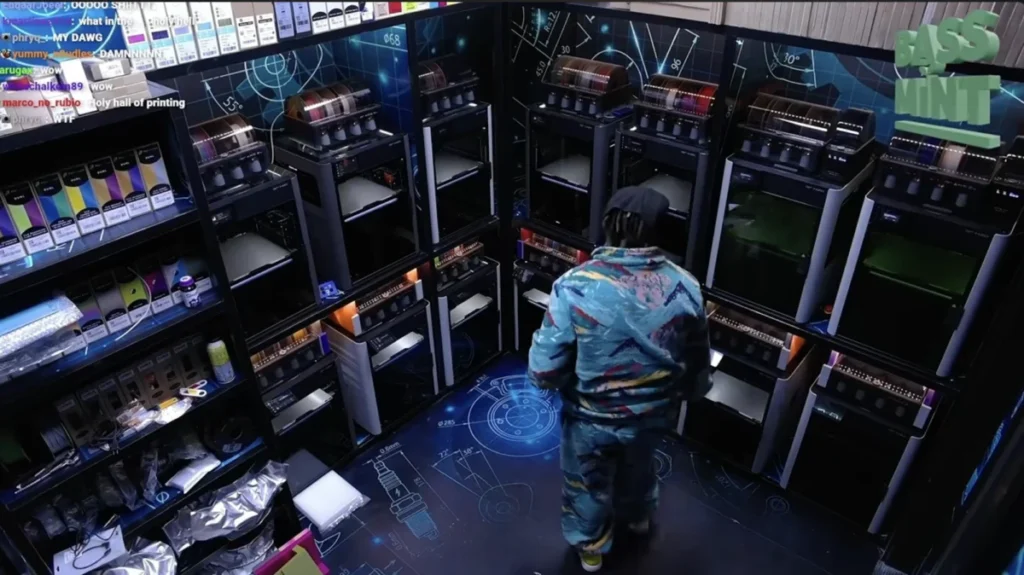
The latest chapter in T-Pain’s evolving narrative is his immersion into the world of 3D printing. Recently, he unveiled his dedicated 3D printing facility via an Instagram reel, showcasing a passion for additive manufacturing that is both impressive in scale and meticulous in execution. This revelation positions him not just as a celebrity dabbling in a trendy hobby, but as a serious practitioner of the technology, with a thoughtfully designed and well-equipped workshop.

The artist has publicly acknowledged and thanked key players in the 3D printing ecosystem, including filament manufacturer Polymaker, the comprehensive retailer Micro Center, and the 3D printing software company CookieCAD. This engagement suggests a genuine appreciation for the tools and resources that enable his creative pursuits. His primary 3D printing workhorse appears to be the Elegoo Storm Giga, a high-performance printer he utilizes for fabricating body kit panels, with plans to showcase intricate nine- and fourteen-day prints.
A Multi-Printers, Multi-Function Space
What truly sets T-Pain’s 3D printing setup apart is its sophisticated organization and dedicated infrastructure. Beyond housing large-format printers like the Elegoo Storm Giga, the space includes a specialized post-processing area, crucial for finishing printed parts to a high standard. The workshop is further equipped with an impressive array of smaller printers: two H2Ds, five H2Cs, and five H2Ss. Notably, T-Pain expresses a clear preference for fused deposition modeling (FDM) printers, stating his avoidance of vat polymerization technologies due to safety concerns. This decision highlights a practical and safety-conscious approach to his hobby.
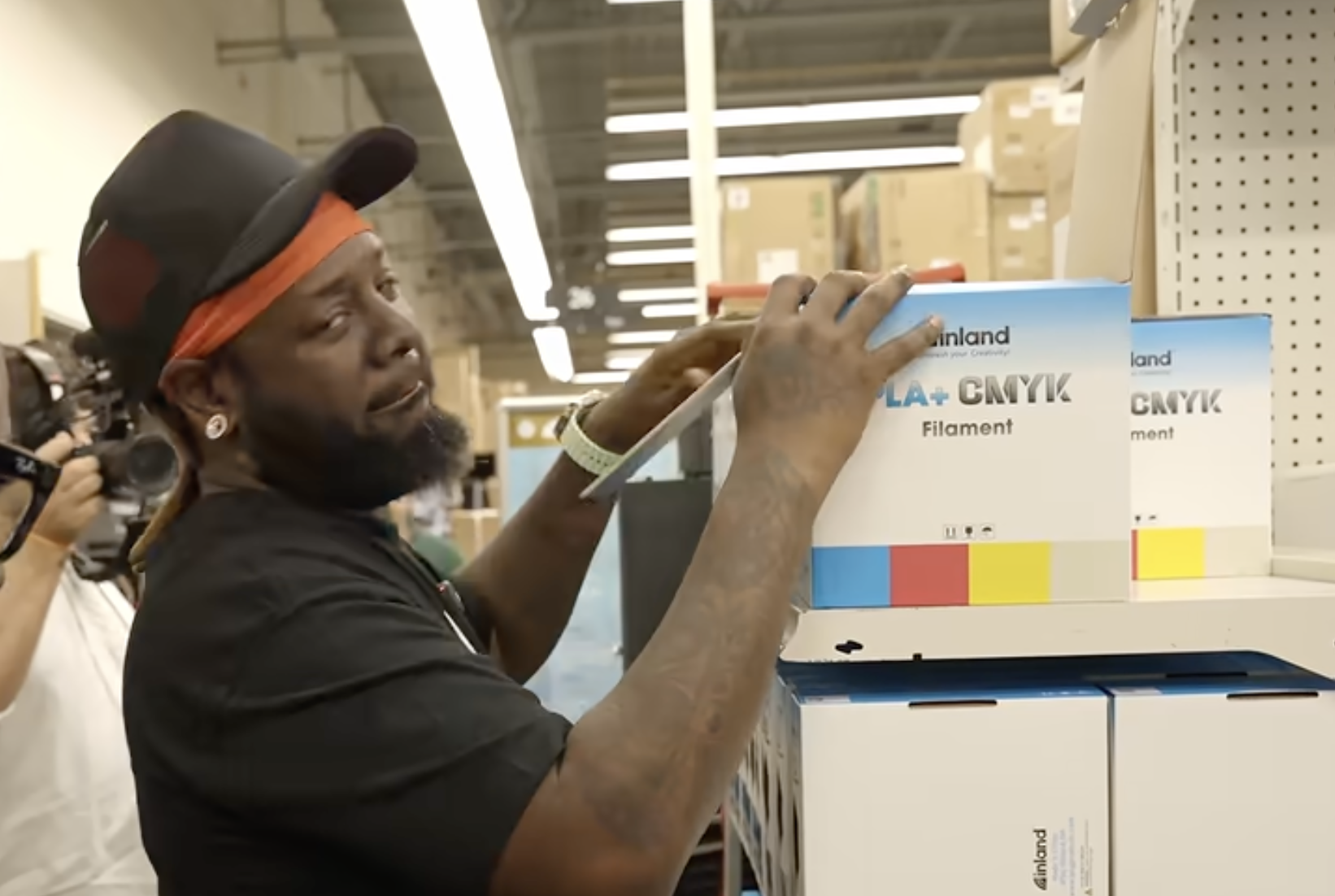
His exploration of 3D printing extends to his basement, which he has extensively outfitted with various printing technologies and related equipment. During a detailed tour of this "3D printing basement," documented in a video shared with Micro Center, T-Pain reveals his preferred filament brand, Inland, and his use of CMYK packs for lithophanes. He predominantly utilizes Bambu Lab printers, even fabricating custom mounts to integrate their AMS (Automatic Material System) units into his cabinetry. The presence of a Creality Sermocon scanner further underscores his commitment to a comprehensive 3D printing workflow, enabling him to capture existing objects for digital replication or modification.

Applications and Future Potential
T-Pain’s foray into 3D printing is not merely for novelty; it serves practical and creative purposes. He primarily produces car parts for his extensive collection of modified vehicles, showcasing a direct application of the technology for his passion for automotive customization. Additionally, he creates custom vinyl-style toys, which he showcases during his live streams, blending his artistic sensibilities with the capabilities of 3D printing.
The artist’s engagement with the 3D printing community has also been evident in promotional activities. He previously 3D printed a basketball for a DraftKings promotion, demonstrating his ability to leverage the technology for commercial partnerships. His interaction with brands like Polymaker and Micro Center highlights the growing trend of influencer marketing within the technology sector, where celebrities with genuine interest can significantly broaden the reach of emerging technologies.
Analysis and Broader Implications
T-Pain’s dedication to 3D printing presents a compelling case study in celebrity engagement with technological innovation. Unlike previous instances where celebrity involvement felt superficial, such as will.i.am’s role as Chief Creative Officer of 3D Systems, T-Pain’s approach appears grounded in genuine curiosity and hands-on application. His willingness to share his learning process, from assembling printers and calibrating them to printing foundational "benchies," resonates with the experience of countless hobbyists worldwide. This authenticity is crucial in fostering wider adoption of 3D printing.

The implications of T-Pain’s embrace of 3D printing are significant. His considerable influence can attract a new demographic to the technology – individuals interested in gaming, cosplay, or automotive customization who might not have previously considered additive manufacturing. This cross-pollination of interests could democratize access to 3D printing knowledge and inspire a new wave of creators and entrepreneurs. As he continues to explore the capabilities of his printers and integrate them into his diverse creative endeavors, T-Pain is not only enhancing his own artistic output but also potentially shaping the future landscape of 3D printing adoption. His journey from the autotune charts to a high-tech workshop is a testament to his adaptability and a beacon for how established artists can redefine their legacies through embracing innovation.