A groundbreaking experiment conducted at CERN’s Large Hadron Collider (LHC) has provided physicists with an unprecedentedly sharp view of how gluons, the fundamental particles mediating the strong nuclear force, behave within atomic nuclei. This detailed observation offers compelling new evidence that could critically distinguish between two long-standing, competing explanations for the dynamics of matter at its most minuscule scales: nuclear shadowing and gluon saturation. The findings, published in Physical Review Letters, represent a significant step forward in understanding the fundamental building blocks of the visible universe and the very origin of mass.
Unveiling the Strong Force’s Architects: Gluons and Quarks
At the heart of this discovery lies the elusive gluon. To comprehend its significance, one must first grasp the intricate structure of matter. Protons and neutrons, the components of atomic nuclei, were once considered elementary. However, decades of high-energy physics experiments revealed they are, in fact, composite particles, each comprising three even more fundamental entities called quarks. But quarks alone do not account for the entirety of a proton or neutron’s mass or internal dynamics.
The strong nuclear force, the most powerful of the four fundamental forces, binds these quarks together. Unlike gravity or electromagnetism, which diminish with distance, the strong force actually increases with separation, making it impossible to isolate individual quarks. This force is mediated by gluons, which can be thought of as the "glue" that holds quarks in place. Crucially, gluons themselves also carry the strong force charge, meaning they can interact with each other, leading to a complex, self-interacting gluon field within atomic nuclei.
While quarks are commonly described as the fundamental constituents of protons and neutrons, much of the mass of ordinary matter – an astounding 95% – does not come from the intrinsic mass of the quarks themselves, but rather from the energetic interactions of gluons and the strong force field they generate. As Daniel Tapia Takaki, a nuclear physicist and professor of physics & astronomy at the University of Kansas (KU) and a leading member of the ALICE collaboration, emphasized, "Although quarks are often described as the fundamental building blocks of matter, nearly all the mass of the visible universe — from the atoms in our bodies to the matter inside stars — actually comes from the energy carried by gluons and the strong force that binds quarks together. Understanding how gluons behave inside nuclei is therefore essential to understanding how matter itself acquires its mass and structure." This profound statement underscores why gaining a clearer picture of gluon dynamics is paramount to our understanding of existence itself.
The theoretical framework governing these interactions is Quantum Chromodynamics (QCD), a cornerstone of the Standard Model of particle physics. QCD describes the strong force and its carriers, the gluons, in much the same way Quantum Electrodynamics (QED) describes electromagnetism and photons. However, due to the self-interacting nature of gluons, QCD calculations are notoriously complex, particularly in the low-energy, high-density regime found within atomic nuclei. Experimental data, therefore, is vital for validating and refining these theoretical models.
The ALICE Experiment: A High-Resolution Gluon Microscope
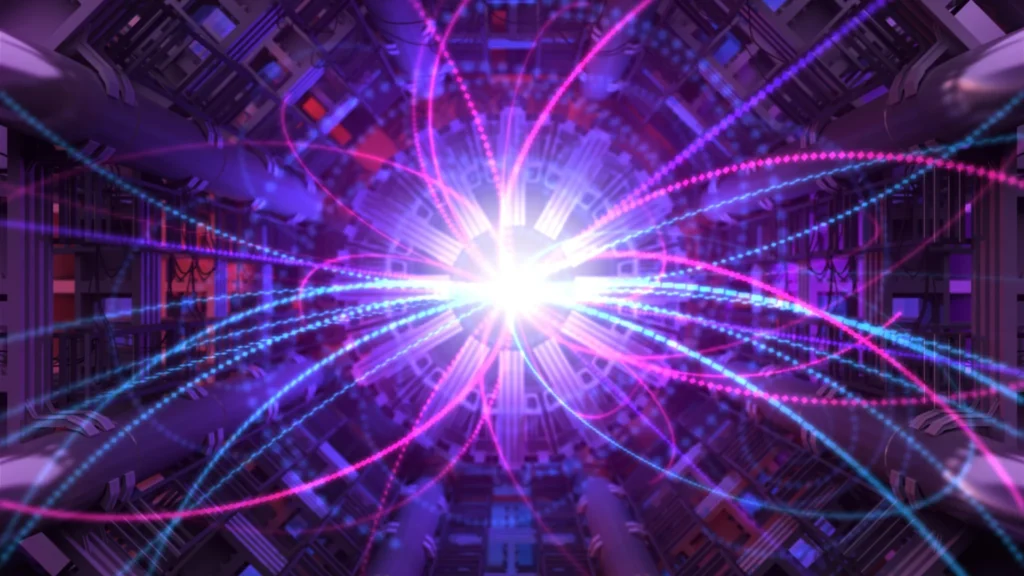
The breakthrough was achieved as part of the ALICE (A Large Ion Collider Experiment) collaboration at CERN, the European Organization for Nuclear Research, home to the world’s largest and most powerful particle accelerator, the Large Hadron Collider. The LHC, a 27-kilometer ring situated hundreds of feet beneath the Franco-Swiss border, accelerates particles to nearly the speed of light before colliding them, recreating conditions akin to those just moments after the Big Bang. While the LHC is famous for its proton-proton collisions that led to the discovery of the Higgs boson, it also routinely collides heavy ions, such as lead nuclei, to study the properties of matter under extreme conditions, including the quark-gluon plasma.
The ALICE detector is specifically designed to study these heavy-ion collisions. However, for this particular experiment, the researchers employed a unique technique that did not involve direct collisions. Instead, they leveraged "ultra-peripheral collisions" during Run 2 of the LHC (which spanned from 2015 to 2018), where fast-moving lead nuclei passed extremely close to one another without directly impacting. In these fleeting encounters, the intense electromagnetic fields surrounding the nuclei behave like highly energetic beams of photons.
"The measurements were performed using data collected during Run 2 of the Large Hadron Collider, where fast-moving lead nuclei pass close to one another without directly colliding," Tapia Takaki explained. "In these encounters, intense electromagnetic fields surrounding the nuclei behave like beams of high-energy photons. When one of these photons strikes another nucleus, it can briefly produce a particle called the J/ψ, whose production provides a sensitive probe of the underlying gluon structure."
The J/ψ (pronounced "JAY-sigh") meson is a subatomic particle composed of a charm quark and an anti-charm quark. Its production mechanism is particularly sensitive to the gluon distribution within the nucleus it interacts with. By meticulously tracking the "incoherent J/ψ photonuclear production," the researchers were able to perform the first multidimensional measurement that simultaneously monitored both the interaction energy and the momentum transfer. These two parameters effectively allowed scientists to "tune" their observational lens, much like adjusting the focus and magnification on a microscope. The interaction energy dictates the overall energy scale of the probing photon, while the momentum transfer determines the spatial resolution – the smaller the momentum transfer, the broader the region probed; the larger the momentum transfer, the finer the detail revealed.
Traditional measurements often average the gluon distribution across an entire nucleus, obscuring localized phenomena. Incoherent J/ψ production, by contrast, is sensitive to local fluctuations in gluon density. This innovative approach transformed the LHC into an unprecedented gluon microscope, capable of investigating structures even smaller than a proton. "Our experiments using incoherent production is like switching from a blurry image to a high-resolution microscope," Tapia Takaki illustrated. "This process allows us to see how gluons fluctuate and organize themselves inside nuclei. By varying the momentum transfer, our experiment effectively changes the focus of our microscope."
The team achieved resolutions of 0.6, 0.3, and 0.2 femtometers (fm). A femtometer is an incredibly tiny unit of length, equal to 10^-15 meters. To put this into perspective, a proton has a radius of approximately 0.84 femtometers. The finest resolution of 0.2 femtometers achieved by ALICE corresponds to structures only about one-quarter the size of a proton. Tapia Takaki offered a compelling analogy: "If an atomic nucleus were enlarged to the size of a football stadium, the experiment’s highest resolution would be fine enough to distinguish features only a few yards wide on the field." This level of precision is truly extraordinary in subatomic physics.
Challenging Established Paradigms: Nuclear Shadowing vs. Gluon Saturation
The powerful gluon fields inside atomic nuclei are central to the structure of nearly all visible matter, yet physicists still grapple with a complete understanding of how large numbers of gluons behave collectively. This is where the competing theories of nuclear shadowing and gluon saturation come into play.
For many years, the concept of "nuclear shadowing" has successfully explained a range of observations in nuclear physics. In this framework, as Tapia Takaki described, "gluons inside a nucleus partially overlap and obscure each other — similar to layers of clouds blocking sunlight — reducing the probability of certain particle production processes." Essentially, the presence of multiple nucleons (protons and neutrons) within a nucleus causes a reduction in the effective density of partons (quarks and gluons) compared to what would be expected from a simple superposition of individual nucleons. This "shadowing" effect means that the interior of the nucleus is less transparent to incoming probes than its edges.
However, QCD also predicts another phenomenon at very high gluon densities and small spatial scales, known as "gluon saturation." In this regime, gluons become so densely packed that they begin to interact strongly with one another, leading to a non-linear behavior where their density effectively "saturates," limiting how many can exist in a given region. This theoretical concept, often described by the "Color Glass Condensate" (CGC) framework, posits that at extremely high energies and small Bjorken-x (a variable related to the momentum fraction carried by a parton), the gluon field becomes so strong that it forms a universal, saturated state. This saturation is expected to manifest as a suppression of particle production rates.
Tapia Takaki has been instrumental in pioneering this experimental approach and has also contributed to theoretical models, such as the energy-dependent hot-spot model, where gluons gather into localized areas of especially high density. These "hot spots" are predicted to change their behavior as collision energy increases, potentially providing unique signatures of previously unexplored physics related to the strong interaction.
For the new work, the researchers measured incoherent J/ψ production across a broad range of photon-nucleus energies, from 20 to 633 billion electron volts (GeV). They meticulously studied how the process varied with momentum transfer, which, as noted, allowed them to probe different spatial scales within the nucleus. The results revealed a striking and significant pattern: "At the smallest spatial scales explored in the experiment, the production rate of J/ψ particles is significantly suppressed, with a statistical significance of about three standard deviations."
A statistical significance of three standard deviations (3σ) indicates that there is only about a 0.27% chance that the observed suppression is due to random statistical fluctuations. While the scientific community typically requires a 5σ significance for a "discovery," a 3σ result is considered a strong indication of a new phenomenon and warrants intense further investigation. This unexpected suppression at the finest resolutions presents a direct challenge to the conventional nuclear shadowing explanation, which, by itself, cannot fully account for the observed pattern.
Instead, the observations are remarkably consistent with the predictions of gluon saturation. "Instead, the observations are consistent with a different phenomenon known as ‘gluon saturation,’ predicted by the theory of quantum chromodynamics, which describes the strong force," Tapia Takaki affirmed. "In this regime, gluons become so densely packed that they begin interacting strongly with one another, limiting how many can exist in a given region." This implies that at these extreme densities, the individual gluons are no longer acting independently but are instead forming a collective, highly non-linear state.
Chronology of Discovery and Experimental Design
The journey to this discovery spanned several years. The data critical for this analysis was collected during Run 2 of the Large Hadron Collider, which operated between 2015 and 2018, providing a wealth of information from heavy-ion collisions. Following the data collection, rigorous analysis and interpretation were undertaken by the ALICE collaboration, involving hundreds of scientists from around the globe. Daniel Tapia Takaki played a leading role in this extensive study, working in close collaboration with scientists from the Czech Technical University in Prague. This partnership highlights the international nature of cutting-edge scientific research, with institutions like the University of Kansas maintaining crucial ties for student and researcher exchanges that foster such advancements. The culmination of these efforts was the publication of their findings in the esteemed journal Physical Review Letters, a leading venue for high-impact physics research.
Implications for Fundamental Physics and Future Research
The implications of this research are profound for several areas of fundamental physics. Primarily, it provides strong experimental support for the existence of gluon saturation, a long-hypothesized but difficult-to-prove prediction of QCD. Confirmation of gluon saturation would not only validate a key aspect of the theory of the strong force but also open new avenues for understanding the fundamental structure of matter.
This finding brings physicists closer to understanding the Color Glass Condensate (CGC), a theoretical state of matter predicted to exist in the gluon fields of nuclei at very high energies. The CGC is thought to be a universal state that would emerge irrespective of the specific properties of the colliding particles, and its experimental verification would represent a major triumph for theoretical physics.
Furthermore, a clearer understanding of gluon dynamics is directly relevant to solving the mystery of the origin of mass. If most of the mass of visible matter stems from gluon energy, then unraveling their collective behavior is crucial for a complete picture of how the universe obtained its mass.
The results will also significantly influence the design and interpretation of future experiments. The proposed Electron-Ion Collider (EIC) in the United States, for instance, is specifically designed to probe the gluon structure of nuclei with unprecedented precision. The ALICE findings provide vital preliminary insights and guide for how the EIC can best explore the gluon saturation regime. Similarly, future runs of the LHC, with increased luminosity and potentially higher energies, will offer further opportunities to confirm and expand upon these measurements, potentially pushing the statistical significance to the 5σ discovery threshold.
The Road Ahead: Refining Our Understanding
While the evidence for gluon saturation is compelling, the journey to a complete understanding is far from over. Future experiments will aim to refine these measurements, explore a wider range of energies and momentum transfers, and investigate different types of nuclei to see if the gluon saturation phenomena are universal. Theoretical models will also need to be further developed to fully incorporate these new experimental observations and provide an even more precise description of the strong force in dense gluon environments.
This work by the ALICE collaboration, spearheaded by dedicated physicists like Daniel Tapia Takaki, marks a pivotal moment in our quest to understand the fundamental forces and particles that govern our universe. By turning the LHC into a high-resolution gluon microscope, scientists are not just observing tiny particles; they are unlocking secrets about the very nature of matter and the intricate dance of forces that shape reality.