The iconic imagery of Katsushika Hokusai’s The Great Wave off Kanagawa has long captivated the world, not only for its dramatic composition but for the luminous, brilliant whites that define the cresting foam and the distant peak of Mount Fuji. To the casual observer, these sections appear to be the result of a thick application of white pigment. However, a scientific analysis reveals a more complex reality: the brilliance of these whites is a product of the washi paper itself. There is no white pigment in these areas; instead, the light scatters off the exposed, un-inked fibers of the traditional Japanese paper, a phenomenon known as structural whiteness. This ancient artistic technique has now become the cornerstone of a modern scientific breakthrough. An international research team, led by Professor Easan Sivaniah of Kyoto University’s Institute for Integrated Cell-Material Sciences (iCeMS), has developed a revolutionary materials platform that utilizes this physical principle to replace hazardous chemicals in industrial manufacturing.
By mimicking the way nature produces white light through microscopic architecture rather than chemical additives, the team—which includes researchers from Tokyo Metropolitan University and Donghua University—has introduced a process called Deep Foam Photolithography (DFP). This technology addresses two of the most pressing environmental and health concerns in contemporary material science: the widespread use of titanium dioxide (TiO2) and the prevalence of per- and polyfluoroalkyl substances (PFAS). The result is a printable, high-resolution material that is inherently white and naturally water-repellent, achieved through the manipulation of physical structure at the molecular level.
The Science of Structural Whiteness and Biomimicry
Structural whiteness differs fundamentally from pigment-based color. In traditional materials, white is achieved by adding substances like titanium dioxide, which absorb very little visible light and reflect it in all directions. In contrast, structural whiteness occurs when a material’s internal geometry is so complex and porous that it scatters all wavelengths of visible light equally. This is the same phenomenon that makes clouds, sea spray, and snow appear brilliantly white despite being composed of transparent water or ice.
Nature frequently employs this strategy. Certain species of beetles, for instance, possess ultra-thin scales with a disordered internal network of chitin that scatters light with incredible efficiency, producing a white far brighter than any synthetic pigment of comparable thickness. Similarly, the foamy nests of some tropical frogs and the internal tissues of various plants utilize air-filled cavities to achieve opacity and brightness.
The researchers at iCeMS sought to replicate this efficiency. "A key challenge faced by biomimetic science is realizing environmentally friendly material designs inspired by nature at the scale and cost of existing materials," explained Associate Professor Taiki Yanagishima of Tokyo Metropolitan University. The team’s goal was to move beyond laboratory curiosity and create a scalable platform that could be integrated into existing industrial workflows, such as printing and textile manufacturing.
Deep Foam Photolithography: A New Manufacturing Paradigm
The process developed by the international team, Deep Foam Photolithography (DFP), represents a departure from traditional coating methods. Instead of applying a layer of chemical treatment to a surface, DFP transforms the material itself into a functional foam.
The manufacturing sequence begins with a standard polymer film. This polymer is exposed to specific wavelengths of light, which trigger a chemical reaction that breaks the long polymer chains into smaller molecular fragments. This step is highly controllable, allowing for precise patterning. Following light exposure, the material is treated with a mild solvent. Unlike harsh industrial solvents that dissolve materials entirely, this specific developer interacts with the fragmented molecules, causing the polymer to swell significantly.
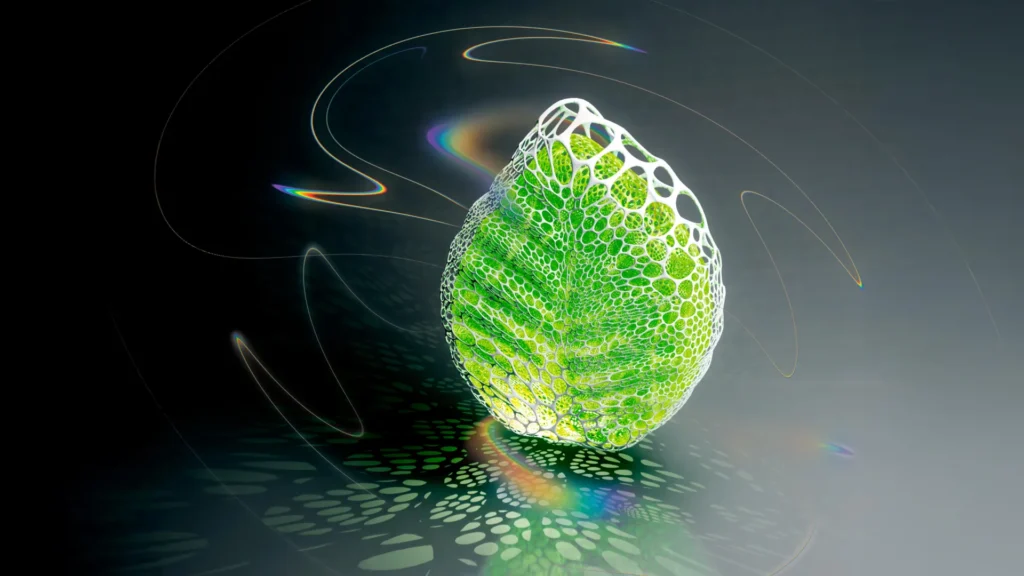
As the material expands, it forms an intricate, open network of microscopic pores. This single transformation bestows two critical properties upon the material:
- Inherent Opacity: The internal porous structure becomes a highly efficient light-scattering medium. This eliminates the need for titanium dioxide or other mineral pigments to achieve a white finish.
- Superhydrophobicity: The surface of the foam develops a microscopic roughness that mimics the "lotus effect." Just as the tiny bumps on a lotus leaf prevent water from adhering to its surface, the DFP-treated material becomes naturally water-repellent without the need for fluorinated chemical coatings.
Addressing the Regulatory Crisis: The End of TiO2 and PFAS
The timing of this discovery is particularly significant given the tightening global regulations on industrial chemicals. For decades, titanium dioxide (TiO2) has been the gold standard for providing whiteness and opacity in everything from food packaging and paints to sunscreens and plastics. However, in 2021, the European Food Safety Authority (EFSA) concluded that TiO2 could no longer be considered safe when used as a food additive (E171), citing concerns regarding genotoxicity—the ability of a substance to damage DNA. This has led to a broader re-evaluation of TiO2 in consumer products, leaving manufacturers scrambling for safe, effective alternatives.
Simultaneously, the world is grappling with the legacy of PFAS, often referred to as "forever chemicals." These substances are prized for their ability to repel water, oil, and heat, making them ubiquitous in non-stick cookware, waterproof clothing, and food packaging. However, the carbon-fluorine bond—the strongest in organic chemistry—means these chemicals do not break down in the environment. They have been linked to a range of health issues, including hormonal disruption, immune system suppression, and increased cancer risk. As governments move toward total bans on PFAS, the demand for "physical" rather than "chemical" water repellency has reached a fever pitch.
The DFP platform provides a "two-birds-one-stone" solution. By building whiteness and water-management functionality directly into the material’s physical architecture, the researchers have bypassed the need for both TiO2 and PFAS entirely.
Collaborative Research and Industrial Performance
The research was not limited to thin films in a controlled lab setting. In collaboration with textile researchers at Donghua University in Shanghai—a global leader in textile science—the team demonstrated that DFP could be applied to fabrics. This opens the door to a new generation of "smart" textiles that are naturally white and water-resistant, yet remain breathable due to their porous nature.
One of the most impressive metrics of the DFP process is its resolution. The researchers demonstrated that the material platform can achieve a resolution of 20,000 dots per inch (DPI). For context, high-quality commercial printing typically ranges from 300 to 1,200 DPI. This ultra-high resolution allows for the "printing" of functional structures at a scale invisible to the naked eye, suggesting applications in high-end security printing, microelectronics, and advanced medical diagnostics.
Furthermore, the process is highly adaptable. It does not require the synthesis of entirely new, expensive specialty polymers. The team has already successfully demonstrated the DFP process using several commercially available polymers, ensuring that the technology is economically viable for large-scale industrial adoption.
Chronology of Development and Future Implications
The journey from observing Hokusai’s washi paper to developing DFP involved several years of interdisciplinary research. The project began with a fundamental study of how light interacts with disordered porous media, drawing on the principles of soft matter physics. By 2022, the team had perfected the light-triggered fragmentation process. The subsequent year was spent optimizing the solvent-induced swelling to ensure the resulting foam was structurally sound and possessed the desired optical and hydrophobic properties. The final phase of the research, involving the integration of these foams into textiles, was completed in collaboration with Donghua University shortly before the public announcement of the technology.
The implications of this research extend far beyond the elimination of harmful chemicals. By moving toward "structural functionality," the manufacturing industry can move closer to a circular economy. Materials that rely on their physical shape rather than complex chemical mixtures are often easier to recycle. Furthermore, because the DFP process can create lighter, air-filled materials, it offers a path toward reducing the overall weight of products, which in turn lowers the energy required for transportation.
Conclusion: A Shift Toward Physical Engineering
The work of Professor Sivaniah and his international colleagues marks a fundamental shift in how we approach material design. For over a century, the solution to any material challenge—be it color, durability, or water resistance—was to add more chemistry. We added pigments for sight and coatings for touch.
The development of Deep Foam Photolithography suggests that the future of manufacturing lies not in adding more substances, but in better structuring the substances we already have. By looking back at the traditional wisdom of Hokusai’s washi paper and looking closely at the microscopic wonders of the natural world, science has found a way to create high-performance materials that are both effective and environmentally benign. As industries face increasing pressure to abandon toxic additives, the "white without pigment" approach offers a clear, sustainable path forward, proving that sometimes, the most sophisticated solution is to change the structure, not the substance.