When three companies join forces to address an ongoing challenge with new technology, good things can happen. This was the case when K-Rain, a leading manufacturer of irrigation products, collaborated with Zero Tolerance LLC, Xact Metal, and Reaction Plastics Solutions to find an innovative solution to a critical cooling issue in one of its molds. The successful integration of 3D-printed conformal cooling inserts not only resolved persistent production bottlenecks but also demonstrated the tangible benefits of additive manufacturing in enhancing traditional moldmaking processes.
The genesis of this collaborative effort stemmed from a familiar refrain in the manufacturing sector: the customer’s demand for faster cycle times. K-Rain approached Steve Michon, founder of Zero Tolerance LLC, with a specific mold that was experiencing inefficiencies. Traditional thermal pins, the standard for heat dissipation in many molds, were clustered in a single area of the K-Rain mold, leading to uneven cooling. "Everywhere else in the mold was fine, but this section wasn’t cooling efficiently," Michon stated, highlighting the precise nature of the problem. This uneven cooling resulted in slow cycle times, exacerbated by the potential for warped parts and surface defects, directly impacting K-Rain’s production output and product quality.
Recognizing the limitations of conventional methods in addressing this localized heat concentration, Michon pivoted to a more advanced approach: 3D-printed conformal cooling inserts. This decision marked a significant departure from established practices, embracing the potential of additive manufacturing to create complex geometries that are impossible with traditional subtractive methods.
The K-Rain Challenge: A Bottleneck in Cooling Efficiency
K-Rain Manufacturing faced a critical dilemma within its production tooling. The core issue revolved around a specific area of a mold where traditional cooling pins, due to design constraints and spatial limitations, could not effectively reach and dissipate heat. This resulted in the formation of "hot spots," areas within the mold that remained significantly warmer for longer periods during the cooling phase of the injection molding cycle.

The consequences of these hot spots were multifaceted:
- Extended Cycle Times: The mold needed to remain closed for an extended duration to allow the affected area to cool sufficiently, directly increasing the time required for each part produced.
- Part Warpage: Inconsistent cooling leads to differential shrinkage rates within the molded plastic. This uneven contraction can cause the final part to warp or deform, failing to meet precise dimensional specifications.
- Surface Defects: Overheating in specific areas could also lead to surface imperfections, such as sink marks (small depressions on the surface caused by material pulling away from the surface as it cools and shrinks) or other cosmetic flaws, compromising the aesthetic quality of the finished product.
The limitations of the existing cooling system meant that conventional solutions, such as adding more thermal pins or altering their placement, were either impractical due to space constraints or ineffective in achieving the desired uniform temperature distribution. This presented a clear need for an innovative solution that could overcome the inherent limitations of traditional mold design.
The Rise of Additive Manufacturing for Mold Cooling
Steve Michon’s interest in metal additive manufacturing was a long-standing one. He recognized its potential to revolutionize complex part production, particularly in areas where traditional machining falls short. However, the cost and accessibility of metal 3D printers had previously been a barrier for smaller and medium-sized enterprises. The emergence of Xact Metal’s compact and more affordable metal 3D printers provided Michon with the opportune moment to bring this advanced capability in-house.
"I’ve always been fascinated by metal additive, but the machines were just out of reach for a long time," Michon explained. The acquisition of an Xact Metal printer empowered Zero Tolerance to explore and implement cutting-edge solutions like conformal cooling.
The collaboration with K-Rain became an ideal proving ground for this new technology. Scott Kraemer, senior sales manager at Xact Metal, played a crucial role in guiding the project. "This project with K-Rain was unique because we started without knowing for sure that conformal cooling would make a difference, but based on past experience and the experience of Scott Kraemer, senior sales manager at Xact Metal, we decided to go for it," Michon recounted. This forward-thinking approach, combining empirical knowledge with technological potential, laid the groundwork for success.

Designing for Precision: The Conformal Cooling Inserts
The specific cooling challenge in the K-Rain mold was concentrated in a thin cross-section near the core tip. While the outer perimeter and top of the part benefited from reasonably effective conventional cooling channels and inserts, this critical area suffered from limited space, severely restricting cooling options. Initial attempts with standard thermal pins proved insufficient to manage the heat buildup in this crucial zone.
Working closely with Scott Kraemer of Xact Metal, Steve Michon and his team at Zero Tolerance designed a set of conformal cooling inserts. These inserts were engineered to replace the existing core cap, integrating intricate cooling channels that closely followed the contours of the part’s geometry. This "conformal" design allowed coolant to flow precisely where it was needed most, maximizing heat extraction efficiency within the confined space.
The material choice was equally critical. Uddeholm’s Corrax stainless steel was selected for its excellent properties, including its ability to be hardened, polished, and welded. Crucially, it also offered superior corrosion resistance, a vital consideration given K-Rain’s facility is located in the Dominican Republic, an environment with a salty coastal atmosphere.
The production process for these inserts showcased the integrated capabilities of Zero Tolerance:
- 3D Printing: The conformal cooling inserts were printed directly on the build plate of the Xact Metal printer using Corrax stainless steel. This additive process allowed for the creation of the complex internal cooling channels.
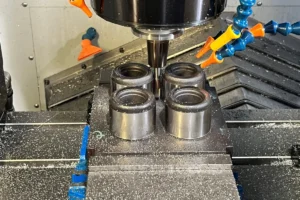
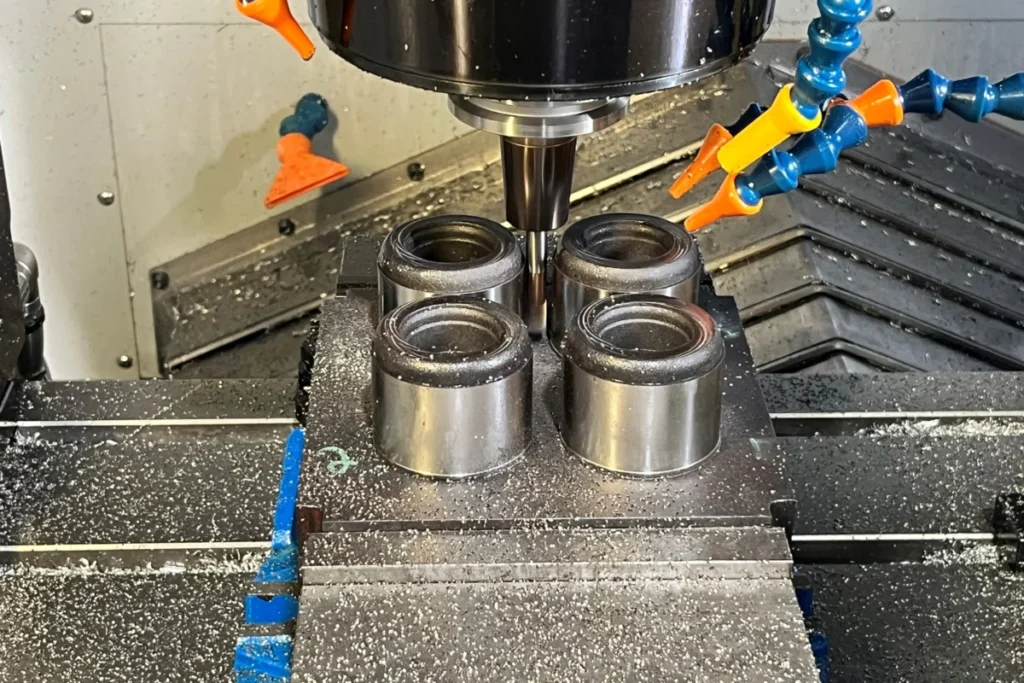
- Secondary Machining: Following the printing process, the inserts underwent crucial secondary machining operations. This included precise milling and electrical discharge machining (EDM) to achieve the required tolerances and surface finishes.
- Surface Finishing: The inserts were finished to an A2 polish, meeting K-Rain’s stringent quality requirements for mold components.
This in-house capability, from printing to finishing, allowed Zero Tolerance to maintain tight control over the quality and timeline of the project, a significant advantage in the fast-paced world of moldmaking.

Simulation Validates Reality: Performance Gains and Cost-Effectiveness
The impact of the 3D-printed conformal cooling inserts was both immediate and significant. Upon implementation, K-Rain’s modified mold began operating with dramatically improved efficiency. "K-Rain’s new tool ran 10 seconds faster per cycle, dropping from 54 seconds to around 44, an 18-20% improvement," Michon reported. While a servo motor upgrade contributed approximately two seconds to this gain, the overwhelming majority of the cycle time reduction was directly attributable to the enhanced cooling performance.
What makes this case study particularly compelling is the timing of the simulation conducted by Reaction Plastics Solutions. Richard Evans, representing Reaction Plastics Solutions, performed the simulation after the physical mold modifications and testing had already been completed. This allowed for a direct comparison between virtual predictions and real-world results. "The two lined up remarkably well, demonstrating how accurate modern simulation has become," Evans observed.
The simulation analysis revealed striking differences in temperature distribution within the mold:
- Original Design: Temperature mapping of the mold with traditional thermal pins showed a significant hot spot that persisted for as long as 31 seconds into the cooling cycle. This prolonged heat retention was the primary cause of the extended cycle times and subsequent production issues.
- Conformal Cooling Design: In contrast, the simulation of the mold with 3D-printed conformal cooling channels depicted a far more uniform heat distribution. The heat dissipated much more rapidly and evenly across the critical area, eliminating the problematic hot spots.
This uniform temperature profile had a direct and measurable impact on part quality:
- Reduced Shrinkage Variation: Consistent cooling led to more predictable and uniform material shrinkage, minimizing dimensional inconsistencies.
- Elimination of Warpage and Sink Marks: The efficient and even dissipation of heat effectively resolved the issues of part warpage and the formation of sink marks that had previously plagued the top section of the molded parts.
The simulation also provided valuable insights into the hydrodynamic performance of the cooling circuit. It confirmed good Reynolds numbers, indicating efficient fluid flow, and a manageable pressure drop of approximately 40 PSI. These parameters are critical for ensuring consistent cooling performance, especially in multi-cavity tooling applications where uniform distribution across all cavities is paramount.

Richard Evans emphasized the strategic value of simulation in such projects. "Of course, running a project like this without simulation is risky," he noted. "A simulation might cost a few thousand dollars, while redesigning and re-machining tooling can run far more expensive if things don’t work out." In essence, the simulation not only validated the success achieved by the toolroom but also underscored the economic prudence of utilizing computational analysis before committing to physical tooling modifications.
Broader Implications and Lessons Learned
The success of this collaborative project extends beyond the immediate gains for K-Rain. It serves as a powerful case study for the broader manufacturing industry, highlighting the transformative potential of combining advanced technologies with cross-disciplinary expertise.
Key Implications for the Manufacturing Sector:
- Democratization of Advanced Technologies: The availability of more accessible metal 3D printing solutions, like those offered by Xact Metal, is enabling smaller manufacturers to adopt additive manufacturing for high-value applications.
- Enhanced Product Quality and Efficiency: Conformal cooling, enabled by additive manufacturing, offers a tangible pathway to improved product quality, reduced scrap rates, and significant increases in production throughput.
- The Value of Simulation: The case reinforces the critical role of simulation in de-risking complex engineering projects, optimizing designs, and ensuring cost-effective development cycles.
- Collaborative Innovation: The success of this initiative underscores the power of collaboration between different specialized companies. Each partner brought unique expertise – K-Rain with its manufacturing needs, Zero Tolerance with its moldmaking and additive manufacturing capabilities, Xact Metal with its printing technology, and Reaction Plastics Solutions with its simulation expertise.
Practical Lessons for Manufacturers Exploring Metal Additive Manufacturing:
The team involved in this project shared valuable insights gleaned from their experience, offering practical guidance for other manufacturers considering similar ventures:

- Start with a Clear Problem: Identify specific pain points in your existing processes where conventional solutions are falling short. A well-defined problem statement is crucial for targeting the application of new technologies effectively.
- Material Selection is Key: Understand the performance requirements of your application and choose materials that offer the necessary properties. Corrax’s combination of hardenability, polishability, weldability, and corrosion resistance proved vital in this instance.
- Leverage Simulation Early: While this project benefited from post-build simulation, integrating simulation earlier in the design process can preempt potential issues and optimize designs before any physical manufacturing begins. This can lead to even greater time and cost savings.
- Consider the Entire Workflow: Metal additive manufacturing is often just one part of a larger production workflow. Ensure you have the necessary secondary processes (machining, finishing, quality control) in place to complete the part to specification.
- Build Strong Partnerships: Collaborate with companies that possess complementary expertise. The synergy between K-Rain, Zero Tolerance, Xact Metal, and Reaction Plastics Solutions was instrumental in achieving a successful outcome.
The journey from a cooling bottleneck to a showcase of modern moldmaking and additive manufacturing demonstrates that when cutting-edge technology is combined with strategic collaboration and a deep understanding of manufacturing challenges, progress is not only possible but also demonstrably measurable. K-Rain has not only achieved faster cycles and higher-quality parts but has also gained a new level of confidence in the potential of additive manufacturing to drive innovation and efficiency within its operations. For the industry at large, this story serves as a powerful reminder that the future of manufacturing lies in embracing these synergistic approaches.