ST. JOHN’S, Newfoundland and Labrador – CoLab, a prominent player in engineering collaboration software, has announced a significant expansion of its artificial intelligence capabilities, introducing a new system designed to generate and refine critical engineering documents such as Design Failure Mode and Effects Analyses (DFMEAs). Alongside this immediate rollout, the company has outlined ambitious plans to launch generative Computer-Aided Design (CAD) functionalities in the first half of 2027, signaling a profound shift in how engineering and manufacturing processes could be streamlined and innovated.
The newly introduced "generative artifacts" capability represents a crucial step forward in automating the often-tedious and time-consuming aspects of product development documentation. Leveraging a vast repository of information associated with a product development program, including its intricate design history, the AI system assists engineering teams in the creation and iterative updating of documents essential for a product’s journey from conceptualization to market release. This initial offering focuses on enhancing efficiency and consistency in documentation, a critical bottleneck in many engineering workflows.
The Immediate Impact: Generative Artifacts for Enhanced Documentation
At the core of CoLab’s immediate offering is the ability to intelligently generate and refine complex engineering documents. The Design Failure Mode and Effects Analysis (DFMEA) serves as a prime example of the type of document targeted by this new AI capability. DFMEA is a systematic, proactive method for identifying potential failure modes in a design, assessing their risk, and planning mitigation strategies. It is a cornerstone of quality management systems in industries ranging from automotive and aerospace to medical devices, mandated by standards such as ISO 9001 and IATF 16949. Traditionally, creating and updating DFMEAs is a highly manual, detail-intensive process that requires significant engineering expertise and can be prone to human error or inconsistencies across different projects or teams.
CoLab’s AI system aims to alleviate this burden by drawing upon a product’s complete development program data, encompassing everything from initial specifications and design iterations to material choices and testing results. By analyzing this rich historical context, the AI can propose comprehensive and accurate DFMEA entries, identify potential failure points based on past designs, and suggest appropriate severity, occurrence, and detection rankings. This not only dramatically accelerates the documentation process but also enhances the quality and completeness of these critical analyses, ensuring that potential issues are identified earlier and more consistently. The system acts as an intelligent co-pilot, reducing the cognitive load on engineers, allowing them to focus on higher-level problem-solving and innovation rather than repetitive data entry and cross-referencing.
Pioneering the Future: Generative CAD and AutoFix Capabilities
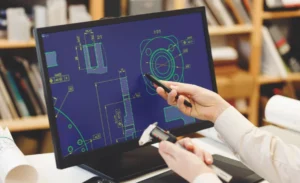
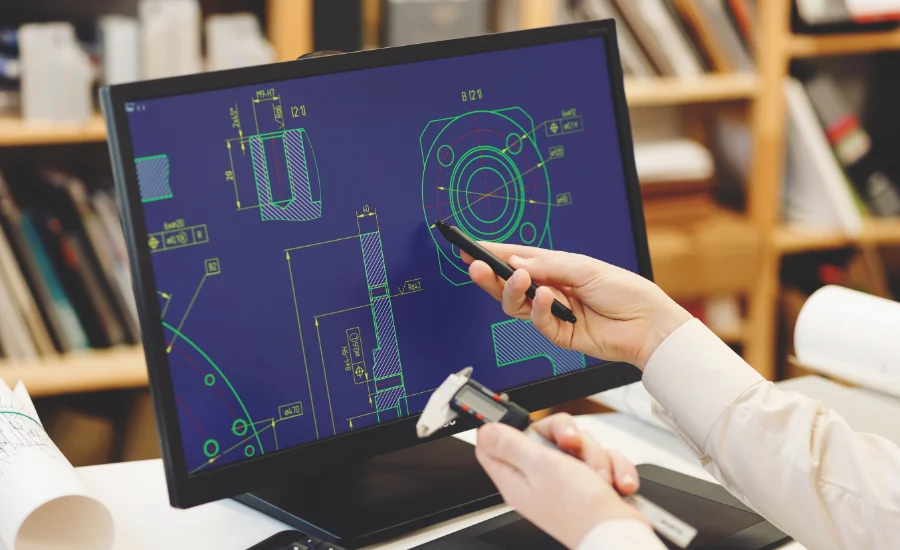
Looking ahead, CoLab’s roadmap includes two transformative capabilities: generative CAD tools and "AutoFix." The generative CAD functionality, slated for release in the first half of 2027, is designed to generate entirely new design concepts. This advanced capability will harness manufacturers’ extensive historical program data, integrating seamlessly with existing CAD software and sophisticated topology optimization tools. Unlike traditional CAD where designers manually create geometry, generative CAD, powered by AI, can explore a vast design space, proposing novel geometries that meet specified performance criteria, material constraints, and manufacturing processes. This could lead to unprecedented design innovation, creating components that are lighter, stronger, more efficient, or optimized for specific functions in ways not easily discoverable through human intuition alone.
The second planned capability, AutoFix, represents an intelligent design assistant. This AI-driven tool would enable the system to suggest specific design changes in direct response to an engineering annotation or a particular requirement. For instance, if an engineer annotates a design with a note about a stress concentration point or a need for improved thermal dissipation, AutoFix could analyze the design, consult engineering knowledge bases and documentation, and propose specific geometric modifications. Crucially, CoLab emphasizes that these proposed changes would not be black-box suggestions; they would incorporate sound engineering principles and documentation, providing a clear rationale behind each design decision. This transparency is vital for engineers to understand, validate, and trust the AI’s recommendations, maintaining the necessary human oversight in critical design processes.
A Strategic Vision: Human-Centric AI in Engineering
Adam Keating, co-founder and CEO of CoLab, articulated the company’s strategic focus, stating, "AI is getting better at generating geometry, so we’re focused on the last mile: fine-tuning the outputs using an organization’s historical designs, standards and guidelines, and expert knowhow." This statement underscores CoLab’s commitment to developing AI that is deeply integrated into existing organizational knowledge and workflows, rather than a generic, one-size-fits-all solution. The "last mile" approach highlights the critical need for AI to produce outputs that are not just technically sound but also align with a company’s unique design philosophies, manufacturing capabilities, and regulatory compliance requirements.
This approach ensures that the AI’s suggestions are highly relevant and actionable within a specific enterprise context. By incorporating internal engineering standards, guidelines, and expert knowledge, CoLab’s system is designed to act as an extension of the engineering team, speaking the same "language" and adhering to the same principles. This also addresses a key concern often raised with generative AI: the potential for outputs that, while novel, may not be practical or compliant within a specific industry or company. CoLab’s methodology promises to mitigate this by grounding the AI in the real-world constraints and accumulated wisdom of its users. The company further emphasizes that its approach is engineered to keep human engineers intimately involved in AI-generated design changes, ensuring a collaborative environment where AI augments human creativity and problem-solving, rather than replacing it. This collaborative framework is also designed to maintain a fully auditable design history, a non-negotiable requirement for regulatory compliance and quality assurance in many sectors.
Addressing Industry Challenges: The Imperative for AI in Product Development
The introduction of CoLab’s AI capabilities comes at a pivotal time for the global engineering and manufacturing sectors. Modern product development is characterized by increasing complexity, shorter product lifecycles, global supply chains, and stringent regulatory demands. Engineers are constantly challenged to innovate faster, reduce costs, and ensure product quality and reliability. Traditional methods, often reliant on manual processes, disparate software tools, and siloed information, struggle to keep pace with these demands.

For instance, the manual creation of DFMEAs, while critical, can consume significant engineering hours, diverting valuable resources from core design and innovation tasks. Studies have consistently shown that engineers spend a substantial portion of their time on non-design activities, including documentation, data management, and communication. Furthermore, the sheer volume of data generated throughout a product’s lifecycle often overwhelms human capacity to extract meaningful insights. This creates a fertile ground for AI-driven solutions that can automate routine tasks, synthesize vast amounts of data, and proactively identify potential issues or opportunities. CoLab’s solution directly addresses these pain points by offering tools that enhance efficiency, consistency, and intelligent assistance, thereby accelerating the entire product development process.
The Broader Landscape: AI’s Transformative Role in Manufacturing and Design
CoLab’s announcement aligns with a broader industry trend of increasing AI adoption in manufacturing and design. The global market for AI in manufacturing is projected to grow significantly, with various reports estimating it to reach tens of billions of dollars by the end of the decade. This growth is driven by the recognized potential of AI to revolutionize various aspects of the industrial value chain, from predictive maintenance and quality control to supply chain optimization and, critically, product design and engineering.
Generative design, in its broader sense, has been a growing field for years, with algorithms used to optimize designs based on a set of parameters. However, the advent of sophisticated AI and machine learning models, particularly large language models (LLMs) and advanced neural networks, is pushing generative design into a new era: AI-powered generative CAD. This new generation of tools can not only optimize existing designs but also conceive entirely novel forms, explore an exponentially larger solution space, and learn from past successes and failures. Companies like Autodesk, Siemens, and Dassault Systèmes have already invested heavily in integrating AI into their CAD and PLM (Product Lifecycle Management) suites, demonstrating the industry-wide recognition of AI’s transformative potential. CoLab’s focused approach, particularly on leveraging an organization’s proprietary historical data and expertise, positions it uniquely within this competitive landscape, aiming to deliver highly customized and practical AI solutions.
The efficiency gains promised by such AI systems are substantial. Industry benchmarks suggest that AI-driven design automation can reduce design cycle times by 20-50%, significantly cut down on prototyping costs, and improve the first-pass yield of designs. By automating repetitive tasks and providing intelligent insights, engineers can dedicate more time to creative problem-solving, complex analysis, and strategic innovation, thereby accelerating time-to-market and enhancing product competitiveness.
Navigating the Implications: Workforce, Competition, and Innovation
The implications of CoLab’s AI advancements are far-reaching. For the engineering workforce, it signals a shift from manual execution of routine tasks to a more supervisory and strategic role. Engineers will increasingly become "AI orchestrators," guiding the AI, validating its outputs, and applying their unique human creativity and judgment to the most complex and ambiguous challenges. This evolution necessitates new skill sets, emphasizing critical thinking, data interpretation, and human-AI collaboration. While concerns about job displacement often accompany discussions of AI, CoLab’s emphasis on keeping engineers "involved" and maintaining auditable histories suggests a future of augmentation rather than wholesale replacement.
In the competitive landscape, CoLab’s move positions it as a significant innovator in the engineering software space. By focusing on AI-powered document generation and advanced generative CAD, it challenges traditional CAD/PLM vendors to accelerate their own AI integrations. It could also carve out a niche for itself as a leader in "domain-specific AI" for engineering, where the value lies not just in general AI capabilities but in their precise application within the highly structured and data-rich environment of product development. This could lead to strategic partnerships or acquisitions as larger players seek to integrate best-in-class AI solutions.
Ultimately, the most profound implication is the acceleration of innovation. By enabling faster iteration, exploring more design alternatives, and providing intelligent assistance for critical documentation, CoLab’s AI tools could empower manufacturers to bring more innovative, higher-quality, and more reliable products to market at an unprecedented pace. This could unlock new levels of performance, sustainability, and customization across a multitude of industries.
Ensuring Trust and Traceability: The Auditability Imperative
A critical aspect of CoLab’s strategy, as highlighted by CEO Adam Keating, is the commitment to maintaining an auditable design history. In regulated industries, every design decision, every change, and every piece of documentation must be traceable and justifiable. The potential for AI to generate or modify designs raises legitimate concerns about accountability and intellectual property. CoLab addresses this by designing its system to integrate seamlessly with existing version control and PLM systems, ensuring that every AI-suggested change, along with its rationale, is recorded and attributable. This transparency is crucial for building trust in AI-generated outputs and for meeting stringent compliance requirements. Furthermore, the ability for manufacturers to provide their internal engineering standards and guidelines for use by the system reinforces this trust, ensuring that the AI operates within established organizational boundaries and best practices, safeguarding proprietary knowledge and design integrity.
The Road Ahead: CoLab’s Ambitious Trajectory and the Future of Engineering
CoLab’s introduction of AI-driven generative artifacts and its planned generative CAD capabilities mark a significant milestone in the evolution of engineering software. By focusing on practical applications that address real-world engineering bottlenecks and by committing to a human-in-the-loop, auditable approach, CoLab is poised to play a pivotal role in shaping the future of product development. As industries continue to embrace digital transformation, tools that intelligently augment human expertise and streamline complex processes will be indispensable. CoLab’s ambitious trajectory suggests a future where AI becomes an integral, trusted partner for engineers, fostering an era of unprecedented innovation and efficiency in design and manufacturing.