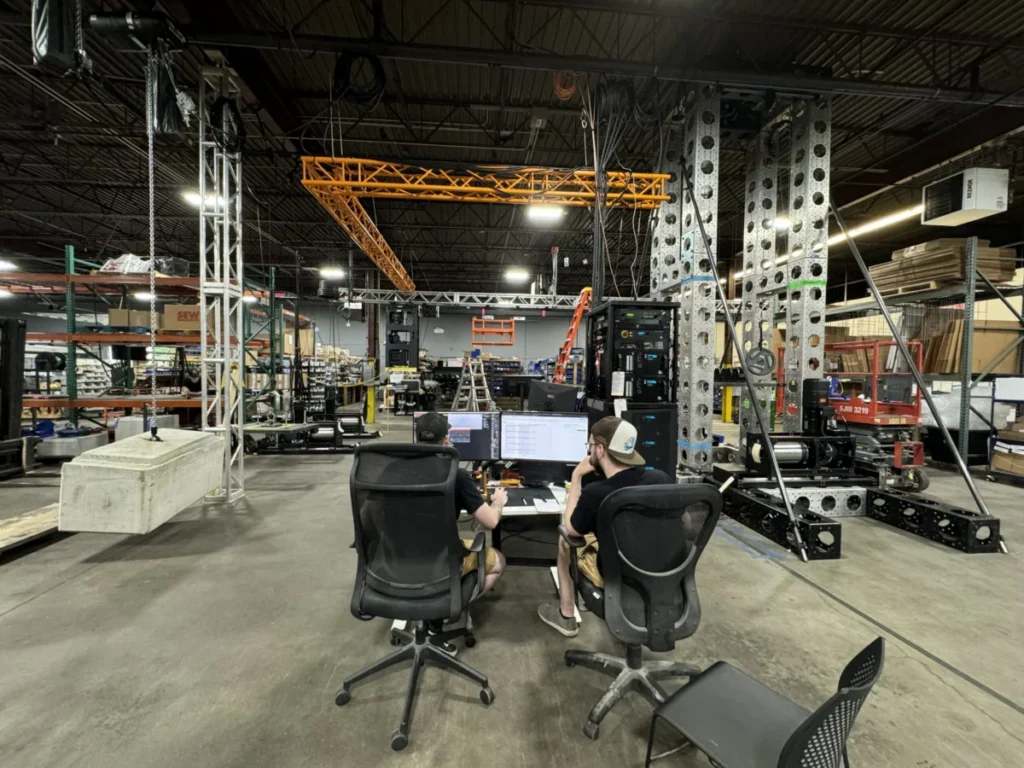
Modern theater and concert events increasingly rely on sophisticated motion control systems to orchestrate the seamless movement of scenery, transform dynamic LED walls, and enable performers to execute breathtaking aerial choreographies with unparalleled precision and safety. This critical technology underpins the visual spectacle and immersive experiences that define contemporary live entertainment. Creative Conners, a prominent company in this specialized field, has significantly enhanced its motion system capabilities by integrating Performance Motion Devices (PMD)’s Magellan MC58113 motion control IC into its core Stagehand control platform. This strategic upgrade addresses previous technical limitations, elevates motion quality, and accelerates development, all while steadfastly preserving the modular and user-friendly design philosophy that is a hallmark of the Creative Conners brand. The adoption of this advanced IC marks a pivotal moment, allowing Creative Conners to push the boundaries of stage automation for a diverse client base, ranging from high-profile international tours to regional theatrical productions.
The Evolving Landscape of Live Entertainment Automation
The demands placed on stage automation have grown exponentially over the past two decades. What was once the domain of manual labor and rudimentary mechanical systems has evolved into a complex interplay of sophisticated robotics, precise motor control, and intelligent software. Audiences now expect fluid, dynamic transformations of stage elements, from massive LED screens that glide into new configurations to elaborate set pieces that appear and disappear with cinematic grace. Crucially, the safety of performers, who may be suspended high above the stage or moving in intricate patterns, is paramount, requiring motion systems that are not only precise but also inherently robust and fail-safe.
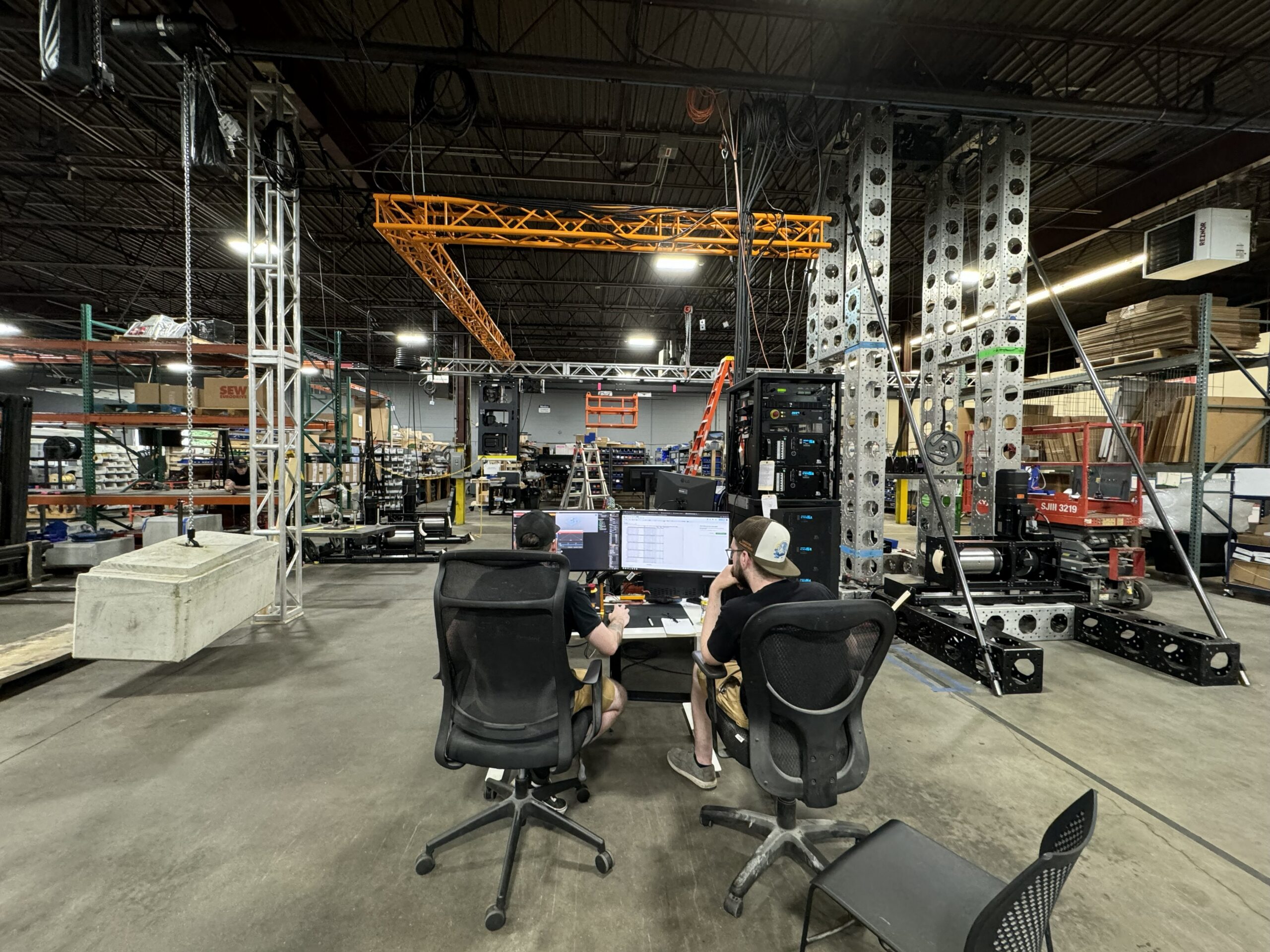
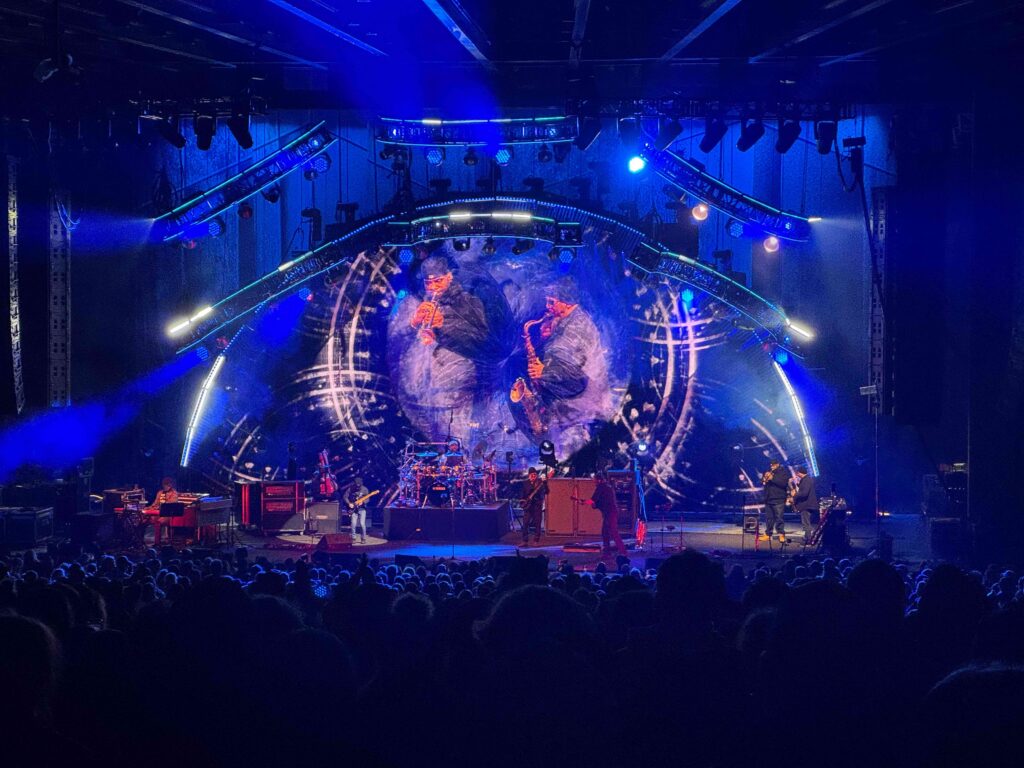
Creative Conners has established itself as a leader in designing and manufacturing these intricate motion systems, making complex stage animations both safe and visually compelling. The company’s unique value proposition lies in its provision of modular machinery, standardized control hardware, and intuitive software, all designed to be combined and configured by a broad spectrum of users, from seasoned professional production teams managing large touring shows to amateur groups staging permanent installations. This vertically integrated approach allows Creative Conners to cater to an unusually broad customer base, a testament to their commitment to making advanced automation accessible. The same underlying technology that powers the demanding productions of world-renowned acts like Cirque du Soleil and the Dave Matthews Band is also readily available for rental by schools bringing productions of Les Misérables to life. This democratization of sophisticated stage technology has particularly benefited regional theaters, a segment of the industry that historically lacked access to such advanced automation tools. Creative Conners’ philosophy, centered on making stage automation more approachable, was a key driver in their decision to re-evaluate and enhance their motion control platform, leading them to partner with Performance Motion Devices (PMD).
The Stagehand System: Heart of Creative Conners’ Operations
At the operational core of most Creative Conners systems is a standardized control box known as the Stagehand. This controller serves as the central nervous system for their diverse range of theatrical machinery. While the specific mechanical apparatus might be custom-engineered for a particular production, the Stagehand controller remains largely consistent across applications, ensuring a unified and familiar interface for operators. The Stagehand is engineered to interface seamlessly with various crucial components, including variable-frequency drives (VFDs) that regulate motor speed, encoders that provide precise positional feedback, and comprehensive safety systems that are non-negotiable in live performance environments.
Functionally, the Stagehand acts as the execution layer for cues meticulously crafted in Creative Conners’ proprietary Spike Mark software. These cues are the digital blueprints of a performance, defining every aspect of an element’s movement: its starting and ending positions, travel speed, dwell times, and how it precisely coordinates with other simultaneous stage actions. Once triggered by a stage manager or automated sequence, these commands are executed locally by the Stagehand controller, ensuring real-time responsiveness and reliability. Given its pivotal role at the nexus of hardware, software, and user interaction, the choice of the underlying motion controller IC within the Stagehand is not merely technical but profoundly strategic, impacting performance, safety, and the overall user experience.
Navigating Technical Hurdles: The Need for an Upgrade
For many years, Creative Conners relied on legacy motion control chips from Texas Instruments to power their Stagehand systems. While these devices served their purpose for a time, they gradually began to impose limitations on the capabilities and innovations Creative Conners could deliver. As the demands of live entertainment grew more complex and nuanced, the constraints of the older technology became increasingly apparent and restrictive.
One of the most significant limitations was the inability to independently control acceleration and deceleration profiles. As Christian Basse, Creative Conners’ senior controls engineer, explained, “On the old IC, we were locked to symmetric accel/decel. Whatever you loaded for the acceleration you had to use for decelerate.” This technical constraint directly clashed with both the aesthetic and safety requirements inherent in stage motion. In theatrical contexts, there’s often a desire for rapid, decisive movement to get scenery or performers into position quickly, followed by a graceful, controlled, and visually deliberate stop. Basse elaborated on this, stating, “We want to hurry up, get onto stage, get moving… but then we want a nice, smooth, deliberate-looking stop.” The inability to achieve this asymmetric motion profile meant compromises in visual fluidity and could, in some scenarios, impact perceived safety and realism.
Even more critically, the legacy ICs did not permit acceleration parameters to be changed dynamically, or "on the fly," during a motion sequence. This was particularly problematic for performer flying effects, where motion characteristics often need to adapt in real-time throughout a single cue to ensure both safety and dramatic impact. Imagine a performer being lifted and then gently decelerating into a new position – the old system offered limited flexibility for such nuanced control.
Beyond these functional shortcomings, practical issues began to emerge. The older motion controller was an aging technology, making it increasingly difficult to source reliably. This challenge was only exacerbated by global supply-chain disruptions, particularly during the pandemic, which highlighted the vulnerability of relying on components with uncertain availability. Creative Conners recognized an urgent need for a reliably procured solution that could also seamlessly integrate with its established modular design philosophy. The pursuit of a more capable, available, and flexible motion control solution became a strategic imperative for the company.
The Solution: A Strategic Partnership with PMD
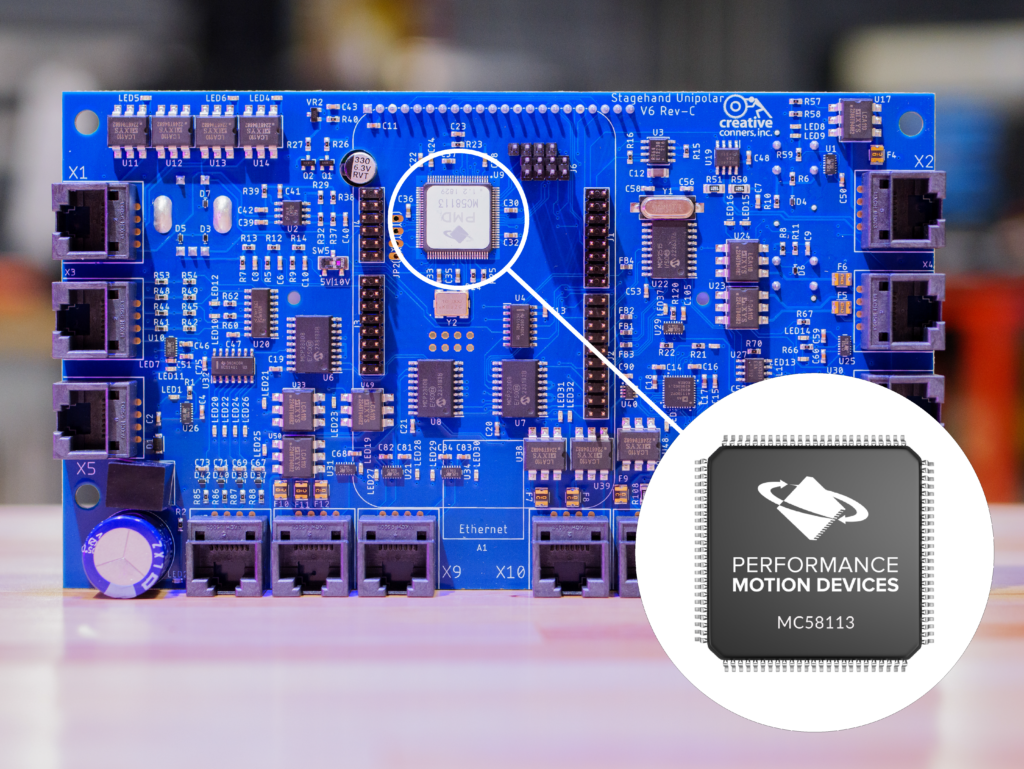
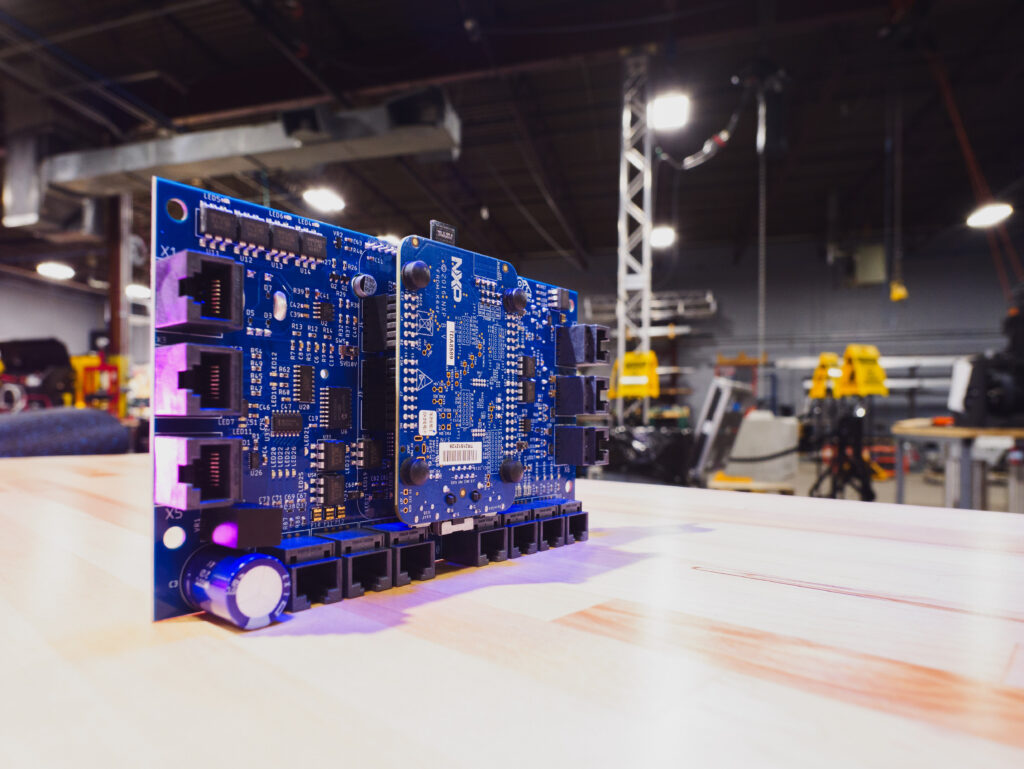
Faced with these growing technical and logistical challenges, Creative Conners embarked on a comprehensive evaluation process to identify a new motion control IC. After thoroughly assessing several available options, the team ultimately selected Performance Motion Devices (PMD)’s Magellan MC58113 motion control IC. This decision marked a significant upgrade for their flagship Stagehand control PCB, with the MC58113 becoming a key element of the new Stagehand controller core, paired synergistically with a microprocessor and a local HMI (Human-Machine Interface) display.
The integration of the MC58113 brought immediate and substantial improvements across several critical performance parameters. The single biggest enhancement, directly addressing a primary pain point, was the robust support for asymmetric acceleration and deceleration. This feature allowed Creative Conners to finally implement the nuanced motion profiles desired for both aesthetic appeal and enhanced safety. Scenery could now move swiftly to its target and then come to a soft, controlled stop, creating a more professional and visually appealing effect. For performer flying, the ability to dynamically adjust these parameters meant safer, more fluid, and more dramatic aerial sequences.
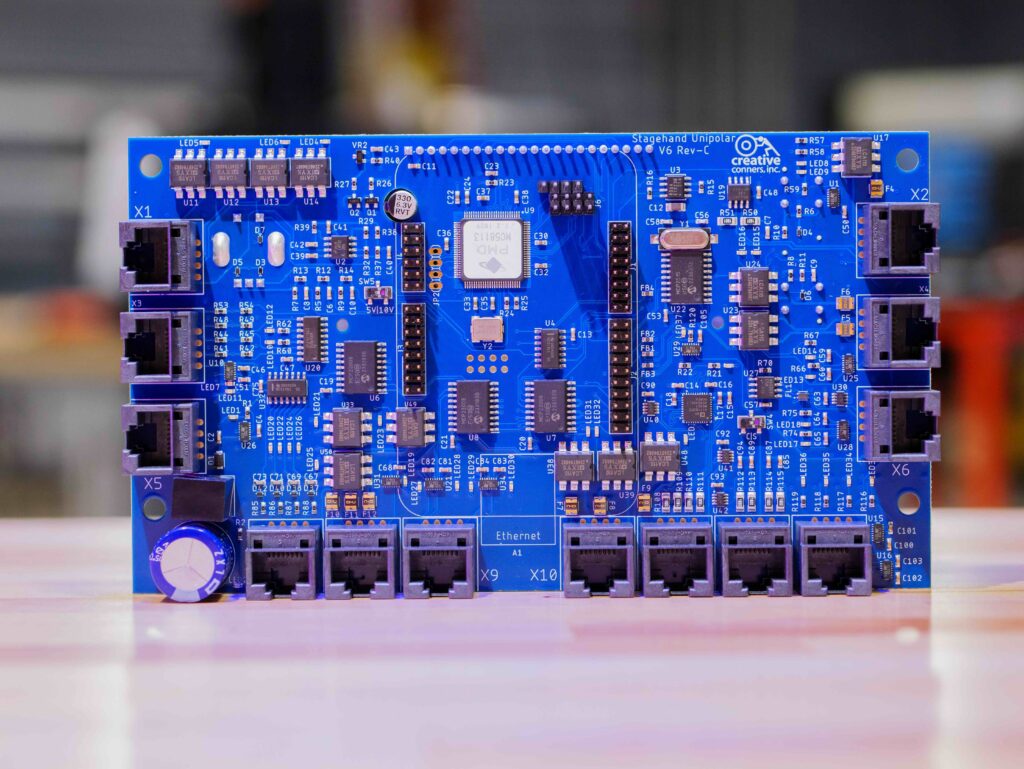
Another significant advancement provided by the MC58113 was its support for absolute encoders. Basse underscored the importance of this capability: “If it’s going to move without the machine and the controls being powered, you’re not going to lose the position.” This feature is critical in various scenarios, particularly rescue operations. For instance, if a performer needs to be manually lowered using mechanical brakes during a power outage, and the controller is powered off, an absolute encoder ensures that when power is restored, the system instantly knows the exact position of the moving element. There’s no need for re-homing or calibration, which saves crucial time and enhances safety in emergency situations. While not every application strictly requires absolute encoders, they are indispensable for permanently installed infrastructure hoists and for the most demanding, high-end customers who are pushing the absolute limits of stage automation in terms of precision and reliability.
The PMD MC58113 also restored a crucial capability that had been lost with previous controller iterations: the ability to generate a ±10-V speed signal using an external Digital-to-Analog Converter (DAC). This bidirectional signal is essential for certain specialized applications, particularly those involving hydraulic valves that interpret negative voltage as reverse motion and positive voltage as forward motion. Basse noted, “When we moved to a newer TI controller, we lost that bidirectional signal. Moving to the PMD controller gave us the ability to throw in an external DAC and do a bidirectional signal again.” Restoring this capability was vital, as it ensured that Creative Conners would not have to turn away specific, highly specialized projects that relied on this type of control, thereby maintaining their broad market reach.
Beyond core motion control, the MC58113 offered built-in tracing and monitoring tools. These features are invaluable for Creative Conners’ engineers, allowing them to visualize motion behavior over time, diagnose any issues efficiently, and fine-tune performance parameters for optimal results. The controller’s highly tunable position filters further contribute to the system’s ability to stay precisely on target, even under dynamic conditions. Basse emphasized the company’s dedication to quality: “We really care about the quality of motion… not just that it looks nice but that it’s where it’s supposed to be when it’s supposed to be.” In the tightly choreographed world of live productions, positional accuracy is just as critical as the smoothness of the motion.
One particularly significant, and somewhat unanticipated, benefit was the availability and quality of PMD’s C-Motion C/C++ software library. Instead of Creative Conners’ small engineering team having to write low-level serial communication code and message-packing routines from scratch—a time-consuming and often error-prone endeavor—they could leverage PMD’s robust, command-driven API. Sending a motion command became as simple as making a call to a C-Motion function. Basse hailed this as a game-changer: “That saved so much time and has been invaluable to us.” This accelerated firmware development considerably, freeing Creative Conners’ engineers to focus their valuable time and expertise on developing higher-level functionality and refining the user experience, rather than reinventing the foundational “motion control plumbing.” This strategic leveraging of PMD’s software tools allowed Creative Conners to maintain its competitive edge and innovate more rapidly.
The partnership with PMD extended beyond product delivery; it involved active collaboration and support. At one point, Creative Conners required a higher encoder resolution than what was supported by the standard implementation of the MC58113. PMD demonstrated exceptional responsiveness, working directly with the Creative Conners team to deliver a customized firmware update that met their specific needs within approximately a week. This level of direct engineering support underscores the value of a strong vendor-customer relationship in complex technical fields.
Broader Impact and Future Horizons
The adoption of PMD’s Magellan MC58113 IC has had a multifaceted impact on Creative Conners. Fundamentally, it has bolstered their ability to deliver superior motion quality and enhanced safety across their entire product line. By overcoming the limitations of legacy systems, Creative Conners can now offer more sophisticated, flexible, and reliable automation solutions, thereby solidifying its position as a market leader. This strategic upgrade has not only allowed them to better serve their existing, diverse client base but also positioned them to tackle even more complex and demanding projects in the future.
Looking ahead, Creative Conners is actively exploring further innovations with PMD technology. Their team is now investigating PMD’s multi-axis motion controllers, which promise even more tightly coordinated motion across multiple axes—a crucial capability for increasingly intricate stage effects. Additionally, Creative Conners has expressed significant interest in PMD’s integrated servo solutions, such as the ION/CME N-Series intelligent drives. One N-Series option, in particular, with a robust 1000-W power output, has captured the team’s attention. The potential integration of such a higher-power solution could herald a new generation of "smart machines" for Creative Conners. These future machines could feature drive electronics mounted directly on the mechanical apparatus itself, significantly reducing the size and weight of control cabinets while simultaneously increasing lifting capacity and operational speed. This represents a paradigm shift towards more compact, powerful, and intelligent automation systems, further enhancing portability and ease of deployment for touring shows and permanent installations alike.
This collaboration between Creative Conners and Performance Motion Devices exemplifies a broader trend in industrial automation and specialized engineering. The demand for highly specialized, flexible, and robust motion control components is driving innovation, with companies like PMD providing the critical building blocks that enable system integrators and manufacturers to create cutting-edge solutions. By leveraging advanced ICs and comprehensive software libraries, smaller engineering teams can achieve disproportionately large impacts, focusing their creativity on high-level system design and user experience rather than fundamental low-level programming.
The implications for the live entertainment industry are profound. As motion control technology becomes more powerful, precise, and accessible, it continues to raise the bar for what is possible on stage. From grand theatrical spectacles on Broadway to intimate community theater productions, enhanced motion control ensures safer operations, more compelling visual narratives, and ultimately, more unforgettable experiences for audiences worldwide. Creative Conners’ strategic move to embrace PMD’s advanced motion control IC is not just a technical upgrade; it is an investment in the future of dynamic, safe, and breathtaking stage automation.