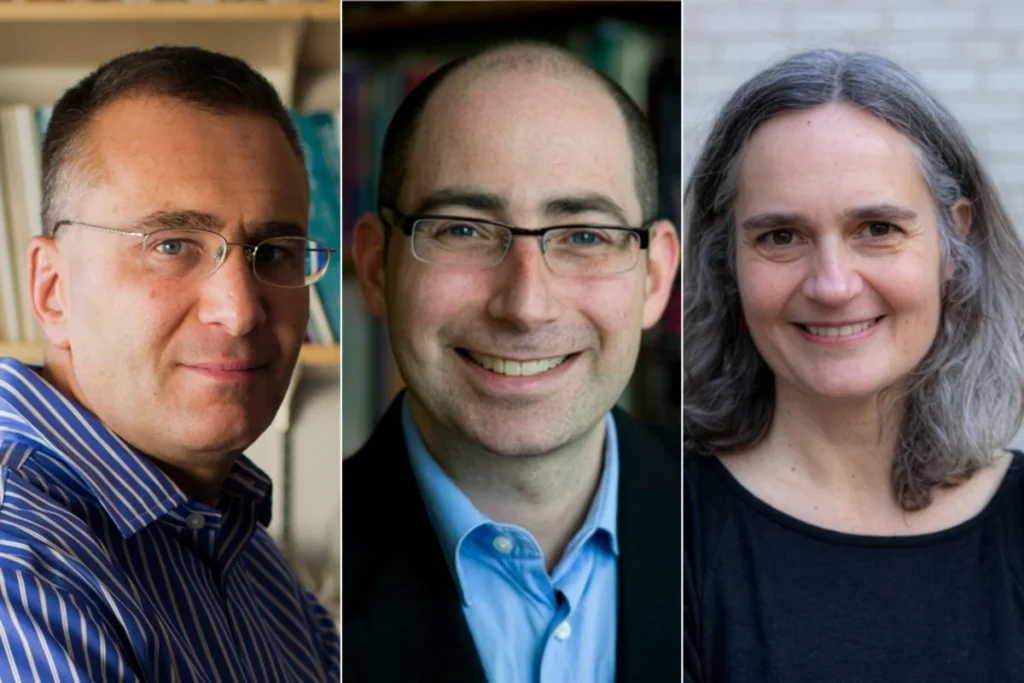
The Massachusetts Institute of Technology (MIT), an institution globally synonymous with groundbreaking engineering and scientific discovery, is currently commemorating a milestone that underscores its commitment to a holistic education: the 75th anniversary of the School of Humanities, Arts, and Social Sciences (SHASS). Established in the wake of World War II, SHASS has evolved from a nascent experimental division into a cornerstone of the MIT identity, ensuring that the world’s leading technologists are equally equipped with the critical thinking, ethical frameworks, and cultural literacy required to navigate a complex global landscape. To mark this diamond jubilee, MIT News recently convened a roundtable with three distinguished faculty members—historian and physicist David Kaiser, anthropologist Heather Paxson, and economist Jonathan Gruber—to reflect on the school’s origins, its current impact, and its role in shaping the future of STEM education.
The Genesis of SHASS: The Lewis Report and the Post-War Pivot
The intellectual architecture of SHASS was not built overnight. Its origins trace back to a period of profound social and geopolitical upheaval. Following the conclusion of World War II, the MIT faculty recognized that the rapid advancement of science and technology—epitomized by the Manhattan Project and the development of nuclear weaponry—posed existential questions that technical proficiency alone could not answer.
In 1946, the Institute convened a committee to reassess its educational principles, culminating in the 1949 publication of the "Lewis Report." This pivotal document argued that for MIT to remain relevant in a new era, it had to produce more than just expert technicians; it had to cultivate informed citizens and leaders capable of understanding the human context of their work. David Kaiser, the Germeshausen Professor of the History of Science and a Professor of Physics, notes that the report was a comprehensive three-year effort that touched upon every facet of campus life, from undergraduate curriculum to residential social structures.
The Lewis Committee’s most significant recommendation was the establishment of a dedicated school for humanities and social sciences that would stand as a "co-equal" to the Schools of Science and Engineering. The rationale was clear: the nuclear age required a toolkit that included history, governance, economics, and culture. Originally founded as the School of Humanities and Social Sciences, the institution expanded its mandate roughly 25 years ago to officially include "Arts," recognizing the vital role of creative expression in the intellectual life of the university.
A Chronology of Integration and Evolution
The trajectory of SHASS reflects a broader shift in higher education toward interdisciplinary collaboration. While departments like Economics existed at MIT long before the formal establishment of the school, the creation of SHASS provided a unified structure for diverse disciplines to flourish alongside STEM.
- 1946–1949: The Lewis Committee conducts a thorough audit of MIT’s educational mission, leading to the recommendation of a humanities-focused school.
- 1950: The School of Humanities and Social Sciences is officially established.
- 1950s–1970s: The school gains prestige, with the Department of Economics and the Department of Linguistics and Philosophy emerging as world leaders in their respective fields.
- 1980s: The "HASS Requirement" is solidified, mandating that all undergraduates complete a significant portion of their credits within the school.
- 2000: The school is renamed the School of Humanities, Arts, and Social Sciences (SHASS) to reflect the growing importance of the arts.
- 2024: SHASS celebrates its 75th anniversary with a two-day conference titled "SHASS 75," showcasing the school’s contributions to public policy, technology ethics, and the arts.
The Quantitative Impact: The HASS Requirement and Enrollment Data
The influence of SHASS is perhaps most visible in the daily schedules of MIT’s undergraduate population. Every year, more than 1,000 undergraduates enroll at the Institute, and despite their primary focus on science or engineering, they are required to spend at least 25% of their time within SHASS. This "HASS Requirement" consists of eight subjects across four years, ensuring that every MIT graduate possesses a foundational understanding of the human condition.
The breadth of the school is expansive, encompassing fields such as music and theater arts, history, anthropology, economics, linguistics, philosophy, literature, and political science. According to internal university data, SHASS subjects are not merely "service courses" but are highly sought-after electives. The Department of Economics, for instance, frequently hosts "Intro to Economics" (14.01), a course that has inspired generations of students—including Jonathan Gruber, the Ford Professor of Economics—to pivot from pure mathematics to applied social science.
Interdisciplinary Excellence: Bridging the "Two Cultures"
The unique strength of SHASS lies in its location within a premier technical institute. This proximity allows for a level of cross-pollination rarely seen at traditional liberal arts colleges. Heather Paxson, the William R. Kenan, Jr. Professor of Anthropology and Associate Dean for Faculty, highlights that SHASS faculty frequently collaborate with colleagues from the School of Engineering and the Sloan School of Management.
A current example of this synergy is the work being conducted by political scientists Adam Berinsky and Charles Stewart in collaboration with Chara Podimata, an operations research specialist. Together, they are utilizing artificial intelligence to study AI itself, specifically examining how chatbots provide information to voters and the potential for biased algorithms to influence election outcomes.
Similarly, David Kaiser’s career exemplifies the lack of rigid boundaries at MIT. As both a physicist and a historian, his research into the history of quantum mechanics led to a five-year experimental physics project. His book, How the Hippies Saved Physics, documented how "marginal" figures in the 1970s kept obscure quantum questions alive—work that eventually contributed to the 2022 Nobel Prize in Physics. This "BOGO" (buy one, get one) career path, as Kaiser describes it, is a direct result of the intellectual permeability fostered by SHASS.
The Modern Challenge: AI, Ethics, and the Public Good
As society enters the age of generative artificial intelligence, the mission of SHASS has never been more critical. The consensus among the roundtable participants was that the challenges posed by AI are not purely technical; they are fundamentally ethical, regulatory, and social.
"The fundamental central issue in AI right now is how do we think about it ethically? How do we regulate it?" says Jonathan Gruber. "There’s no place better to think about that than MIT, where you’ve got the people developing the frontier AI models next to the people who can help you think about how to regulate and think ethically about those models."
Gruber also emphasized the concept of the "public good." In an era of intense academic and economic pressure, SHASS serves as a vital space where students are encouraged to look beyond personal gain and consider the broader societal impact of their innovations. This ethos is reflected in the school’s pedagogy, which emphasizes communication skills—the ability to explain complex data in clear, persuasive terms.
Mens et Manus: The Humanistic Hand
The MIT motto, Mens et Manus (Mind and Hand), is often associated with laboratory work and mechanical engineering. However, SHASS faculty argue that the motto is equally applicable to the humanities. Heather Paxson describes an anthropology assignment where students were tasked with making mozzarella cheese using poorly written instructions. The exercise was designed to teach students about "tacit knowledge"—the skills and intuition that cannot be captured in a manual.
This hands-on approach to the humanities ensures that students do not just read texts but engage with them critically. By writing essays on physics concepts like time dilation or debating the responsibilities of scientists during wartime, students learn that "writing is thinking." These exercises force a clarification of thought that is essential for any leader in the STEM fields.
Looking Ahead: The SHASS 75 Conference
The upcoming 75th-anniversary conference, scheduled for September 24th and 25th, 2024, serves as both a retrospective and a roadmap for the future. The event will feature over 40 speakers, ranging from early-career scholars to Nobel laureates and alumni who have applied their SHASS education in diverse global sectors.
The conference will also showcase the artistic side of the school, featuring original musical compositions, dance performances, and a jazz ensemble showcase. This integration of the performing arts into a commemorative academic event highlights the school’s belief that human expression is an inescapable part of being a responsible member of the modern age.
As David Kaiser concluded, no major global challenge—whether climate change, pandemic preparedness, or the regulation of AI—can be solved by a technical fix alone. The legacy of SHASS over the last 75 years is the proof that the most effective solutions emerge from the intersection of scientific rigor and humanistic inquiry. By continuing to flex this interdisciplinary muscle, MIT ensures that its graduates are not just builders of the future, but stewards of it.