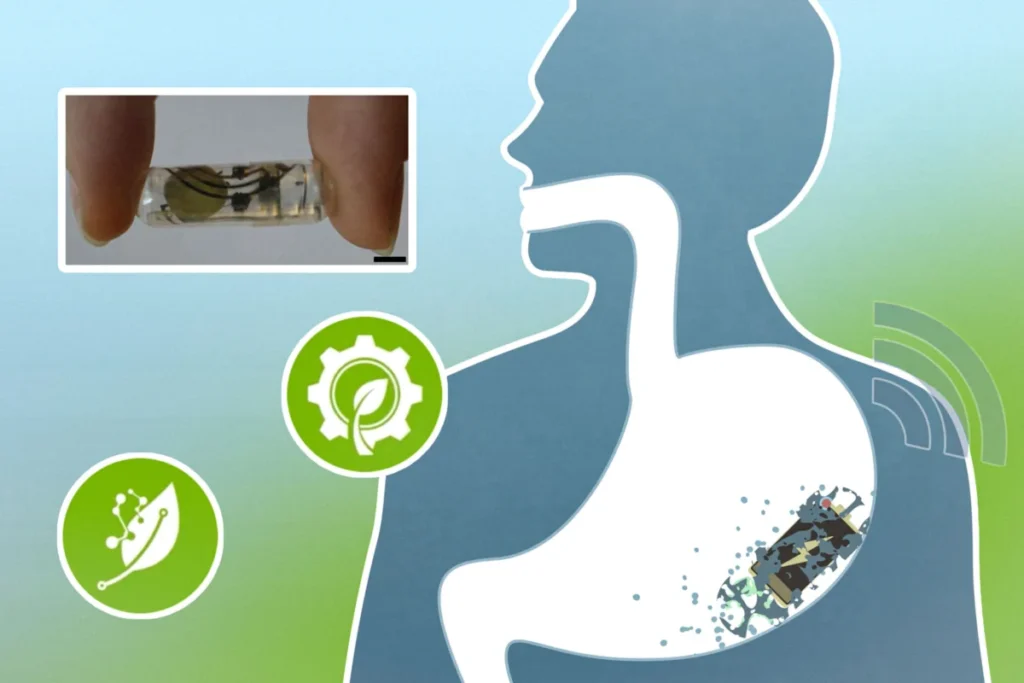
A groundbreaking innovation in medical technology has emerged from the collaborative efforts of researchers at MIT, Brigham and Women’s Hospital, and the Broad Institute of MIT and Harvard: the development of fully bioresorbable batteries capable of safely powering ingestible and implantable medical devices. This significant advance, detailed in a paper published today in Nature Chemical Engineering, addresses critical safety and environmental concerns associated with traditional power sources in the rapidly expanding field of internal diagnostics and therapeutics. Led by Giovanni Traverso, a distinguished professor of mechanical engineering at MIT, a gastroenterologist at Brigham and Women’s Hospital, and an associate member of the Broad Institute, and former MIT postdoc Mehmet Girayhan Say, the research marks a pivotal step towards medical devices that can perform their function within the body and then safely dissolve, leaving no trace.
The necessity for such a radical shift in power supply stems from the inherent challenges of operating electronics within the human body, particularly within the gastrointestinal (GI) tract. For years, Traverso’s lab has been at the forefront of developing sophisticated ingestible capsules designed for a range of applications, from monitoring vital signs and delivering targeted drugs to detecting opioid overdoses. These devices often require a reliable power source, and while external wireless power transmission or harvesting energy from the GI tract have been explored, many rely on compact coin batteries. However, these conventional batteries, typically containing lithium, silver oxide, or other heavy metals, present a considerable safety risk. Should their protective coating be compromised during transit through the corrosive environment of the GI tract, leakage of potentially toxic materials could occur, posing serious health hazards to patients.
"For many of the systems we’re developing, we need power, and we power the system through different ways," stated Professor Traverso, articulating the core problem his team sought to solve. "Often, we use batteries, so the question here was: Could we develop a battery that was bioresorbable, and then apply that across a range of application areas?" This inquiry laid the foundation for a multi-year research endeavor culminating in the present breakthrough.
The Genesis of Bioresorbable Power: A Decade of Innovation
The development of these dissolvable batteries is not an isolated event but rather the latest evolution in a decade-long trajectory of innovation from Traverso’s lab. Since the early 2010s, his team has consistently pushed the boundaries of ingestible technology, introducing devices that can autonomously perform complex functions within the body. Early iterations of these devices, while revolutionary in their capabilities, highlighted the persistent challenge of power management. Initial solutions included drawing power from external sources wirelessly or, in some cases, ingeniously harnessing the acidic environment of the stomach itself to generate minute amounts of electricity. Yet, for devices requiring sustained or higher power output, self-contained batteries remained the most practical option. The inherent safety risks of traditional batteries, however, served as a significant impediment to widespread clinical adoption, particularly for chronic or repeated use.
The global market for ingestible sensors and diagnostic devices is projected to grow substantially in the coming years, driven by increasing demand for minimally invasive diagnostics, remote patient monitoring, and personalized medicine. With this growth comes an amplified need for safe, biocompatible, and environmentally friendly power solutions. Current ingestible devices, such as those used for capsule endoscopy, typically rely on silver oxide batteries, which, while approved, still necessitate passage through the digestive system and eventual excretion, contributing to medical waste and carrying a low but present risk of complications.
Engineering Safety: Magnesium and Molybdenum Trioxide as the Core
To circumvent the dangers posed by conventional battery materials, the researchers pivoted towards elements known for their biological safety and ability to function as electrodes. The selection criteria focused on materials that are not only effective in generating power but also safe for human consumption in small quantities and readily absorbed by the body. This meticulous selection process led them to magnesium and molybdenum trioxide.
Magnesium, a vital mineral involved in over 300 enzymatic reactions in the human body, is commonly found in dietary supplements and certain medications. Its excellent electrochemical properties make it an ideal candidate for the anode (negative electrode) of the battery. Molybdenum trioxide, while less common in everyday parlance, is also considered safe for consumption in trace amounts and is used as the cathode (positive electrode). Both materials exhibit the necessary characteristics to create a functional battery while being inherently biocompatible.
"Those materials are known to be relatively safe. That was the biggest driver, thinking about materials that can be tolerated by humans," Traverso emphasized, underscoring the patient-centric approach to their material selection.
The battery design integrates these electrodes with an ionic liquid gel electrolyte, all encased within a bioresorbable system. This means that, unlike conventional batteries, the entire assembly is engineered to fully break down and be absorbed by the body’s natural processes over time. The team developed two primary configurations: a disc-shaped battery measuring 7.5 millimeters in diameter, suitable for compact devices, and a rectangular bar 24 millimeters long, designed for applications requiring a larger power footprint.
Rigorous Testing and Performance Validation
To rigorously assess the performance and degradation profile of their novel batteries, the researchers subjected them to conditions mimicking the harsh environment of the GI tract. Initial tests involved exposing the batteries to a highly acidic solution comparable to gastric juice. The results were promising: the batteries maintained normal function for approximately three days, after which their performance gradually declined. Crucially, within a few weeks, the batteries completely disintegrated, confirming their bioresorbable nature. This degradation timeline is particularly advantageous, as many ingestible diagnostic and therapeutic interventions require functionality for only a few days before their task is complete.
The true test of the battery’s clinical relevance came through its integration into existing ingestible technologies developed by Traverso’s lab. One notable application involved a degradable device first reported in 2023, designed to deliver a small electrical current to the stomach lining. The original version of this device, aimed at stimulating endocrine cells in the stomach to produce ghrelin – a hunger-regulating hormone – was powered by two silver oxide coin batteries.
Ghrelin stimulation holds significant therapeutic potential for conditions characterized by nausea or loss of appetite, such as cachexia, a severe form of body mass loss often observed in patients with cancer or other chronic diseases. By replacing the conventional silver oxide batteries with the new magnesium-molybdenum oxide bioresorbable power source, the researchers achieved a remarkable feat: nearly the entire ghrelin-stimulating device became bioresorbable, with the exception of a minuscule printed circuit board. Any non-absorbable components, including the circuit board, are designed to pass safely through the GI tract and be excreted, minimizing patient risk.
In the new study, the bioresorbable battery demonstrated its capacity to generate continuous electrical stimulation for up to three days, sufficient for its therapeutic purpose. Animal trials provided compelling evidence of its efficacy, showing that just 20 minutes of stomach stimulation could boost ghrelin levels by approximately 50 percent. This robust performance validates the battery’s capability to power clinically relevant functions within the GI tract.
"What makes this work exciting is that we were able to show that a bioresorbable battery is not just a concept. It can actually power clinically relevant functions inside the gastrointestinal tract and then simply dissolve," stated Mehmet Girayhan Say, underscoring the transition from theoretical possibility to demonstrated practical application.
Empowering Communication: Enhanced RFID for Medication Adherence
Beyond therapeutic stimulation, the bioresorbable battery’s potential extends to improving patient compliance and monitoring. The research team integrated the disc-shaped battery into a novel Radio-Frequency Identification (RFID) device designed to aid patients in adhering to their medication schedules. This ingestible capsule, equipped with a bioresorbable RFID tag made from molybdenum and cellulose, can transmit its location from within the GI tract.
This represents a significant upgrade from earlier RFID systems. In January, Traverso’s lab unveiled SAFARI (Self-Activating Functionalized Autonomous RFID Ingestible), a system that utilized passive RFID tags powered by harvested energy. While innovative, passive tags have inherent limitations in communication range and continuous transmission, as they rely on external activation. The integration of the new bioresorbable battery transforms the RFID capsule into an active system, enabling continuous transmission over a significantly extended range.
Animal studies confirmed the enhanced capabilities, demonstrating that the battery-powered RFID tags could transmit continuously from within the GI tract, achieving a communication range of up to 1.5 meters. This increased range and continuous functionality are crucial for reliable medication adherence monitoring, allowing caregivers or automated systems to confirm ingestion and track passage without requiring the patient to be in immediate proximity to a reader.
Broader Implications: Patient Safety, Environmental Stewardship, and Future Horizons
The implications of bioresorbable batteries extend far beyond the immediate applications demonstrated in this study. From a patient safety perspective, eliminating the need for conventional batteries in ingestible devices significantly reduces the risk of internal injury, chemical leakage, or the need for retrieval in case of device malfunction. This could pave the way for more frequent and less invasive diagnostic procedures, particularly for vulnerable populations or those requiring long-term monitoring.
Moreover, the environmental benefits are substantial. Traditional batteries, even small coin cells, contain hazardous materials that pose a challenge for disposal. As the volume of ingestible medical devices grows, the cumulative environmental impact of discarded batteries entering sewage systems or landfills becomes a legitimate concern. Bioresorbable batteries offer a sustainable alternative, as their components naturally degrade and are absorbed, leaving no toxic residue.
"The benefits are twofold: one, the ability to be bioresorbable, but also the potential to minimize environmental impact because the materials will be degraded in the environment as well," Traverso highlighted, emphasizing the dual advantage of this innovation. This aligns with a growing global movement towards green engineering and sustainable healthcare practices.
Looking ahead, the researchers are actively planning a clinical trial for the SAFARI system, which is anticipated to commence in approximately two years. This crucial step will involve human subjects and provide invaluable data on the safety, efficacy, and real-world performance of the bioresorbable battery and RFID system. Success in clinical trials could rapidly accelerate the adoption of this technology across various medical fields.
The advent of bioresorbable batteries opens up a vast landscape for future medical device development. Imagine implantable sensors that monitor post-surgical healing and then harmlessly disappear, or drug delivery systems that release medication over a precise period before dissolving. The ability to power sophisticated electronics internally without the need for retrieval or concerns about long-term biocompatibility of foreign materials represents a paradigm shift in medical engineering. This breakthrough not only solves a critical existing problem but also unlocks new possibilities for diagnostic and therapeutic interventions that were previously unattainable due to power source limitations. The research underscores a future where medical technology is not only effective but also seamlessly integrated with the body’s natural processes, offering unparalleled safety and environmental responsibility.
This pioneering research received significant financial backing from a consortium of supporters, including Novo Nordisk, the Karl van Tassel Career Development Professorship, MIT’s Department of Mechanical Engineering, the Brigham and Women’s Hospital Division of Gastroenterology, and the U.S. Advanced Research Projects Agency for Health (ARPA-H), reflecting the broad recognition of its potential impact.