For decades, the concept of robots autonomously selecting randomly oriented parts from a bin has been a tantalizing prospect, often deemed "almost ready for prime time." While significant technological strides in vision-guided systems have brought bin picking to a genuinely production-capable state, a discernible chasm persists between systems that function in controlled laboratory environments and those that operate with unwavering reliability on dynamic factory floors. This enduring gap, often understated by technology vendors, underscores the complexities inherent in deploying advanced automation solutions in real-world manufacturing settings.
Drawing from extensive operational experience, including the deployment of vision-based picking cells across global manufacturing facilities that have collectively executed over 30 million production picks, crucial insights have emerged. These observations move beyond theoretical possibilities under ideal conditions, instead illuminating the practical realities and challenges encountered when bin-picking systems face the unpredictable variables of factory floors: fluctuating lighting, inconsistent part quality, and the human element of maintenance crews. The success or failure of such projects is rarely determined by obvious factors; rather, it hinges on meticulous decisions made throughout the entire lifecycle – from initial cell design and gripper selection to integration planning and long-term maintenance protocols, often well before and long after the robot’s inaugural pick.
The Evolution and Current Landscape of Bin Picking
The journey of bin picking from an academic curiosity to a commercially viable technology spans several decades. Early attempts in the 1980s and 1990s were often hampered by limitations in computational power, rudimentary 3D vision algorithms, and the high cost of specialized hardware. Robots, though increasingly precise, lacked the intelligent perception needed to navigate unstructured environments. The vision systems of that era were often slow, prone to errors with variations in lighting or part geometry, and required extensive, often manual, programming for each new part. This made them largely impractical for the high-mix, low-volume scenarios common in many manufacturing operations.
The past decade, however, has witnessed a transformative acceleration. Advances in artificial intelligence, particularly deep learning and neural networks, coupled with exponential increases in processing power, have revolutionized 3D vision. Modern cameras, employing technologies like stereo vision, structured light, and time-of-flight, can capture highly detailed depth maps with unprecedented speed and accuracy. AI algorithms can now rapidly analyze these complex 3D point clouds, identify objects regardless of their orientation, and plan collision-free pick paths for robotic arms. This confluence of technologies has propelled bin picking into its "prime time" moment, making it a cornerstone of Industry 4.0 initiatives aimed at enhancing flexibility and efficiency in manufacturing.
According to market research by Statista, the global industrial robotics market, within which bin picking plays a crucial role, is projected to reach approximately $35 billion by 2028, with vision-guided robotics being a significant growth driver. This growth is fueled by persistent labor shortages, rising labor costs, and the increasing demand for automation across diverse sectors, including automotive, electronics, logistics, and general manufacturing.
Strategic Imperatives: Is Bin Picking the Optimal Solution?

The initial and arguably most critical question in any automation project involving bin picking is not how to implement it, but whether it should be implemented at all. Bin picking technology is specifically designed to address scenarios where parts are randomly presented within a container or exhibit minor positional variations around a known reference point, necessitating visual adjustment for successful retrieval.
However, its application is not universal. If parts are consistently arranged in a fixed, predictable pattern, vision-guided picking often introduces unnecessary cost and complexity without adding commensurate value. In such deterministic scenarios, a pre-programmed sequence of robot motions can achieve the task with high reliability and efficiency, eliminating the need for a sophisticated vision system.
Similarly, the economics of automating a loading step with vision become harder to justify when the loading time constitutes a small fraction of the total processing time for a part. For example, if manually loading a part into a welding fixture takes a mere 5 seconds while the welding operation itself requires 60 seconds, the return on investment for automating that brief load step with a complex vision system might be prolonged.
Before resorting to complex vision systems, engineers should exhaust simpler, more robust alternatives. Input trays, designed to ensure consistent part positions, are often preferable if upstream processes can accommodate them. Eliminating randomness at an earlier stage in the production flow is almost always more efficient and reliable than attempting to solve it within the robotic cell. Bowl feeders, another established technology, remain highly effective for handling a limited number of SKUs comprising small, simple, non-fragile parts. While they lack the flexibility for high-mix environments, within their specific operational range, bowl feeders offer unmatched speed and reliability.
Beyond these fundamental considerations, several red flags can indicate potential difficulties at the feasibility stage:
- Part Complexity: Parts that are inherently difficult for a vision system to recognize or for a gripper to reliably secure often signal future production challenges. Geometrical complexities, highly reflective surfaces, or fragile materials can significantly complicate the picking process.
- Aggressive Cycle Time Targets: A 4-second cycle time, for instance, is realistic for simple parts picked with suction cups and placed in bulk with minimal precision. It becomes unachievable for complex parts demanding precise finger positioning and high-accuracy placement. Unrealistic expectations here can lead to perpetual tuning and dissatisfaction.
- 100 Percent Success Rate Mandates: While a noble goal, a 100 percent pick success rate is rarely achieved in real-world production. Well-tuned cells typically operate within a 98 to 99.9 percent success range. Designing for a theoretical ceiling rather than practical reality often creates more problems than it solves, leading to over-engineered and costly solutions.
- High SKU Variety: Applications involving thousands of SKUs, such as those found in warehouse fulfillment, represent some of the industry’s most challenging automation problems. While the technology exists to handle varying shapes, materials, and weights, the engineering scope, tuning time, and overall cost are substantially higher than for single or low-mix manufacturing applications.
Unpacking Common Misconceptions and System Components
Two pervasive misconceptions consistently arise in discussions about bin picking. The first is the belief that adapting a system to new SKUs is a quick and straightforward process. While AI-powered approaches have significantly streamlined this, it is not always instantaneous. Depending on the system architecture and workflow, integrating a new workpiece can range from minutes to several days, with some complex scenarios requiring new CAD data or even paid retraining services from the vendor.
The second misconception is the expectation of 100 percent recognition rates "out of the box." This is rarely the case. Successful deployment necessitates planning for a dedicated tuning period and establishing acceptance criteria that accurately reflect production reality rather than idealized demo conditions.

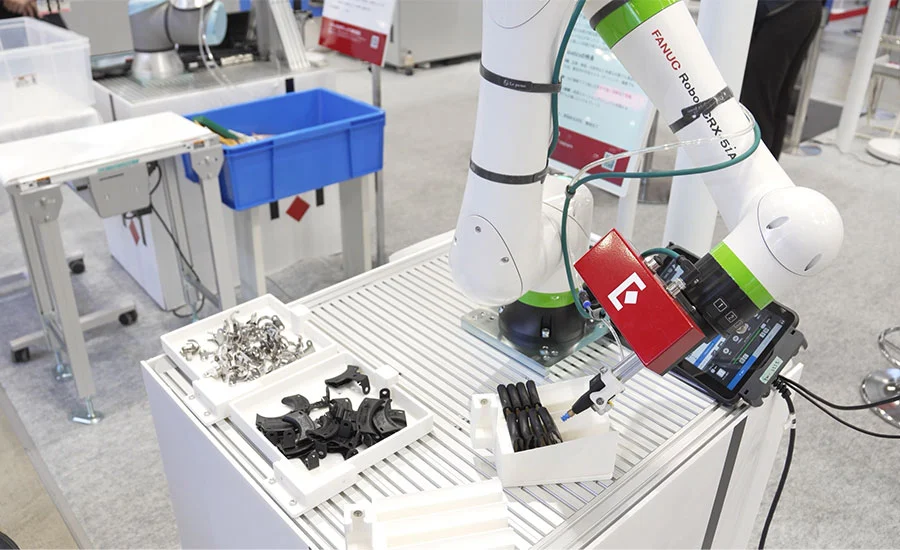
A complete bin-picking system is far more than just a "camera plus robot." It is a sophisticated integration of multiple components:
- Robot: The mechanical arm executing the pick and place motions.
- 3D Camera: Captures depth information crucial for localizing parts in three-dimensional space. Modern systems often use stereo vision combined with AI-based depth reconstruction.
- Controller with AI Capabilities: The "brain" of the system, analyzing camera data, identifying pickable objects, and directing the robot’s movements.
- End-Effector: The gripper mechanism attached to the robot wrist, designed to interface directly with the parts.
- Gripper Fingers: Specific tooling for the end-effector, often customized to part geometry.
- Lighting: Crucial for optimal image acquisition, often requiring specialized illumination to minimize glare and ensure consistent visibility.
- Support Structures: Gantry systems or pedestals for mounting the camera and robot.
- Source and Destination Containers: Bins, trays, or fixtures where parts are presented and placed.
- Electrical Panel: Powering and controlling the various components.
- Safety Components: Light curtains, safety scanners, interlocks, and emergency stops to ensure operator safety.
While AI vision systems manage the perception and decision-making, the mechanical and electrical scope of a bin picking project is substantial and should never be underestimated during project planning.
The Underestimated Effort: Integration, Testing, and Tuning
A significant portion of the engineering effort in a bin-picking cell is devoted not to initial integration or software setup, but to rigorous testing, troubleshooting, and fine-tuning on-site. This phase is consistently underestimated in project schedules. Typical timelines involve one to two weeks of off-site preparation, encompassing model training, application logic development, camera and controller integration, and initial tuning.
On-site installation and production ramp-up typically add another few days to two weeks. While achieving the "first pick" can often be done in an afternoon with advanced vision systems, reaching stable, reliable production performance takes considerably longer. Explicitly planning for this ramp-up period, rather than assuming it will be swift, is crucial for project success and avoiding budget overruns.
Critical Factors in Cell Design and System Understanding
Effective cell design profoundly impacts both cycle time and pick success rate, often more so than any software tuning adjustments. Addressing design elements correctly pre-installation is far more efficient than attempting corrections post-deployment.
Camera Configuration:

- Fixed Mount: In most applications, the camera is mounted in a fixed position above the bin. The optimal distance is determined by bin size, part size, camera model, and robot reach (to prevent collisions). This configuration generally allows for continuous robot motion, with image capture occurring between picks, leading to faster cycle times.
- In-Hand Camera: Mounted on the robot wrist, this configuration is advantageous for covering multiple bins, inspecting small parts requiring close-up views, or dealing with unpredictable part positions across a large area. However, in-hand cameras typically add 1 to 2 seconds to cycle time because the robot must pause above the part to capture an image.
Gripper Selection:
- Suction Cups: Ideal when parts have large, flat, smooth, uncontaminated surfaces that allow for a reliable seal. They are mechanically simpler, faster, and less sensitive to precise orientation relative to the part.
- Two-Finger Parallel Grippers: The preferred alternative when suction is not viable, offering robust mechanical gripping.
- More Complex Grippers: Four-finger or custom grippers exist for unusual geometries but introduce greater mechanical complexity and potential failure points. Finger grippers generally add 1 to 2 seconds to cycle time compared to suction cups due to the need for more precise alignment.
Understanding the Vision System:
While deep expertise in vision engineering isn’t necessary, a fundamental understanding of 3D vision is critical. A standard 2D camera lacks the depth information required for 3D localization. 3D cameras, employing techniques like stereo vision (which mimics human binocular vision to calculate depth) or structured light (projecting a known pattern onto an object and analyzing its deformation), provide the necessary spatial data. The choice of camera model depends on working distance and container size, with ranges typically spanning from close-up (300-600mm) to long-range (1200-4000mm) applications.
Lighting and Calibration: Even with robust vision systems, lighting remains a common source of problems. Overexposure, glare from reflective parts, or underexposure in deep bins (where overhead lighting cannot reach) can compromise image quality. Proactive cell design incorporating controlled lighting solutions is essential. Calibration is another critical area. While intrinsic camera calibration is typically done by the supplier, camera-to-robot calibration, which defines the spatial relationship between the camera and the robot’s tool center point, is where field errors most often occur. Mistakes in defining reference frames or insufficient variability in calibration poses can lead to accuracy issues. A general rule of thumb for end-to-end system accuracy is approximately 0.5 percent of the container size, meaning a 0.5mm error for a 10cm tray or 4mm for an 80cm tray. Placement requirements must be designed around these realistic accuracy expectations.
Driving Cycle Time and Performance Expectations
Several key variables directly influence the cycle time of a bin-picking operation:
- Camera Configuration: Fixed cameras are typically 1 to 2 seconds faster than in-hand models.
- Gripper Type: Suction cups are generally 1 to 2 seconds faster than finger grippers.
- Robot Type: Standard industrial robots are 3 to 4 seconds faster than collaborative robots (cobots), which are inherently speed-limited by design for safety.
These choices compound. A cell utilizing an in-hand camera, a finger gripper, and a cobot will inevitably have substantially longer cycle times than one equipped with a fixed camera, a suction cup, and a high-speed industrial robot. Realistic targets for well-designed cells are approximately 5 seconds for simple parts picked by suction cups and placed in bulk, and 7 to 8 seconds for complex parts requiring precise finger positioning and accurate placement.
In production, customers can realistically expect pick success rates of 98 to 99.9 percent. These figures often improve from initial demonstrations to full production as more tuning time is invested. Beyond initial performance, three factors are paramount over the system’s operational life: pick success rate, system downtime for debugging, and system downtime for adding new SKUs. The ability to autonomously train and add similar new workpieces without expensive vendor support or CAD submission significantly enhances long-term ROI.
Lessons Learned: Failure Modes and Preventive Measures

Real-world deployments inevitably encounter failure modes. The most consistently observed issues include mechanical gripper failure, cables and connections loosening due to repetitive robot motion, and camera-to-robot calibration drift caused by vibration or physical shock to the camera mount. Calibration drift is particularly insidious, as it rarely causes immediate, obvious failures. Instead, it manifests as a gradual increase in placement errors or intermittent, difficult-to-reproduce failures. If miss rates increase over weeks or months, recalibration should be the first troubleshooting step before assuming a software problem.
A notable incident involved a cleaning crew inadvertently shifting a camera housing by less than 0.1 degree. Because the camera was mounted over a meter above the source bin, this minute displacement translated to approximately 1 millimeter of localization error, leading to placement failures roughly once every few hundred cycles for precision laser lenses requiring tight clearance. The rarity of the failure and the unexpected cause made debugging particularly challenging. This incident underscores the critical importance of clear maintenance Standard Operating Procedures (SOPs) specifying what personnel can and cannot do near sensitive equipment, and including camera inspection in routine maintenance checklists.
Preventive measures that consistently yield significant returns include: a clear cell maintenance SOP, quarterly preventive maintenance visits, and multi-day stress testing before system delivery or go-live. While none of these recommendations are novel, they are often the first to be skipped when project schedules are tight, leading to costly long-term consequences.
Economic Justification and Collaborative Success
From a financial perspective, a simple rule of thumb suggests that if a bin-picking system can free up one worker across two shifts per day, it warrants further investigation. More precise economic justification depends heavily on part value. High-value parts might justify a system with only a few hundred picks per day, while low-value parts, such as small injection-molded plastics, typically require throughputs of several thousand picks daily to achieve a viable ROI.
While hardware costs are transparent and easily quoted, the engineering time required to bring a complex system to stable production performance is less visible, more variable, and frequently where budget surprises occur. Installation, testing, and ramp-up labor are consistently underestimated line items, particularly for complex systems. In the U.S. market, a return on investment (ROI) of two to four years is a reasonable benchmark for a well-scoped project, though applications with stringent cycle time requirements, challenging parts, or frequent SKU changes may trend towards the longer end of this spectrum.
Ultimately, beyond any technical specifications, the most critical determinant of project success is the presence of a customer-side point of contact who possesses a comprehensive understanding of both the production process and the realistic capabilities (and limitations) of AI and robotics systems. This individual must be committed to collaborative problem-solving. Projects that struggle often exhibit a "handoff" mentality, whereas successful projects are characterized by shared ownership and a mutual commitment to navigating the inherent complexities of advanced automation deployment.
The future of bin picking promises even greater sophistication, with continuous advancements in AI, sensor technology, and robotic dexterity. As these systems become more intuitive and adaptable, their application will broaden across industries. However, the foundational lessons learned from millions of picks on factory floors – emphasizing realistic expectations, meticulous engineering, robust maintenance, and strong collaboration – will remain indispensable for transforming the promise of bin picking into tangible, sustained operational excellence.