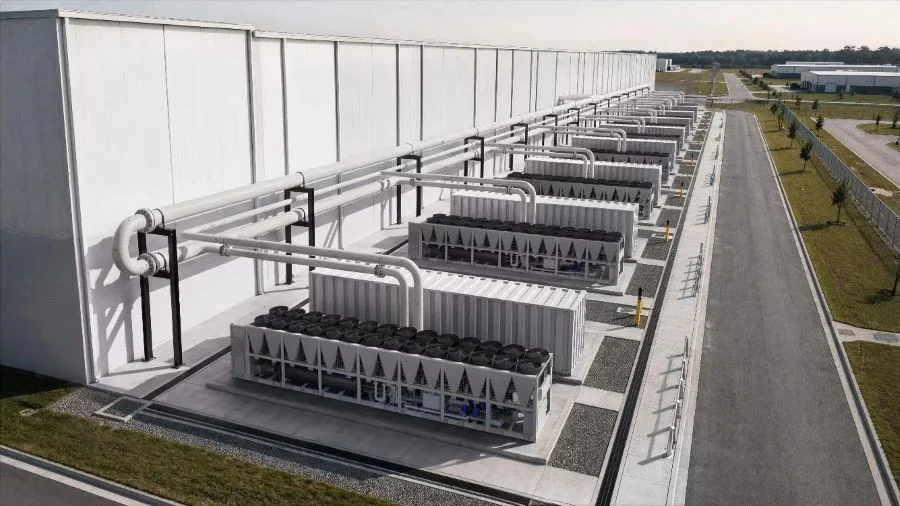
WINDSOR, VA – LG Electronics Inc. has announced plans to construct a significant manufacturing facility in Windsor, Virginia, dedicated to the assembly of advanced chiller systems crucial for cooling the burgeoning number of data centers across North America. The state-of-the-art 350,000-square-foot plant is slated to commence production in early 2025, marking a pivotal expansion of LG’s industrial footprint and strategic commitment to the rapidly evolving digital infrastructure sector. This move underscores LG’s ambition to become a dominant provider of comprehensive HVAC solutions, particularly in the critical domain of high-performance cooling for artificial intelligence (AI) and high-performance computing (HPC) facilities.
Strategic Expansion Amidst Unprecedented Data Center Growth
The decision to build a new factory in Windsor is a direct response to the escalating demand for robust and efficient cooling technologies, driven primarily by the exponential growth of data centers. Don Kwack, president and CEO of LG Electronics North America, articulated the strategic imperative behind this investment. "This factory represents an important step in LG’s strategy to expand production capacity for advanced cooling technologies and better serve the rapidly expanding customer base in North America," Kwack stated. He further emphasized Virginia’s appeal as a location, citing its "workforce, location, and infrastructure needed to support our long-term growth." This investment reflects a broader industry trend where technology giants are localizing manufacturing to enhance supply chain resilience, reduce lead times, and better cater to regional market specificities.
The global data center market size, valued at approximately $250 billion in 2023, is projected to grow at a compound annual growth rate (CAGR) of over 10% through 2030, according to various industry reports. North America, in particular, accounts for a substantial share of this market, largely due to its robust technological infrastructure, significant investment in cloud computing, and the pioneering development of AI. Virginia stands at the epicenter of this expansion, often referred to as "Data Center Alley," hosting the highest concentration of data centers in the world. This geographical advantage makes Windsor, located strategically within the broader mid-Atlantic region, an ideal choice for LG’s new facility.
The Indispensable Role of Chillers in Modern Data Centers
The core product of the new Windsor plant—chillers—are indispensable components in maintaining the operational integrity of data centers. Modern data centers, especially those supporting AI and HPC, generate immense amounts of heat due to the continuous operation of thousands of powerful servers, processors, and storage devices. Without effective cooling, these components can overheat, leading to performance degradation, system failures, and significant operational costs.
Chris Ahn, president of LG Electronics USA’s air conditioning technology division, highlighted this critical function. "With our first chiller plant in the United States, LG is addressing the growing need for advanced cooling solutions for data centers across the country," Ahn remarked. He further elaborated on the strategic positioning of the plant, noting, "More than half of the world’s AI data centers are located in North America, and Virginia is home to a large concentration of data centers operated by major technology companies. As AI adoption accelerates, data centers are becoming critical infrastructure for large-scale data processing and high-performance computing. Their stable operation depends on effective heat management, making high-performance cooling technology, including chillers, essential."
Chillers work by removing heat from a liquid, typically water or a glycol solution, which then circulates through the data center to absorb heat from the server racks. This heated liquid returns to the chiller, where the heat is transferred to a refrigerant and then expelled, often to the outside atmosphere. The efficiency of these chillers directly impacts a data center’s Power Usage Effectiveness (PUE) – a metric that measures how efficiently a data center uses energy. A lower PUE indicates greater efficiency, which translates into lower operational costs and a reduced environmental footprint. As energy costs rise and sustainability becomes a paramount concern, the demand for highly efficient, advanced chiller technologies is escalating.
LG’s Broader HVAC Vision and U.S. Manufacturing Commitment

The Windsor plant is not an isolated venture but rather a crucial piece in LG’s broader strategy to position itself as a "total HVAC solutions provider." This encompasses a wide array of heating, ventilation, air conditioning, and water heating products, alongside sophisticated building controls. By producing chillers domestically, LG aims to strengthen its supply chain for North American customers, offering tailored solutions that meet specific regional standards and demands. This local production capability will enhance responsiveness, reduce logistical complexities, and potentially foster closer collaboration with data center operators in designing customized cooling architectures.
LG Electronics has a well-established history of investing in U.S. manufacturing. A prime example is its state-of-the-art laundry appliance factory in Clarksville, Tennessee, which commenced operations in 2019. This facility, representing a $360 million investment, employs over 1,000 people and produces millions of washing machines annually. The success and operational efficiency of the Clarksville plant likely served as a blueprint and confidence booster for the Windsor chiller factory project, demonstrating LG’s commitment to creating jobs and contributing to the American manufacturing sector. This pattern of strategic U.S. investment aligns with global trends of reshoring and nearshoring production to enhance resilience against geopolitical and supply chain disruptions.
Economic Impact and Regional Development in Windsor, Virginia
The establishment of the LG chiller factory is expected to bring significant economic benefits to Windsor and the broader Isle of Wight County region. While specific job creation numbers were not detailed in the initial announcement, a manufacturing facility of 350,000 square feet typically generates hundreds of direct jobs, ranging from skilled production workers and engineers to administrative and logistics personnel. Beyond direct employment, the factory will likely stimulate indirect job growth in supporting industries, such as logistics, maintenance, local services, and raw material suppliers. This influx of jobs and investment will contribute to increased tax revenues for the county and state, which can be reinvested in public services, infrastructure, and educational programs.
Virginia Governor Glenn Youngkin, while not quoted in the original brief, would typically express enthusiastic support for such a significant corporate investment. The Virginia Economic Development Partnership (VEDP) and local authorities would likely have offered a package of incentives, including grants, tax credits, and workforce development programs, to secure LG’s investment. Such incentives are standard practice for attracting large-scale manufacturing projects that promise substantial economic returns and job creation. The project further solidifies Virginia’s reputation as a prime location for advanced manufacturing and technology-related industries, attracting further investment and fostering a robust economic ecosystem.
The Future of Data Center Cooling: Innovation and Sustainability
The data center industry is continually seeking more sustainable and energy-efficient cooling solutions. As data centers consume a significant portion of global electricity—estimated to be between 1% and 2%—optimizing cooling efficiency is paramount for environmental stewardship and operational cost reduction. LG’s investment in advanced chiller technology suggests a focus on innovations that address these challenges. This could include developing chillers that utilize refrigerants with lower global warming potential, incorporate artificial intelligence for predictive maintenance and optimized performance, or are designed for hybrid cooling systems that combine traditional methods with newer techniques like liquid immersion cooling.
The future outlook for data center cooling involves a continuous drive towards higher efficiency, greater scalability, and enhanced sustainability. With the proliferation of AI, the power density of server racks is increasing dramatically, pushing the boundaries of traditional air-cooling methods. This necessitates a shift towards more sophisticated, often liquid-based, cooling solutions, where high-performance chillers play a central role. LG’s proactive investment in this sector positions it to capitalize on these evolving technological demands and contribute to the development of next-generation data center infrastructure. The Windsor factory will serve as a critical hub for research, development, and manufacturing, allowing LG to quickly adapt to market changes and introduce cutting-edge cooling technologies tailored for the North American market.
In conclusion, LG Electronics’ decision to build a chiller assembly plant in Windsor, Virginia, is a multifaceted strategic move. It represents a significant investment in U.S. manufacturing, a targeted response to the explosive growth of the North American data center market—particularly driven by AI—and a reinforcement of LG’s ambition to be a leading provider of comprehensive HVAC solutions. With production set to begin in early 2025, the Windsor facility is poised to play a crucial role in supporting the digital backbone of the modern economy, contributing to regional economic development, and advancing the state of cooling technology for the critical infrastructure of the 21st century.