Worcester Polytechnic Institute (WPI) has been awarded a substantial $3.3 million grant from the National Science Foundation’s (NSF) prestigious Growing Convergence Research program. This significant five-year, two-phase initiative aims to fundamentally redefine how industries approach vast streams of industrial waste—including coal ash, red mud, and mine tailings—by transforming them from environmental liabilities into valuable sources of critical minerals, rare earth elements, and other essential materials. The pioneering research seeks to harness biological strategies observed in nature, specifically those employed by diatoms, sea sponges, and plants, to recover these resources with significantly reduced energy consumption and reliance on harsh chemicals, marking a paradigm shift towards sustainable resource management.
The Unseen Value in Global Waste Streams
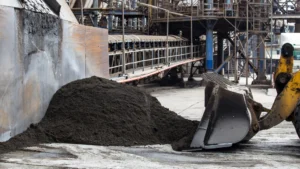
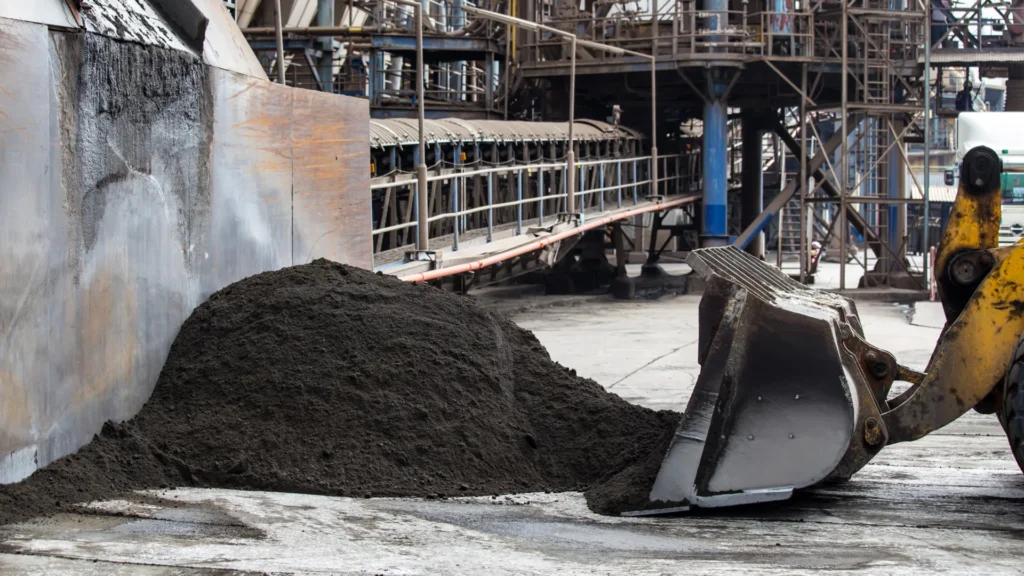
Industrial waste streams represent one of the most pressing environmental challenges of the modern era, yet they also harbor an untapped wealth of resources. Coal ash, a byproduct of coal-fired power plants, contains not only heavy metals but also significant concentrations of silicon, aluminum, and even rare earth elements (REEs). Red mud, the highly alkaline residue from bauxite refining for aluminum production, accumulates in vast impoundments globally, posing environmental risks while simultaneously containing valuable iron, titanium, and REEs. Similarly, mine tailings, the waste material left over after extracting the target mineral from ore, are generated in colossal volumes worldwide and often contain residual critical minerals. Annually, humanity generates billions of tons of these materials, with coal ash production alone reaching over 700 million tons globally, and red mud exceeding 150 million tons. In the United States, hundreds of millions of tons of these wastes are produced each year, often ending up in landfills, storage ponds, or large waste piles, creating significant environmental burdens and requiring substantial land areas.
The conventional methods for extracting valuable materials from these wastes are typically energy-intensive, requiring high temperatures and strong chemical reagents like concentrated acids or bases. These processes are not only costly and energy-demanding but also generate secondary waste streams that can be hazardous, contributing to a larger environmental footprint. The WPI-led project directly addresses this dual challenge: the environmental burden of waste disposal and the strategic imperative to secure domestic supplies of critical minerals.
A National Imperative: Securing Critical Mineral Supply Chains
Critical minerals and rare earth elements are indispensable components of modern technology, driving advancements across diverse sectors including consumer electronics, electric vehicles, renewable energy infrastructure (wind turbines, solar panels), and national defense systems. From the neodymium in powerful magnets to the lithium in batteries and the silicon in semiconductors, these elements underpin global economic competitiveness and national security. The United States, like many industrialized nations, faces significant reliance on foreign sources for a substantial portion of its critical mineral supply, a vulnerability highlighted by geopolitical tensions and supply chain disruptions.
The economic potential of recovering these materials from waste is staggering. For instance, one estimate suggests that approximately 11 million tons of rare earth elements are trapped within U.S. coal ash landfills, representing a potential value of $8.4 billion. This figure is nearly eight times the nation’s current raw domestic reserves, underscoring the immense strategic and economic opportunity. Developing domestic capabilities to extract and refine these materials from unconventional sources like industrial waste is therefore not just an environmental endeavor but a critical component of national economic and strategic policy. Initiatives by the Department of Energy and other federal agencies have increasingly focused on fostering research and development in this area to reduce import dependency and strengthen domestic supply chains. The NSF’s Growing Convergence Research program, which awarded the grant to WPI, is specifically designed to support ambitious, interdisciplinary projects that tackle complex societal challenges through the integration of diverse fields, making it an ideal vehicle for this transformative research.
Biomimicry: Nature’s Elegant Solution for Resource Recovery
At the heart of the WPI research lies the principle of biomimicry – drawing inspiration from nature’s highly efficient and sustainable processes. The project specifically investigates how organisms like diatoms, sea sponges, and certain plants naturally manage silicon. These organisms possess remarkable abilities to collect dissolved silicon from their environment and construct intricate silica structures, such as the elaborate cell walls of diatoms or the skeletal spicules of sea sponges, under remarkably mild conditions—ambient temperatures, neutral pH, and using benign biological molecules and organic scaffolds. This process, known as biosilicification, contrasts sharply with industrial methods that demand extreme conditions.
The WPI team hypothesizes that these natural processes can be adapted and engineered to create low-energy, environmentally friendlier methods for breaking down silicon-rich industrial waste. The goal is two-fold: first, to selectively liberate rare earth elements and other critical minerals trapped within the silicate matrix; and second, to convert the liberated silica itself into useful, marketable products. This "whole-material approach," as articulated by Professor Mingjiang Tao, the project’s lead principal investigator, is central to the team’s vision. "Recovering critical minerals is only part of the opportunity," Tao stated. "We want to develop a process that uses as much of each waste stream as possible, separating strategically important elements while converting the remaining material into useful products. That whole-material approach could fundamentally change how industries manage waste and obtain essential resources." This holistic strategy aims not only to extract high-value elements but also to transform the bulk of the waste into valuable secondary materials, thereby achieving true circularity and minimizing residual waste.
An Interdisciplinary Powerhouse: The WPI-Led Research Consortium
The ambitious scope of this project necessitates a highly interdisciplinary approach, integrating expertise from biology, geochemistry, materials science, metallurgy, civil and environmental engineering, computational chemistry, and artificial intelligence. This convergence of disciplines is a hallmark of the NSF’s Growing Convergence Research program, designed to foster breakthroughs that would be impossible within a single field.
The WPI team is spearheaded by Mingjiang Tao, an associate professor in the Department of Civil, Environmental, and Architectural Engineering. As lead principal investigator, Professor Tao will oversee the project’s strategic direction, coordination, and management. His specific research focus within the project will delve into understanding and engineering biosilicification processes and developing bio-enabled metallurgical techniques for recovering rare earth elements from silicon-rich waste streams.
Joining him as co-principal investigators are two other distinguished WPI faculty members:
- Professor Carrick Eggleston, an expert in geochemistry from the Department of Civil, Environmental, and Architectural Engineering, will lead the fundamental investigations into the chemical reactions governing the breakdown and rebuilding of silicate materials. His research will meticulously examine reaction pathways, kinetics, and thermodynamics associated with silicate dissolution, repolymerization, carbonation, glass formation, and the synthesis of silicones. "Understanding the atomic-level interactions and reaction mechanisms is crucial," Professor Eggleston might elaborate, "to precisely control how these waste materials break down and how we can reassemble their components into new, valuable products efficiently."
- Professor Yan Wang, the William B. Smith Professor of Mechanical and Materials Engineering, brings a wealth of experience as a recognized pioneer in battery recycling and sustainable manufacturing. Professor Wang will be instrumental in developing and optimizing the bioengineered methods for the practical recovery of rare earth elements and other critical minerals, ensuring the processes are not only scientifically sound but also scalable and economically viable. Professor Wang could remark, "Our goal is to translate these biological inspirations into robust engineering solutions that can be implemented at an industrial scale, closing the loop on valuable materials and minimizing waste."
The collaborative spirit of the project extends beyond WPI, encompassing researchers from several other prominent institutions: George Mason University, the University of California San Diego, the University of Massachusetts Amherst, and the University at Buffalo. Each contributing institution brings specialized knowledge and resources, further strengthening the project’s diverse expertise and analytical capabilities. This distributed network of researchers underscores the "convergence" aspect, pooling intellectual capital to tackle a grand challenge.
Accelerating Discovery through AI and Advanced Computation
A critical component of this cutting-edge research involves leveraging advanced computational modeling and artificial intelligence (AI). Researchers plan to utilize these sophisticated tools to rapidly design specialized biomolecules and predict their interactions with various silicon-rich waste materials. This predictive capability is expected to significantly accelerate the discovery process, allowing the team to quickly identify the most promising biological strategies and molecular designs for efficient mineral recovery and materials manufacturing. Instead of relying solely on laborious trial-and-error experiments, AI can screen vast numbers of potential biomolecules and reaction pathways, dramatically shortening the research timeline and optimizing experimental design. This integration of AI represents a modern approach to materials science, moving towards rational design rather than empirical discovery.
From Waste to Wealth: Transforming Industries and Securing the Future
The potential implications of this research are far-reaching, promising transformative impacts on industries, the environment, and national security. If the bio-inspired approach proves successful and scalable, it could unlock new avenues for converting massive volumes of industrial waste into a diverse array of marketable products.
- Economic Transformation: The ability to derive critical minerals and valuable silicon products from waste could significantly reduce dependence on newly mined resources. This would not only stabilize supply chains and potentially lower raw material costs for industries but also foster the creation of entirely new domestic industries focused on waste valorization and critical mineral recovery. This could generate new jobs and economic growth in a nascent "circular economy" sector.
- Environmental Stewardship: The environmental benefits are substantial. By diverting vast quantities of coal ash, red mud, and mine tailings from landfills and impoundments, the project could drastically reduce land contamination, water pollution, and the overall environmental footprint of material production. Furthermore, the use of lower temperatures and fewer harsh chemicals would lead to reduced energy consumption and greenhouse gas emissions, aligning with global climate goals and promoting cleaner manufacturing practices.
- Strategic Security: Strengthening domestic supplies of critical minerals and rare earth elements through waste recovery would significantly enhance national security. It would reduce geopolitical vulnerabilities associated with relying on a few dominant foreign suppliers and ensure a more resilient and self-sufficient supply chain for essential technologies, from defense systems to advanced electronics.
The project also places a strong emphasis on nurturing the next generation of scientific and engineering talent. WPI graduate and undergraduate students will be integral participants in this multi-year endeavor, gaining invaluable hands-on experience in cutting-edge, interdisciplinary research through the university’s renowned immersive STEM programs. This direct involvement will prepare them to become future innovators in sustainability, biotechnology, materials science, data science, and artificial intelligence.
Ultimately, this initiative aims to cultivate a broader "bioengineered, silicon-based materials ecosystem." This vision involves fostering collaboration among researchers, industry partners, policymakers, educators, and future innovators across multiple disciplines and sectors. By connecting these diverse stakeholders, the project seeks to build a robust framework for long-term sustainable resource management, where industrial waste is no longer viewed as a problem to be disposed of, but as a rich, untapped resource waiting to be harnessed through intelligent, nature-inspired solutions. This holistic approach signifies a pivotal step towards a more sustainable, resource-independent future.