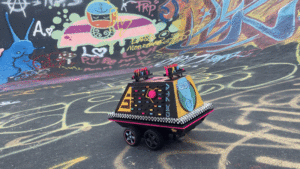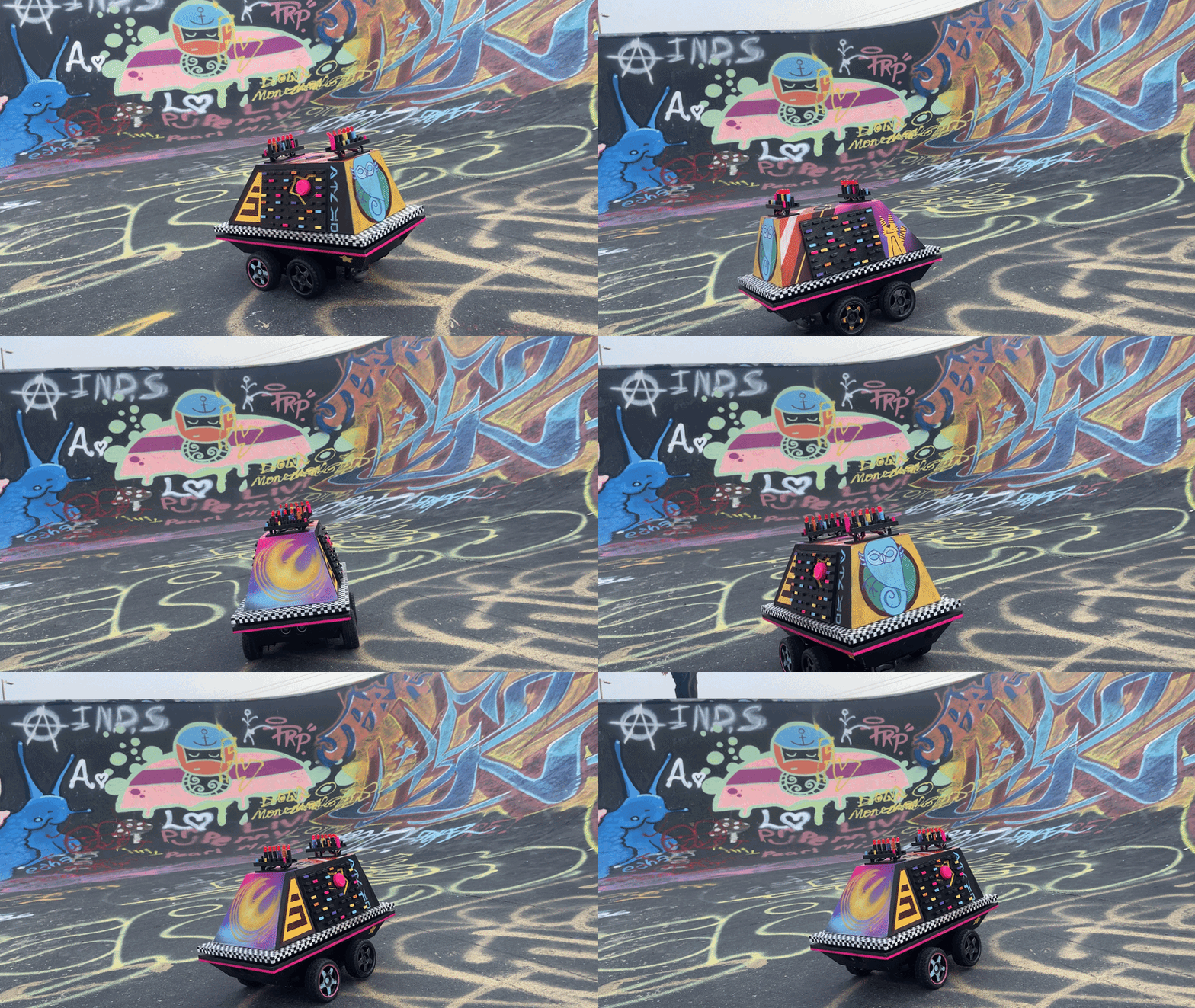
In a captivating display of engineering prowess and artistic rebellion, Canadian maker Cass, known in the creative community as Chaos Theory, has unveiled an extraordinary project: an open-source, fully autonomous, 3D-printed Mouse Droid. This creation transcends a mere replica, embodying a fascinating fusion of Star Wars lore, transforming the ubiquitous Imperial utility droid into a vibrant "rebel rave machine" adorned with the signature graffiti aesthetic of Sabine Wren. The project, meticulously documented and shared with the global maker community, represents a significant achievement in personal fabrication, robotics, and fan-driven innovation.
The Genesis of a Galactic Mashup: Unpacking the Star Wars Context
To fully appreciate the ingenuity of Chaos Theory’s creation, it’s essential to delve into the Star Wars universe elements that inspired it. The MSE-6 series repair droid, colloquially known as the Mouse Droid, is an iconic, albeit unassuming, fixture of the Galactic Empire. These small, wheeled droids, resembling "toasters on wheels," are pervasive across Imperial installations, from the Death Star to Star Destroyers, performing mundane but critical tasks like maintenance, delivery, and guiding personnel. Despite their utilitarian design and lack of overt personality, their distinctive chirps and hurried movements have endeared them to fans, often serving as a subtle source of comic relief or background atmosphere. They symbolize the vast, bureaucratic, and often faceless machinery of Imperial control.
In stark contrast stands Sabine Wren, a central character from the animated series Star Wars Rebels. A Mandalorian warrior, explosives expert, and, crucially, a prolific graffiti artist, Sabine embodies the spirit of rebellion through her vibrant, defiant artwork. Her art is not merely aesthetic; it’s a powerful tool of protest, communication, and cultural expression, transforming the stark, oppressive environments of the Empire with splashes of color and symbolic imagery. Her personal style, infused with Mandalorian heritage and a rebellious edge, is instantly recognizable and deeply resonant with fans. The idea of Sabine Wren "getting her hands on" an Imperial Mouse Droid and giving it a makeover is, therefore, a stroke of thematic genius, turning a symbol of conformity into an emblem of defiance. This conceptual collision — Imperial utilitarianism meeting Rebel artistry — forms the philosophical bedrock of Chaos Theory’s project.
Chaos Theory: The Visionary Behind the Machine
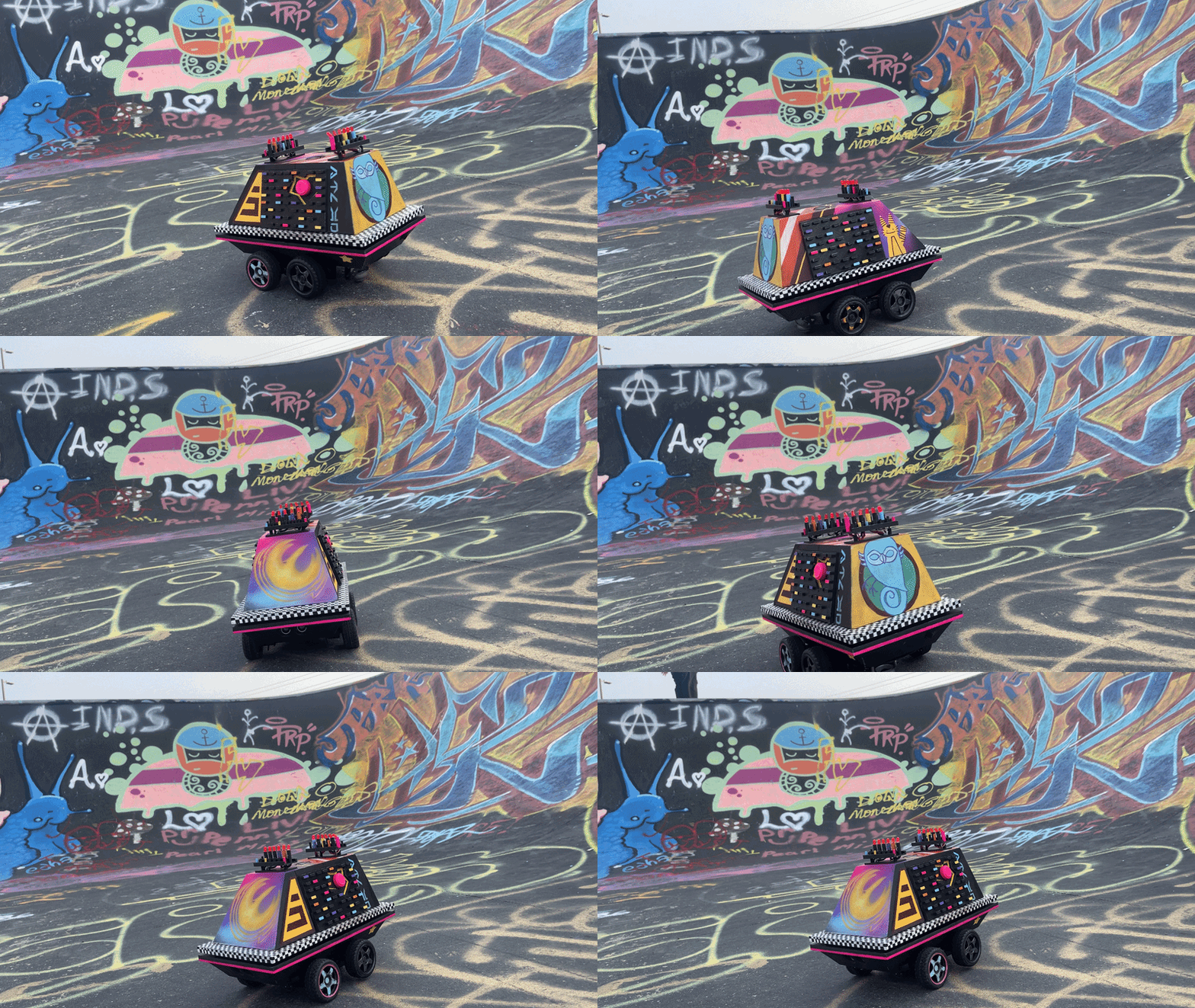
Cass, the Canadian maker behind the Chaos Theory moniker, is clearly a connoisseur of both the original Star Wars trilogy’s gritty charm and the expanded universe’s character-driven narratives. Her project began with an "important question": what if an Imperial Mouse Droid, typically confined to its drab, dutiful existence, fell into the artistic hands of Sabine Wren? This thought experiment blossomed into a tangible, functional piece of art and engineering.
Her approach to this project was far from superficial. It wasn’t sufficient to merely clad an existing remote-controlled vehicle in a new shell. Cass envisioned a droid that would truly embody the spirit of its conceptual origin – autonomous, reactive, and capable of spontaneous celebration. This ambition necessitated building the droid largely "from scratch," a testament to her dedication and technical skill. Her commitment to open-source principles further elevates the project, transforming a personal passion into a shared resource for the global maker community. By releasing the design files and build instructions, she champions the ethos of collaboration and education that lies at the heart of the modern maker movement.
Engineering an Autonomous Rebel: A Deep Dive into the Mechanics
The technical specifications of Chaos Theory’s Mouse Droid are as impressive as its aesthetic. At its core, the droid’s intelligence is powered by an Arduino UNO, a popular and versatile microcontroller board widely used in hobby robotics and educational projects. The Arduino acts as the central processing unit, interpreting sensor data, executing movement commands, and managing the droid’s various modes.
For auditory flair, a DFPlayer Mini MP3 module is integrated, allowing the droid to play sounds and music, fulfilling its "rave machine" persona. This small, cost-effective module simplifies audio playback, a crucial component for injecting character and interactivity into the robot. The droid’s ability to "feel around" its environment is facilitated by an ultrasonic distance sensor. This sensor emits sound waves and measures the time it takes for them to return, calculating the distance to objects. This data is fed to the Arduino, enabling the droid to detect obstacles, navigate autonomously, and avoid collisions, a fundamental requirement for any mobile robot.
The physical construction is predominantly 3D-printed, a choice that offers immense flexibility and customization. Cass designed a custom chassis, allowing for precise integration of all components and ensuring the droid’s unique form factor. While an existing flat metal Mecanum chassis was initially utilized as a structural mounting point for the motors during development, Cass articulated a clear vision for a future iteration (version 2) that would eliminate this external support, integrating motor mounts directly into a fully custom, 3D-printed structure. This iterative design philosophy is characteristic of experienced makers, constantly seeking optimization and self-reliance in their builds. The use of 3D printing also means that the project is highly replicable. Anyone with access to a 3D printer can download the files and construct their own version, fostering a sense of community and shared creation.

Cass specifically highlighted her successful foray into using heat-set inserts, a technique that involves embedding threaded metal inserts into 3D-printed parts using heat. This method creates robust, reusable screw threads, significantly enhancing the durability and modularity of plastic assemblies—a detail that speaks to her continuous pursuit of refining her fabrication skills.
The Journey from Concept to Creation: An Inferred Timeline
While the article doesn’t provide a precise chronology, the development of such a complex project typically follows a series of logical stages:
- Conceptualization and Inspiration (Initial Spark): The initial idea of blending the Mouse Droid with Sabine Wren’s art likely emerged from Cass’s deep engagement with Star Wars lore. This phase would involve sketching ideas, contemplating the thematic implications, and defining the core functionalities (autonomy, panic mode, party mode).
- Design and Prototyping (Digital and Physical): This stage would involve 3D modeling the custom chassis and various components using CAD software. Concurrently, circuit diagrams for the electronics (Arduino, sensors, audio module, motor drivers) would be designed. Initial tests might involve individual electronic components to ensure their functionality.
- Fabrication (3D Printing and Assembly): Once designs are finalized, the 3D printing process would commence. Parts would be printed, cleaned, and then assembled. The initial integration of the existing Mecanum chassis for motor mounting would occur here, allowing for early mobility tests.
- Electronics Integration and Wiring: The various electronic components would be wired together according to the circuit diagrams. This phase requires meticulous attention to detail to ensure proper power delivery and signal integrity.
- Software Development and Programming: The Arduino UNO would be programmed to control the motors for autonomous navigation, interpret sensor data for obstacle avoidance, activate the DFPlayer Mini for audio, and manage the different operational modes (normal, panic, party). This is an iterative process of coding, uploading, testing, and debugging.
- Testing and Refinement: The droid would undergo rigorous testing in various environments to ensure its autonomous navigation, obstacle avoidance, and special modes function as intended. This phase would involve troubleshooting any mechanical or electrical issues, refining the code, and optimizing performance. The decision to consider eliminating the Mecanum chassis in a "version 2" suggests a continuous refinement process.
- Documentation and Sharing: Once the project reached a stable and impressive state, Cass meticulously documented her process, including design files, code, and assembly instructions, on platforms like Instructables and Arduino Project Hub, enabling others to replicate and learn from her work.
Open-Source Philosophy and Community Impact
The decision to make the Mouse Droid an open-source project is a cornerstone of its significance. In the maker community, open-source hardware and software are foundational principles, fostering innovation through shared knowledge. By providing detailed instructions on Instructables and sharing her project on the Arduino Project Hub, Cass empowers enthusiasts worldwide to build their own "rebel rave machine." This democratizes access to complex robotics projects, lowering the barrier to entry for aspiring makers, engineers, and artists.
The replicability of the project carries profound implications for education. It offers a tangible, engaging platform for learning about:

- 3D Printing: Understanding design for additive manufacturing, material properties, and practical application.
- Electronics: Interfacing microcontrollers (Arduino) with sensors, actuators (motors), and output devices (audio modules, LEDs).
- Programming: Developing algorithms for autonomous navigation, conditional logic for different modes, and basic robotics control.
- Design Thinking: The iterative process of conceptualization, prototyping, testing, and refinement.
Projects like this serve as powerful educational tools, inspiring curiosity and practical skill development in STEM (Science, Technology, Engineering, and Mathematics) and STEAM (adding Art) fields. They demonstrate that complex technological creations are within reach for individuals, moving beyond purely academic or industrial settings.
Beyond the Build: Implications for Makers, Fans, and the Future
Chaos Theory’s rebel Mouse Droid is more than just a clever fan project; it’s a microcosm of several broader trends within contemporary culture and technology.
- The Power of the Maker Movement: This project exemplifies the burgeoning maker movement, a global phenomenon characterized by individuals creating and inventing using accessible technologies like 3D printing, microcontrollers, and open-source software. It highlights the movement’s capacity for innovation, skill development, and community building, often driven by passion rather than commercial imperative.
- Fan Creativity and Intellectual Property: It showcases how deeply engaged fans can reinterpret and celebrate beloved intellectual properties in novel ways. While major franchises often have strict control over their brands, projects like this demonstrate a vibrant, grassroots creativity that enriches the fan experience and pushes the boundaries of how stories and characters can exist beyond their original medium. This "fanon" (fan canon) often fosters a deeper connection between fans and the fictional worlds they cherish.
- The Intersection of Art and Technology: The droid’s graffiti-inspired aesthetic, combined with its advanced robotics, perfectly illustrates the growing synergy between art and technology. Art provides the vision and emotional resonance, while technology provides the tools and capabilities to bring that vision to life. This fusion results in creations that are both functionally impressive and aesthetically compelling.
- The Future of Personal Robotics: As technologies become more accessible and user-friendly, the potential for personal robotics continues to expand. Projects like this pave the way for a future where custom-built, intelligent machines are not just confined to industrial settings or specialized labs but can be created and deployed by individuals for entertainment, education, or even niche domestic tasks. The concept of an autonomous, character-filled robot, even one primarily for fun, points towards a future where human-robot interaction is more diverse and personalized.
In conclusion, Chaos Theory’s autonomous, graffiti-covered Mouse Droid stands as a shining example of how passion, technical skill, and creative vision can converge to produce something truly remarkable. It’s a testament to the maker spirit, the enduring appeal of the Star Wars universe, and the exciting possibilities that emerge when individuals are empowered to build, innovate, and share their creations with the world. This "rebel rave machine" doesn’t just navigate a room; it navigates the intersection of technology, art, and fandom, inspiring a new generation of creators to ask their own "important questions" and build the answers.