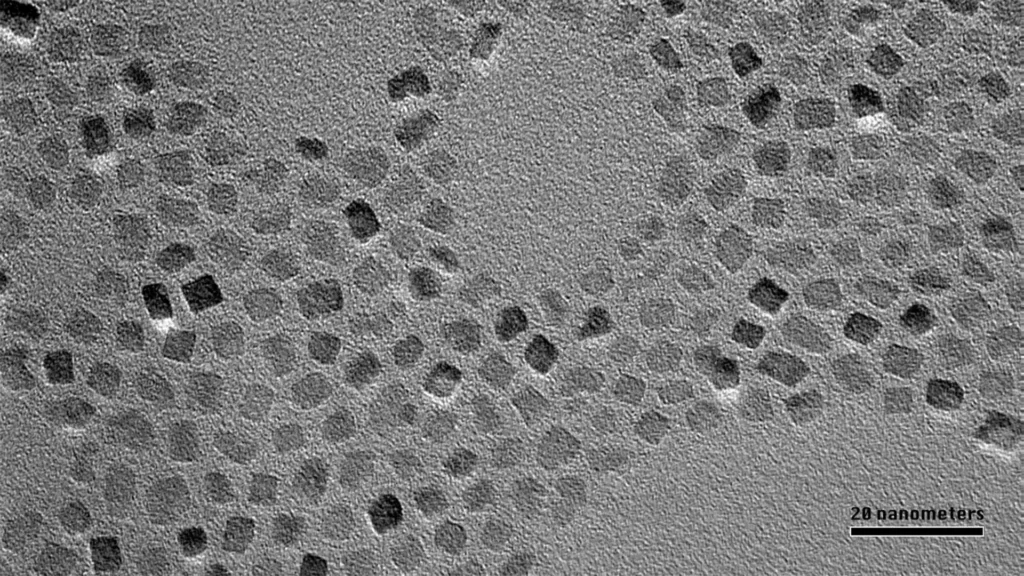
Nanocrystals, particularly quantum dots that garnered the 2023 Nobel Prize in Chemistry for their discoverers, have emerged as a cornerstone of modern materials science. Their unique quantum mechanical properties enable a spectrum of groundbreaking applications, from advanced displays and efficient lighting to novel medical diagnostics and therapies. However, the realization of their full potential has been significantly hampered by a persistent limitation: the narrow range of materials from which these microscopic crystals could be reliably synthesized. For years, the vibrant world of nanomaterials has been largely confined to oxides, sulfides, and a select few other compound classes, leaving a vast and technologically crucial category of materials largely inaccessible at the nanoscale.
Now, a transformative development from a collaborative effort between chemists at the University of Chicago and Argonne National Laboratory is poised to shatter these long-standing barriers. Researchers have successfully devised a novel method for creating nanocrystals from metal nitrides, a class of materials with immense technological significance that has historically resisted conventional nanocrystal synthesis. This pioneering study, published in the prestigious journal Nature, promises to dramatically expand the horizons of nanotechnology, paving the way for a new generation of electronics, flexible lighting solutions, and advanced medical implants.
The significance of this breakthrough is underscored by the fact that the newly developed method has enabled the creation of nearly a dozen distinct metal nitride materials that were previously unobtainable in nanocrystalline form. This achievement represents a fundamental leap forward, pushing the boundaries of materials science beyond what were once considered immutable constraints.
Unlocking the Potential of Metal Nitride Nanocrystals
Metal nitrides are not new to the technological landscape; they are already integral components in a wide array of established and emerging technologies. Gallium nitride (GaN), for instance, is a ubiquitous material that powers much of today’s lighting technology, forming the backbone of energy-efficient LED bulbs and vibrant laptop displays. Its robust semiconductor properties also make it crucial for high-power electronics and radiofrequency applications. Similarly, titanium nitride (TiN) is widely employed in medical implants due to its excellent biocompatibility and wear resistance, as well as in protective coatings for tools and components. Niobium nitride (NbN) is a key material in the development of superconducting devices, essential for technologies like MRI machines and particle accelerators. Molybdenum nitride (MoN) finds application as a catalyst in various chemical processes, contributing to industrial efficiency and sustainability.
The ability to transform these robust, bulk materials into nanocrystals is a game-changer. Instead of being confined to rigid films or bulk forms, metal nitride nanocrystals could be readily incorporated into flexible polymers, enabling their use in printable electronics and wearable devices. Imagine flexible displays that can be rolled up or integrated into clothing, or biocompatible coatings for implants that can be precisely applied using inkjet-like printing techniques. This versatility opens up a vast landscape of previously unattainable applications.
"This discovery expands the boundaries of the field beyond what were previously fundamental constraints, and lays the foundation for the use of nitrides as nanomaterials," stated Dmitri Talapin, the Ernest DeWitt Burton Distinguished Service Professor of Chemistry and Molecular Engineering at the University of Chicago and a senior scientist at Argonne National Laboratory, who led the research. "We were able to show how to make a series of nearly a dozen materials that could not be synthesized by traditional methods."
The Intrinsic Properties and Challenges of Nanocrystals
Nanocrystals, by definition, are extremely small crystalline structures, often measured in nanometers. Billions of them could fit onto the tip of a pin. At this minuscule scale, materials exhibit emergent properties that are dramatically different from their bulk counterparts. These "quantum size effects" can lead to phenomena such as tunable light emission (as seen in quantum dots), enhanced catalytic activity, and altered electronic and magnetic behaviors. These unique attributes make nanocrystals highly sought after for applications demanding precision and novel functionalities.
In theory, the principles of nanocrystal formation should be applicable to a vast array of chemical compounds. However, in practice, the synthesis of nanocrystals from many materials has proven to be exceptionally challenging, if not entirely impossible, using conventional techniques. This difficulty arises from the complex interplay of thermodynamics and kinetics that govern crystal growth. For a nanocrystal to form properly, its constituent atoms or ions must have sufficient mobility to arrange themselves into a well-ordered lattice structure before solidifying.
The research team, led by graduate student Ruiming Lin and under the guidance of Professor Talapin, specifically targeted metal nitrides because of their desirable material properties and the significant challenge they presented. Metal nitrides are compounds formed by the strong chemical bonding between a metal and nitrogen. This strong bond, while contributing to their desirable characteristics like hardness, thermal stability, and chemical inertness, simultaneously creates a formidable hurdle for nanocrystal synthesis.
Overcoming the "Strong Bond" Conundrum
The fundamental difficulty in synthesizing metal nitride nanocrystals lies in the nature of the chemical bonds between the metal and nitrogen atoms. During conventional crystal growth, ions or atoms are in constant motion, akin to dancers rearranging partners in a square dance. This dynamic rearrangement is crucial for them to find their energetically favorable positions within the growing crystal lattice. In metal nitrides, however, the bonds are exceptionally strong. This strength severely restricts the mobility of the constituent ions, making it exceedingly difficult for them to break existing bonds and reform new ones in the precise orientations required for nanocrystal formation.
"If bonds cannot break during this process, that’s a death sentence for nanocrystals," explained Professor Talapin. "Once you make an incorrect bond, everything goes south." The inherent stability that makes metal nitrides so useful in bulk applications paradoxically renders them recalcitrant to the delicate processes of nanoscale self-assembly.
The breakthrough in overcoming this challenge involved a multi-pronged approach that required a fundamental rethinking of established synthetic protocols. According to the researchers, two key innovations were instrumental in their success.
Firstly, the Talapin laboratory built upon a previous discovery that demonstrated the utility of molten salts as a reaction medium for nanocrystal synthesis. Molten salts can provide a stabilizing environment, helping to control the size and shape of nascent nanocrystals and prevent their aggregation. This approach offered a promising pathway to manage the high-energy conditions potentially required to manipulate the strong metal-nitrogen bonds.
Secondly, and critically, the team embarked on an extensive empirical investigation, meticulously testing a wide range of reaction conditions. Through this systematic exploration, they identified a specific "sweet spot" characterized by precise control over temperature and ammonia pressure. Under these carefully calibrated conditions, the researchers found that the strong bonds between metal and nitrogen atoms could be coaxed to break and reform with sufficient ease, allowing the crystal structure to self-organize into the desired nanocrystalline form. This delicate balance of energy and pressure was essential to disrupt the tenacious bonds without causing uncontrolled decomposition or aggregation of the material.
"This process is very unusual – it goes against every bit of common sense in the field," Professor Talapin remarked. "We had to entirely rethink the approach." The development represents a significant departure from conventional wisdom in materials synthesis, highlighting the power of persistent experimentation and a willingness to challenge existing paradigms.
A Cascade of New Nanocrystal Materials
The impact of this novel synthesis method extends far beyond a single material. The researchers successfully demonstrated its efficacy not only for gallium nitride but also for a range of other related nitride compounds. This included titanium nitride, a material vital for its biocompatibility and use in medical implants; niobium nitride, an indispensable component in advanced superconducting technologies; and molybdenum nitride, a widely utilized catalyst in industrial chemical processes.
The ability to produce nanocrystals from these diverse and economically important materials is expected to catalyze a surge of innovation across multiple sectors. The inherent strengths of these nitrides – their hardness, thermal stability, chemical resistance, and biocompatibility – when combined with the unique properties of the nanoscale, promise to unlock a new era of advanced materials.
"I remember the first time I looked through the electron microscope and saw those crystals," shared Ruiming Lin, the first author of the paper. "You always hope something you discovered will wind up in applications. I think there will be many uses." This sentiment reflects the profound optimism surrounding the potential applications of these newly accessible nanocrystalline materials.
Broader Implications and Future Directions
The implications of this research are far-reaching and underscore the continued importance of fundamental materials science research. The ability to synthesize metal nitride nanocrystals opens up avenues for:
- Advanced Electronics: Flexible and transparent electronic devices, high-efficiency power electronics, and novel sensor technologies.
- Biomedical Applications: Improved biocompatible coatings for implants, targeted drug delivery systems, and advanced imaging agents.
- Energy Technologies: More efficient catalysts for chemical reactions, enhanced materials for energy storage, and novel superconducting devices.
- Optical Devices: New forms of lighting, tunable lasers, and advanced optical coatings.
The research team included other notable contributors from the University of Chicago, including Ningxin Jiang, Wooje Cho, Zirui Zhou, Di Wang, Justin Ondry, Zehan Mi, James Cassidy, Alex Hinckle, Alexander Filatov, and John S. Anderson. Their collective expertise was crucial in navigating the complexities of this advanced synthesis.
The scientists leveraged state-of-the-art facilities to conduct their research, including resources at the UChicago-based National Science Foundation Materials Research Science and Engineering Center, the UChicago Soft Matter Characterization Facility, and Argonne’s Center for Nanoscale Materials. These advanced infrastructure resources are critical for enabling cutting-edge research at the forefront of materials science.
Funding for this groundbreaking work was provided by the U.S. Department of Energy, the Samsung QD Cluster Collaboration, the National Science Foundation, and the Air Force Office of Scientific Research. These diverse funding sources highlight the broad recognition of the strategic importance of this research for national technological advancement.
This development not only represents a significant scientific achievement but also serves as a powerful testament to the collaborative spirit between academic institutions and national laboratories. By pushing the boundaries of what is possible in materials synthesis, the University of Chicago and Argonne National Laboratory are paving the way for a future where the transformative power of nanotechnology is accessible to an even wider array of critical materials, promising to reshape industries and enhance human well-being for decades to come.