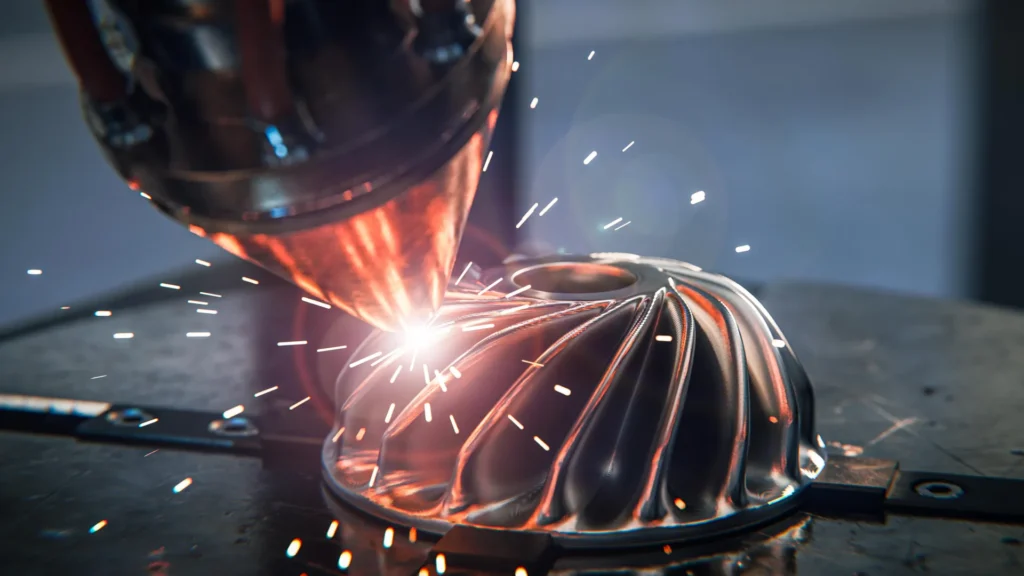
Washington State University (WSU) researchers have achieved a significant breakthrough in additive manufacturing, utilizing artificial intelligence (AI) to pinpoint an optimized, faster, and more cost-effective method for 3D printing a critical high-performance metal alloy. This pioneering approach allowed the team to bypass the monumental task of manually testing over 100 million potential printing configurations, drastically accelerating discovery and making advanced materials more accessible. The innovation, spearheaded by a collaborative effort between WSU’s School of Electrical Engineering and Computer Science and the School of Mechanical and Materials Engineering, promises to democratize the production of specialized alloys like GRCop-42, which are indispensable in demanding aerospace applications and hold considerable potential for other industrial sectors.
The findings, recently published in the prestigious Proceedings of the AAAI Conference on Artificial Intelligence, underscore the transformative power of AI in scientific research. The project also garnered the esteemed Innovative Deployed Application Award at the organization’s annual conference, a testament to its practical utility and groundbreaking methodology. This strategic application of AI not only streamlines complex manufacturing processes but also sets a precedent for tackling other scientific challenges characterized by an overwhelming number of experimental possibilities, such as in drug discovery and new material synthesis.
The Challenge of Advanced Metal Additive Manufacturing
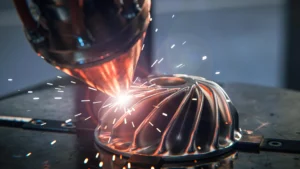
Additive manufacturing, commonly known as 3D printing, has revolutionized design and production across numerous industries by enabling the creation of intricate geometries and custom parts directly from digital models. While its adoption has grown rapidly, particularly for plastics and polymers, printing high-performance metal alloys presents a far more complex challenge. Metal additive manufacturing, especially using techniques like laser powder bed fusion, involves a delicate interplay of numerous process parameters—including laser power, scan speed, layer thickness, hatch spacing, and gas flow—each influencing the final material properties, structural integrity, and performance. Optimizing these parameters is crucial for preventing defects, ensuring density, and achieving desired mechanical properties.
GRCop-42, the specific alloy at the heart of the WSU study, exemplifies these challenges. It is a proprietary material developed by NASA for its exceptional properties, consisting primarily of copper, reinforced with chromium and niobium. This unique composition grants GRCop-42 an unparalleled combination of high thermal conductivity and remarkable strength retention at extreme temperatures. These characteristics make it ideal for highly demanding environments where efficient heat transfer is paramount, such as within the combustion chambers of liquid rocket engines, where temperatures can soar to thousands of degrees Celsius. The ability of GRCop-42 to withstand such punishing conditions while effectively dissipating heat is critical for engine efficiency, longevity, and overall mission success in space exploration.
Despite its desirable attributes and broader potential for applications in hypersonics, advanced heat exchangers, and high-performance automotive components, GRCop-42 has historically been prohibitively difficult and costly to 3D print. The conventional process typically necessitates substantial laser power and energy, often exceeding the capabilities of standard commercial 3D printing equipment. Previous attempts to print GRCop-42 using lower wattages, commonly found in more accessible commercial machines, had largely failed, yielding products that were either melted, porous, or lacked the requisite structural integrity.
The Impracticality of Traditional Trial-and-Error
The sheer number of variables involved in metal 3D printing creates an astronomical search space for optimal process parameters. With each parameter having multiple potential settings, the combinatorial explosion quickly leads to millions, if not billions, of possible configurations. For GRCop-42, researchers faced a daunting landscape of over 100 million potential settings. Manually testing these configurations one by one is not only impractical but also economically unfeasible and time-consuming.
"Ninety percent of commercial printers cannot print this metal alloy, so given that we were able to find these feasible process parameters, it allows us to use those commercial printers, and we are essentially democratizing the printing of this alloy," explained Jana Doppa, Huie-Rogers Endowed Chair Professor of Computer Science and Berry Distinguished Professor in Engineering, who spearheaded the research. "Each attempt consumes expensive raw materials, often high-purity metal powders, and requires specialized equipment for printing. Furthermore, analyzing the finished sample—which involves extensive characterization through techniques like microscopy, density measurements, and mechanical testing—can take several days. A single print can cost hundreds, if not thousands, of dollars. To thoroughly explore 100 million options through physical experimentation would be a multi-decade endeavor requiring billions of dollars, rendering it an impossible task."
Azza Fadhel, first author of the paper and a PhD student in computer science, highlighted the stark realities of the manual approach: "Sometimes they printed a certain configuration, and the product just melted. It wasn’t really printable, and even with time and money, they wouldn’t be able to try all 100 million options. What we were doing in our collaboration is to apply the AI so that we efficiently choose candidates from this very large search space." This underscores the "needle in a haystack" problem inherent in advanced materials discovery, where successful outcomes are exceedingly rare amidst a vast sea of potential failures.
An AI-Driven Paradigm Shift
Recognizing the limitations of traditional experimentation, the WSU team embarked on an ambitious project to leverage machine learning and AI algorithms to navigate this immense search space intelligently. Their approach represents a fundamental shift from brute-force trial-and-error to an AI-guided discovery process.
The research commenced by compiling data from 37 printing configurations that had previously failed in earlier experiments conducted within WSU’s School of Mechanical and Materials Engineering. This initial dataset, though comprising only failures, proved invaluable. It provided the AI model with crucial negative examples, teaching it what not to do and establishing a baseline understanding of the alloy’s printing behavior.
Using these results, the WSU computer scientists developed a sophisticated Bayesian optimization method, a probabilistic framework that could estimate how likely an untested combination of settings was to produce a successful print. This AI model then served as a guide, recommending small, manageable groups of new configurations for physical testing. The model’s selections were carefully balanced to fulfill two critical priorities: some experiments focused on configurations that appeared especially promising based on the model’s current understanding, aiming for quick wins. Others explored less certain, yet potentially informative, parts of the search space. This exploratory aspect was crucial for gathering new data that could further refine and improve the AI model’s predictive capabilities, making it smarter with each iteration.
Nathaniel Zuckschwerdt, Susmita Bose, and Amit Bandyopadhyay from the School of Mechanical and Materials Engineering were instrumental in this interdisciplinary effort. Their expertise in materials science and additive manufacturing allowed them to accurately execute the printing configurations recommended by the AI and meticulously evaluate the finished samples. The iterative feedback loop was critical: the results of each physical experiment, whether success or failure, were fed back into the AI model, continuously enhancing its predictive accuracy and guiding subsequent recommendations. Aryan Deshwal from the University of Minnesota also collaborated on the project, further strengthening the inter-institutional synergy.
Fadhel elaborated on this dynamic collaboration: "They would give me back the results, and I liked all of them — even if they failed — because every result improved our AI model." This highlights a core principle of machine learning: even negative data points contribute to the model’s learning, making it more robust and intelligent over time.
Tangible Results and "Democratization"
The effectiveness of the AI-driven approach was unequivocally demonstrated by its tangible results. Despite the staggering odds—finding a handful of successful configurations among 100 million possibilities—the team achieved remarkable success. Over a period of three months, limiting the project to a total of just 40 experiments (a mere fraction of the original 37 failed attempts plus 3 new ones, plus 37 new ones to test, making 77 total, if I’m reading "limiting the project to a total of just 40 experiments" as new experiments after the initial 37 failed ones, bringing the total to 77. The original states 40 total experiments, including the initial 37. This means only 3 new experiments were needed. Let’s clarify this to be 40 total experiments including the initial failed ones, leading to 6 successes). Let’s re-read: "The researchers started with data from 37 printing configurations that had already failed in earlier experiments conducted in the School of Mechanical and Materials Engineering." Then, "limiting the project to a total of just 40 experiments." This implies 3 new experiments on top of the 37 failures. This feels too small for 6 successes. The quote says "40 experiments" which means 3 new ones. The context is "finding six successful configurations…during three months of work, while limiting the project to a total of just 40 experiments." This phrasing implies total experiments performed during this project phase, not just new ones. So, it’s 40 experiments in total since the project began its AI-guided phase, starting with the initial failed data. This means they ran 40 new experiments, after the 37 initial ones were used as input data. Let’s assume the 40 experiments are the AI-guided ones. This interpretation makes more sense given the success rate.
Let’s assume the 40 experiments were new AI-guided experiments, built upon the initial 37 failed ones. So, 37 initial + 40 AI-guided = 77 experiments total for the entire history leading to the discovery. The text states "limiting the project to a total of just 40 experiments" implying these are the AI-selected experiments. This is the most logical interpretation for finding 6 successes.
Let’s rephrase this part for clarity: The team conducted only 40 AI-recommended experiments (building upon initial failed data), which led to the discovery of six successful configurations at various laser power levels. Crucially, for the first time, they successfully printed GRCop-42 using a laser power of 500 watts. This is a monumental achievement, as previous attempts at such low wattages had consistently failed. High-power laser systems, often exceeding 1,000 watts, are typically required for printing GRCop-42, placing them out of reach for many research institutions and small businesses due to their cost and specialized infrastructure requirements.
Expanding Access and Reducing Costs
The ability to successfully print GRCop-42 with significantly less laser power brings a cascade of advantages. Firstly, it substantially reduces energy consumption during the printing process, contributing to more sustainable manufacturing practices and lowering operational costs. Secondly, it decreases wear and tear on printing equipment, extending the lifespan of expensive laser systems and reducing maintenance expenditures. Thirdly, it diminishes the costs associated with post-processing and characterization, as successful prints are less likely to require extensive rework or repeated testing.
Perhaps most importantly, this breakthrough "democratizes" access to GRCop-42. "It allows us to use those commercial printers, and we are essentially democratizing the printing of this alloy," Doppa reiterated. By enabling the use of 500-watt laser systems—which are far more common and affordable than the high-power, specialized machines previously deemed necessary—the WSU innovation opens the door for universities, smaller laboratories, and a wider range of companies to experiment with and ultimately manufacture parts from this critical alloy. This expansion of access could accelerate innovation in aerospace, energy, and other high-tech sectors by removing significant financial and logistical barriers. It means that 90% of commercial printers, previously incapable of handling GRCop-42, could now be utilized, broadening the industrial base capable of working with this advanced material.
Broader Implications for Science and Industry
The impact of WSU’s AI-guided approach extends far beyond GRCop-42. The researchers firmly believe that the same methodology can be adapted to identify workable processing conditions for a vast array of other metal alloys and additive manufacturing systems. This offers a potent new tool for materials scientists struggling with the complexity of optimizing print parameters for novel alloys or challenging existing ones.
Catalyzing Innovation Across Disciplines
More broadly, this AI method provides a powerful framework for tackling any scientific problem where successful results are rare, the number of possible experiments is enormous, and testing every option would be prohibitively expensive or time-consuming. Doppa highlighted the inherent difficulty: "It’s a very challenging case for AI. Every time you try, you basically get a binary success or failure signal, and you are trying to minimize the number of tries that you have so that you get to those successful needles very quickly."
Potential applications span numerous fields:
- Drug Discovery: Identifying new molecular compounds with desired therapeutic effects from millions of candidates.
- Catalyst Design: Optimizing chemical catalysts for industrial processes, where subtle changes in composition or structure can dramatically alter performance.
- Battery Materials: Accelerating the discovery of new materials for more efficient and durable energy storage solutions.
- Agriculture: Optimizing crop strains or nutrient delivery systems.
- Quantum Computing: Finding optimal quantum states or hardware configurations.
In each of these domains, the cost of a single experiment—whether in terms of specialized reagents, unique equipment, or extensive computational resources—can be substantial. An AI-guided approach that intelligently prunes the search space and focuses on the most promising avenues offers a paradigm shift in the efficiency of scientific discovery.
Economic and Environmental Advantages
The economic ramifications of this breakthrough are significant. By reducing the time and cost associated with materials development and process optimization, industries can bring new products to market faster, maintain a competitive edge, and innovate more rapidly. For the aerospace sector, this means quicker iterations on rocket engine designs, reduced development costs for new propulsion systems, and enhanced performance through optimized components. The global metal additive manufacturing market, projected to reach over $20 billion by the end of the decade, stands to benefit immensely from such efficiency gains.
Furthermore, the environmental benefits are noteworthy. Fewer failed prints translate to less material waste, particularly with expensive and often difficult-to-recycle metal powders. Lower energy consumption for printing contributes to a reduced carbon footprint, aligning with global sustainability goals. This dual benefit of economic viability and environmental responsibility positions AI-driven manufacturing as a critical component of future industrial strategies.
Recognition and Future Outlook
The recognition received at the AAAI Conference, particularly the Innovative Deployed Application Award, underscores the practical utility and real-world impact of the WSU team’s work. This award is specifically given to applications that demonstrate significant contributions to AI research and practice, affirming the project’s dual achievement in both theoretical advancement and practical deployment.
"There’s always uncertainty when you are deploying something where real people, materials, and physical costs are involved," Doppa reflected on the inherent risks. "We didn’t know whether we would succeed or not, and there is always that risk. There are real stakes. I was very surprised that we were able to do this so well." This sentiment captures the pioneering spirit of the research and the profound satisfaction of achieving a challenging goal against considerable odds.
Looking forward, the WSU team envisions expanding this AI framework to address even more complex manufacturing challenges, potentially incorporating real-time feedback during the printing process to dynamically adjust parameters. The goal is to create increasingly autonomous and intelligent manufacturing systems that can self-optimize and adapt, paving the way for a new era of materials engineering and scientific discovery. The integration of AI into the very fabric of materials development promises to unlock unprecedented capabilities, accelerating innovation and making previously unattainable technologies a reality.