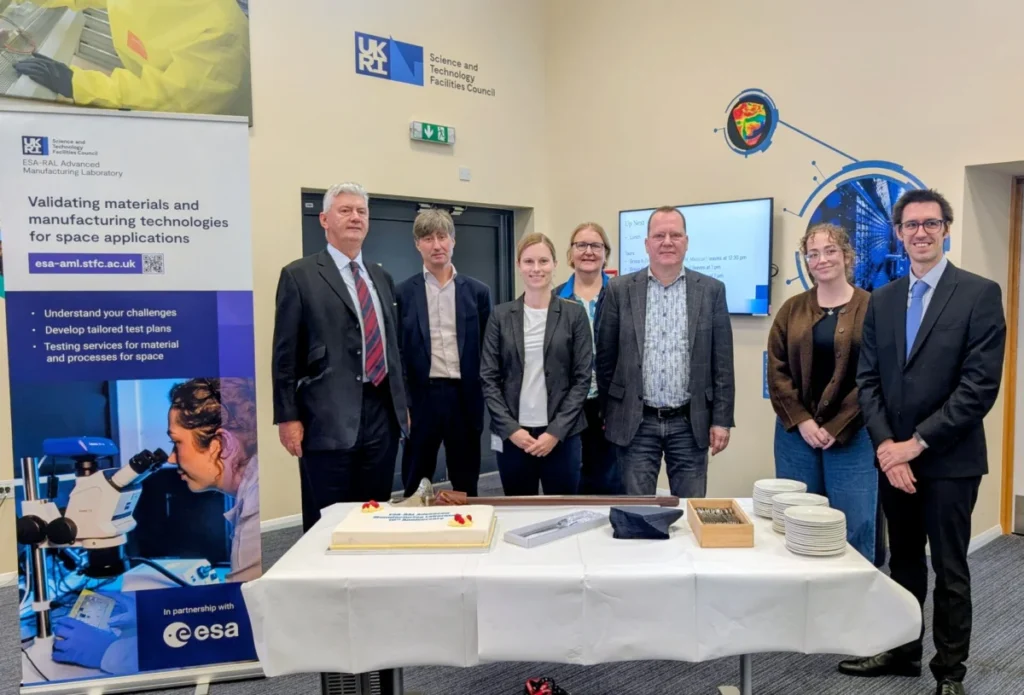
The European Space Agency-Rutherford Appleton Laboratory (ESA-RAL) Advanced Manufacturing Laboratory, a beacon of cutting-edge materials science nestled within the prestigious Harwell Campus in the United Kingdom, is marking its tenth anniversary. This significant milestone provides a timely opportunity for the facility’s dedicated engineers and collaborators to reflect on a decade of groundbreaking achievements and to cast a visionary gaze towards the ambitious future of space exploration it is poised to enable.
Established in 2016, the ESA-RAL Advanced Manufacturing Laboratory has rapidly evolved into a critical nexus for the characterization of high-performance materials essential for the next generation of space missions. Its strategic location, just a stone’s throw from ESA’s UK facility and a vital component of a wider network of ESA laboratories spread across Europe, underscores its integral role in the continent’s ambitious space endeavors. The laboratory’s existence is a testament to the synergistic partnership between the European Space Agency (ESA) and the UK’s Science and Technology Facilities Council (STFC), itself a part of UK Research and Innovation (UKRI), highlighting a shared commitment to pushing the boundaries of technological innovation.
A Decade of Transformative Achievements
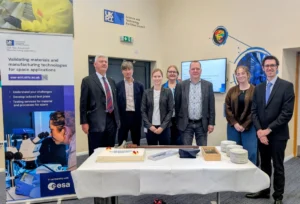
The tenth anniversary was formally commemorated with a special event on October 14, 2026, jointly orchestrated by ESA and STFC. This gathering served as a powerful platform to showcase the laboratory’s profound impact on materials testing and advanced manufacturing processes, underscoring a decade marked by significant breakthroughs. The facility has demonstrably outpaced initial expectations, expanding its operational scope and technological prowess considerably since its inception.
From its foundational year, the ESA-RAL Advanced Manufacturing Laboratory has witnessed a remarkable growth trajectory. It now boasts an impressive arsenal of over 25 state-of-the-art materials testing systems, a testament to continuous investment and technological advancement. This sophisticated infrastructure has facilitated the successful completion of more than 150 diverse projects, fostering robust collaborations with 40 industrial partners. The fruits of this intensive research and development are further evidenced by the publication of over 15 scientific papers, disseminating crucial findings to the global scientific community. Beyond its research output, the laboratory has also been instrumental in nurturing the next generation of space technologists, providing invaluable hands-on experience to a dozen trainees, interns, research fellows, PhD students, and graduates. This commitment to knowledge transfer ensures a sustained pipeline of skilled professionals for the burgeoning space sector.

Among the laboratory’s most notable successes are its contributions to pivotal missions and programs. It played a crucial role in enabling the development of lightweight yet robust propulsion tanks for the M-Argo CubeSat mission, designed to undertake a critical inspection of near-Earth asteroids. This work directly supports the scientific community’s efforts to understand the origins and potential threats posed by these celestial bodies. Furthermore, the facility conducted vital testing on the sophisticated electronics destined for ESA’s groundbreaking Quantum telecommunications programme, a project aiming to revolutionize secure communication through quantum entanglement. The precision and reliability of these components are paramount for the success of such an ambitious and sensitive undertaking. In another significant achievement, the lab provided crucial support for the characterization of stainless-steel specimens that were successfully 3D printed aboard the International Space Station (ISS). This pioneering work in additive manufacturing in microgravity opens up unprecedented possibilities for in-orbit construction and repair, significantly reducing reliance on Earth-based manufacturing and launch costs.
Beyond specific mission support, the ESA-RAL Advanced Manufacturing Laboratory has cemented its reputation as a global leader in several specialized areas. It has cultivated unparalleled expertise in powder characterization, a fundamental step in the development and application of advanced materials, particularly in additive manufacturing. Its work has significantly enhanced the utilization of additive manufacturing techniques for critical space hardware, driving innovation in design flexibility, material efficiency, and component performance. Moreover, the facility has established itself as a preeminent center for electronics assembly verification and quality inspection of space hardware. This rigorous assurance of quality is non-negotiable in the high-stakes environment of space exploration, where mission success and crew safety depend on the flawless performance of every component. These multifaceted capabilities have positioned the laboratory as an indispensable resource for European companies, empowering them to develop cutting-edge technologies, rigorously verify their performance under extreme conditions, and successfully bring them to market.
Charting a Course for Future Ambitions
As the ESA-RAL Advanced Manufacturing Laboratory embarks on its second decade, its focus sharpens on the relentless pursuit of innovation and the expansion of its already formidable capabilities. The facility is strategically aligning its efforts with the evolving landscape of space technology, anticipating the demands of future missions and the challenges of deeper space exploration.
The coming years will see a concerted effort to characterize and validate state-of-the-art materials and space components manufactured using next-generation 3D printing methodologies. This includes a deep dive into smart manufacturing processes, which integrate artificial intelligence and automation to optimize production; advanced electronics, designed for enhanced resilience and functionality in harsh space environments; and in-space fabrication technologies. These technologies are not merely incremental improvements; they represent a paradigm shift in how space infrastructure will be conceived, built, and maintained, playing an absolutely crucial role in realizing Europe’s ambitious long-term space objectives, including lunar bases and Martian exploration.
Martina Meisnar, a Materials and Processes Engineer at ESA, articulated her pride and optimism regarding the laboratory’s trajectory. "Over the past ten years, the ESA-RAL Advanced Manufacturing Laboratory has grown into an important centre of expertise, supporting a wide range of innovative developments for European space missions," Meisnar stated. "Through close collaboration with industry and research partners, we have helped advance innovative materials and manufacturing technologies for space applications. I am incredibly proud of what our team and partners have achieved together and excited about the opportunities that lie ahead." Her words encapsulate the spirit of collaborative innovation that defines the laboratory.

Echoing this sentiment, Joe Bennett, Innovations Technology Access Centre (ITAC) Manager at STFC-UKRI, highlighted the synergistic nature of the partnership and its tangible benefits. "I am proud of what we have accomplished together over the past 10 years, particularly in supporting ESA with the pre-screening of new materials and processes for future space applications," Bennett commented. "By leveraging our world-class skills and capabilities, we have developed and delivered a broad range of testing services that have helped advance innovation in the space sector. We look forward to continuing this successful collaboration and to the positive impact our work will continue to have on both local and international businesses." His perspective underscores the dual benefit of the facility: advancing space technology while simultaneously fostering economic growth and competitiveness for businesses.
Broader Impact and Future Implications
The sustained success and forward-looking vision of the ESA-RAL Advanced Manufacturing Laboratory carry profound implications for the European and global space sectors. By providing robust, reliable, and cutting-edge materials testing and characterization, the facility directly mitigates risks associated with the development and deployment of new space technologies. This reduction in risk is critical for attracting investment, fostering a vibrant space economy, and ensuring the timely execution of complex, multi-year missions.
The emphasis on advanced manufacturing, particularly additive manufacturing and in-space fabrication, signals a strategic pivot towards greater autonomy and sustainability in space operations. The ability to manufacture components and even entire structures in orbit or on other celestial bodies dramatically reduces launch mass and cost, enabling more ambitious and cost-effective exploration and utilization of space resources. This could lead to the accelerated development of infrastructure for space tourism, resource extraction, and scientific research facilities beyond Earth’s orbit.
Furthermore, the laboratory’s role as a hub for training and collaboration fosters a critical ecosystem of expertise. The close interaction between academic institutions, government agencies, and private industry ensures that research findings are rapidly translated into practical applications, and that the skills required for the future of space manufacturing are being cultivated today. This integrated approach is essential for maintaining Europe’s competitive edge in the rapidly evolving global space landscape.
Looking ahead, the ESA-RAL Advanced Manufacturing Laboratory is not merely a testing ground; it is a crucible for the innovations that will define humanity’s future in space. Its continued dedication to pushing the boundaries of materials science and manufacturing technology positions it as a pivotal player in shaping the next era of space exploration, from the deployment of advanced satellites to the establishment of sustainable human presence beyond Earth. The next decade promises to be even more transformative, building on the solid foundation of success laid over the past ten years.