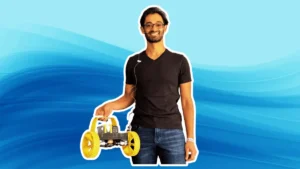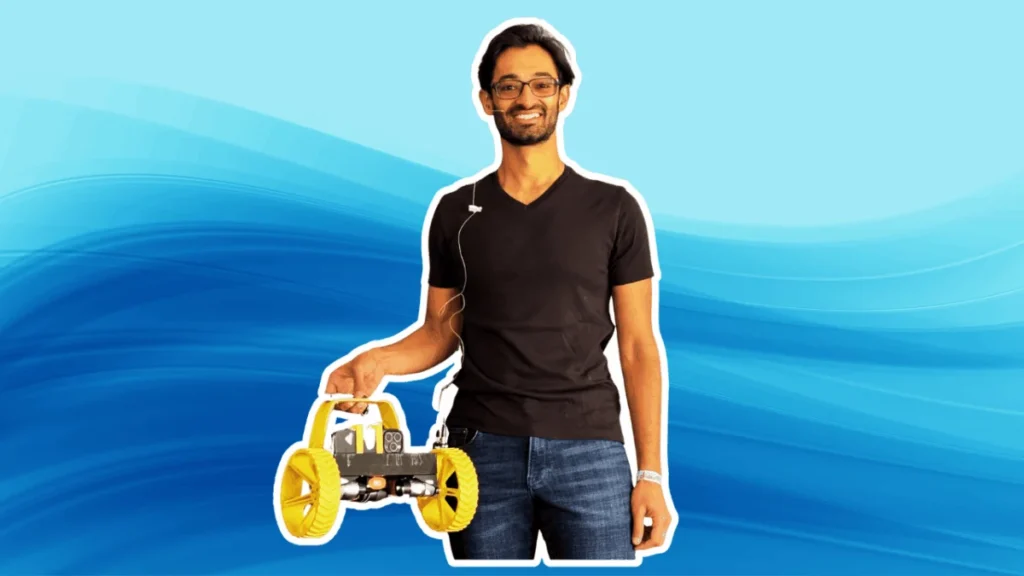
The bustling atmosphere of Maker Faire Bay Area recently served as the backdrop for a compelling demonstration of ingenuity, as maker Survy unveiled his remarkable journey from a rudimentary shoebox prototype to a sophisticated, outdoor-navigating autonomous robot. His project stands as a powerful testament to the democratization of technology, proving that groundbreaking innovation can emerge from accessible materials and a steadfast commitment to iterative design. Survy’s work encapsulates the core spirit of the maker movement: transforming a broad ambition like "I want to build an autonomous robot" into a tangible, functional machine capable of navigating public parks and identifying objects, all without the need for an elaborate laboratory or an unlimited budget.
The Crucible of Creativity: Maker Faire Bay Area
Maker Faire Bay Area, often dubbed "the Greatest Show (and Tell) on Earth," is a flagship event in the global maker movement, originating in San Mateo, California. Since its inception in 2006, it has grown into a pivotal platform where inventors, hobbyists, educators, and artists converge to share their creations, learn from one another, and inspire future generations of innovators. The Faire is more than just an exhibition; it’s a vibrant community gathering that champions hands-on learning, experimentation, and the open exchange of ideas. It underscores the belief that anyone, regardless of formal training or resources, can contribute to technological advancement. For makers like Survy, presenting at such an event offers invaluable feedback, visibility, and the opportunity to connect with a wider audience passionate about DIY culture and STEM fields. The environment encourages the showcasing of projects at all stages of development, from polished products to humble prototypes, fostering an inclusive ecosystem where the process of making is celebrated as much as the final product. Survy’s project perfectly embodies this ethos, illustrating the real-world engineering cycle from conceptualization to functional deployment.
The Genesis of Autonomy: From Concept to Crude Form
Every complex system begins with a simple idea, and Survy’s autonomous robot was no exception. The initial spark was a desire to create a machine that could navigate its environment intelligently. However, rather than succumbing to the overwhelming complexity often associated with robotics, Survy adopted a pragmatic approach: start with the absolute minimum viable product. This philosophy is fundamental to rapid prototyping and agile development methodologies, which prioritize functionality and learning over initial perfection.
His journey commenced with what he affectionately described as "the simplest possible point": a humble shoebox. This everyday item, often discarded, became the chassis for his very first iteration. Fitted with basic DC motors and a set of wheels, this shoebox on wheels was not designed to impress with its capabilities, but rather to prove a singular, crucial concept: locomotion. The objective was merely to demonstrate that a conceptual machine could physically move and be controlled, laying the foundational groundwork for all subsequent enhancements. This initial phase, often overlooked in the pursuit of advanced features, is critical for identifying fundamental mechanical challenges, understanding power requirements, and establishing a baseline for control systems. It exemplifies the "fail fast, learn faster" mantra prevalent in engineering disciplines.
A Chronology of Iteration: The Core of Engineering
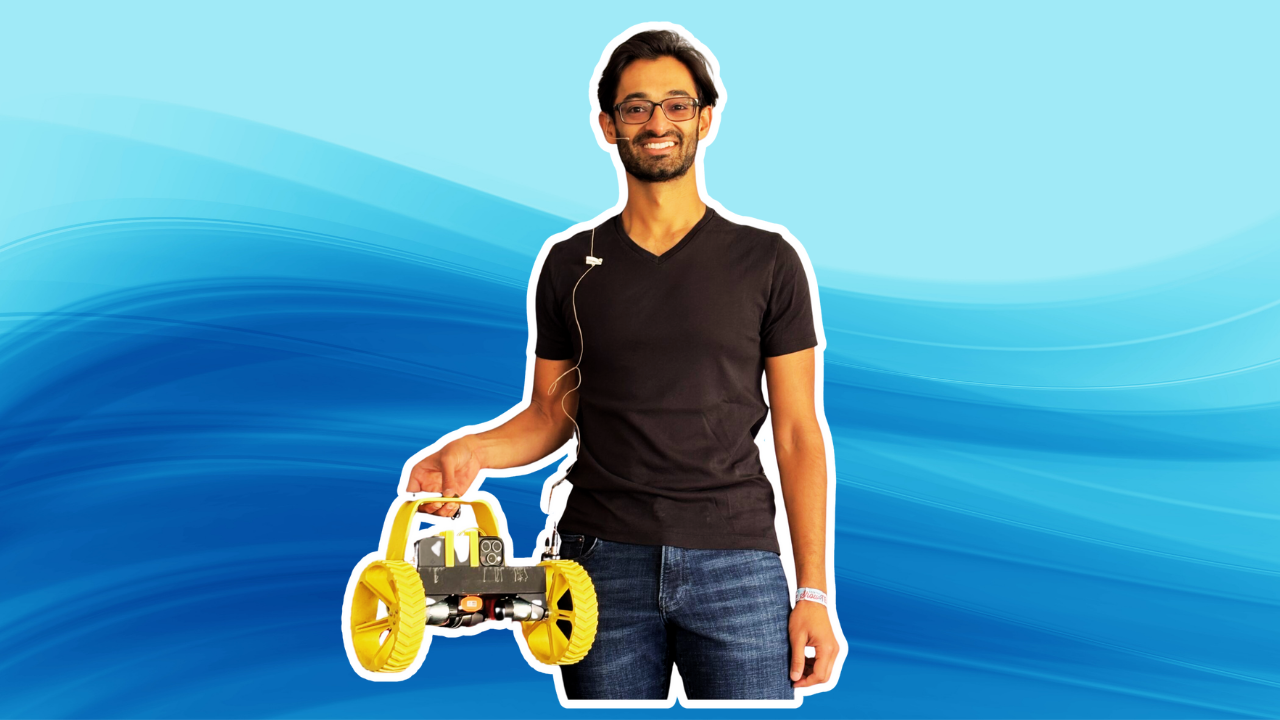
Survy’s project masterfully illustrates the iterative design process, a cornerstone of effective engineering and product development. Far from constructing a perfect robot on his first attempt, Survy embraced a cyclical methodology: Test, Identify Problems, Fix, and Iterate. This continuous feedback loop is the engine of progress, transforming each "failure" into a valuable lesson and a catalyst for improvement.
Phase 1: Basic Mobility and Control (The Shoebox Prototype)
- Objective: Achieve basic movement.
- Components: Shoebox chassis, simple DC motors, wheels, basic power source (e.g., battery pack), rudimentary control (perhaps wired remote or simple microcontroller).
- Challenges Identified: Lack of environmental awareness, inability to navigate autonomously, limited power.
Phase 2: Introducing Environmental Awareness (Sensors)
- Objective: Enable the robot to perceive its surroundings.
- Response to Challenge: The robot couldn’t avoid obstacles.
- Solution: Integration of sensors. For an outdoor robot, this likely involved ultrasonic sensors for distance measurement and obstacle detection, potentially an Inertial Measurement Unit (IMU) for orientation and balance, and wheel encoders for odometry (measuring distance traveled). These additions allowed the robot to gather data about its immediate environment, a prerequisite for any form of intelligent navigation.
Phase 3: The Brain and Data Processing (Raspberry Pi Integration)
- Objective: Provide computational power for decision-making.
- Response to Challenge: Raw sensor data needed to be processed and translated into actionable commands.
- Solution: The integration of a Raspberry Pi. This low-cost, credit-card-sized single-board computer has revolutionized hobbyist robotics. Its versatility, processing power, and extensive community support make it an ideal choice for embedded systems. The Raspberry Pi became the "brain," responsible for collecting data from the newly added sensors, executing control algorithms, and managing the overall system. It could run operating systems like Linux and support programming languages such as Python, enabling complex logic to be implemented.
Phase 4: Advanced Navigation and Perception (Smartphone Integration)
- Objective: Achieve sophisticated outdoor navigation and object identification.
- Response to Challenge: The robot needed to understand its global position and identify specific objects in a dynamic outdoor environment.
- Solution: Repurposing a smartphone. This was a particularly innovative and cost-effective decision. Modern smartphones are packed with powerful hardware: high-resolution cameras, GPS modules, accelerometers, gyroscopes, and significant processing capabilities, all integrated into a compact unit. Survy leveraged these inherent features:
- GPS: For accurate outdoor localization and path planning.
- Camera Vision: For real-time object detection, recognition, and visual odometry. Using libraries like OpenCV on the smartphone or Raspberry Pi, the robot could potentially identify landmarks, distinguish between different types of objects (e.g., trees, benches, people), and even perform basic semantic mapping.
- Connectivity: Wi-Fi and Bluetooth on the phone could facilitate remote monitoring, data logging, and potential cloud integration for more complex AI processing.
This phased approach, driven by continuous testing and problem-solving, is the hallmark of effective engineering. Each addition was a direct, practical response to a real problem encountered during live testing, culminating in a highly functional autonomous system.
Supporting Data and the Democratization of Robotics
Survy’s project is a microcosm of a larger trend: the democratization of advanced technology. Over the past decade, the "maker movement" has experienced exponential growth. Data from organizations like the Fab Foundation and various open-source hardware communities indicates a significant increase in participation. For instance, the number of FabLabs and makerspaces globally has surged, providing access to tools and knowledge previously confined to industrial or academic settings.

A key enabler of this trend is the dramatic reduction in the cost and increase in accessibility of robotics components. In the early 2000s, a microcontroller development board could cost hundreds of dollars; today, powerful alternatives like Arduino boards are available for under $30, and Raspberry Pis for under $50. Sensors, once specialized and expensive, are now commodity items, available for a few dollars each. This economic shift means that aspiring innovators no longer require institutional funding to experiment with complex systems.
Furthermore, the rise of open-source software and hardware communities has significantly lowered the barrier to entry. Platforms like GitHub host countless projects, code repositories, and documentation, allowing makers to build upon existing work rather than starting from scratch. The Robot Operating System (ROS), for example, provides a flexible framework for writing robot software, abstracting away much of the underlying hardware complexity and offering a rich ecosystem of tools and libraries for perception, navigation, and manipulation. While Survy’s specific use of ROS wasn’t explicitly stated, his project aligns perfectly with the principles ROS champions: modularity, reusability, and community collaboration.
The integration of smartphones into robotics projects is another powerful trend. According to technology analysts, the average smartphone now possesses more processing power and a more comprehensive sensor suite than many scientific research robots of a decade ago. Leveraging this readily available and powerful hardware not only reduces costs but also accelerates development cycles, as makers can tap into established mobile development ecosystems and powerful APIs. This approach exemplifies "resourceful innovation," where existing consumer technology is creatively repurposed for advanced applications.
Inferred Statements and Reactions
While specific quotes were not provided in the original text, the context of Maker Faire and the nature of Survy’s project allow for logical inferences regarding stakeholder reactions:
- Survy’s Perspective (Inferred): "When I started, the idea of an autonomous robot seemed daunting. But I realized the most important step was simply to begin, no matter how crude the initial prototype. Each challenge, each ‘failure,’ was just a puzzle waiting to be solved. Seeing the shoebox evolve into a robot that can truly navigate and ‘see’ the world outdoors is incredibly rewarding. It shows that innovation isn’t about having a massive budget or a fancy lab; it’s about persistence, learning, and the willingness to iterate."
- Maker Faire Organizers (Inferred): "Survy’s project perfectly encapsulates the spirit of Maker Faire. It’s a prime example of how ingenuity, coupled with accessible technology and an iterative approach, can lead to remarkable outcomes. Projects like this inspire countless attendees, demonstrating that complex engineering challenges can be tackled by anyone with curiosity and a hands-on mindset. This is precisely why we created Maker Faire—to celebrate and foster this kind of grassroots innovation."
- Attendees and Community Members (Inferred): "It’s amazing to see how he started with just a shoebox! It makes you realize that you don’t need to be a professional engineer to build something truly smart. This definitely makes me want to start my own robotics project." "The smartphone integration is brilliant. It’s so clever to use something we all have in our pockets to give a robot advanced capabilities like GPS and vision."
- Robotics Educator/Expert (Inferred): "Survy’s work offers invaluable pedagogical lessons. It demonstrates the real-world application of engineering principles: problem identification, systematic iteration, and resourceful use of available technology. Such projects are vital for inspiring the next generation of STEM professionals, showing them that theoretical concepts have practical, exciting applications in the physical world. It also highlights the growing power of democratized robotics tools like the Raspberry Pi and the untapped potential of repurposing consumer electronics."
Broader Impact and Implications for Future Innovation
Survy’s journey from a shoebox to an autonomous outdoor robot carries significant implications that extend beyond the individual project, touching upon education, industry, and the very nature of innovation itself.
1. Democratization of Advanced Technology: The most salient implication is the continued democratization of robotics and artificial intelligence. By demonstrating that sophisticated autonomous systems can be built with readily available, low-cost components and open-source knowledge, Survy effectively lowers the barrier to entry for aspiring engineers, hobbyists, and even small businesses. This empowers a broader demographic to engage with and contribute to technological advancement, moving robotics out of specialized laboratories and into garages, classrooms, and community makerspaces.

2. Revolutionizing STEM Education: Projects like Survy’s provide a powerful model for project-based learning in STEM fields. Traditional educational approaches often compartmentalize subjects, but a robotics project inherently integrates physics, computer science, electronics, and mechanical engineering. The iterative process of "test, fix, iterate" cultivates critical thinking, problem-solving skills, and resilience—qualities essential for any scientific or engineering endeavor. Educators can leverage such examples to inspire students, making abstract concepts tangible and engaging.
3. Sustainable Innovation and Resourcefulness: The repurposing of a smartphone for GPS and camera vision exemplifies sustainable innovation. Instead of requiring custom-built, expensive components, Survy utilized an existing, mass-produced device, reducing both cost and environmental footprint. This resourcefulness highlights a growing trend where innovators seek to maximize the utility of existing technology, fostering creativity within constraints and potentially leading to more environmentally conscious design practices.
4. Economic Opportunities for Small-Scale Development: The ability to develop complex robotic systems without massive capital investment opens new avenues for small businesses, startups, and even individual entrepreneurs. Custom autonomous solutions could be developed for niche applications in agriculture, environmental monitoring, local delivery services, or assistive technologies, potentially creating new markets and economic opportunities in regions with limited access to high-tech manufacturing.
5. Inspiring Future Innovators: Perhaps the most profound impact is the inspiration Survy’s story provides. It challenges the perception that only large corporations or elite research institutions can innovate in cutting-edge fields like AI and robotics. By showing that a single individual, armed with curiosity, determination, and accessible tools, can build a functioning autonomous robot, he encourages countless others to embark on their own maker journeys, fostering a culture of experimentation and self-directed learning. This contributes to a broader ecosystem of innovation where diverse perspectives and approaches can flourish.
In conclusion, Survy’s journey from a simple shoebox to a park-navigating, object-identifying robot is more than just a technical achievement; it is a powerful narrative about the accessibility of innovation, the efficacy of iterative design, and the boundless potential of the human spirit when combined with the right tools and a tenacious mindset. His work, celebrated at Maker Faire Bay Area, serves as a compelling invitation for anyone with an idea to simply begin, demonstrating that the most impressive technological feats often have the most humble origins.