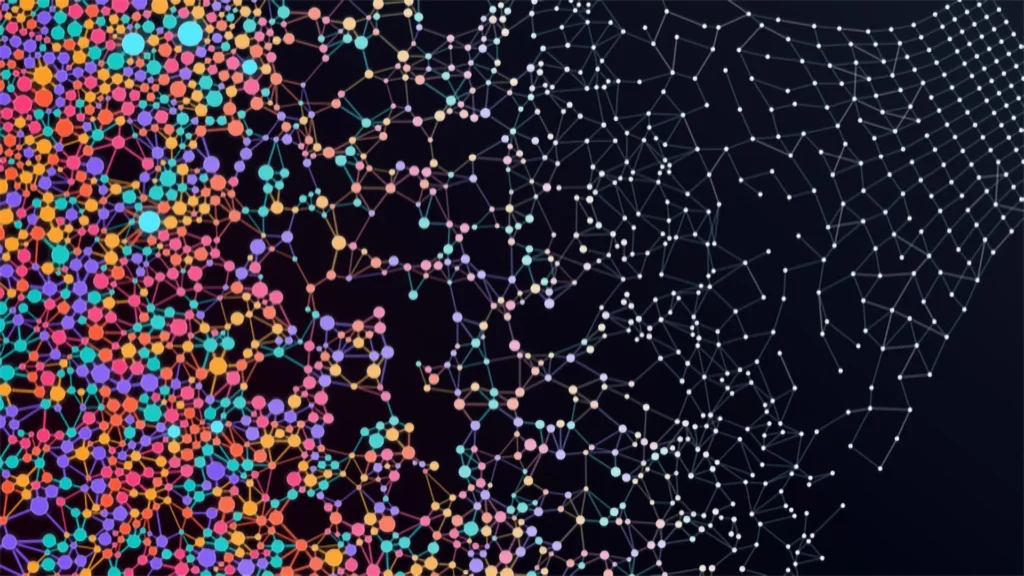
Perfection may not always be the best recipe for stability, especially in complex systems such as electrical grids, ecosystems, and advanced materials. This groundbreaking revelation, emerging from research conducted by physicists at Northwestern University, challenges a long-standing scientific assumption that networks perform most reliably when their individual components behave as similarly as possible. Instead, a comprehensive new study suggests that carefully managed variation, often termed disorder or heterogeneity, can be a significant advantage, fostering greater resilience and stability in interconnected systems across various disciplines. This paradigm shift holds profound implications for how engineers design future technologies and how scientists interpret the robustness of natural phenomena.
The Long-Held Quest for Perfection: Historical Context
For decades, the prevailing wisdom in the study of complex systems leaned heavily towards homogeneity. Researchers often operated under the intuitive assumption that a system composed of identical, uniformly behaving parts would naturally be more predictable, efficient, and ultimately, more stable. This perspective was largely driven by the inherent complexities of modeling real-world systems, which are inherently messy and diverse. Simplified mathematical frameworks, while offering valuable initial insights, frequently abstracted away these crucial differences, inadvertently reinforcing the idea that uniformity was the ideal state.
The appeal of uniformity is undeniable in many engineering contexts. Imagine a perfectly synchronized assembly line, or an electrical grid where every generator operates at precisely the same frequency. Such theoretical constructs offer elegance and ease of analysis. However, real-world systems rarely conform to such pristine ideals. Power generators, even within the same grid, exhibit subtle operational differences; neurons in the brain vary in form, function, and connectivity; species in an ecosystem occupy distinct niches and interact in asymmetric ways; and even the most meticulously engineered materials contain microscopic variations in their internal structure. When these real-world systems faced disturbances, the expectation was that any deviation from uniformity would contribute to instability, leading to failures ranging from power outages to material fatigue or ecosystem collapse. The challenge then became to minimize these "defects" or "irregularities" to achieve optimal performance and resilience.
Unveiling the Power of Heterogeneity: The Northwestern Methodology
The recent study, led by Northwestern’s Adilson Motter, the Charles E. and Emma H. Morrison Professor of Physics and Astronomy and director of the Center for Network Dynamics, fundamentally reorients this understanding. Published on September 17 in the prestigious journal Science, the research introduces a novel mathematical framework designed to systematically determine the conditions under which variation can actually enhance network stability. This work builds upon a growing body of evidence, much of it pioneered by Motter’s own team, that hinted at the beneficial role of disorder.
The journey towards this broader understanding has been a chronological progression of increasingly sophisticated models. Earlier research by Motter’s group, including a 2020 Nature Physics study, demonstrated that electrical generators could achieve more successful synchronization when they possessed slight operational differences rather than striving for perfect uniformity. This counter-intuitive finding was echoed in a 2025 Nature Communications study led by Northwestern postdoctoral researcher Arthur Montanari, a co-first author on the current Science paper. That work revealed comparable effects in models simulating collective behaviors like flocking birds and drone swarms, where individual variations contributed to the stability of the collective.
These previous studies, while significant, raised a critical question: were these isolated exceptions, or did they point to a much broader, overlooked principle governing complex systems? The new framework developed by Motter, Montanari, and graduate student Pietro Zanin (also a co-first author) addresses this directly. It moves beyond simplified models, such as the widely used Kuramoto model, which often represents each network node with only a single variable. While invaluable for understanding basic synchronization phenomena, these simpler models, as Motter explains, "can inadvertently strip away the very stabilizing effect we want to capture" because they fail to account for the "rich enough" dynamics of real-world components.
The new framework allowed the researchers to simulate complex systems closer to their actual operational conditions. They first analyzed systems in a stable state and then introduced small disturbances, observing whether these perturbations gradually diminished, indicating a return to stability, or grew, signifying a drift towards instability. By comparing networks with identical components to those with varying components or connections, the team was able to pinpoint the general conditions under which heterogeneity systematically outperforms uniformity. To facilitate understanding and further exploration, the researchers also developed an interactive website where users can visually explore the framework, adjusting parameters to observe how network components interact, synchronize, and form organized patterns under different conditions of disorder.
Beyond Simplistic Models: How Disorder Fortifies Networks
The study’s core insight is that the "richness" of a node’s dynamics – meaning the complexity of its internal behavior and its potential responses to external stimuli – is crucial for disorder to be beneficial. When individual components possess a more intricate set of behaviors, their differences can act as a buffer against disturbances, preventing cascading failures that might occur in a perfectly uniform system. For instance, in an electrical grid, if all generators react identically to a surge in demand, they might all falter simultaneously. However, if they possess varied response profiles, some might compensate for others, stabilizing the overall system.
The researchers identified two primary ways in which disorder enhances stability: through differences among the nodes themselves (e.g., varying operational parameters of generators, diverse neuronal firing thresholds) or through variations in the links connecting those nodes (e.g., different strengths of ecological interactions, asymmetric social relationships). Crucially, the effect is not a simple linear relationship; it depends on both the location and the amount of variation. This introduces what Montanari describes as a "Goldilocks principle": a moderate level of disorder can significantly improve stability, but excessive variation can push the system back towards instability. The framework is designed to help pinpoint this optimal level, allowing for strategic design rather than random trial and error.
Perhaps one of the most surprising findings was that beneficial differences do not always require precise, deliberate engineering. In many of their models, randomly introduced variation resulted in greater stability than the best possible completely uniform configuration. This suggests that simply allowing for a degree of inherent diversity within a system can, in itself, provide a significant advantage, potentially simplifying design processes in certain contexts. An important nuance emerged when variation occurred in the links rather than the nodes: in these cases, even networks with relatively simple node dynamics could gain stability from disorder, highlighting the versatile nature of heterogeneity’s stabilizing power.
Revolutionizing Design: Engineering for Resilience
The implications of this research are vast, promising to revolutionize design principles across various engineering disciplines. In electrical grids, for example, the findings could lead to the development of more resilient smart grids. Current grids face immense challenges from unpredictable renewable energy sources and increasing demand. Instead of striving for perfectly synchronized generators, engineers might strategically introduce variations in their operational parameters or control algorithms to make the grid more robust against sudden fluctuations or cyberattacks, preventing widespread blackouts. This move towards "heterogeneous control" could be a cornerstone of future energy infrastructure.
In architected materials and metamaterials, which are often constructed from repeating, nearly identical units, the study suggests a radical shift in approach. Traditionally, the goal has been precise uniformity to achieve predictable properties. However, by deliberately varying the shapes, sizes, orientations, or physical properties of these constituent units, engineers might be able to create materials with novel and improved behaviors, such as enhanced damping capabilities, tunable stiffness, or superior resistance to fracture. This opens avenues for designing materials with unprecedented performance tailored for specific applications, from aerospace components to biomedical implants. The work implies a move from purely structural design to a more nuanced "network-based material engineering."
Furthermore, the principles could extend to robotics and swarm intelligence. In systems like drone swarms, achieving coordinated behavior while maintaining resilience to individual drone failures is critical. By allowing for, or even designing, variations in individual drone behaviors, communication protocols, or sensor capabilities, the collective swarm could become more robust against disturbances, able to adapt and complete its mission even if some units malfunction or encounter unexpected obstacles.
Nature’s Masterclass in Imperfection: Ecological and Biological Insights
Beyond engineering, the Northwestern study offers profound insights into the inherent robustness of natural systems, helping to resolve long-standing paradoxes. One of the most significant is in ecological networks. Since the 1970s, mathematical models have often predicted that large, complex ecosystems should be inherently unstable, prone to collapse given their intricate web of interactions. Yet, nature abounds with highly diverse and persistent ecosystems, from rainforests to coral reefs, that thrive over vast timescales.
As Montanari explains, "Since the 1970s, mathematical models have predicted that large, complex ecosystems should destabilize and collapse. Yet very large and highly diverse ecosystems persist in nature." The new findings offer a compelling explanation: variation among mutually beneficial interactions, such as those between pollinators and flowers, or between predators and prey, could be a key mechanism promoting this observed stability. Rather than a weakness, the inherent biodiversity and "messiness" of ecosystems—with species occupying distinct niches and having varied interaction strengths—could be their greatest strength, providing a built-in resilience that simple models failed to capture.
Similarly, in neural networks and brain computation, the brain itself is a testament to the power of irregularity. Neurons vary dramatically in their morphology, electrical properties, and connectivity patterns. This inherent biological "disorder" has often been viewed as a consequence of evolutionary processes rather than a functional advantage. The study suggests that this variability might be fundamental to the brain’s remarkable robustness, its ability to learn, adapt, and recover from damage, and its capacity for complex computations. Understanding how specific types and amounts of neuronal heterogeneity contribute to brain function could unlock new approaches to treating neurological disorders or designing more sophisticated artificial intelligence.
The Path Forward: Designing with Deliberate Variation
The research marks a pivotal moment, shifting the scientific lens from viewing disorder as a deviation from an ideal state to recognizing it as a potential design principle. "When disorder enhances stability, the next challenge is figuring out how best to design it," Motter stated. This next phase of research will likely involve developing advanced computational techniques and machine learning algorithms to explore vast parameter spaces, identifying optimal combinations and distributions of heterogeneity that yield the greatest benefit for specific system types.
The findings call for a fundamental re-evaluation of how engineers, biologists, and physicists approach complex system design and analysis. It suggests that a one-size-fits-all approach to uniformity may be detrimental, and that a more nuanced understanding of system dynamics, embracing controlled and strategic variation, will be essential for creating truly resilient and adaptive technologies and for fully appreciating the robustness of natural systems. This interdisciplinary effort, spanning theoretical physics, engineering, and biology, is poised to unlock new frontiers in understanding and harnessing the power of complexity.
The study, "Disorder-promoted stability," received significant support from key funding bodies, underscoring its importance and potential impact. Financial backing came from the Army Research Office (grant number W911NF-22-2-0109) and the National Science Foundation (grant number DMS-2308341). Additionally, the stimulating research environment provided by the NSF-Simons National Institute for Theory and Mathematics in Biology (NSF grant number DMS-2235451 and Simons Foundation grant number MP-TMPS-00005320) was acknowledged, highlighting the collaborative and foundational nature of this transformative scientific endeavor.