The landscape of PC gaming peripherals is undergoing a significant transformation as the boundary between DIY maker culture and professional-grade hardware continues to blur. At the forefront of this niche innovation is the KeyboaStick, a 3D-printed mechanical keyboard modification designed by the South Korean maker known as FunOrNothing. This peripheral enhancement, which adapts standard mechanical keyboard switches into a functional joystick, represents a broader trend in the mechanical keyboard community toward extreme customization and the integration of tactile, retro-inspired interfaces into modern computing setups.
The Genesis of the KeyboaStick and the Maker Movement
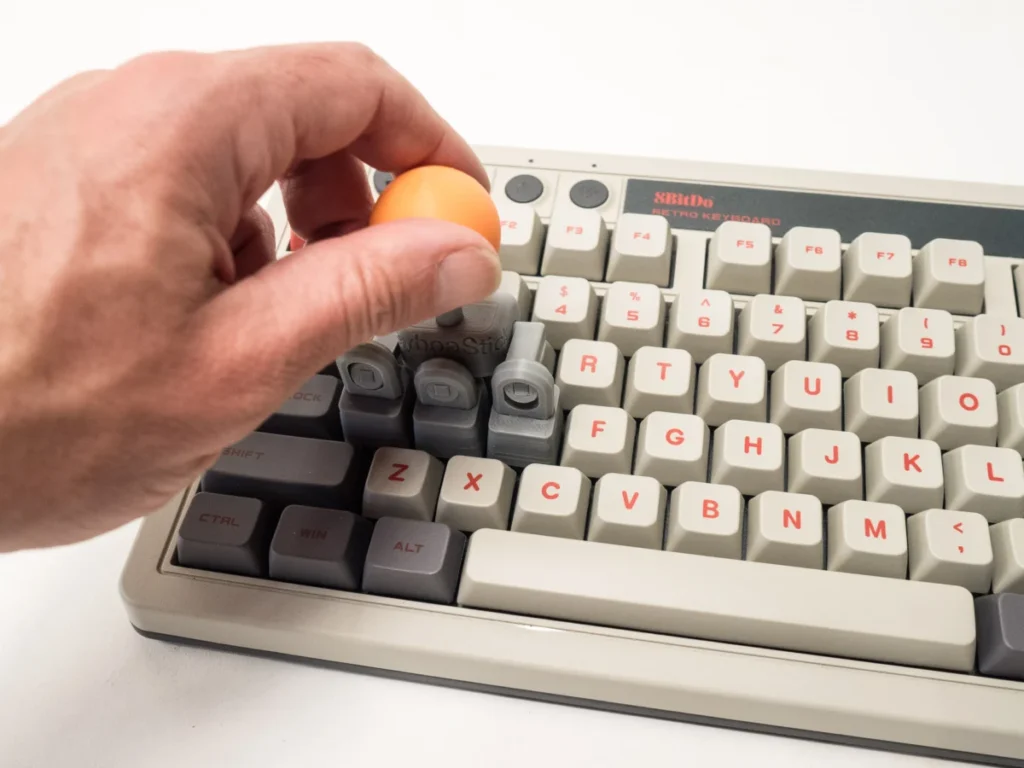
The KeyboaStick originated from the vibrant maker community in South Korea, a region known for its deep-rooted gaming culture and technological prowess. The designer, FunOrNothing, sought to solve a perennial challenge for PC gamers: the inherent rigidity of the WASD keyboard layout for certain genres of gaming. While mechanical keyboards offer superior tactile feedback compared to membrane alternatives, they remain essentially digital inputs—either a key is pressed or it is not. By introducing a physical joystick linkage that sits atop these switches, the KeyboaStick provides a bridge between the precision of mechanical switches and the ergonomic fluidity of a traditional arcade stick.
The project gained significant traction on MakerWorld, a platform hosted by Bambu Lab that facilitates the sharing of 3D printing files. The accessibility of the design is a cornerstone of its success. Available as a free download for those with their own 3D printers, or as a finished product through the official RadianLab store on Etsy, the KeyboaStick exemplifies the "open-source to commercial" pipeline that defines modern hobbyist engineering.
Technical Engineering and Print-in-Place Innovation
From a technical standpoint, the KeyboaStick is a marvel of "print-in-place" engineering. This manufacturing technique allows for complex mechanical assemblies—including joints, hinges, and linkages—to be printed as a single, interconnected unit without the need for manual assembly of individual moving parts.
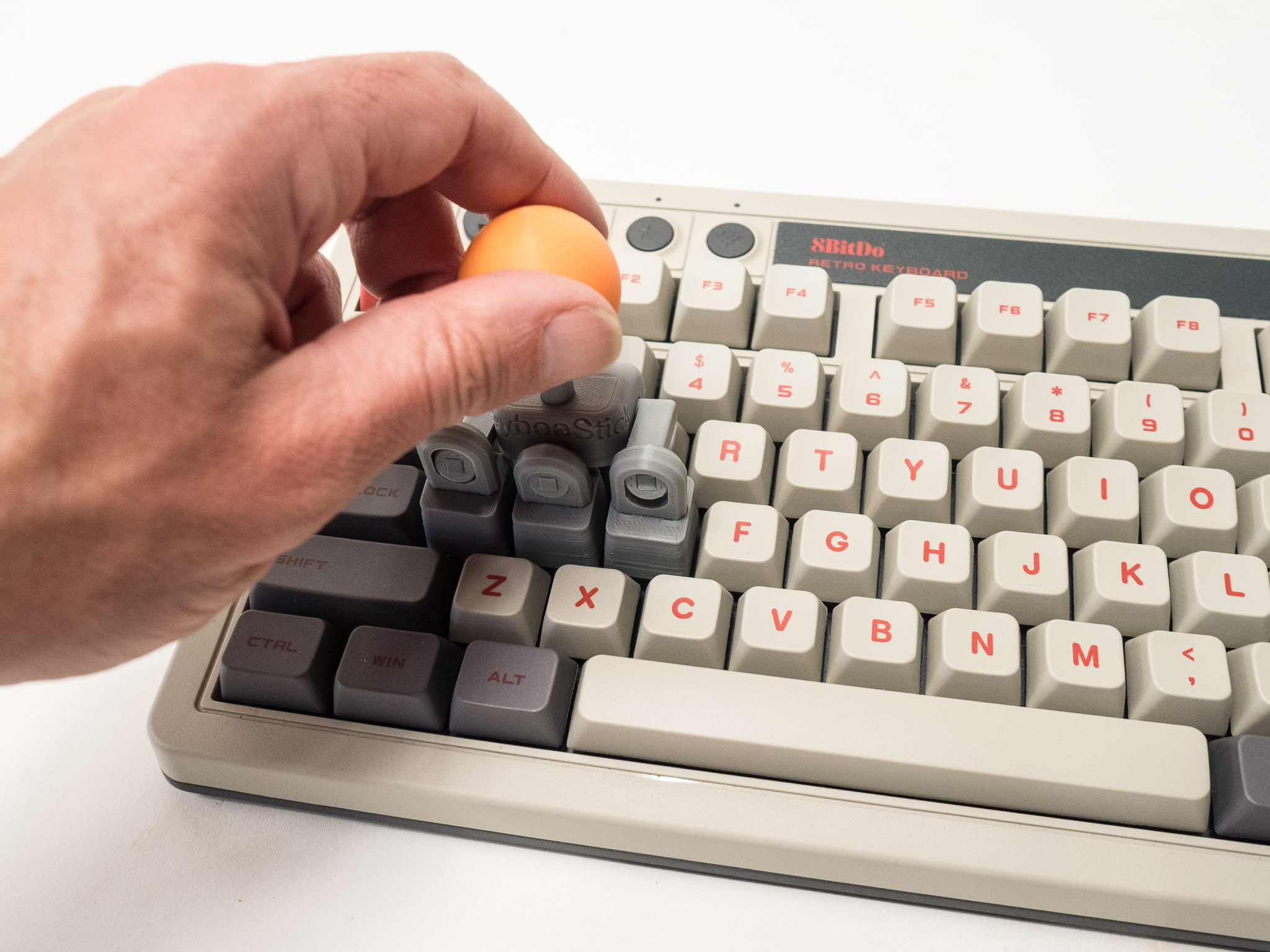
The standard version of the KeyboaStick is specifically engineered to replace the WASD (W, A, S, D) or arrow keycaps on a mechanical keyboard. These keys are the industry standard for movement in first-person shooters, platformers, and various indie titles. The joystick mechanism utilizes articulated linkages that, when moved by the user, depress the underlying mechanical switches in a manner that mimics the directional input of a gamepad’s thumbstick.
One of the most notable aspects of the design is its "forgiving" geometry. In the realm of Fused Deposition Modeling (FDM) 3D printing, precision is often dictated by the calibration of the machine. FunOrNothing designed the KeyboaStick with sufficient tolerances to ensure that even older or less-calibrated 3D printers can produce a functional unit. The joints are designed to break free with minimal force after printing, allowing for immediate use.
Product Iterations and the Pro Series Evolution
Following the success of the initial design, the product line expanded to cater to different user needs and keyboard configurations.
- Standard WASD Version: The core model designed for the primary movement keys used by the majority of PC gamers.
- Arrow Key Version: A variant designed for the secondary directional cluster, often favored by players of retro emulators or specific indie titles.
- Quick-Replace Version: A modular design that allows users to swap between standard keycaps and the joystick mechanism without removing the entire linkage system.
- KeyboaStick Pro: A redesigned professional version available exclusively through the RadianLab Etsy shop. This version features enhanced performance metrics, including smoother articulation and increased durability, addressing minor "stickiness" reported in the community-driven free versions.
The pricing structure reflects the project’s dual nature as both a hobbyist file and a retail product. Users with a 3D printer can produce the device for the cost of a few grams of filament (roughly $0.50), while professionally printed and assembled units from RadianLab retail for up to $17, providing an entry point for those without access to additive manufacturing hardware.
Performance Analysis in Gaming Scenarios
The practical application of the KeyboaStick has been tested across various gaming genres, most notably in high-speed platformers like Sonic the Hedgehog 2. Testing indicates that while the device offers a novel and enjoyable way to interact with classic titles, it does introduce a learning curve.

In gameplay sessions involving the Emerald Hill Zone of Sonic the Hedgehog 2, the KeyboaStick proved capable of handling rapid directional changes. However, users have noted that the mechanical nature of the 3D-printed plastic can occasionally lead to "sticky" movement when aiming for diagonal inputs or extreme side-to-side transitions. This is a common characteristic of FDM-printed parts, where the layer lines of the plastic can create friction.
Despite these minor mechanical hurdles, the device successfully bridges the gap between a keyboard and a controller. It is particularly effective for games designed for digital d-pads, where the tactile "click" of the underlying mechanical switch (such as a Cherry MX Blue or Brown) provides the player with confirmation of input that a standard analog stick lacks.
The Challenge of Intellectual Property in the 3D Printing Era
The rise of the KeyboaStick has also highlighted a growing issue within the maker community: the unauthorized resale of digital designs. As the model gained popularity, numerous "unscrupulous sellers" began harvesting the files from MakerWorld to sell 3D-printed versions on third-party marketplaces without the designer’s consent or attribution.
This phenomenon has forced makers like FunOrNothing to seek official partnerships, such as the one with RadianLab, to establish a legitimate commercial presence. It underscores the difficulty of protecting intellectual property in an ecosystem built on open sharing. The community response has largely been one of advocacy, encouraging users to support the original creator through official channels to ensure the continued development of such innovative peripherals.
Market Context: The $5 Billion Mechanical Keyboard Industry
The KeyboaStick enters a market that has seen explosive growth over the last decade. The global mechanical keyboard market was valued at approximately $1.3 billion in 2023 and is projected to grow significantly as more consumers transition to remote work and high-end gaming setups.

Customization is the primary driver of this market. Enthusiasts often spend hundreds of dollars on "artisan" keycaps—individual keys hand-crafted from resin, wood, or metal. The KeyboaStick represents an evolution of the artisan keycap: it is not merely aesthetic but functional. It taps into the "retro-modding" subculture, where gamers seek to blend the aesthetics of 1980s arcade cabinets with the performance of 21st-century hardware.
Chronology of Development
- Early 2023: FunOrNothing begins prototyping a mechanical linkage system to convert vertical key presses into lateral joystick movement.
- Late 2023: The first version of the KeyboaStick is uploaded to MakerWorld, quickly becoming one of the most downloaded "functional prints" on the platform.
- Early 2024: Following feedback regarding friction and durability, the "Pro" version is developed with tighter tolerances and reinforced joints.
- Mid 2024: RadianLab becomes the official commercial partner for FunOrNothing, offering high-quality, pre-assembled units to the global market.
- Present: The design continues to be iterated upon, with new versions being developed for low-profile mechanical switches and specialized gaming pads.
Broader Implications for Peripheral Design
The success of the KeyboaStick suggests a future where peripheral manufacturers may offer more modular components. If a single maker in South Korea can successfully re-engineer the fundamental input method of a keyboard using a basic 3D printer, major manufacturers like Logitech, Razer, or Corsair may eventually see the value in offering official "add-on" modules for their flagship keyboards.
Furthermore, the KeyboaStick serves as a case study for the democratization of hardware design. It proves that with a solid understanding of mechanical linkages and access to 3D printing technology, individuals can create specialized tools that rival mass-produced alternatives in specific use cases.
While it may not replace the traditional mouse-and-keyboard setup for competitive first-person shooters, the KeyboaStick has secured its place as a quintessential accessory for the "fun-first" gamer. It transforms the keyboard from a static data-entry tool into a dynamic, playful interface, proving that even the most standard office equipment can be reimagined through the lens of creative engineering. As 3D printing technology continues to advance, the line between "making" and "buying" will only continue to thin, paved by innovations like the KeyboaStick.