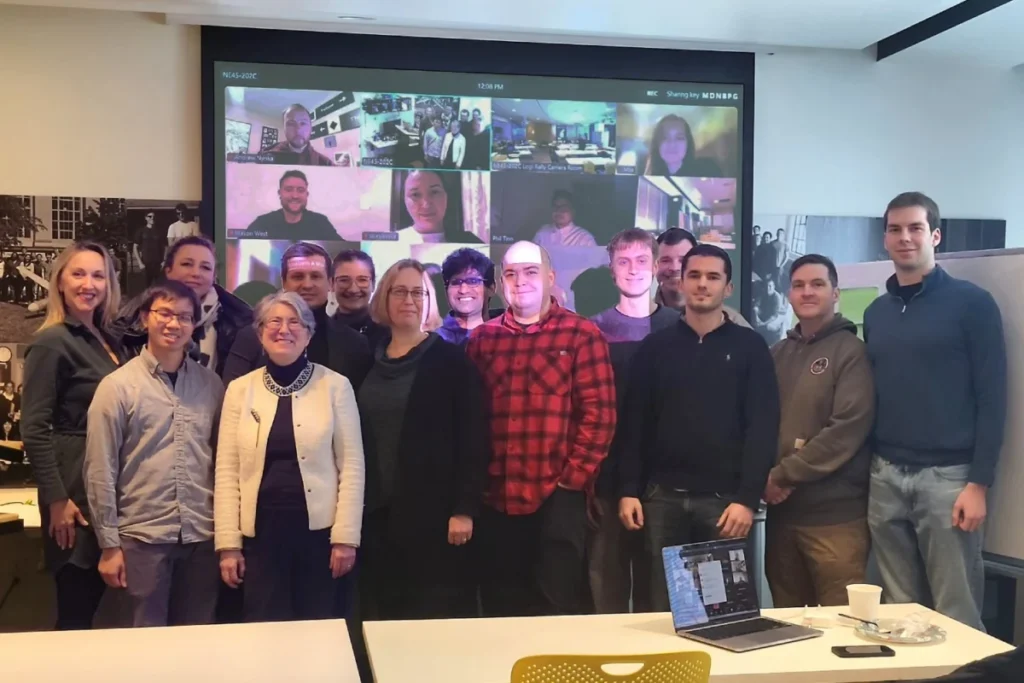
During this year’s Independent Activities Period (IAP), students, researchers, and collaborators spanning seven time zones converged in a monumental effort to confront the urgent technical challenges facing Ukraine as the full-scale war tragically enters its fourth year. This intensive four-week hackathon, aptly named Build for Ukraine 2.0, served as a crucible for innovation, bringing together brilliant minds from MIT and dedicated Ukrainian collaborators within a shared, albeit geographically disparate, innovation environment. The daily realities of teamwork were often punctuated by power outages, air-raid alerts, and subzero temperatures experienced by participants on the ground in Ukraine, underscoring the extraordinary circumstances under which these critical solutions were forged.
The ambitious initiative was co-led by the distinguished MIT-Ukraine Program, the pioneering MIT Edgerton Center, and the cutting-edge MIT Lincoln Laboratory Beaver Works. Further crucial support was provided by Mission Innovation X, the computational software giant MathWorks, and the advanced fabrication facility MIT.nano, highlighting a broad institutional commitment to the cause. Designed and taught as an official IAP subject, EC.S01/EC.S11 (Build for Ukraine 2026), the hackathon strategically paired technically diverse participants with Ukrainian organizations. These partners were actively seeking near-term, tangible solutions to pressing problems that have arisen directly from the devastating wartime conditions, ranging from critical infrastructure protection to humanitarian aid and disinformation countermeasures. The unique demands of the program were encapsulated by Hosea Siu ’14, SM ’15, PhD ’18, one of the lead organizers, who remarked, "It’s not every working group that has to reschedule team meetings because some members are in Ukraine and just had a blackout. This class is unusual — in the most meaningful ways." His statement not only highlighted the logistical hurdles but also the profound, real-world relevance that set this program apart.
The Independent Activities Period: A Catalyst for Rapid Innovation
The Independent Activities Period (IAP) at MIT, typically held each January, is a unique and defining feature of the Institute’s academic calendar. For four weeks, the traditional academic structure gives way to an open-ended exploration of knowledge, allowing students, faculty, and staff to engage in a wide array of non-credit courses, seminars, workshops, and independent projects. This period is renowned for fostering creativity, interdisciplinary collaboration, and hands-on learning, often pushing the boundaries of conventional education. IAP embodies MIT’s ethos of "mind and hand," providing a flexible framework for students to pursue niche interests, delve into advanced research, or, as demonstrated by Build for Ukraine 2.0, tackle urgent global challenges with direct, real-world impact. The program’s format, emphasizing rapid prototyping and intense focus over a compressed timeline, perfectly aligns with IAP’s spirit, making it an ideal vehicle for addressing the immediate needs of Ukraine. It allows for the rapid mobilization of diverse talents to generate innovative solutions that would be challenging to develop within a traditional semester structure.
The Genesis of "Build for Ukraine": A Proactive Response to Crisis
The inception of Build for Ukraine 2.0 stemmed from a profound understanding of the protracted nature of the conflict and the ever-evolving technical needs on the ground. Following an earlier successful iteration, Build for Ukraine 1.0 (though not explicitly detailed in the source, the "2.0" designation implies a predecessor), organizers dedicated the preceding fall semester to a meticulous process of gathering critical challenge statements. This involved extensive outreach and consultation with stakeholders across Ukraine, as well as partners in Taiwan, the United Kingdom, Spain, and various locations across the United States. The objective was clear: to identify specific, actionable problems where a small, interdisciplinary team could realistically make measurable progress within the intensive one-month IAP timeframe. This proactive, needs-driven approach ensured that every project undertaken would directly address an identified gap or improve an existing capability critical to Ukraine’s resilience and humanitarian efforts. The commitment to co-design and rapid prototyping with in-country partners was central to the program’s methodology, ensuring that solutions were not only technically sound but also practically applicable and culturally appropriate for the challenging operational environment.
Navigating Geopolitical Complexities and Logistical Hurdles
The collaborative class was truly built for real-world urgency, confronting an unprecedented array of logistical and human challenges. The participant pool was a microcosm of MIT’s diverse ecosystem, featuring first-year undergraduates working alongside seasoned senior engineers, international researchers, and, crucially, Ukrainian colleagues participating remotely. These Ukrainian participants often logged into meetings from darkened apartments in cities like Kyiv, Kharkiv, and Cherkasy, frequently relying on unstable heaters and backup battery packs amidst the frequent blackouts caused by targeted attacks on infrastructure. The gravity of their situation was starkly illustrated when one participant had to excuse himself from a design review due to an air-raid alert, a chilling reminder of the daily realities faced by those enduring the conflict.
Svetlana Boriskina, a principal research scientist at MIT and director of the Multifunctional Metamaterials Laboratory in the Department of Mechanical Engineering, vividly described the unique bond that formed within these teams. She coined the term "quantum entanglement" to characterize their intense collaboration, noting, "They were sharing data in real time across continents, while experiencing the war’s impacts directly and indirectly." This powerful metaphor captured the profound interconnectedness and shared sense of purpose that transcended geographical distances and adverse conditions, demonstrating an extraordinary level of dedication and resilience from all involved.
A Month of Intense Innovation: Structure and Curriculum
The Build for Ukraine 2.0 hackathon unfolded over four weeks of intense engagement, beginning with a foundational week designed to immerse participants in the multifaceted context of their work.
Week One: Immersive Briefings and Technical Overviews
The initial week was dedicated to providing participants with a comprehensive understanding of the geopolitical, technical, and humanitarian landscape framing their projects. Expert speakers and specialists delivered briefings on topics such as:
- The current military and humanitarian situation in Ukraine.
- Specific challenges related to energy infrastructure and grid resilience.
- The evolving dynamics of drone warfare and counter-drone technologies.
- The pervasive threat of disinformation and information warfare.
- Challenges in de-mining and unexploded ordnance (UXO) clearance.
- Logistical hurdles in humanitarian aid delivery and supply chain resilience.
- Overviews of relevant technologies and methodologies applicable to these challenges.
By the end of the first week, a robust community had formed, with nearly 90 individuals actively engaged through Discord channels. This initial engagement coalesced into the formation of five core teams, each poised to tackle a specific challenge statement with a diverse set of skills and perspectives.
Subsequent Weeks: Co-Design, Rapid Prototyping, and Rigorous Review
The following three weeks were a whirlwind of intensive co-design and rapid prototyping. The collaborative spirit was evident in the blurring of traditional roles: undergraduates mentored experienced professionals, Ukrainian engineers provided invaluable real-time operational data and contextual insights, and faculty members offered swift, targeted guidance for problem-solving. This dynamic interchange of knowledge and experience accelerated the development process significantly.
Each team adhered to a rigorous development pipeline, completing a Preliminary Design Review (PDR) to establish initial concepts, followed by a Critical Design Review (CDR) to refine their approaches and address potential roadblocks. The culmination of their efforts was a final presentation, delivered to an audience of over 80 people, both online and in-person. This broad attendance, comprising specialists from Ukrainian universities, industry partners, and MIT-affiliated programs, underscored the significance and widespread interest in the solutions being developed. Despite the compressed timeline, the teams delivered highly promising prototypes and analyses, each with substantial potential for real-world application and immediate impact.
Project Showcase: Innovative Solutions for Critical Needs
The five core teams produced remarkable results, addressing distinct and pressing challenges:
Clearview Interface: Visualizing Metal-Detector Data for Safer De-mining
The Challenge: Ukraine faces an unprecedented contamination from landmines and unexploded ordnance, posing a grave threat to civilians and hindering reconstruction. Traditional metal detectors often produce complex, overwhelming sequences of indistinguishable audio beeps, making identification of object types slow, ambiguous, and dangerous for de-miners.
The Solution: Two undergraduates from Olin College developed a groundbreaking method to convert these complex audio signals into intuitive visual information. By reverse-engineering commercial detector outputs, they produced a preliminary interface that could help de-miners identify object types more quickly and accurately.
Impact and Implications: This innovation promises to enhance both the safety and efficiency of de-mining operations, allowing operators to make more informed decisions and potentially accelerate the critical process of clearing vast tracts of contaminated land. The team plans to refine their interface further in the spring, moving closer to a deployable solution. The scale of landmine contamination in Ukraine is immense, estimated to be one of the largest globally, making advanced de-mining technology an absolute necessity for the nation’s future.
HotPot: Acoustic Monitoring for Nuclear Reactor Cooling Systems
The Challenge: Ukraine’s nuclear power facilities, including the critically endangered Zaporizhzhia Nuclear Power Plant (currently under occupation), have remained in operation during wartime, facing unprecedented risks. A critical safety parameter is the detection of transitions from water to supercritical states inside steam pipes, which can indicate dangerous operational anomalies.
The Solution: A dedicated team of seven, comprising five members at MIT and two from the Kharkiv Institute of Physics and Technology, collaborated to address this vital safety concern. Combining advanced physics simulations, hardware engineering expertise, and sophisticated acoustics, the group analyzed real-time data from Ukrainian partners. They proposed a robust model capable of identifying supercritical conditions via remote acoustic monitoring, offering a non-invasive and continuous safety check.
Impact and Implications: This project has profound implications for nuclear safety in a warzone. The ability to remotely monitor such critical parameters enhances the safety protocols for facilities under duress, potentially preventing catastrophic failures. Given the immense risks associated with nuclear incidents, especially during conflict, HotPot offers a crucial layer of protection and an early warning system for Ukraine’s energy infrastructure.
Birdwatch: Acoustic Detection of Fiber-Optic-Controlled Drones
The Challenge: The evolving landscape of modern warfare increasingly features drones, often tethered to fiber-optic control lines. These lines provide robust communication but also make such drones largely invisible to conventional radiofrequency (RF) detection systems, creating a significant blind spot along front lines.
The Solution: The Birdwatch team ingeniously built an audio-based detection system utilizing a network of cameras and microphones. They trained their sophisticated model on distinct drone signatures recorded across MIT’s campus, demonstrating its ability to accurately identify these elusive aerial threats. Early detections were then integrated into a decision-support tool, designed to help operators interpret and act swiftly on the alerts.
Impact and Implications: This project directly addresses a critical vulnerability in modern air defense. As drone technology advances, so too must detection methods. Acoustic detection offers a complementary and often indispensable layer of defense against drones designed to evade traditional electronic warfare countermeasures. This innovation provides a vital tool for early warning and tactical response, potentially saving lives and protecting critical assets.
Hrobachki: Radiofrequency Localization for Long-Range Drones
The Challenge: While Birdwatch focused on fiber-optic drones, the Hrobachki team tackled the challenge of radiofrequency (RF) detection for drones operating at significantly longer ranges, beyond the immediate front lines. Identifying and tracking these longer-range threats is crucial for strategic defense and early warning systems.
The Solution: Two MIT students, working with collaborators from Kenyon College, Olin College, and a partner in Cherkasy, Ukraine, focused on developing a distributed RF sensing network. They successfully established experimental nodes at MIT, Olin, and the town of Milton, Massachusetts, alongside their Ukrainian counterpart. This setup effectively demonstrated the feasibility and potential of distributed RF sensing for the identification and localization of aerial threats at extended distances.
Impact and Implications: Long-range drone detection is paramount for national security, enabling earlier interception and defensive measures against reconnaissance or attack drones. The Hrobachki project’s success in demonstrating a scalable, distributed RF sensing network paves the way for a more comprehensive and resilient air defense infrastructure, critical for a country facing persistent aerial threats.
VibeTracking: Following the Movement of Disinformation Narratives
The Challenge: Information warfare is an integral component of modern conflict, with disinformation narratives rapidly propagated across various digital platforms, sowing confusion, undermining morale, and influencing public opinion. Tracking and understanding the spread of these narratives is a monumental task.
The Solution: The smallest team, comprising a master’s student in Lviv supported by several advisors, collaborated with IN2 to develop a sophisticated large-language-model (LLM) pipeline. This system was designed to classify and group narratives across diverse platforms such as Telegram and X (formerly Twitter). Their prototype successfully demonstrated the likely propagation path of a specific disinformation narrative, illustrating how early-stage disinformation can be identified before it infiltrates mainstream channels.
Impact and Implications: In an era of pervasive digital communication, combating disinformation is crucial for maintaining societal stability and informed decision-making. VibeTracking offers a powerful tool for early detection and analysis of malicious narratives, empowering institutions and individuals to counteract their spread. This project represents a significant step forward in leveraging AI and LLM technologies to address one of the most insidious threats of modern warfare.
Resilience, Connection, and Transformative Next Steps
The final day of presentations was met with an overwhelmingly enthusiastic response. The room was filled with specialists from Ukrainian universities, industry partners, and various MIT-affiliated programs, while many more populated the Zoom call, reflecting the global interest and profound impact of the hackathon. The enthusiasm stemmed not only from the tangible prototypes and analyses produced in a mere four weeks but, perhaps more significantly, from the robust collaborative networks forged under the most challenging of conditions.
Svetlana Boriskina eloquently articulated this broader success: "The most important outcome is the community that emerged. These teams built tools — but they also built relationships that will carry this work forward." This statement underscores that beyond the technological innovations, the hackathon cultivated a vital human network of shared purpose and expertise, poised to continue supporting Ukraine’s resilience.
The success of Build for Ukraine 2.0 has significant implications for future initiatives. Officials from MIT expressed profound pride in the students and collaborators, emphasizing MIT’s unwavering commitment to applying its unique ingenuity and interdisciplinary strength to address pressing global humanitarian and geopolitical challenges. Ukrainian partners conveyed deep gratitude for the direct, tangible support and the potential for these innovative solutions to save lives, protect infrastructure, and counter the multifaceted threats posed by the war. Participants themselves reflected on the extraordinary learning experience, the profound sense of purpose derived from working on projects with immediate impact, and the lasting connections formed across continents.
Looking ahead, the momentum generated by Build for Ukraine 2.0 is expected to continue. Several projects are slated to advance this spring through various avenues, including dedicated research internships, MIT’s prestigious Undergraduate Research Opportunity Program (UROP) projects, and direct follow-on collaborations with Ukrainian institutions. This commitment ensures that the prototypes developed during IAP will transition from promising concepts to deployable solutions, further strengthening Ukraine’s capabilities.
The Build for Ukraine initiative serves as a powerful model for how academic institutions can effectively engage with real-world crises. It demonstrates the profound impact of global collaboration, interdisciplinary problem-solving, and rapid innovation when confronted with urgent needs. The resilience displayed by all participants, particularly those enduring the daily realities of war in Ukraine, stands as a testament to the human spirit and the power of collective action. Students interested in joining ongoing Build for Ukraine projects are encouraged to email the MIT-Ukraine Program at [email protected]. For those wishing to support MIT-Ukraine initiatives, contact Svitlana Krasynska at [email protected]. The sustained efforts promise to make a lasting difference in Ukraine’s journey toward peace and recovery.