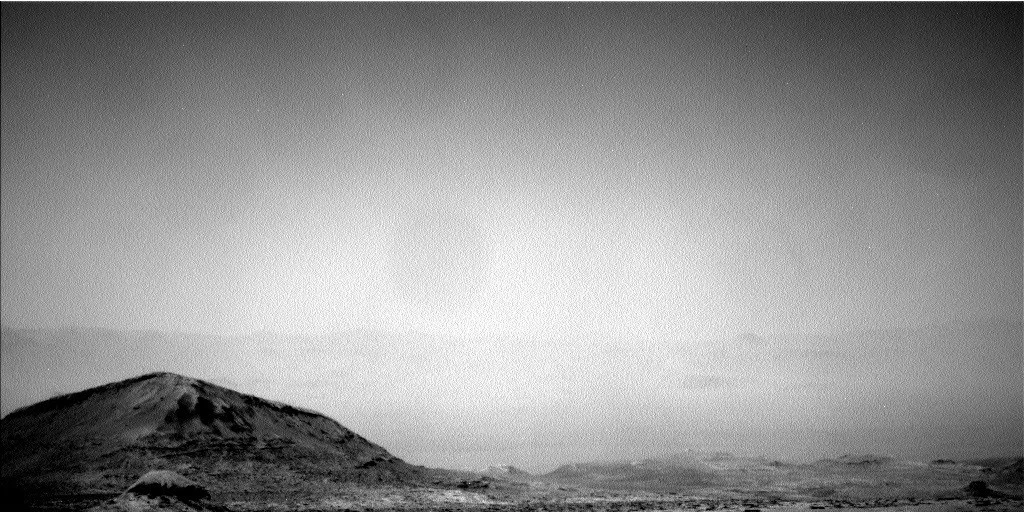
The Mars Science Laboratory (MSL) mission team, operating the Curiosity rover, has successfully completed a productive week of scientific exploration in Gale Crater, Mars. The rover has been systematically traversing diverse geological units, meticulously analyzing rock formations and atmospheric conditions. These investigations are providing crucial insights into the ancient Martian environment and the planet’s ongoing climatic processes. The mission, a flagship endeavor of NASA’s Mars exploration program, continues to push the boundaries of our understanding of the Red Planet, with the latest findings highlighting the intricate interplay between geology and atmosphere.
Geological Investigations: A Window into Mars’ Past
Curiosity’s recent activities have focused on examining distinct geological "units" within Gale Crater, each offering a unique narrative of the Red Planet’s history. The rover’s strategic movement across these varied terrains allows scientists to piece together the complex story of how Gale Crater formed, evolved, and was shaped by geological forces and past hydrological activity. The bedrock compositions and textures, which may appear unremarkable to the untrained eye, are meticulously studied by geologists to infer the processes of their formation and subsequent alteration.
The operational week involved three distinct stops, each characterized by comprehensive "contact science." This typically includes the use of the Mars Hand Lens Imager (MAHLI) to capture high-resolution close-up images of rock surfaces and the Alpha Particle X-ray Spectrometer (APXS) to determine the elemental composition of these materials. Complementing these surface analyses, the ChemCam instrument, specifically its Laser-Induced Breakdown Spectroscopy (LIBS) component, has been instrumental in analyzing the elemental makeup of targets at a distance. This dual approach—close-up imaging and elemental spectroscopy—provides a robust dataset for understanding rock origins and evolution.
Beyond direct contact science, the Mastcam and ChemCam instruments have been actively engaged in studying the broader geological context. Medium and long-distance imaging of surrounding buttes and formations allows scientists to map out the stratigraphy and understand the spatial relationships between different geological layers. This contextual information is vital for interpreting the localized findings from contact science. The team has paid particular attention to features that indicate past erosion, examining various examples of these erosional remnants throughout the week. These features are critical indicators of past wind or water activity, shedding light on the dynamic geological processes that have shaped Gale Crater over eons.
Unearthing Extraterrestrial Clues: Dark Rocks Under Scrutiny
Among the numerous rocks examined by Curiosity, two particular specimens garnered significant scientific attention due to their unusual characteristics. The workspaces on Monday and Wednesday of the reporting period both contained rocks that were noticeably darker than their surrounding geological neighbors. This striking difference in albedo immediately flagged these rocks as potentially anomalous. Scientists hypothesize that such darker rocks could be xenoliths, fragments of igneous material transported from elsewhere within Gale Crater or even beyond, or they could be meteorites – remnants of extraterrestrial objects that have impacted Mars.
To unravel the mysteries surrounding these dark rocks, the ChemCam LIBS instrument was deployed to conduct detailed compositional analyses. By vaporizing small portions of the rock surface with a laser and analyzing the resulting plasma’s spectral signature, LIBS can identify the elemental composition of the target. This data is crucial for determining whether these dark rocks possess a composition distinct from the local bedrock, which would support the hypothesis of an external origin. The specific elemental ratios and presence of certain minerals can offer clues about the rock’s formation environment, whether it be volcanic activity from a distant region of Mars or the unique chemical fingerprint of an asteroid or comet. The detailed analysis of these dark rocks is a prime example of Curiosity’s capability to identify and investigate potential extraterrestrial materials on the Martian surface, furthering our understanding of the diversity of materials present on the planet.
Monitoring Mars’ Dynamic Atmosphere: A Transition in Seasons
While Curiosity’s primary mission is geological exploration, its scientific payload is also dedicated to a comprehensive study of Mars’ present-day atmosphere. As the Martian year progresses towards autumn in Gale Crater, the atmospheric conditions are undergoing a significant seasonal transition. The rover team is closely observing the shift from the dusty season to the cloudy season, a period characterized by dynamic atmospheric phenomena.
The current period marks the final phase of the "C" storm season, a time when mid-sized, regional dust storms are prone to forming. These storms can significantly impact visibility and atmospheric conditions across large areas of Mars. To monitor these events, Curiosity’s Mastcam and Navcam instruments are actively engaged in imaging the Martian sky, searching for any signs of developing dust storms. These observations contribute to a broader understanding of dust transport and atmospheric circulation patterns on Mars.
In addition to dust monitoring, the rover’s suite of Environmental and Radio Science (REMS) instruments continues to diligently record daily meteorological data. REMS provides a continuous stream of information on temperature, pressure, humidity, wind speed, and direction, building a robust climatological record for Gale Crater. This ongoing data collection is essential for understanding diurnal and seasonal variations in the Martian atmosphere and for detecting any anomalies or trends that might indicate significant climatic shifts. The interplay between atmospheric dust, cloud formation, and temperature fluctuations is a key area of research, with implications for future human missions and our understanding of planetary habitability.
Historical Context of Gale Crater Exploration
The Curiosity rover landed in Gale Crater on August 6, 2012, as part of NASA’s Mars Science Laboratory mission. The primary objective of the mission was to determine if Mars ever had an environment capable of supporting microbial life. Gale Crater was chosen as the landing site due to its geological diversity and the presence of Mount Sharp (Aeolis Mons) at its center, a towering mountain whose layers of exposed rock offer a chronological record of Martian history.
Over its extended mission, Curiosity has made groundbreaking discoveries, including evidence of past liquid water in Gale Crater, the presence of essential chemical ingredients for life, and organic molecules preserved in ancient Martian rocks. The rover’s traverse has allowed scientists to study different geological units, from the crater floor to the lower slopes of Mount Sharp, each revealing different aspects of Mars’ watery past.
The current phase of exploration, moving through different mapped "units," is a continuation of this systematic approach. Each geological unit represents a distinct depositional environment or a period of geological activity, providing a layered history of the crater’s evolution. By analyzing the mineralogy, geochemistry, and morphology of these units, scientists can reconstruct past climates, identify potential habitable environments, and understand the processes that shaped the Martian surface.
Supporting Data and Scientific Instruments
The scientific findings reported are a testament to the sophisticated suite of instruments aboard the Curiosity rover:
- MAHLI (Mars Hand Lens Imager): A microscopic imager capable of capturing detailed images of rock and soil textures, revealing fine-scale geological features.
- APXS (Alpha Particle X-ray Spectrometer): Used for determining the elemental composition of rocks and soils, providing insights into their origins and chemical history.
- ChemCam (Chemistry and Camera): This instrument suite includes LIBS (Laser-Induced Breakdown Spectroscopy) for remote elemental analysis and a remote micro-imager for detailed imaging of rock surfaces. ChemCam’s LIBS capability is particularly crucial for analyzing the composition of distant targets and identifying potential meteorites.
- Mastcam (Mast Camera): A multispectral camera system that provides high-resolution panoramic and stereo images, essential for geological mapping, identifying rock types, and assessing the broader landscape.
- Navcam (Navigation Camera): Used for navigation and hazard avoidance, but also for observing atmospheric phenomena like dust devils and clouds.
- REMS (Rover Environmental Monitoring Station): A suite of meteorological sensors that measure atmospheric pressure, temperature, humidity, wind speed and direction, and UV radiation. REMS data is vital for understanding the current Martian climate and its daily and seasonal variations.
The data collected by these instruments is transmitted to Earth for analysis by scientists at NASA’s Jet Propulsion Laboratory (JPL) and partner institutions. The ongoing analysis of this data contributes to a continuously evolving understanding of Mars.
Broader Impact and Future Implications
The work conducted by the Curiosity rover has profound implications for our understanding of planetary science and the search for life beyond Earth. By meticulously studying the geological and atmospheric history of Gale Crater, scientists are gaining invaluable insights into the conditions that might have supported life in the past. The discovery of past habitable environments, characterized by the presence of liquid water and essential chemical elements, fuels ongoing efforts to search for biosignatures on Mars.
Furthermore, Curiosity’s atmospheric monitoring provides crucial data for understanding the dynamics of the Martian climate. This knowledge is not only fundamental to planetary science but also essential for the planning and execution of future human missions to Mars. Understanding dust storm patterns, atmospheric pressure variations, and seasonal changes will be critical for ensuring the safety and success of human explorers.
The identification and analysis of potential meteorites also contribute to our understanding of the delivery of organic molecules and other materials to planets, a process that may have played a role in the origin of life on Earth. Each dark rock examined by Curiosity represents a potential piece of evidence from elsewhere in the solar system, offering a unique window into the broader cosmic context.
The Mars Science Laboratory mission, through the diligent work of the Curiosity rover and its dedicated science team, continues to illuminate the complex and fascinating history of Mars. The ongoing exploration of Gale Crater promises further discoveries that will undoubtedly shape our understanding of this neighboring world and the potential for life beyond our own planet. The systematic approach, combining detailed geological analysis with continuous atmospheric monitoring, ensures that every Martian day brings new opportunities for scientific revelation.