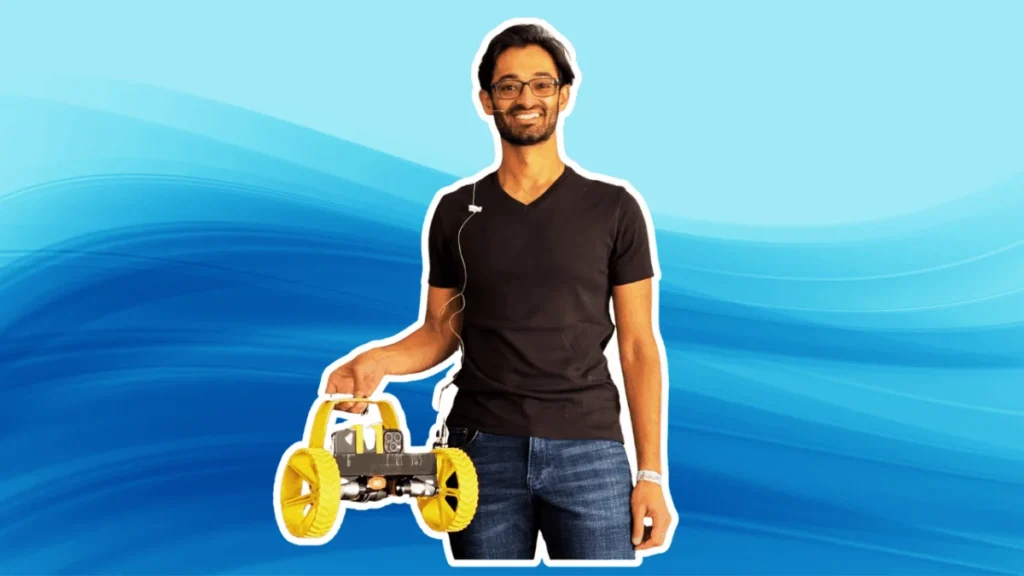
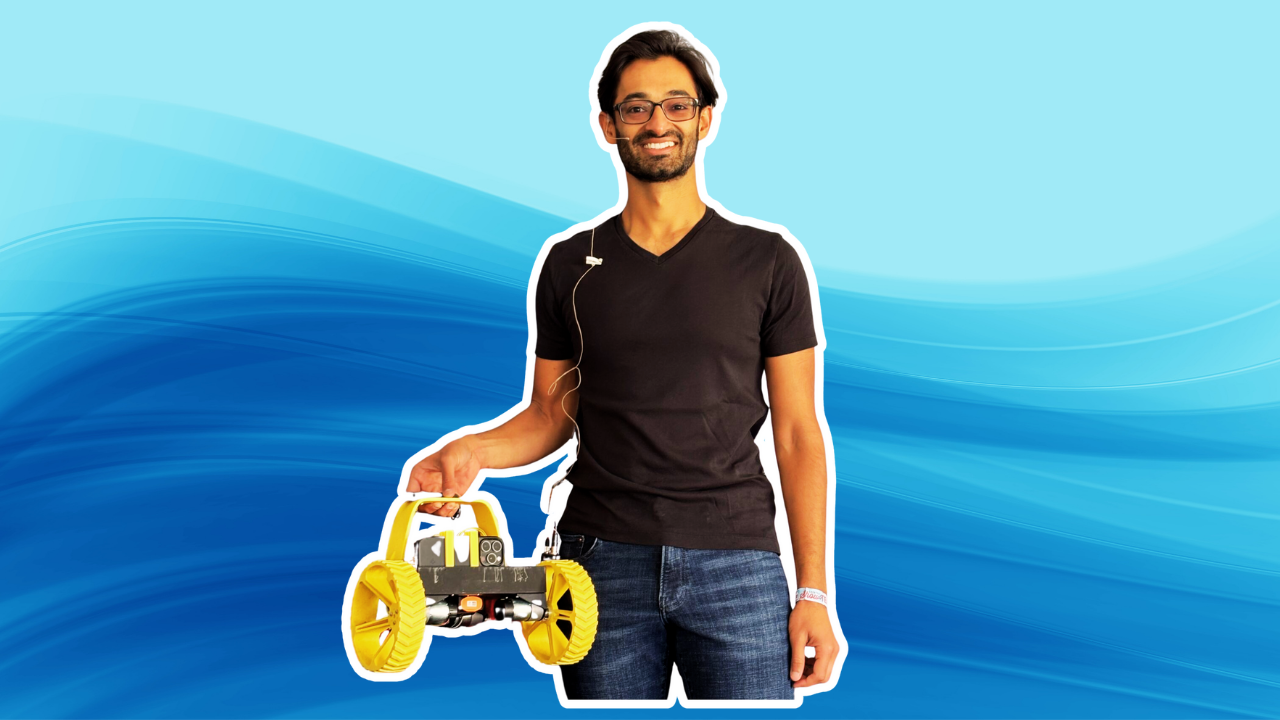
The annual Maker Faire Bay Area once again served as a vibrant crucible for innovation, creativity, and the relentless pursuit of problem-solving, with engineer and maker Survy Vaish captivating attendees with his journey from a rudimentary concept to a fully autonomous, phone-powered outdoor robot. Vaish’s presentation underscored a fundamental principle of the maker movement: that groundbreaking technological advancements do not necessarily require multi-million-dollar laboratories or limitless budgets, but rather a blend of ingenuity, perseverance, and a willingness to embrace iterative design. His project, which culminates in a robot capable of navigating a park and identifying objects, stands as a testament to the power of accessible technology and the spirit of DIY engineering.
Unveiling Innovation at Maker Faire Bay Area
The Maker Faire Bay Area, often dubbed "the Greatest Show (and Tell) on Earth," is a flagship event in the global maker movement, originating in San Mateo, California. Since its inception in 2006, it has grown into a pivotal platform for inventors, hobbyists, artists, scientists, and engineers to showcase their creations, share knowledge, and inspire future innovators. The Faire’s ethos revolves around celebrating the act of making, encouraging experimentation, and fostering a community where ideas can flourish, irrespective of formal qualifications or financial backing. Survy Vaish’s demonstration perfectly embodied this spirit, presenting a complex engineering challenge—building an autonomous robot—through a transparent, step-by-step process that demystified the often-intimidating world of robotics. Attendees at the Faire, ranging from seasoned engineers to curious schoolchildren, were able to witness firsthand the transformation of an abstract idea into a functional machine, reinforcing the event’s mission to democratize technology and inspire hands-on learning.
The Core Philosophy: From Abstract Idea to Tangible Reality
Vaish’s project began with a seemingly simple yet ambitious goal: "I want to build an autonomous robot." This initial spark, while common among aspiring engineers, often founders on the perceived complexity and cost barriers associated with robotics. However, Survy’s approach, as shared at the Faire, highlighted the critical importance of starting with the simplest possible iteration. This strategy, deeply rooted in agile development and lean prototyping methodologies, emphasizes rapid construction of a Minimum Viable Product (MVP) to validate core concepts before investing significant resources.
The Humble Genesis: A Shoe Box as the Starting Line
The very first prototype, a shoe box fitted with basic motors and wheels, serves as a powerful symbol of this philosophy. This initial stage was not about achieving advanced functionality or elegant design; it was purely about proving the fundamental concept of locomotion. Many aspiring makers often get bogged down in the pursuit of perfection from the outset, leading to analysis paralysis and project abandonment. Survy’s shoe box robot eloquently demonstrates that the initial step, no matter how rudimentary, is the most crucial. It allows for immediate hands-on interaction, identifies foundational mechanical challenges, and builds momentum without the pressure of a flawless outcome. This phase of development, often overlooked in polished product presentations, is where real learning begins, transforming vague aspirations into concrete, albeit simple, physical realities.
The Iterative Engineering Cycle: Test, Learn, Evolve
The true brilliance of Survy’s methodology lies in his rigorous adherence to the iterative design cycle: test, fix, and iterate. This process is the bedrock of effective engineering and problem-solving, particularly in complex fields like robotics. Rather than aiming for a perfect design from the start, Vaish systematically built, tested, identified flaws, and then refined his creation. Each "failure" was not a setback but a valuable data point, guiding the next phase of development.
-
Initial Testing and Problem Identification: The shoe box on wheels, while proving basic movement, would inevitably encounter limitations. Perhaps it lacked directional control, struggled with uneven surfaces, or had insufficient power. These initial shortcomings served as immediate prompts for enhancement. For instance, if the robot constantly veered off course, it indicated a need for more precise motor control or better wheel traction. If it struggled to climb a small incline, it pointed to power delivery or gear ratio issues.
-
Sensing the Environment: The First Step Towards Awareness: A truly autonomous robot must understand its surroundings. The initial shoe box had no such capability. This identified gap led to the integration of sensors. Simple ultrasonic sensors could detect obstacles, providing the robot with a rudimentary "sense" of its immediate environment. Infrared sensors could differentiate between light and dark, or detect edges. More advanced projects might incorporate lidar for detailed mapping or IMUs (Inertial Measurement Units) for orientation and movement tracking. Survy’s decision to add sensors was a direct response to the robot’s inability to navigate intelligently, a crucial step beyond mere mobility.
-
The Brain of the Bot: Integrating the Raspberry Pi: Processing sensor data and executing complex navigational algorithms requires a dedicated "brain." This is where the Raspberry Pi, a popular and highly versatile single-board computer, entered the scene. The Raspberry Pi provided the necessary computational power to interpret sensor inputs, make decisions based on programmed logic, and control the motors accordingly. Its compact size, low power consumption, and extensive community support make it an ideal choice for DIY robotics projects, enabling sophisticated control systems that were once the exclusive domain of expensive industrial robots. The Pi could run a Linux-based operating system, allowing for the execution of Python scripts or other programming languages to manage the robot’s behavior.
-
Vision and Navigation: Harnessing Smartphone Power: A significant leap in the robot’s capabilities came with the integration of a smartphone for GPS and camera vision. This was a particularly innovative and cost-effective solution. Modern smartphones are equipped with high-resolution cameras, powerful processors, GPS modules for precise localization, accelerometers, gyroscopes, and robust wireless communication capabilities. By leveraging an existing smartphone, Survy bypassed the need to purchase separate, specialized, and often expensive cameras, GPS units, and computing hardware for advanced perception. The smartphone’s camera could be used for real-time object detection (e.g., identifying trees, benches, or people in a park) using machine learning models (like TensorFlow Lite or OpenCV). Its GPS could provide global positioning data, allowing the robot to map its environment and follow predefined routes. This clever integration demonstrated how readily available consumer technology can be repurposed to achieve sophisticated robotic functions, making advanced autonomy more accessible than ever before.
The Technological Symphony: Components and Their Roles
The final iteration of Survy’s robot is a harmonious integration of various hardware and software components, each playing a vital role in achieving autonomy.

-
The Raspberry Pi: A Hub for Innovation: The Raspberry Pi acts as the central control unit, orchestrating the various functions of the robot. It communicates with the sensors, processes their data, executes navigation algorithms, and sends commands to the motor drivers. Its GPIO pins allow for easy interfacing with external components, while its ability to run a full operating system enables complex software development, including custom scripts for behavioral control, data logging, and communication with the smartphone. The availability of numerous libraries and frameworks for robotics on the Raspberry Pi significantly accelerates the development process for makers.
-
The Smartphone: A Pocket-Sized Powerhouse: The smartphone’s contribution is multifaceted. Its GPS module provides accurate location data, crucial for outdoor navigation and path planning. The high-resolution camera, coupled with image processing libraries, enables advanced computer vision tasks such as object recognition, tracking, and even rudimentary SLAM (Simultaneous Localization and Mapping) in some configurations. Furthermore, the smartphone’s powerful System-on-a-Chip (SoC) can offload computationally intensive tasks from the Raspberry Pi, such as running neural networks for real-time object detection, thereby enhancing the robot’s perception capabilities without adding significant cost or complexity in terms of dedicated AI hardware. The phone’s wireless connectivity (Wi-Fi, Bluetooth) also facilitates remote monitoring, control, and data transfer.
-
Mechanical Foundation and Power Management: While the article does not detail the final chassis, it is inferable that the "shoe box" evolved into a more robust and purpose-built frame capable of housing the electronics and withstanding outdoor conditions. This would involve considerations for weight distribution, ground clearance, and protection from elements. Power management is another critical aspect, involving batteries (e.g., LiPo batteries for their high energy density), voltage regulators, and power distribution systems to ensure a stable and reliable power supply to all components, especially the Raspberry Pi and the power-hungry smartphone.
Autonomy Realized: The Robot in Its Element
The culmination of this meticulous iterative process is a robot that successfully executes its mission outdoors. This "thrilling payoff" demonstrates the practical application of all the design choices and problem-solving efforts. Navigating a park environment presents unique challenges: uneven terrain, varying light conditions, dynamic obstacles (people, animals), and the need for robust localization. Survy’s robot, through its integrated sensors, Raspberry Pi intelligence, and smartphone vision, is able to overcome these hurdles, demonstrating a level of autonomy that was once the exclusive domain of academic research labs or industrial applications. The ability to identify objects further expands its utility, potentially allowing it to perform tasks such as environmental monitoring, automated inspection, or even simple delivery functions within controlled outdoor settings.
Broader Implications: Democratizing Robotics and STEM Education
Survy Vaish’s project carries significant implications beyond his personal achievement, particularly in the realms of STEM education and the democratization of advanced technology.
-
Fostering Innovation in Education: This project serves as an excellent pedagogical tool, illustrating the entire engineering design process from ideation to implementation. It demonstrates that complex concepts like autonomy, computer vision, and embedded systems can be taught and learned through hands-on, accessible projects. Schools and educational institutions can replicate or draw inspiration from Survy’s approach to create engaging learning experiences that cultivate critical thinking, problem-solving skills, and a practical understanding of robotics.

-
The Power of Accessible Technology: By strategically utilizing readily available and relatively inexpensive components like a Raspberry Pi and an old smartphone, Survy has lowered the barrier to entry for advanced robotics. This approach proves that innovation is not solely dependent on bespoke, high-cost equipment but can thrive on resourcefulness and clever integration of existing technologies. This democratizes access to robotics, making it feasible for hobbyists, students, and small teams with limited budgets to experiment and develop their own autonomous systems.
-
Inspiring the Next Generation of Makers: The transparent display of the iterative process—showing the failures and subsequent improvements—is profoundly inspiring. It demystifies the creative process, reassuring aspiring makers that imperfections and setbacks are an integral part of learning and development. The message that "you just need to begin" resonates deeply within the maker community, encouraging individuals to take the first step towards their ideas, no matter how daunting they may seem. This fosters a culture of experimentation and resilience, essential traits for future innovators.
Maker Faire Bay Area: A Catalyst for Creativity
The Maker Faire Bay Area provided the ideal stage for Survy Vaish to share his creation. Such events are crucial for showcasing the tangible results of DIY endeavors, connecting makers with resources, fostering collaborations, and, most importantly, inspiring countless others. The informal yet intellectually rigorous environment of the Faire allows for direct engagement, where visitors can ask questions, understand the challenges, and appreciate the ingenuity behind each project. Survy’s presentation was not just a demonstration of a robot; it was a masterclass in accessible engineering, problem-solving, and the sheer joy of bringing an idea to life.
Conclusion: A Testament to Ingenuity and Perseverance
Survy Vaish’s journey from a humble shoe box to a sophisticated, phone-powered outdoor autonomous robot is a compelling narrative of ingenuity, perseverance, and the transformative power of iterative design. His project, showcased at the Maker Faire Bay Area, stands as a beacon for aspiring makers, students, and educators alike, proving that the path to advanced technological innovation is not necessarily paved with exorbitant costs but with curiosity, methodical problem-solving, and a willingness to start small and evolve. It underscores the profound impact of accessible technology in democratizing complex fields like robotics, inspiring a new generation to embrace the challenges of making and to turn their imaginative visions into tangible realities.