Josh Jakson’s journey into the forefront of digital dentistry was not a sudden career shift, but rather an organic evolution deeply rooted in his family’s legacy. His path began long before any official job title, nurtured within a household where dentistry was intrinsically linked with engineering and manufacturing. This foundational understanding, inherited from his Polish immigrant father who established the family’s dental laboratory in Buffalo, New York, approximately 30 years ago, has become the bedrock of Evolution Dental Solutions and its sister company, Evolve Technology. The influence extends even further back, to Jakson’s grandfather, an engineer in Poland and later within the U.S. automotive industry, whose technical acumen shaped the family’s approach to business from its inception.
"My dad’s interest in the industry was always about helping people smile," Jakson shared with 3DPrint.com. "But our family also came from an engineering background, so dentistry in our house was always connected to manufacturing, materials, and understanding how things were actually made. That really became the foundation of our dental lab from the beginning." This deep-seated connection between the craft of dentistry and the principles of engineering has propelled the Jakson family business to the cutting edge of additive manufacturing in the dental sector.
From Analog Craft to Digital Precision: A Family Legacy
The genesis of the family’s dental enterprise can be traced to Jakson’s father’s initial aspiration to become a dentist. However, guided by his own father’s engineering wisdom, he was encouraged to first master the technical intricacies of the industry, understanding the fundamental processes behind the creation of dental prosthetics. This pivotal decision not only shaped his father’s career but also laid the groundwork for the family business’s future trajectory.
This technical grounding eventually led to the establishment of Evolution Dental Solutions, a Buffalo-based dental laboratory that has embraced digital tools and 3D printing to produce a comprehensive range of dental restorations, including crowns, bridges, implants, and dentures. Josh Jakson currently holds the position of Chief Case Designer at Evolution Dental Solutions. Concurrently, he presides over Evolve Technology, the company’s affiliated venture dedicated to advancing digital dentistry equipment and workflows. This dual leadership role underscores the Jakson family’s commitment to both the application and the technological innovation within the dental field.
The Digital Transformation of Denture Production
Over the years, Evolution Dental Solutions experienced a significant transformation, becoming deeply immersed in digital dentures, CAD/CAM design, sophisticated scanning workflows, and, most notably, 3D printing. According to Jakson, this evolutionary process has redefined one of dentistry’s most labor-intensive products, positioning it as one of additive manufacturing’s most compelling real-world production applications. Dentures, he asserts, have emerged as a clear demonstration of how digital workflows can fundamentally alter the economic viability and scalability of a dental laboratory.
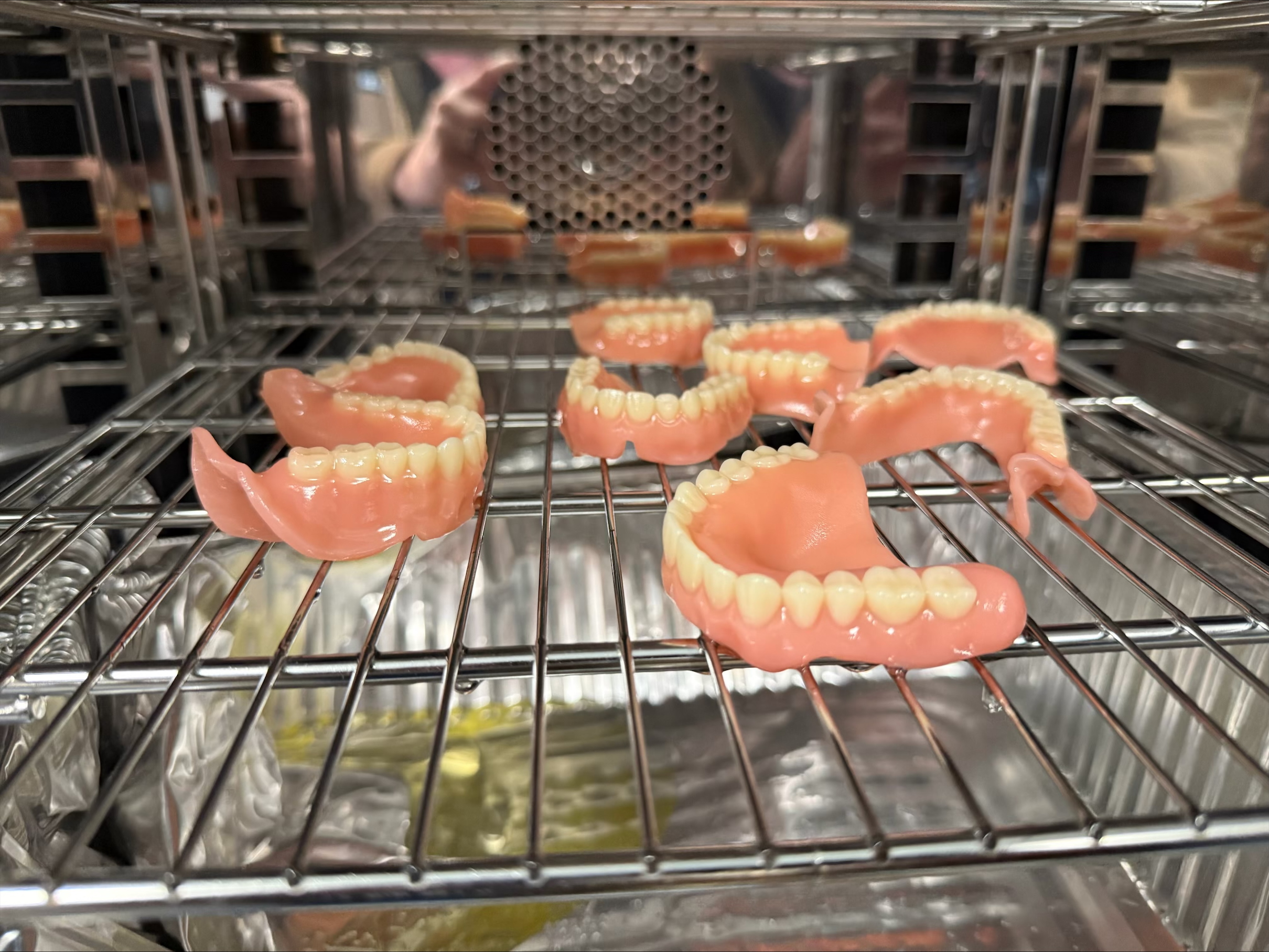
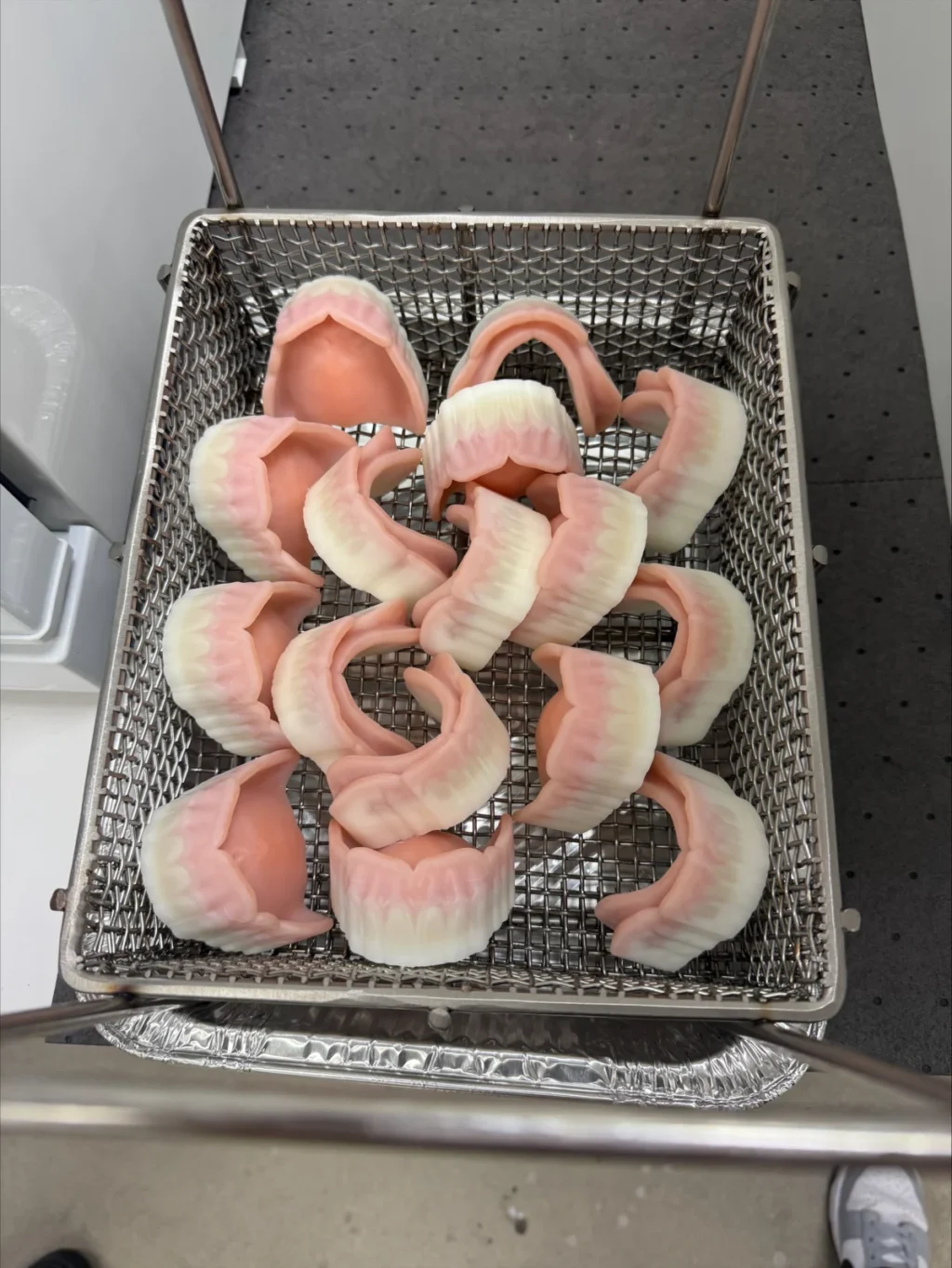
"For years, denture production was one of the most labor-heavy parts of the dental lab," Jakson explained. "It required waxing, investing, finishing, carving, correcting mistakes, and a long chain of manual steps. Dentures were always a thorn in our side because they required a ton of hand-touch processing. But that is changing. Today, our team uses digital scans, CAD workflows, and 3D printing to turn denture production into something much closer to a repeatable manufacturing process," he elaborated. "We can really make it a much more scalable process. We take the scans and design the CAD using a clear, chronological workflow. We can then go into processing that on a 3D printer."
This shift from manual artistry to digital precision has dramatically improved efficiency. Previously, the intricate process of crafting dentures involved numerous steps, each requiring significant manual labor and skilled craftsmanship. This included meticulous waxing, investing the wax patterns, casting, and extensive finishing and polishing. The potential for error was high, and rework was often necessary, leading to extended production times and increased costs. The digital workflow, conversely, streamlines these stages. Intraoral or model scans capture the patient’s precise oral anatomy, which is then translated into a digital 3D model. This model is then manipulated using CAD software to design the denture base and tooth arrangement, optimizing aesthetics and function. The final digital design is then sent directly to a 3D printer, minimizing manual intervention and reducing the likelihood of human error.
Embracing Cutting-Edge Technology: 3D Systems and NextDent
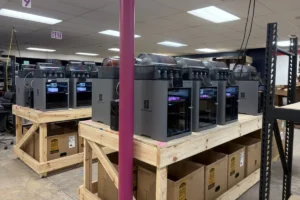
Evolution Dental Solutions leverages advanced technology from 3D Systems, specifically utilizing the NextDent 300 printer and NextDent materials for the production of dentures. This strategic choice of equipment and materials is instrumental in achieving the desired quality and efficiency. The NextDent 300 is known for its precision and speed, capable of producing intricate dental models and prosthetics with high accuracy. Coupled with 3D Systems’ specialized NextDent materials, which are biocompatible and designed for dental applications, the laboratory can produce high-quality dentures that meet stringent industry standards.
Evidence of this technological integration is presented in a case study shared by Jakson during the interview. The laboratory currently produces approximately 20 to 30 dentures per day, with ambitious plans to further scale up production by integrating additional machines. This consistent output highlights the reliability and throughput of their current setup. The potential for scaling is further amplified by the modularity of 3D printing solutions, allowing laboratories to incrementally increase their capacity as demand grows. This adaptability is a significant advantage in a market where patient needs are constant and often urgent.
Revolutionizing Production: From Individual Craft to Batch Manufacturing
The most profound impact of this technological adoption, according to Jakson, lies not solely in the automated creation of the physical part by the printer, but in the overarching workflow that eradicates many of the traditional manual steps. "With older 3D printed dentures, labs often still had to print a pink base, print or use separate teeth, and then glue the parts together," Jakson stated. "That was still better than traditional analog processing, but it was not fully scalable. Multi-material printing changes that. With newer 3D printing technology, like the multi-jetting technology provided by 3D Systems, we’re able to make that even more scalable than the last decade in 3D printing."
This advancement signifies a move toward true batch production, a paradigm shift from the previous model where a single technician might spend hours meticulously crafting one denture. With the new digital workflows and multi-material printing capabilities, a small team can now manage a significantly higher volume of arches. "Three technicians can handle a hundred arches, whereas three technicians back in the day could probably only handle about 20," Jakson elaborated. "It increases our manufacturing capability by nearly 10 times that of a laboratory, allowing us to drive down the cost of these prosthetics. That is the larger point: dental is not a one-off application. It is a daily production."

This increase in manufacturing capability has direct economic implications. By reducing the labor hours per unit and increasing throughput, laboratories can offer more competitive pricing for dentures and other restorations. This makes essential dental prosthetics more accessible to a wider patient population, addressing a critical need in healthcare. The ability to produce in larger batches also allows laboratories to optimize their resource allocation, potentially reducing material waste and energy consumption per unit.
The Unwavering Importance of Human Expertise in Digital Dentistry
Despite the remarkable advancements in automation, Jakson emphasizes that the success of digital dentistry remains critically dependent on high-quality data and astute human judgment. While the final printed part may require minimal finishing, the excellence of the outcome is determined much earlier in the process. Accurate scan data, precise bite records, and meticulous capture of jaw positioning are paramount.
"It’s not just a matter of surface-level acquisition. It’s about recording the bite," Jakson noted. "A bad bite record can change everything. Just a small error in the back of the mouth can become a much bigger problem in the front because of how the jaw moves. If you take that bite record and it’s one degree off over here, it could be three degrees in the anterior zone," he explained. "That can lead to someone looking like they have buck teeth or a very nice smile at the end of the day. That is why human judgment still matters."
While sophisticated software can identify potential issues and emerging AI tools are beginning to assist with bite generation and scan analysis, Jakson maintains that a crucial human element remains indispensable. The line between complete automation and clinical responsibility is still clearly drawn by the need for human oversight and interpretation. "There is still a big part in the process where a human needs to evaluate that. Digital dentistry is not simply about replacing technicians with machines. It’s about changing the role technicians play inside the workflow."
This evolution in roles is fostering a new kind of workforce within dental labs. The skills required are no longer solely traditional dental craftsmanship. Instead, there’s a growing demand for individuals with diverse expertise, including dental knowledge, CAD and engineering proficiency, and practical 3D printing experience. Intriguingly, Jakson revealed that some of the individuals now operating his 3D printers transitioned from hobbyist 3D printing backgrounds. "The people who run my 3D printers were hobbyist 3D printers. They were very involved in working with different types of maker boxes and all sorts of different hobby-level 3D printers." This demonstrates a crossover of skills and passion, where enthusiast knowledge is being directly applied to professional dental manufacturing.
The Shifting Landscape of Dental Laboratories
This technological and operational transformation is fundamentally reshaping the dental laboratory business model itself. Jakson observes a significant consolidation within the industry, with fewer dental labs operating today compared to previous decades, even as the demand for dentures and other restorations continues to rise. Smaller, local laboratories have found it increasingly challenging to compete with the economies of scale and advanced capabilities offered by larger, digitally-enabled labs.

"Our business used to be 80% to 90% local. Now it’s the reverse. We’re 80% to 90% national and only 10% to 20% local," Jakson stated. "That is where additive manufacturing becomes more than a tool. It becomes part of a larger change in how dental labs operate." This national reach is facilitated by efficient shipping and logistics, allowing labs to serve a broader client base without being geographically constrained. The ability to produce high-quality restorations consistently and at scale makes them attractive partners for dental practices across the country.
Future Horizons: Beyond Polymers to Ceramics and Metals
Evolution Dental Solutions is not limiting its exploration to polymer denture printing. Jakson indicated that the company is actively investigating ceramic 3D printing, including materials like zirconia and lithium disilicate, which are known for their strength, aesthetics, and biocompatibility. Furthermore, they are closely monitoring the development of more affordable metal additive manufacturing systems for restorations made from chrome cobalt and titanium alloys. These materials are crucial for certain types of implants and bridges where high strength and durability are essential.
However, for the present, dentures stand as a prime example of the tangible success already being achieved with 3D printing in the dental industry. The ability to produce custom-fit dentures efficiently and affordably is revolutionizing patient care and laboratory operations.
For Josh Jakson, the significance of 3D printing in dentistry is multifaceted: "Dental matters to 3D printing because it brings together materials, scanning, design, and repeatable production in one workflow. It lets us explore new materials. It allows us to scale at the level that we need, and it allows us to participate in the advancements in acquisition and design." This holistic integration of technologies and processes positions dental labs as leading adopters and innovators within the broader additive manufacturing landscape.
Dental laboratories are rapidly becoming the most compelling real-world examples of scalable 3D printing. Day in and day out, they are producing highly customized, functional parts for actual patients, leveraging digital workflows and the power of additive manufacturing. This fusion of technology and patient care is not just a trend; it represents a fundamental shift in how dental prosthetics are designed, manufactured, and delivered, ultimately enhancing the quality of life for countless individuals.
The ability to rapidly reproduce a lost or damaged denture from a digital file offers immense value, particularly for elderly patients or those with limited mobility. "If a patient loses a denture nowadays, we could simply press a button and have that product made again," Jakson explained. "For older patients, especially those in nursing homes, that matters. Repeating the full dental appointment and denture-making process can be difficult or unrealistic. A faster replacement can directly affect nutrition, comfort, and quality of life." This rapid replacement capability ensures continuity of care and minimizes the disruption to a patient’s daily life, underscoring the profound human impact of these technological advancements.