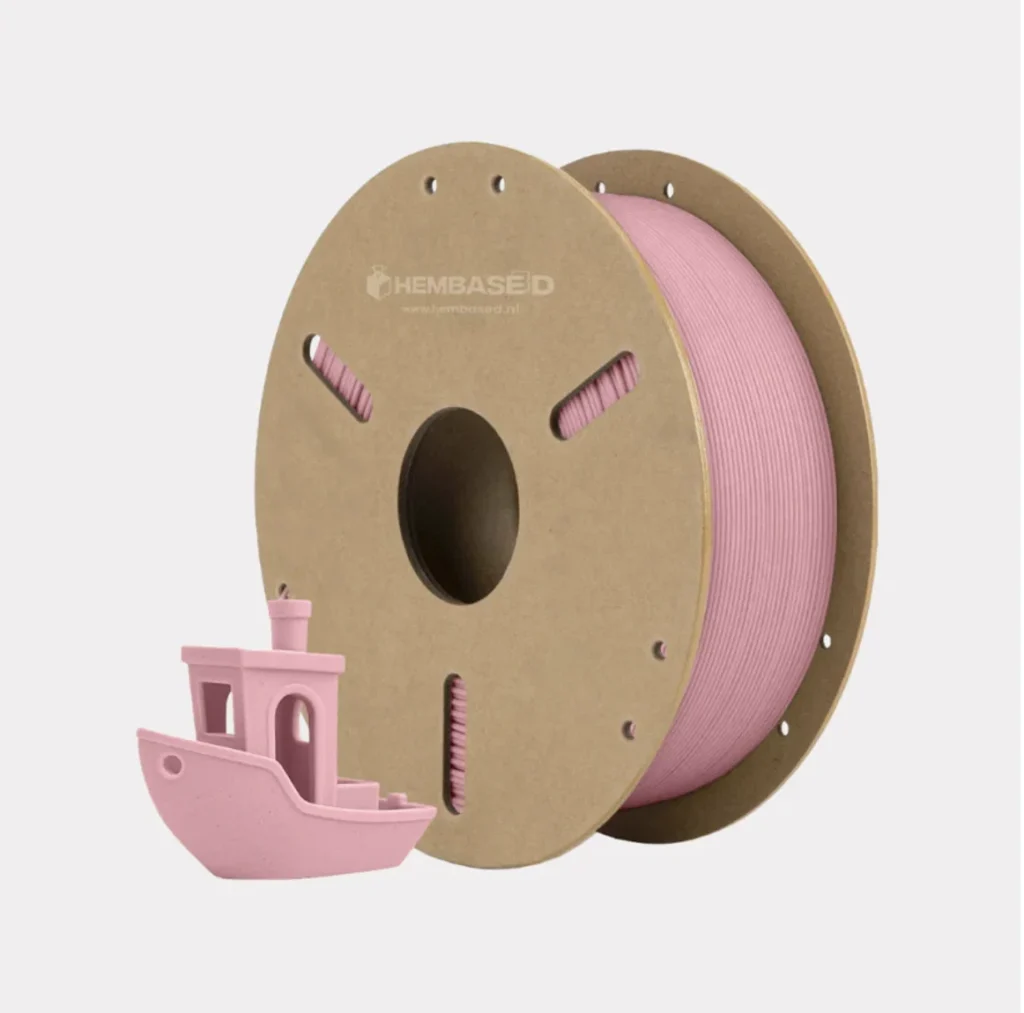
Dutch company Hembased has announced the launch of its new cold compostable 3D printing filament, a material designed to fully decompose in standard home compost bins. This innovation positions Hembased as a contender in the growing field of sustainable biomaterials for additive manufacturing, though the company’s claim of being the "first company in the world" to offer such a product is contested by several established players in the bioplastics arena. The filament is derived from palm leaf byproducts, a material source that raises both environmental promise and questions regarding its broader impact within the palm oil industry.
Understanding Cold Compostability: A Key Distinction in Sustainable Materials
The significance of Hembased’s new filament lies in its "cold compostable" nature. This designation signifies that the material can break down naturally in a typical home compost environment, characterized by ambient temperatures ranging from 20-30 degrees Celsius. This contrasts sharply with "industrially compostable" materials, which require the higher, controlled temperatures found in specialized industrial composting facilities to achieve degradation. For consumers and small-scale manufacturers, cold compostability offers a more accessible and practical end-of-life solution, aligning with the principles of a circular economy where products are designed for reuse, repair, or responsible decomposition.
According to industry definitions, cold compostable materials must achieve complete disintegration within a year under these moderate conditions. Crucially, they must not leave behind any harmful residues, and ideally, should contribute positively to soil health by becoming biomass. This standard sets a high bar for biodegradability and emphasizes a commitment to truly closing the loop on material lifecycles.
The Rise of PHA and the Pioneer Landscape
The field of compostable 3D printing filaments has been significantly shaped by Polyhydroxyalkanoates (PHAs). PHAs are a class of biodegradable polyesters produced by numerous microorganisms. They are often derived from renewable resources, including agricultural waste and byproducts, making them a compelling alternative to petroleum-based plastics. When PHAs decompose, they break down into water, biomass, and carbon dioxide – elements that are naturally reintegrated into the environment.
One of the early and most prominent companies to champion PHA filaments for 3D printing is ColorFabb. Their "allPHA" filament has been a leading example of a truly sustainable biomaterial. Following ColorFabb’s lead, other companies have entered the market, offering their own bio-based and compostable solutions. Regen filaments, for instance, has also made strides in this area. The development of PHA materials has a notable history, with ColorFabb releasing its first blended PHA filament as early as 2013 and a pure PHA variant in 2022. Research into optimizing PHA production and application in 3D printing has been ongoing, with a review paper on engineering biodegradable PHA blends published in 2020 highlighting the growing interest and scientific effort. Furthermore, Canadian firm Genecis has been actively exploring PHA production from food waste since 2018, demonstrating a diverse range of approaches to sourcing and utilizing this versatile biopolymer. Genecis has a notable partnership with Helian, which in turn supports ColorFabb in its PHA filament manufacturing, underscoring the interconnectedness and collaborative nature of innovation in this sector.

Other companies that have been recognized for their contributions to cold compostable bio-based 3D printing materials include Phabulous, Ecogenesis EcoFab, and Loopha, all of which predate Hembased’s market entry with similar offerings. This established timeline suggests that Hembased is entering a competitive landscape where several entities have already laid the groundwork and gained traction with compostable filaments.
Hembased’s Entry: A Palm Leaf Approach
Hembased’s new filament distinguishes itself through its specific source material: palm leaf byproducts. The company states that these leaves are agricultural waste that would otherwise be burned. By collecting and processing these fallen leaves, Hembased aims to divert waste and create a valuable new material. The leaves are dried, ground into a fine powder, and then processed into a granulate called HemCell, which is subsequently used to manufacture their filament.
Erik Janssen, Founder of Hembased, articulated the company’s vision, stating, "3D printing is a powerful tool for rapid innovation, but current materials do not yet align with what the future demands. We believe that materials should not only perform well during use, but should also have a credible and responsible end-of-life solution." This philosophy underscores a broader industry trend towards prioritizing sustainability throughout a product’s entire lifecycle, from sourcing to disposal.
Janssen further elaborated on the development process: "One of the greatest challenges in developing and manufacturing the filament was combining reliable print performance with an end-of-life solution that aligns with the principles of circular design. For us, cold compostable means that a product does not cease to be useful once its original function has been fulfilled. Under the right conditions, a printed object can ultimately serve as a nutrient source within a biological system." This statement highlights the dual focus on material performance during printing and its ultimate biological reintegration. Hembased’s mission is to "print what you need, use it with confidence, and when it has fulfilled its function, choose an end-of-life solution that aligns with responsible innovation."
Environmental Considerations and Sourcing Transparency
While the use of agricultural waste as a feedstock for bioplastics is commendable, the sourcing of palm leaf byproducts from Hembased warrants further examination. Palm oil production is notoriously linked to significant deforestation and habitat destruction, particularly in Southeast Asia. If Hembased’s palm leaves are sourced from plantations actively involved in or contributing to palm oil expansion, there is a potential for indirect environmental consequences.
The company’s description suggests that the leaves are collected from fallen material that might otherwise be burned. This practice could potentially be beneficial by preventing the release of greenhouse gases from burning and by utilizing a readily available waste stream. However, the economic incentives of collecting these byproducts could, in some scenarios, inadvertently bolster the profitability of palm oil operations, potentially encouraging further expansion.

Hembased states that the leaves are dried and ground using local machines, implying a localized processing approach. The company also expresses a desire to collaborate with research partners, particularly those interested in end-of-life solutions and the sustainable use of palm oil byproducts. This openness to collaboration could provide an avenue for greater transparency and for addressing potential environmental concerns associated with their sourcing.
Market Positioning and Future Outlook
Hembased’s filament is available in natural hues, described as reminiscent of Faberdashery’s natural color palettes, and is priced at €32 per kilogram, which translates to approximately $36 USD. This pricing places it within the premium segment of the 3D printing filament market, a common characteristic for specialized bio-based and sustainable materials.
The company’s ambition to be a leader in sustainable 3D printing materials is clear, but its claim of being the "first" overlooks the pioneering work of companies like ColorFabb, which have been developing and marketing PHA filaments for years. Nevertheless, Hembased’s focus on palm leaf byproducts offers a specific niche within the broader bioplastics landscape.
The broader implications of Hembased’s launch extend beyond just a new filament. It contributes to the ongoing conversation about the future of materials in additive manufacturing. As the 3D printing industry continues to mature, the demand for environmentally responsible alternatives is growing. Innovations like Hembased’s filament, even with the need for clearer supply chain transparency, push the boundaries of what is possible in creating functional products with a reduced environmental footprint. The challenge for Hembased, and indeed for all companies in this space, will be to balance material performance, cost-effectiveness, and genuine environmental sustainability, ensuring that their innovations contribute positively to a circular economy without unintended negative consequences. The company’s stated commitment to responsible innovation and its openness to research partnerships suggest a potential for addressing these complexities and evolving its practices over time. The success of such initiatives will ultimately be measured by their tangible impact on waste reduction, carbon footprint, and the overall health of our planet.