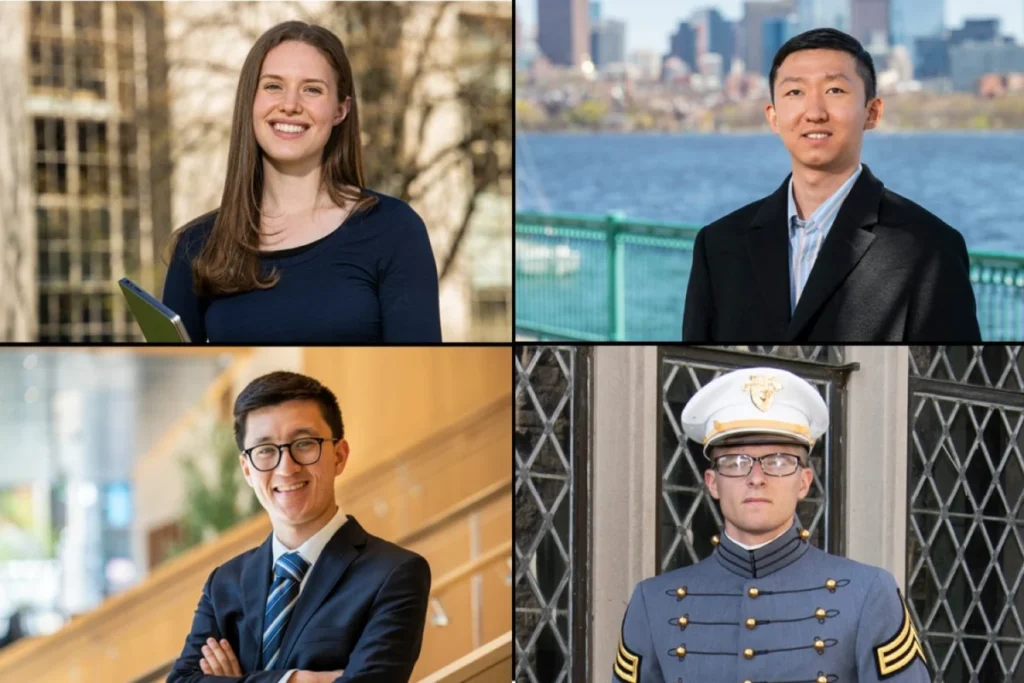
Cambridge, MA – The Hertz Foundation, a philanthropic organization dedicated to supporting exceptional graduate students in the applied physical, biological, and engineering sciences, has announced the selection of four individuals affiliated with the Massachusetts Institute of Technology (MIT) as recipients of its highly coveted 2026 fellowships. This distinguished cohort includes three current MIT students – Annika Marschner, Alvin Q. Meng, and Zachary S. Siegel – alongside Matthew Wanta, an incoming graduate student poised to join the institution. These fellowships, renowned for providing unparalleled financial autonomy and a lifelong network, are designed to empower the nation’s most promising scientific minds to pursue high-impact, potentially transformative research without conventional constraints.
The Hertz Foundation Fellowship stands as one of the most prestigious and competitive awards in American science and technology. Each recipient is granted up to five years of comprehensive financial support, encompassing a substantial stipend and full tuition equivalent. This unique structure grants fellows an extraordinary degree of freedom to define and pursue their own research agendas, fostering an environment where truly groundbreaking discoveries can flourish. The foundation’s commitment extends beyond monetary aid, offering a robust, lifelong network of over 1,300 past and present fellows, providing invaluable mentorship, collaboration opportunities, and access to a vibrant community of scientific leaders.
Philip Welkhoff, a Hertz Fellow himself and director of the malaria program at the Gates Foundation, co-led the rigorous selection process and expressed profound admiration for the chosen scholars. "What particularly impresses me about this cohort is their fearlessness in taking on new challenges and advancing the frontiers of science," Welkhoff stated. "Each has exhibited tremendous creativity, grit, and vision, and I cannot wait to see what each accomplishes with the freedom to innovate provided by the Hertz Fellowship." His remarks underscore the foundation’s core philosophy: identifying individuals not just for their academic prowess but for their potential to disrupt and redefine scientific understanding.
A Legacy of Scientific Investment: The Hertz Foundation’s Mission
Established in 1963 by entrepreneur and philanthropist David Hertz, alongside his wife Fannie, the Fannie and John Hertz Foundation was born from a vision to bolster America’s scientific and technological leadership during the Cold War era. Recognizing the critical need for a continuous pipeline of scientific talent, particularly in fields vital for national security and economic prosperity, the Hertz’s endowed the foundation with a mission to support the nation’s most promising graduate students in the applied physical sciences, engineering, and increasingly, quantitative biology.
David Hertz, a German immigrant who built a fortune through various ventures including the Hertz Corporation car rental service, believed deeply in the power of education and scientific innovation. His philanthropic endeavor aimed to cultivate a cadre of "super-scientists" who would drive future breakthroughs. The timing of the foundation’s establishment, following the Sputnik shock and amidst the burgeoning space race, highlighted the strategic importance of investing in indigenous scientific talent. Since its inception, the foundation has awarded fellowships to individuals who have gone on to achieve monumental successes, contributing to advancements in diverse fields ranging from advanced medical therapies and global defense networks to foundational work on projects like the James Webb Space Telescope. This impressive track record solidifies the Hertz Fellowship’s reputation as a catalyst for high-impact research and innovation.
The selection process for the Hertz Fellowship is notoriously rigorous. Typically attracting thousands of applications from top-tier universities across the United States, only a small fraction — often less than 2% — are ultimately chosen. Candidates undergo multiple rounds of review, including comprehensive essays, academic transcripts, recommendations, and intense interviews with panels of distinguished scientists and engineers, many of whom are Hertz Fellows themselves. The focus is not merely on academic achievement but on demonstrated leadership potential, originality of thought, and the courage to tackle complex, high-risk, high-reward research questions. This year, the MIT-affiliated recipients are part of a broader cohort of 19 Hertz Foundation Fellows selected nationwide, a testament to the exceptional caliber of talent emerging from the institution.
The MIT-Affiliated Hertz Fellows: Profiles in Innovation
MIT has historically been a strong contributor to the Hertz Fellowship program, consistently producing scholars who meet the foundation’s exacting standards. The institution’s culture of interdisciplinary collaboration, cutting-edge research infrastructure, and commitment to pushing the boundaries of scientific knowledge creates an ideal environment for nurturing Hertz-caliber talent. The four new fellows exemplify this spirit, each bringing a unique set of skills and an ambitious research agenda to their respective fields.
Annika Marschner (’26) – Pioneering Bio-Inspired Robotics and Medical Technologies
Annika Marschner, an MIT alumna from the Class of 2026 with a major in mechanical engineering, is set to embark on her PhD studies at MIT in the fall. Her undergraduate career was marked by an intense focus on the development of novel technologies at the intersection of biointerfacing and bio-inspired systems. This included significant contributions to the Raman Lab at MIT, where she developed a custom benchtop stereoscope-compatible incubator and an extrusion-based desktop bioprinter. She also contributed to a light-based filamented bioprinting system for ETH Zürich’s Tissue Engineering and Biofabrication Lab and designed large-scale hardware for robotic systems in MIT’s Biomimetic Robotics Lab.
Marschner’s undergraduate thesis specifically addressed the crucial challenge of improving the speed and dexterity of dynamic motions in bio-inspired robotic limbs. Her work holds profound implications for the future of robotics, particularly in areas requiring nuanced interaction with complex environments. As a graduate student, she plans to deepen her exploration of both hardware and control system design within biologically relevant contexts, with a particular emphasis on assistive medical technology and surgical robotics. Her research could lead to the creation of more adaptive prosthetics, advanced surgical instruments, and robots capable of performing delicate tasks with human-like precision, ultimately enhancing patient care and quality of life. The field of bio-inspired robotics is rapidly expanding, with applications ranging from environmental exploration to advanced manufacturing, and Marschner’s work is poised to contribute significantly to its frontier.
Alvin Q. Meng – Unraveling the Mysteries of Inorganic Chemistry
Alvin Q. Meng is a doctoral student in inorganic chemistry at MIT, where his research delves into the fundamental interactions that govern chemical structure and reactivity. Under the guidance of Professor Daniel L.M. Suess, Meng is currently immersed in the study of iron-sulfur clusters, a class of compounds critical to numerous biological processes, including respiration, photosynthesis, and DNA synthesis. Understanding these clusters is vital for advancing fields like sustainable energy, medicine, and materials science.
Born in Tianjin, China, Meng immigrated to the United States at the age of 10. He earned undergraduate degrees in chemistry and mathematics from the University of Virginia, where he conducted research in Professor W. Dean Harman’s group. His prior work involved the synthesis and characterization of dihapto-coordinated tungsten complexes of cyclopentadiene, focusing on an unusual class of binuclear species linked by a carbon-carbon bond between two metal-bound five-membered rings. This research showcases his expertise in synthetic inorganic chemistry and his ability to explore complex molecular architectures. Meng’s pursuit of understanding fundamental chemical principles has broad implications, potentially leading to the design of new catalysts for industrial processes, novel therapeutic agents, or advanced materials with unique properties. His work is foundational, aiming to unlock the very mechanisms that drive chemical transformations.
Zachary S. Siegel – Bridging Robotics, Cognitive Science, and Artificial Intelligence
Zachary S. Siegel is an electrical engineering and computer science graduate student pursuing a PhD in MIT’s renowned Computer Science and Artificial Intelligence Laboratory (CSAIL). His research navigates the complex intersection of robotics, cognitive science, and artificial intelligence, seeking to build machines that learn and reason with human-like efficiency. Siegel graduated summa cum laude from Princeton University with a BSE in computer science and a minor in philosophy, receiving numerous accolades including Tau Beta Pi, Sigma Xi, and the Outstanding Computer Science Independent Work Prize.
His senior thesis, advised by Tom Griffiths and Jacob Andreas, explored how humans infer the goals of others in open-ended, real-world environments. Siegel elegantly demonstrated that Bayesian inference serves as an accurate model for people’s goal predictions, achieved by comparing partial observations to a learned library of possible plans weighted by their prior likelihood. This work provided crucial insights into human cognition, which he now aims to translate into artificial intelligence. His doctoral research goal at MIT is to develop systems that can learn from limited data and generalize to novel situations by combining robot planning with Bayesian inference. Siegel is particularly fascinated by "combinatorial generalization" – the human capacity to compose known skills in new ways to solve previously unseen problems without requiring additional demonstrations. Advised by Professors Leslie P. Kaelbling, Tomás Lozano-Pérez, and Joshua B. Tenenbaum, Siegel’s work promises to advance the frontiers of AI, leading to more versatile, intelligent robots capable of operating effectively in unpredictable, dynamic environments, from autonomous vehicles to personal assistant robots.
Matthew Wanta – Innovating Autonomous Systems for Defense and Beyond
Matthew Wanta is an incoming doctoral student who will begin his studies in operations research at MIT in the fall. A distinguished Class of 2026 graduate of the United States Military Academy at West Point, Wanta earned bachelor’s degrees in computer science and mathematical sciences, both with honors. His academic and research focus has been on machine learning for autonomous systems, particularly integrating probabilistic modeling and computer vision into cooperative drone search and swarm control frameworks.
Wanta’s work has had significant practical applications in the defense sector. In collaboration with the DEVCOM Armaments Center, he developed sophisticated computer vision models designed to detect energetic defects in artillery munitions. This innovation enables rapid, non-intrusive quality control in defense manufacturing, enhancing safety and efficiency in critical production processes. Furthermore, his contributions to the U.S. Special Operations Command and Army C5ISR organizations focused on autonomous aerial search and sensing. He built advanced simulation architectures for probabilistic target localization and multi-agent coordination, directly impacting the effectiveness of military intelligence and operational capabilities.
Beyond his academic and research prowess, Wanta demonstrated exceptional leadership at West Point, serving as company commander for Bravo Company, 2nd Regiment, and holding leadership positions in Upsilon Pi Epsilon and Phi Kappa Phi. He is also an Astronaut Scholar and a Sapper School graduate, having commissioned as an Army officer in the Cyber Corps. His unique blend of academic rigor, practical engineering experience, and military leadership positions him to make profound contributions to the field of operations research, particularly in developing robust and intelligent autonomous systems that can address complex logistical and strategic challenges in both civilian and defense contexts.
Broader Implications: Nurturing Future Scientific Leadership
The awarding of these Hertz Fellowships to MIT-affiliated students underscores not only the individual brilliance of the recipients but also the enduring strength of MIT as a global hub for scientific and technological innovation. The consistent recognition of MIT students by such a prestigious foundation highlights the institution’s commitment to fostering an environment where groundbreaking research and interdisciplinary collaboration thrive.
The financial autonomy granted by the Hertz Fellowship is a critical component of its success. Unlike many other fellowships, which may tie funding to specific projects or advisors, the Hertz Foundation’s model empowers young scholars to pursue their most ambitious and often unconventional ideas. This freedom is essential for fostering true innovation, allowing researchers to pivot, explore high-risk avenues, and ultimately make discoveries that might not fit within traditional research paradigms. The lifelong network of Hertz Fellows also represents an invaluable asset, creating a community of practice that transcends disciplines and generations, facilitating collaboration and mentorship among some of the nation’s brightest minds.
As these four MIT scholars embark on their doctoral journeys, their work promises to push the boundaries of knowledge in areas critical to humanity’s future: from advanced robotics and medical technologies to fundamental chemistry, artificial intelligence, and strategic autonomous systems. Their success will not only enrich their respective fields but also contribute to the broader scientific enterprise, reinforcing America’s position at the forefront of global innovation. The Hertz Foundation’s continued investment in such exceptional talent is a testament to the belief that nurturing fearless, creative, and visionary scientists is the most effective way to ensure a future shaped by progress and discovery.






